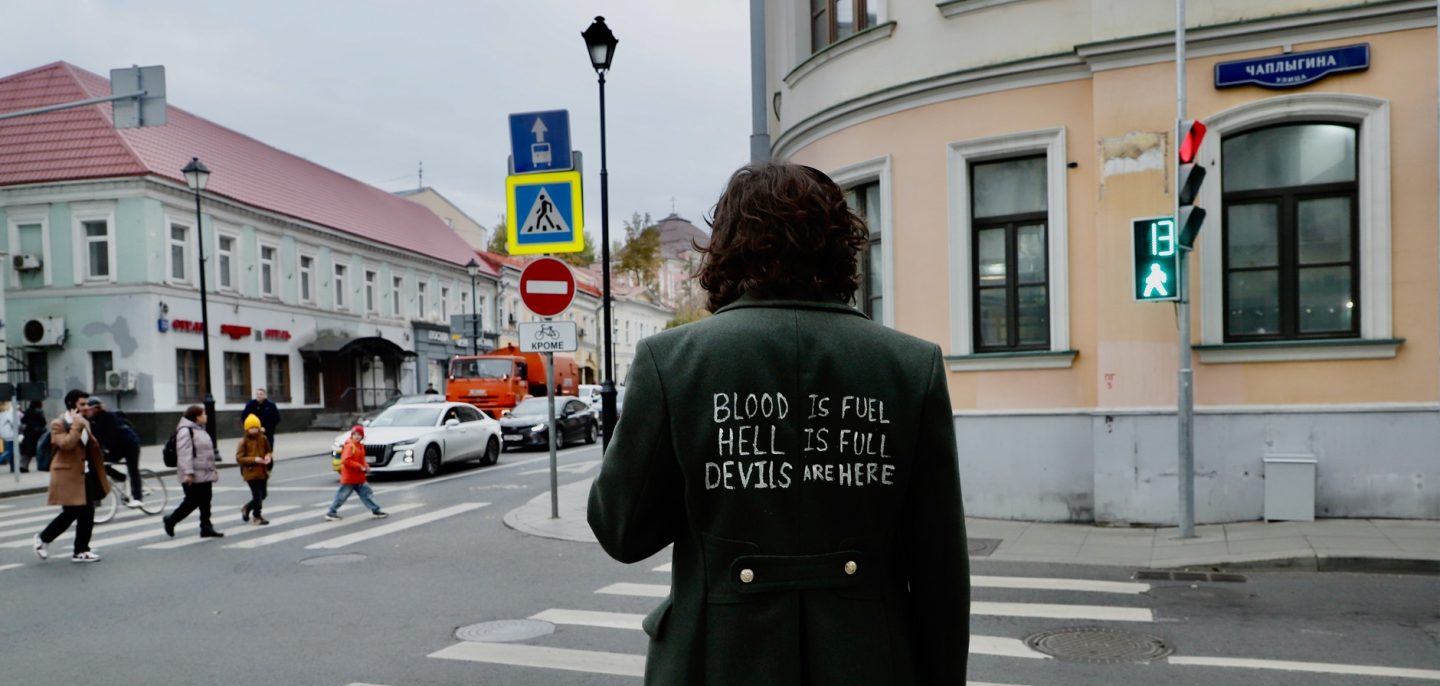
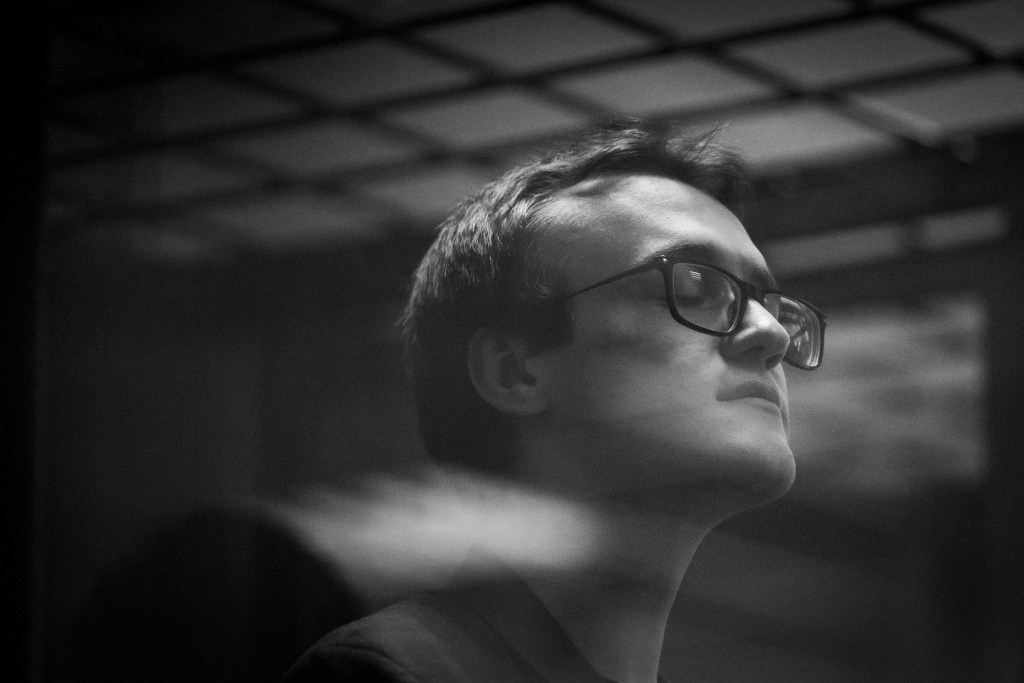
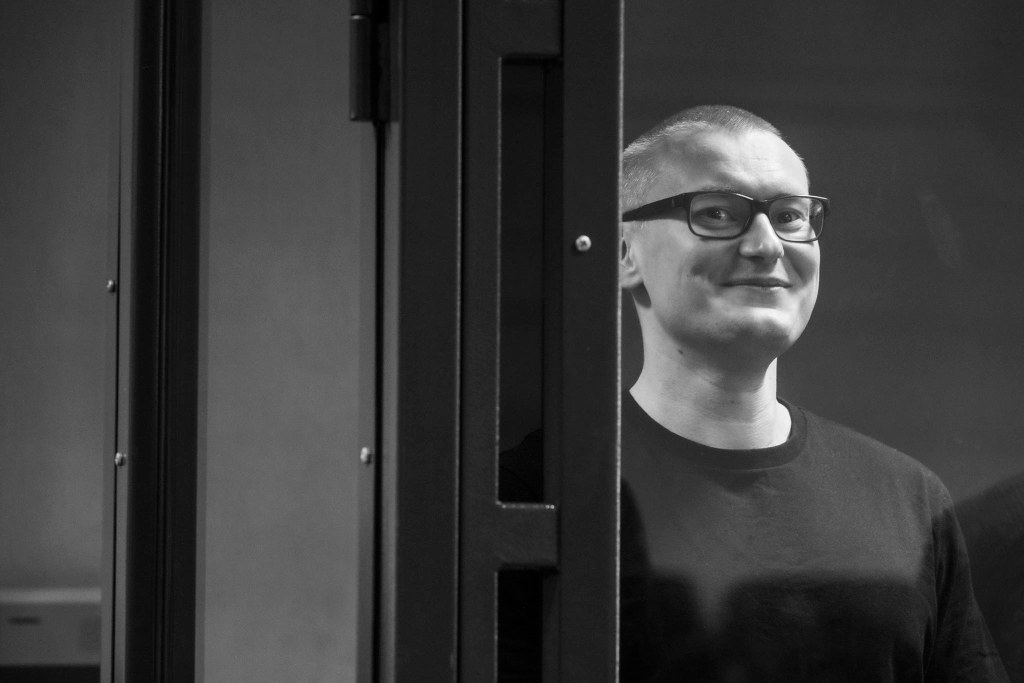
Over four years into Russia’s war in Ukraine, some of the Russians imprisoned in its early days are still in jail. Even people with no previous political activism have been landed with long prison sentences in order to crush dissent.
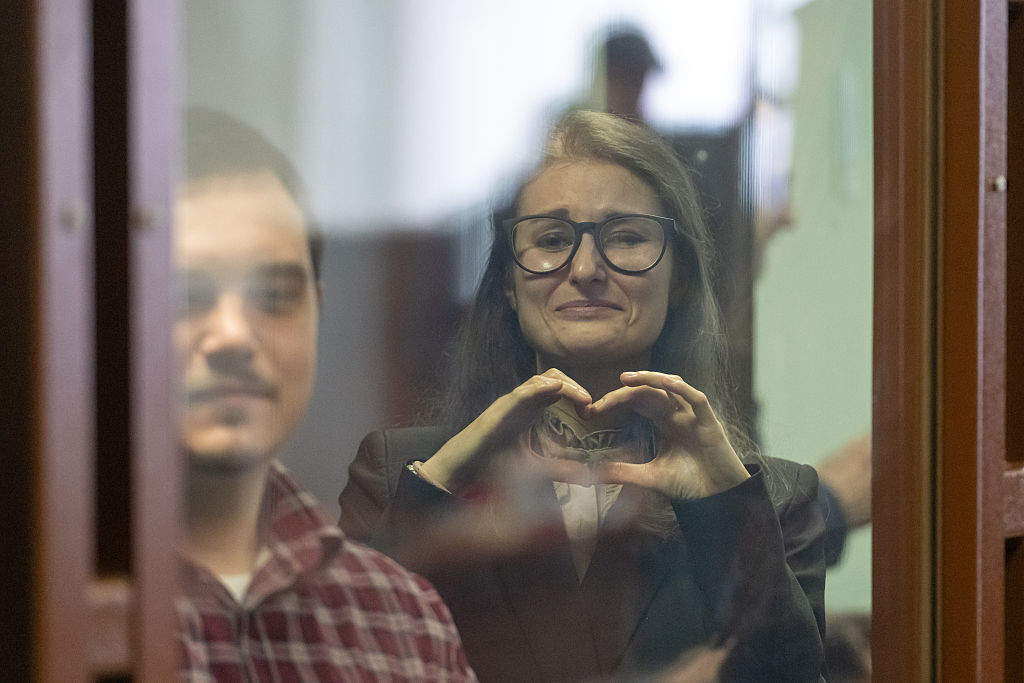
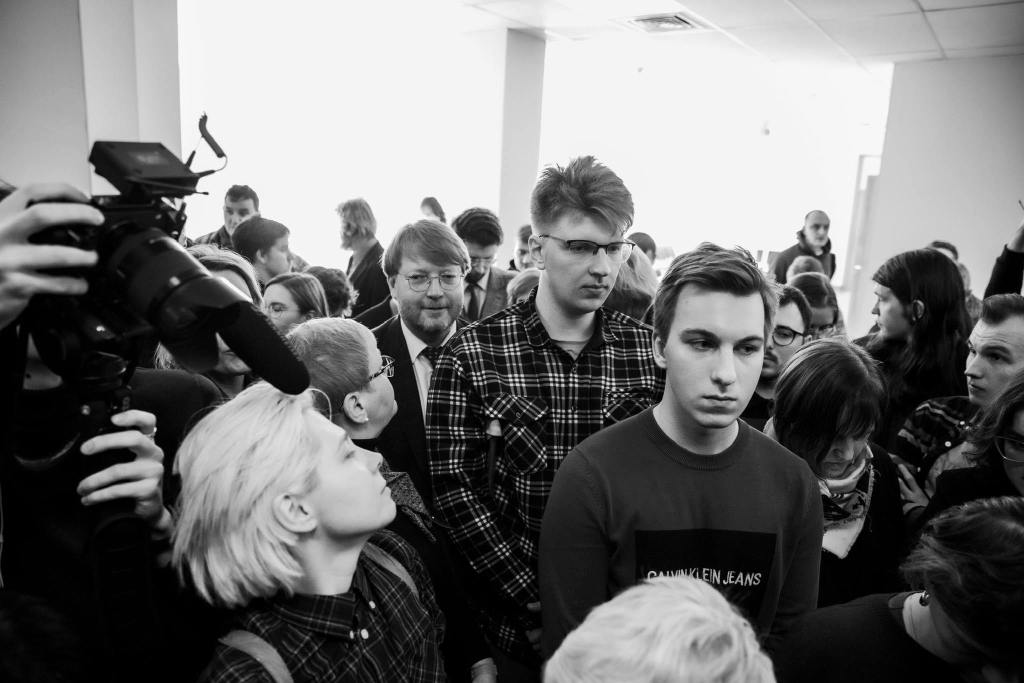
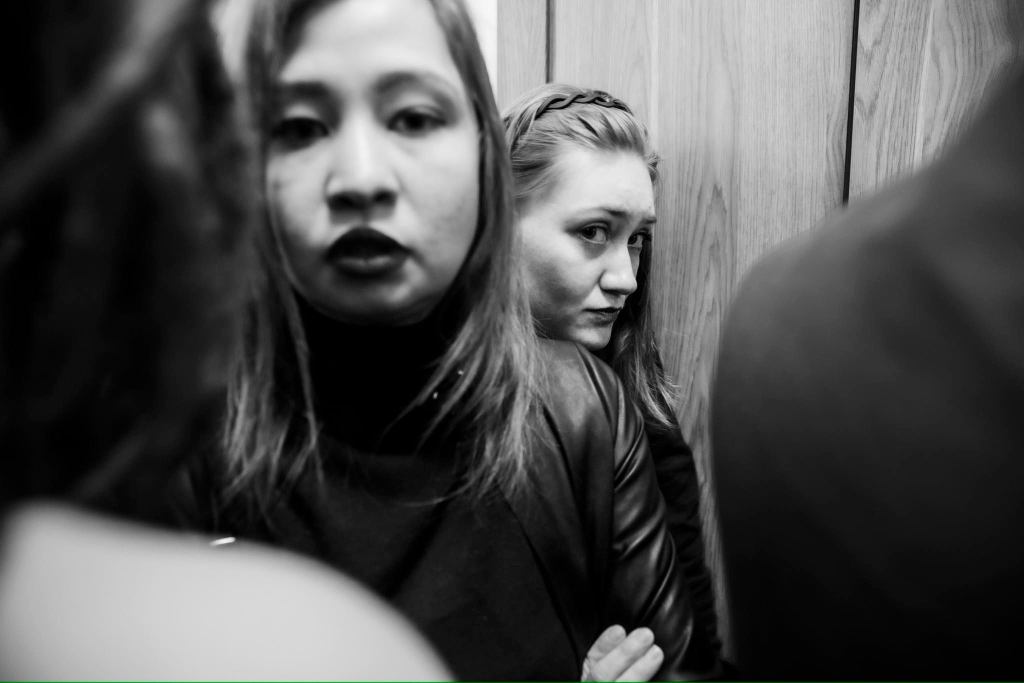
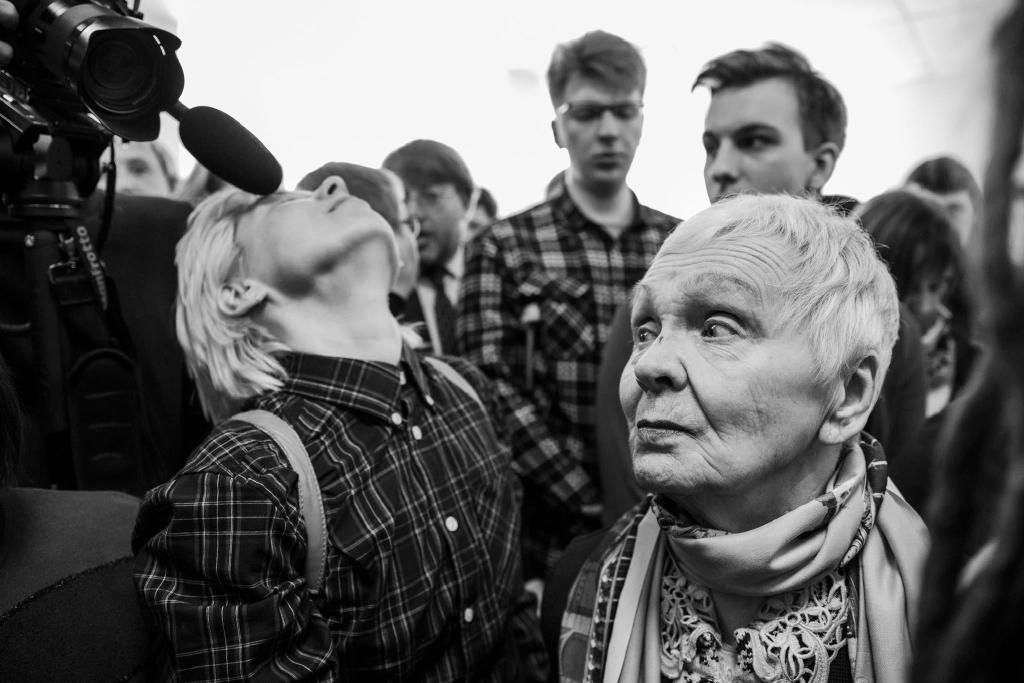
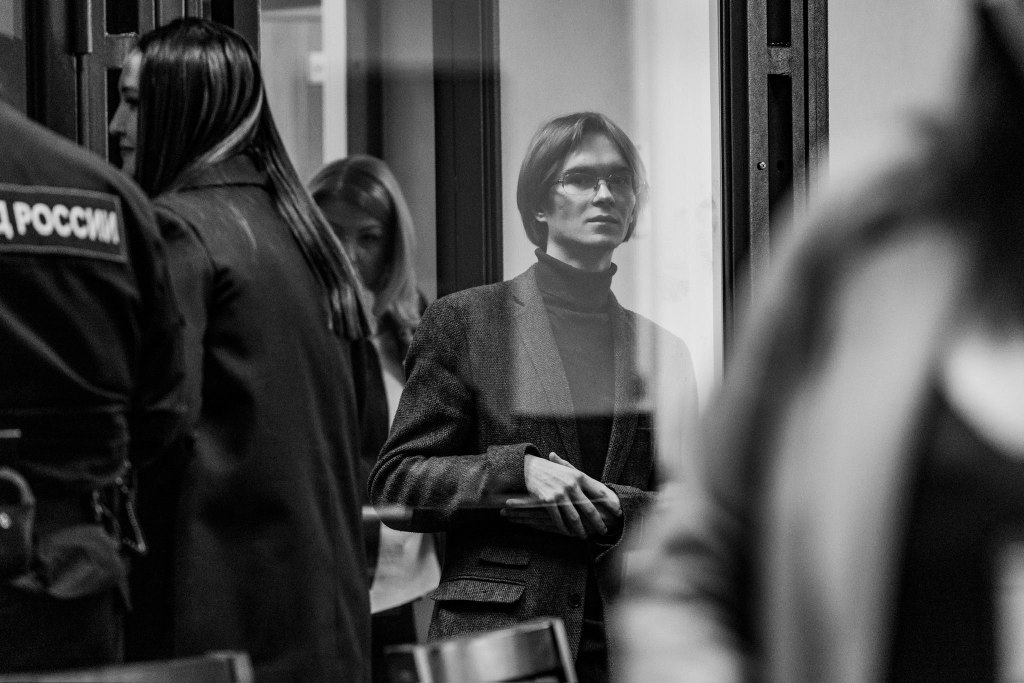
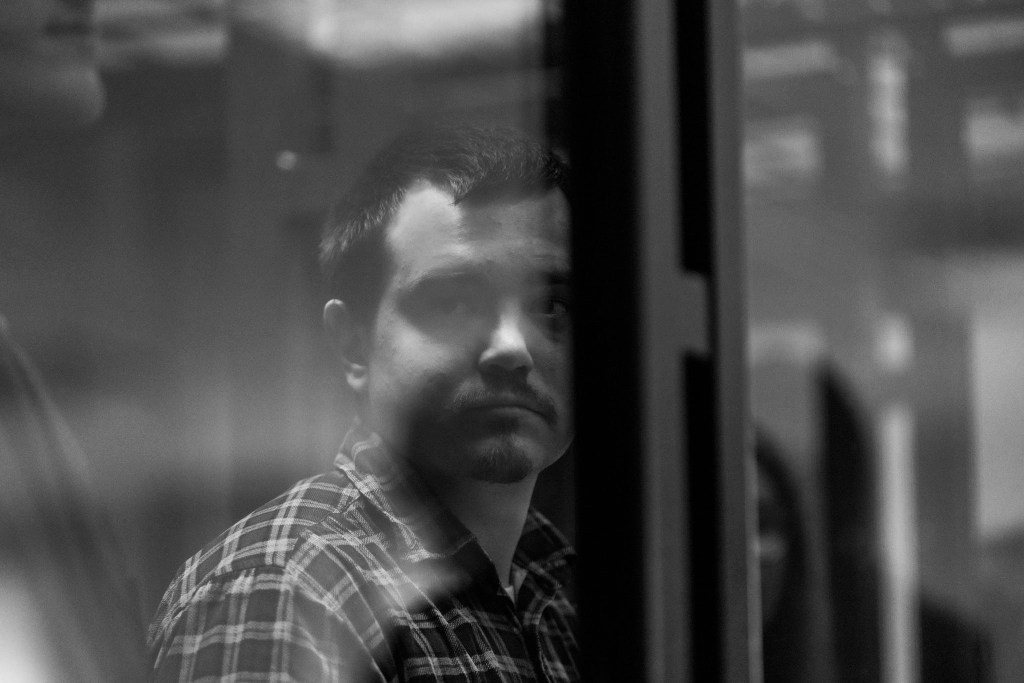
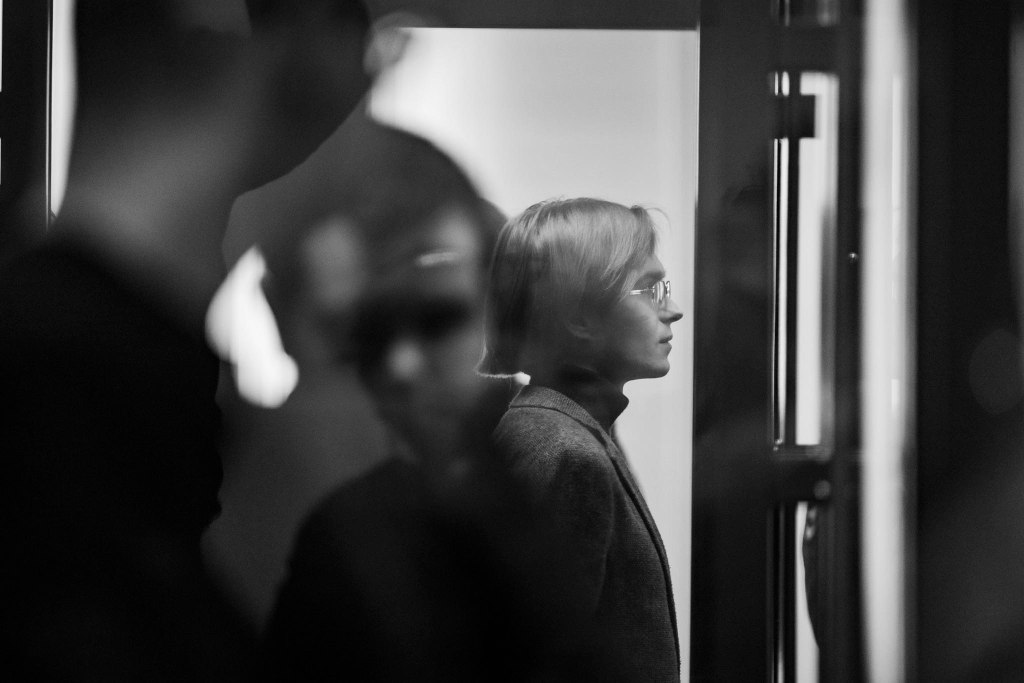
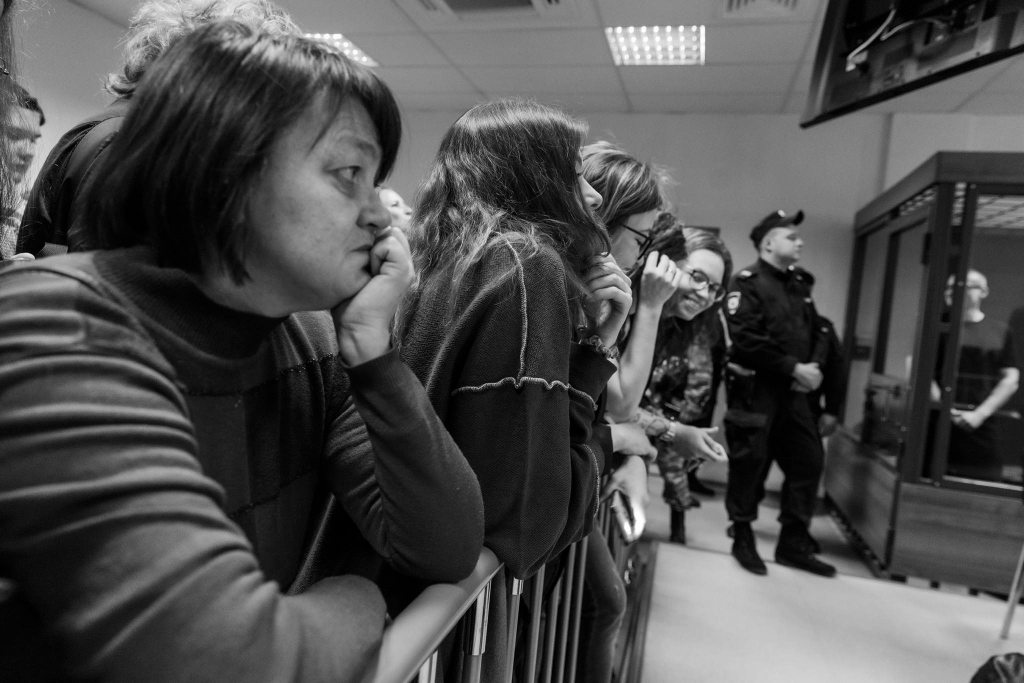
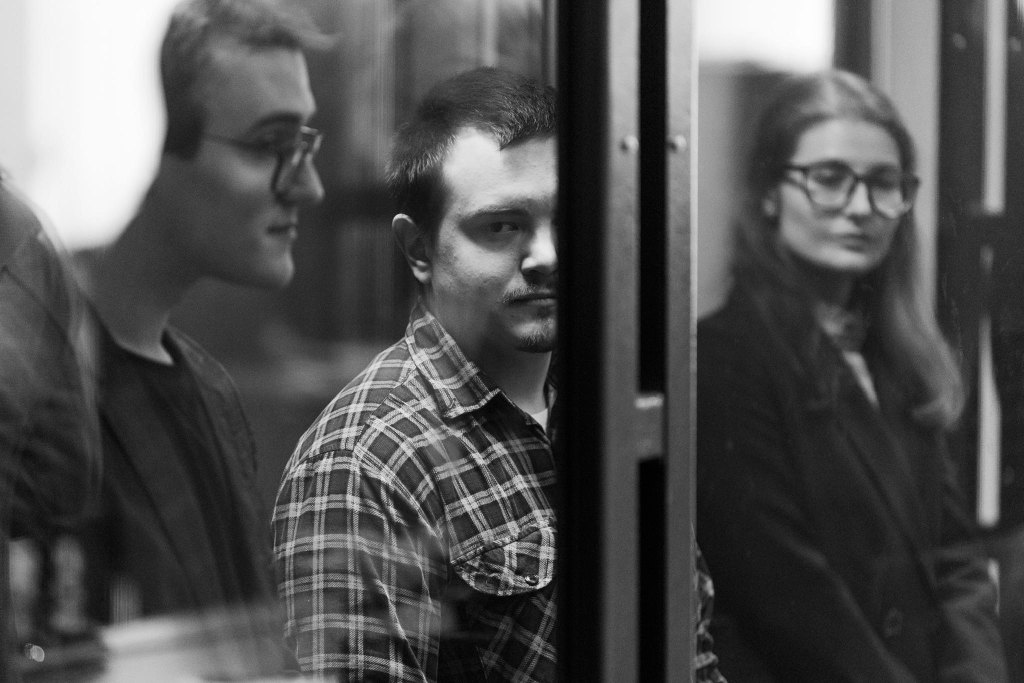
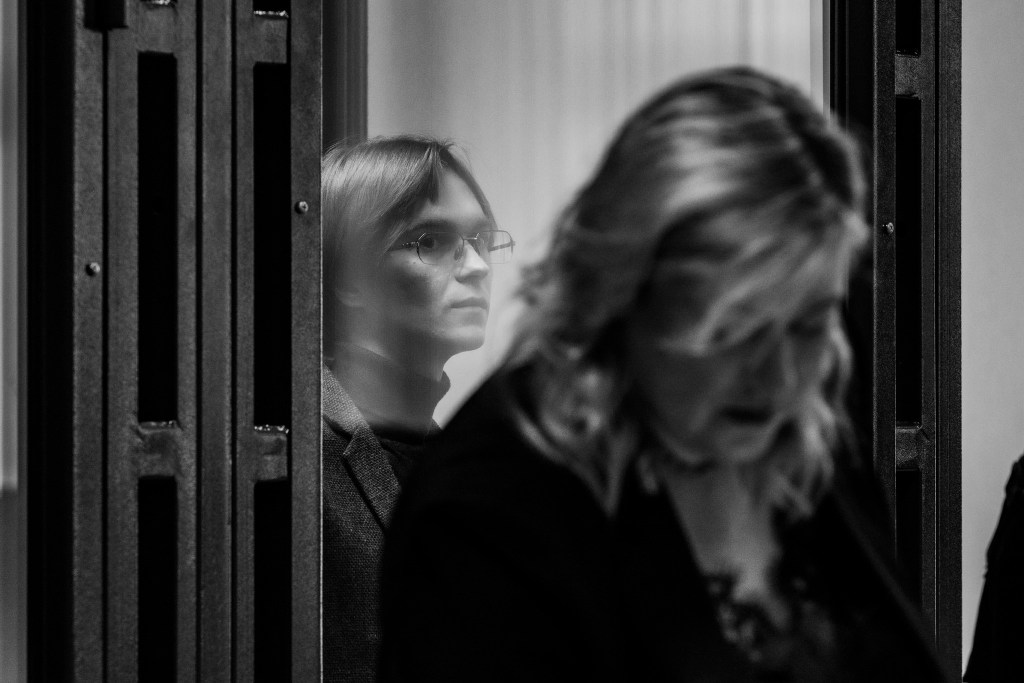
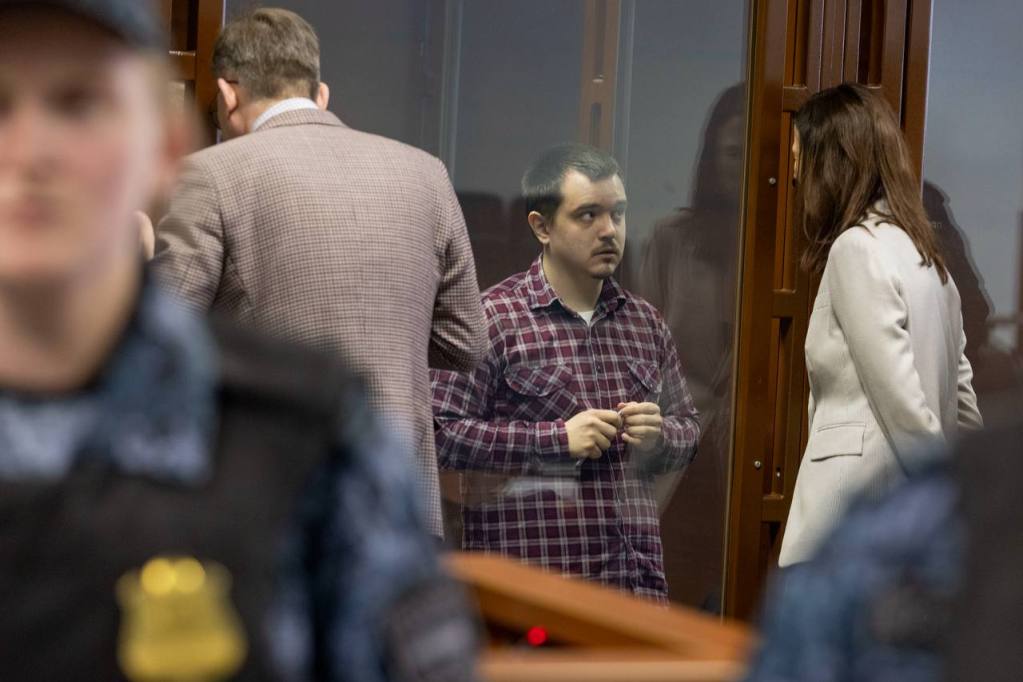
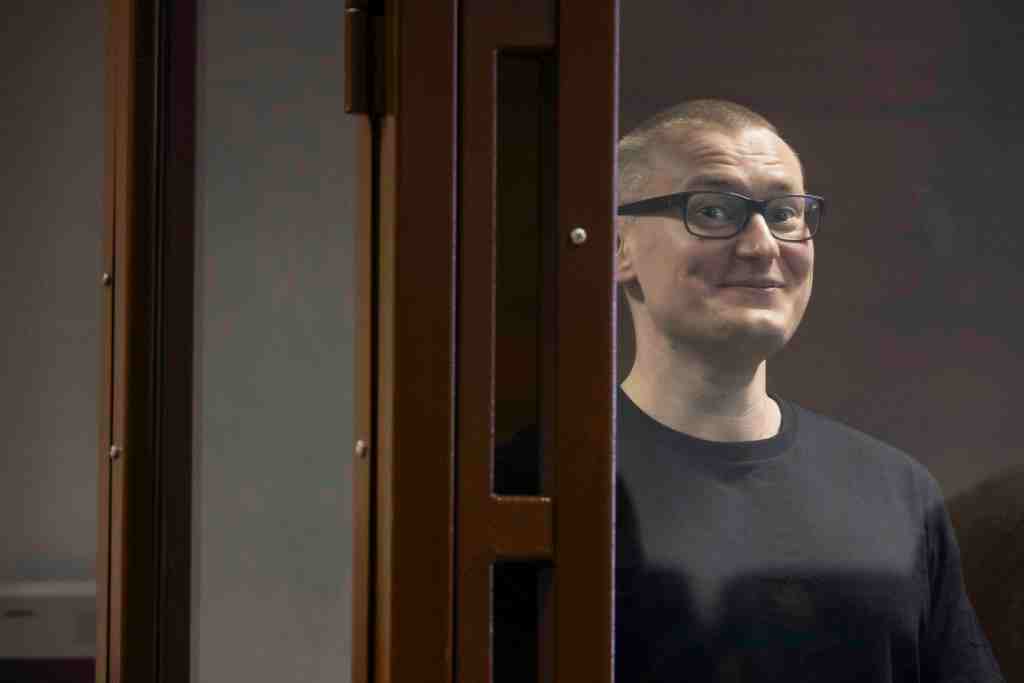
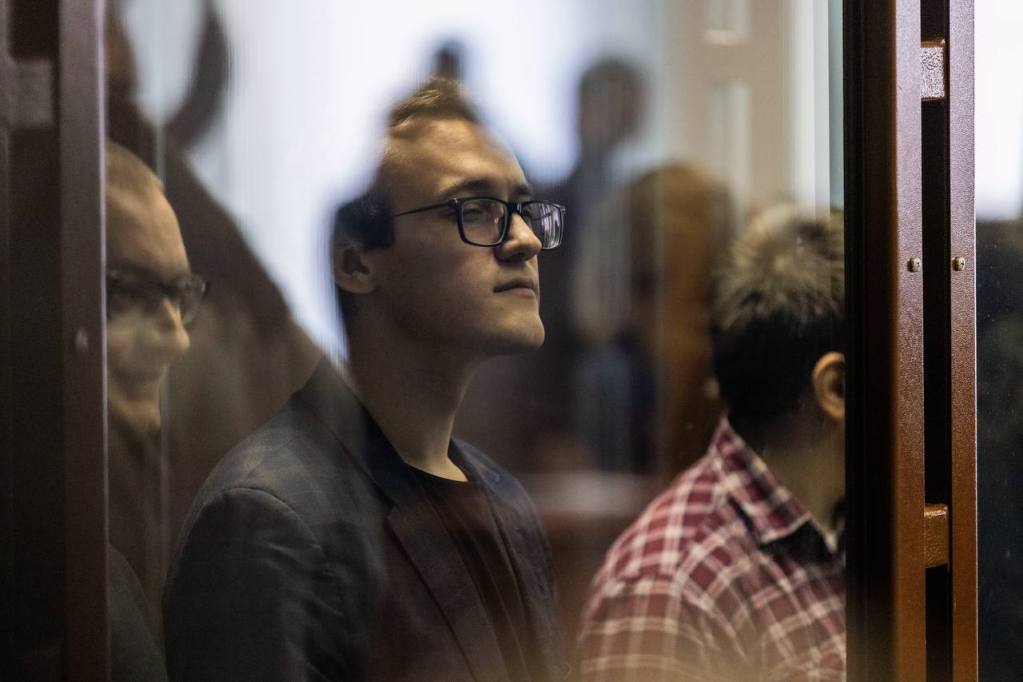
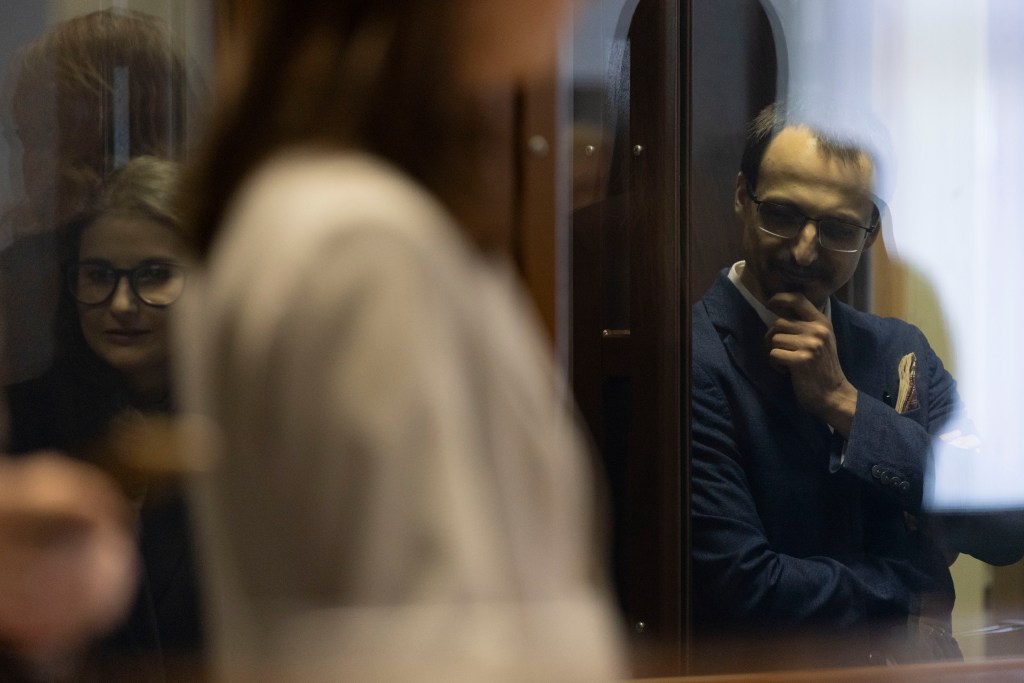
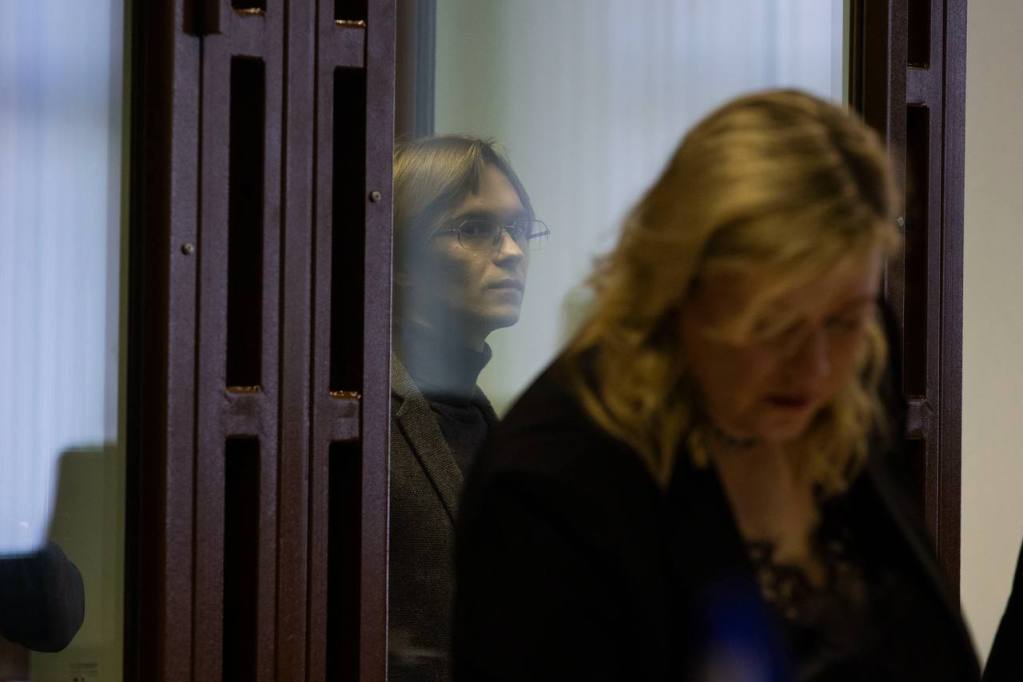
Yevgeny Zateyev and Anna Arkhipova attend a court hearing in the case against the Vesna movement, one of the leading voices of antiwar protest in Russia. A court in St Petersburg sentenced six defendants in the case to prison terms of up to 12 years. (Andrei Bok/ SOPA Images/LightRocket via Getty Images)
Russia’s political prisoners are “outcasts in their own land,” Sergei Dudchenko, a biker tortured and framed by the security services, told his trial judges this month before being handed a seven-year prison sentence.
Those arrested for opposing the war in Ukraine had “fewer rights than a stray dog, and on top of that they bear the humiliating brand of ‘terrorist’ — and all this for their active civic stance.”
Dudchenko and his friend Nikolai Murnev, who received the same sentence, were arrested with others in October 2022 in Stavropol, in southern Russia.
While in detention on minor charges (petty hooliganism and drug possession), they were brutally tortured. A case was put together that they were preparing a “terrorist act” — setting fire to a military recruitment office. Another of the group died in pretrial detention, one fled the country, and one turned state’s witness.
The invasion of Ukraine on February 24, 2022, “split life into before and after, it divided the world into black and white,” Dudchenko told the court.
Russians, Ukrainians, Belarusians, Armenians, Georgians, Azerbaijanis, Kazakhs, Turkmens, Jews, and others had “paid an unimaginable price” to resist Nazism in World War II. How, decades later, could “so much hatred and anger” be directed against Ukraine?
Within days of the invasion, Dudchenko made a solo protest — a motorbike ride with the Ukrainian flag. In court, four years later, he said: “When I sped along, with the banner of the oppressed streaming behind me, past an astonished crowd of militarists, I felt the human in me come into bloom.”
Dudchenko is one of dozens of wartime protesters who have exercised one of the few constitutional rights that remains accessible: to say a “final word” before sentencing.
Some who exercise this right, like Dudchenko, are citizens whose antiwar protest was their first political action. Some, like the powerlifting champion Yulia Lemeshchenko, are Russians who joined the Ukrainian armed forces. She told her trial, in November of last year: “I am not a citizen of the country for which I decided to fight, but for me, Ukraine is home.”
Some are political activists, like Anna Arkhipova, one of six members of the Vesna protest network sentenced at a show trial in St Petersburg last month. “When the war began, it was my conscience that would not let me stand idly by,” she stated.
On Sunday May 17, Try Me For Treason: anti-war protesters’ speeches in Russian courts, an English-language film featuring readings of speeches, will be released on YouTube.
The title comes from a speech by Andrei Trofimov, who is serving ten years for pro-Ukrainian statements on social media — plus three for ending his “final word” to a closed court by saying: “Glory to Ukraine! Putin is a d–khead.”
At the second trial, before getting the three extra years, Trofimov scorned the charges of “discrediting the armed forces” and “justifying terrorism,” and invited prosecutors to charge him for deserting to Ukraine’s side. “Try me for treason. I betrayed your deranged state,” he told the judges.
The fifty-minute documentary was put together on a zero budget by a group of actors in Britain, to make the Russian antiwar movement more visible internationally.
Maya Willcocks, the actor-producer who reads a speech by Darya Kozyreva, said: “These are not well-known political leaders, they are people who have taken a stand against the state. I felt it was very important to have their words translated into English and out there for people to hear — to send the message that occupation is a crime, whether in Palestine or in Ukraine.”
Anthony Aldis, the videographer, said: “What I found compelling about these stories is that the beginning of any fightback is very often when people stand up against an apparently unassailable power.
“These people are not organized. It’s a raw push against something that they don’t believe they can beat, but they think they have to take a stand anyway, in solidarity with someone else who is being attacked and murdered.
“That idea is very important to us in the West, given what we face here in the UK, and in the USA, with the rise of the far right.”
As one of a small group of translators that helped prisoner support groups, I worked on the script, and on the book Voices Against Putin’s Warfrom which it derived.
Having traveled to Russia and Ukraine since Soviet times, I was struck by the political depth and heterogeneity of antiwar protest, even as it is constrained by state terror to individual acts of defiance. Those punished with long sentences range from pacifists who quote Leo Tolstoy to Soviet-era dissidents who ooze contempt for the judges, and Russians who go out of their way to justify Ukraine’s defensive military action.
It would be easy — and stupid — to dismiss the “final words” as atomized cries into a dark, authoritarian night. Rarely are they pleas to judges or government; more often, they are consciously crafted appeals to society.
The “last words” often try to situate those who say them historically. Sergei Dudchenko, born in 1987, said in court that “people like us will always keep emerging, to pick up the fallen banner of good and reason” . . . and recalled the seven protesters arrested on Red Square in 1968 for opposing the Soviet invasion of Czechoslovakia.
Noteworthy, too, is the infrastructure of support for political prisoners, comprising established human rights organizations such as Memorial: Support Political Prisoners, OVD-Info, and Mediazona; newly formed groups such as Fires of Freedom and Solidarity Zone, a website featuring “last words” going back to the 1950s; and Telegram groups caring for individual prisoners.
From California to the Caucasus, dozens of informal groups of Russians in exile gather and write letters to prisoners.
All these organizations support lawyers and activists in Russia who visit prisoners, send parcels, and support relatives — themselves now risky activities.
Bohdan Ziza, who features in our film, has family and friends who know where he is. (He is serving fifteen years for throwing blue and yellow paint, the colors of the Ukrainian flag, as well as a petrol bomb that was quickly extinguished by a security guard, at a municipal council’s office in Crimea.) So do many Crimean Tatar activists victimized by Russia’s racist, Islamophobic crackdown in the peninsula in 2017–19.
But hundreds, possibly thousands of Ukrainians are at unknown locations in Russia’s twenty-first-century gulag.
The Ukrainian government today counts ninety thousand people as “missing”: many are soldiers, imprisoned or killed, but at least sixteen thousand are civilians, according to the Organisation for Security and Cooperation in Europe. Many are victims of abductions, widespread in the territories occupied by Russia. Ukrainian lawyers and human rights activists have compiled a register of more than five thousand “enforced disappearances,” in addition to the widely publicized cases of kidnapped children.
Long prison sentences, imposed with little or no pretense of legal procedure, and savage torture — especially of those suspected of sympathizing with Ukrainian resistance — are ubiquitous in the occupied territories. The indefatigable Kharkiv Human Rights Protection Group’s website reports a stream of life-destroying sentences for peaceful activities deemed dissident.
Doing all we can to provide practical support for political prisoners and engaging with their compelling articulations of their motives is central to international solidarity.
Try Me For Treason premieres on Sunday, May 17. You can sign up to watch it here.
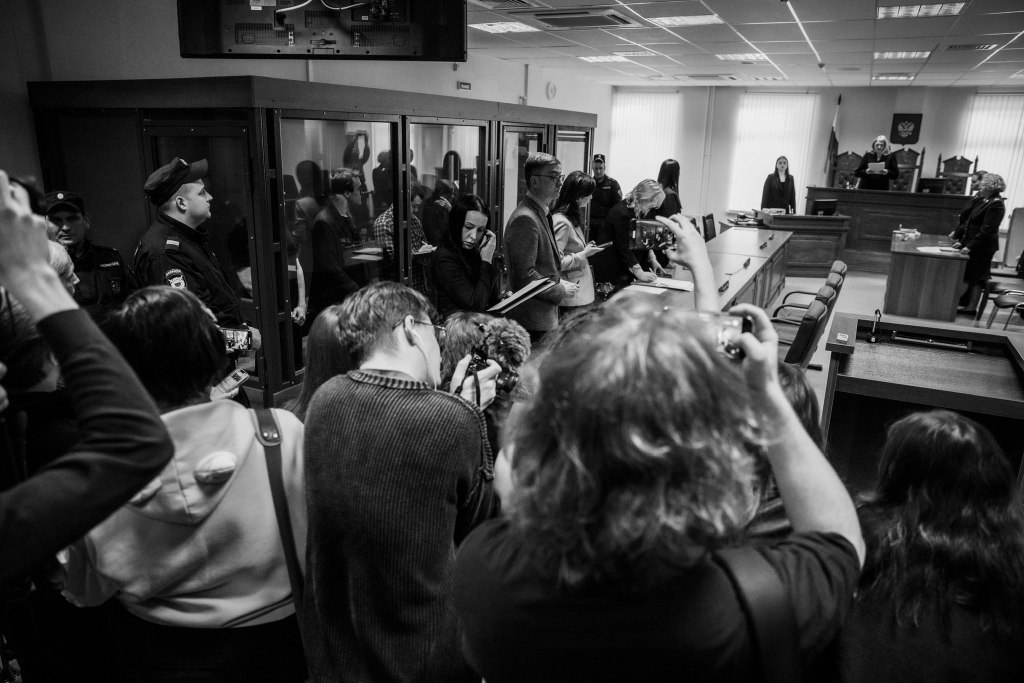
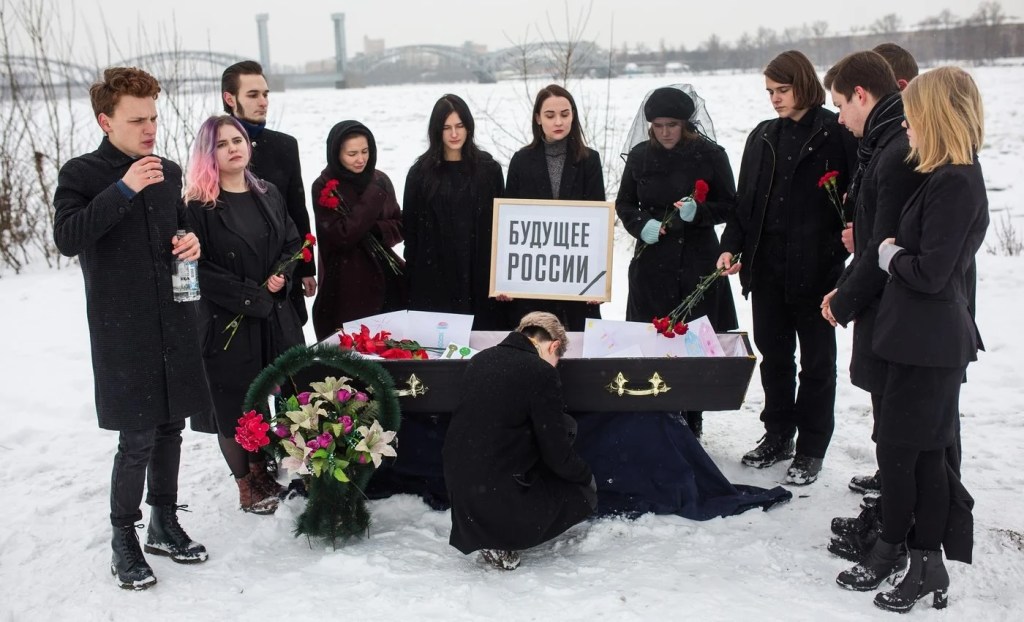
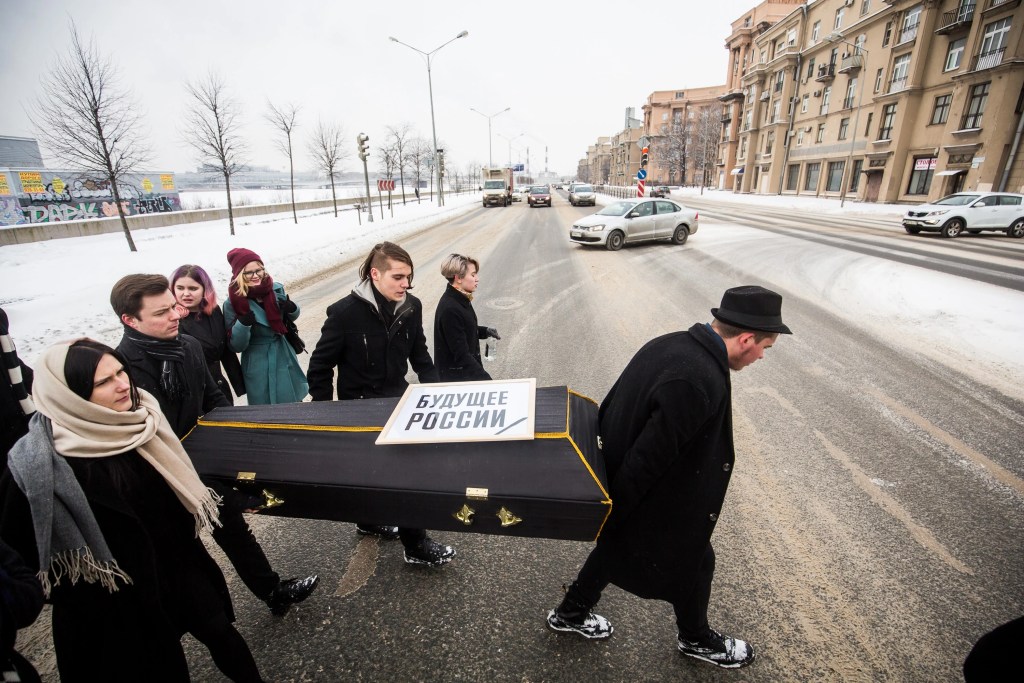
A verdict was handed down in the Vesna case in Petersburg today. In 2018, members of this movement, which Russia designated “extremist” and “hostile” (or something along those lines, “undesirable,” etc.), held a protest: a funeral for Russia’s future. It turned out to be a long process: burying the future, imprisoning spring… Today is a bad day. The activists were convicted and sentenced to extremely long prison terms! The only female defendant, Anna Arkhipova, was sentenced to twelve years in prison; Yan Ksenzhepolsky, to eleven years; Vasily Neustroyev, to ten years; Pavel Sinelnikov, to seven and a half years; Yevgeny Zateyev, to six years and two months. Valentin Khoroshenin was also sentenced to six years and two months in prison despite the fact that he had testified against his comrades while in jail. It didn’t do him any good…. Look at his face today. He is the only one who looks lost to me. The other defendants were calm and dignified.
I may be naive, but I still believe that the future isn’t buried, that spring will come, that the gloom and the cold will simply fade away. It will happen naturally because that’s how the world works, and I believe this especially during Holy Week. “Wind and weather [will] change direction,” and spring will arrive.
I hadn’t taken photos in a courtroom for nearly nine months. Today was tough. I can recall only one case which dragged on longer than the Vesna case—the trial of the twenty-four fighters from the Azov Regiment. My sister Lizka has provided a detailed account of the Vesna case and the young people sentenced today. Give it a listen and/or a read! [See the embedded YouTube video and translation of the Mediazona article below—TRR.]
The natural flow of life suffices to make spring come, but to ensure that the earth hasn’t been depopulated by the time it does come—so that there is someone other than the beasties left to welcome that spring—we must remain human beings: we must know what is going on, empathize, and help out.
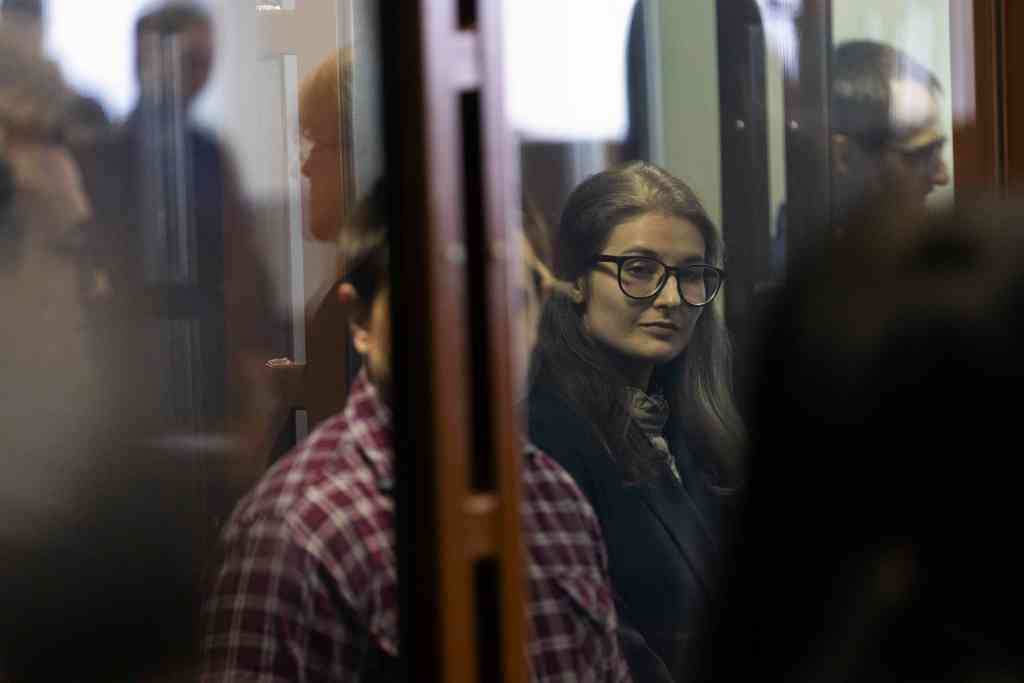
A judge in St. Petersburg on Wednesday sentenced six former members of the democratic youth organization Vesna to prison sentences of varying lengths after they were found guilty of charges including extremism and spreading “war fakes.”
The activists, including one woman and five men, were no longer members of Vesna at the time of their arrests in June 2023.
Vesna, which means spring in Russian, was founded in St. Petersburg in 2013. After the full-scale invasion of Ukraine, it staged anti-war rallies in Russian cities, shortly after which it was designated as an “extremist” organization.
The human rights group Memorial recognized the six former members sentenced to jail on Wednesday as political prisoners.
St. Petersburg’s City Court found all six guilty of organizing an extremist group, mass unrest, disseminating “fakes” about the Russian army, calling for actions that undermine national security and rehabilitating [sic] Nazism.
The longest prison sentence of 12 years was handed to Anna Arkhipova, followed by 11 years for Yan Ksenzhepolsky and 10 years for Vasily Neustroyev.
Pavel Sinelnikov was sentenced to 7.5 years in prison, while Yevgeny Zateyev and Valentin Khoroshenin each received six years and two months.
State prosecutors had requested prison sentences between eight years and 13 years.
The former activists initially pleaded not guilty in October 2024, but last July, Khoroshenin provided a “full confession” and testified against his co-defendants.
Arkhipova later said that Khoroshenin had told her after giving his confession that “what really matters isn’t what actually happened, but how the investigator wrote it up.”
Vesna declined a request for comment when contacted by the Moscow Times.
“Russia’s Future”: a 2018 protest action by Vesna. Photo: David Frenkel/Mediazona
Saint Petersburg City Court has handed down sentences to six former activists in the Vesna movement: Yevgeny Zateyev, Vasily Neustroyev, and Valentin Khoroshenin, of Petersburg; Yan Ksenzhepolsky, of Tver; Anna Arkhipova, of Novosibirsk; and Pavel Sinelnikov, of Barnaul. They were sentenced to stints in prison ranging from six to twelve years. In total, the case involves twenty-one suspects from thirteen regions. One of the defendants unexpectedly testified against his comrades in court. Mediazona offers its readers this brief overview of one of the most wide-ranging and dramatic trials against dissidents in recent years.
The democratic youth movement Vesna came to life with spirited, theatrical street protests in Petersburg over a dozen years ago. It came to an end in 2022 when it was banned, followed by the launching of a criminal case against it, leading to the arrests of some activists, and the exile of others.
“They made up their minds that [Vesna] was something along the lines of [Alexei Navalny’s] Anti-Corruption Foundation, I suppose,” muses one former Vesna member. The young woman asked not to be named, even though she had stepped away from politics before the movement was officially deemed “extremist.” She continues to live in Russia and hopes that the security services will “continue to overlook her.”
The playbooks for dismantling the Anti-Corruption Foundation and Vesna are indeed broadly similar:
The prosecution of Vesna activists began with searches warranted under an obscure criminal law statute concerning the creation of NGOs which infringe on people’s personal and civil rights. Charges of violating this very same statute had also formed the core of the case against the Anti-Corruption Foundation.
As happened with the Anti-Corruption Foundation, the security forces got Vesna designated an “extremist” organization. Following this, any public activity that police investigators deemed as “continuing” the movement’s work, such as posting on its social media, was regarded as a punishable offense.
In both cases, a wave of police searches of activists’ homes swept across various regions of Russia, and this was followed by a series of arrests.
Vesna’s most prominent figures were designated “foreign agents.” Many of them fled Russia and were placed on the wanted list. The security forces then took their revenge on those who remained behind.
The trial of the six Vesna activists in Petersburg had dragged on since the summer of 2024 and been one of the most high-profile political trials in wartime Russia, owing both to the steadfast stance taken by some of the defendants and to the dramatic about-face by others.
Vesna was founded in February 2013. The new movement consisted of approximately fifty activists, many of whom hailed from the Petersburg branch of Youth Yabloko, which had dissolved a short time earlier. The goals Vesna voiced at the time were far removed from radicalism: “increasing the level of political engagement among young people” and “participating in Petersburg’s legislature and local government through elections.”
In their hometown, Vesna’s theatricalized processions and pickets quickly became a familiar fixture on the cultural and political scenes.
In the summer of 2015, Vesna held an anti-war protest on Nevsky Prospekt, [Petersburg’s main thoroughfare]. Five activists stood holding signs that read “Write kind words to Ukraine” and a box where anyone could drop a postcard with words of support for the Ukrainian people.
In May 2016, Vesna marched through the city holding a banner reading “Circus, go away!” Opposition activists had not been permitted to hold May Day marches on Nevsky Prospekt, even though the country’s ruling United Russia party had been granted permission to march down the same route without any issues. In protest, Vesna activists staged an alternative procession in guise of a carnival: a young woman in church vestments with a fake belly demanded a ban on abortions, while another waved a censer by way of blessing a silver “Rogozin 1” rocket. Behind them walked a man with a TV set instead of a head. Someone carried a huge saw with the slogan “I support embezzlement!” Another carried a cello case stuffed with banknotes.
“Russia’s Future”: a 2018 protest action by Vesna. Photo: David Frenkel/Mediazona
In January 2018, Vesna staged a mock funeral for Russia’s future: people dressed in mourning attire and with sorrowful expressions on their faces carried a coffin through the streets, adorned with children’s drawings that symbolized hopes for life in a free, democratic country.
Photo: David Frenkel/Mediazona
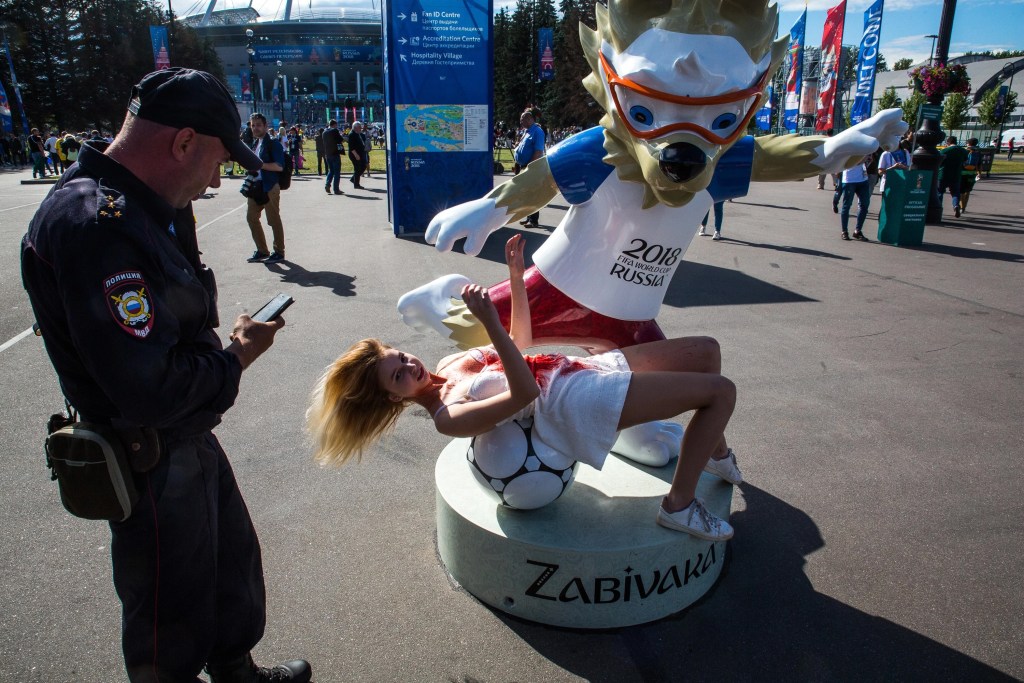
In the summer of 2018, when Russia was hosting the FIFA World Cup, Vesna activists unfurled a banner reading “This World Cup Is Filled with Blood” on Palace Bridge in Petersburg. Vesna timed another protest against [torture in police custody] to coincide with the World Cup—a young woman, doused in red paint, lay down on a pedestal beneath a replica of the tournament’s official mascot, the wolf Zabivaka.
Photo: David Frenkel/Mediazona
The movement grew rapidly. Regional chapters emerged, and by 2018 there were already around a dozen of them. By the late 2010s, Vesna was the most prominent youth organization in the Russian opposition’s ecosystem. No major protest took place without its activists being present. And yet, Vesna activists emphasized their commitment to legal methods of campaigning, as stated in their charter: “The movement pursues its work in accordance with the current laws of the Russian Federation.”
Vesna during the war: the first raids and interrogations
After Russia invaded Ukraine, the price of political dissent in Russia skyrocketed for all opponents of the government, and Vesna activists were no exception. On 3 May 2022, the movement announced the campaign “They Didn’t Fight for This,” calling on dissenters to attend the Immortal Regiment marches on 9 May (WWII Victory Day) but to carry anti-war placards at them.
A few days later, Vesna activists Yevgeny Zateyev and Valentin Khoroshenin, of Petersburg, and Roman Maximov, of Veliky Novgorod, who had already quit the movement, were targeted with searches of their homes. All three men were taken to Moscow for questioning and held in a temporary detention center pending trial.
These were the first steps in the investigation against Vesna activists. It was then that law enforcement authorities launched a criminal case into the setting up of an NGO that infringes on the personal rights of citizens.
The same day, search warrants were executed in Petersburg at the homes of the parents of Bogdan Litvin, Vesna’s federal coordinator, who had already left Russia, and activist Polina Barabash, as well as at the homes of former movement members Alexei Bezrukov and Artem Uimanen. In Moscow, searches were conducted at the homes of Timofei Vaskin, Angelina Roshchupko, Daria Pak, and Ivan Drobotov.
On 10 and 11 May 2022, the court issued restraining orders against Vaskin, Drobotov, Angelina Roshchupko, Maximov, Zateyev, and Khoroshenin, prohibiting them from certain actions. Soon after, Litvin and Drobotov were placed on the wanted list, as they had managed to leave Russia.
This did not stop Vesna, however. In September 2022, the youth activists announced protests against the military mobilization across Russia. Less than a month later, the Justice Ministry added the movement to its list of “foreign agents,” and the Saint Petersburg City Court ruled Vesna an “extremist” organization on 6 December 2022.
The charges and the trial
On 5 June 2023, the Investigative Committee opened a new criminal case, which later came to be known simply as the “big Vesna case.”
Searches were carried out the following day in Barnaul, Novosibirsk, Petersburg, and Tver. Six people were detained and taken to Moscow: Zateyev, Pavel Sinelnikov, Anna Arkhipova, Vasily Neustroyev, Yan Ksenzhepolsky, and Khoroshenin. On 8 June, a Moscow court remanded them to pretrial detention.
During the same pretrial detention hearing, the prosecution listed five charges: organizing and participating in an extremist group, desecrating the memory of defenders of the Fatherland, spreading “fake news” about the army, and calling for actions contrary to national security.
A year later, when the Saint Petersburg City Court began hearing the case against the six activists on its merits, there were seven charges. Incitement to mass unrest and the creation of an NGO infringing on citizens’ rights (the very same charge under which the activists’ homes had initially been searched in 2022) had been added to the bill of particulars.
The investigation assigned the role of leader and ideological instigator to Vesna’s federal coordinator Bogdan Litvin, who had managed to flee the country. According to law enforcement officials, it was Litvin who had driven the movement toward “extremism.”
Most of the charges were related to posts on Vesna’s social media accounts. Entered into the recorded were ninety posts made in Vesna’s name at various times on various platforms. When presenting evidence in court, the prosecution primarily read these posts aloud, listed the names of Telegram channels, cited viewer statistics, and read out the comments.
The indictment placed particular emphasis on a comment posted by a user known as “Kanoki Nagato,” on 1 May 2022. On one of Vesna’s Telegram channels, he suggested that Russians would one day start “killing the pigs, just like the Ukrainians did at Maidan.” According to the prosecution, the appearance of such a comment proved that Vesna was inciting dangerous actions. None of the defendants knows who “Kanoki Nagato” is, and law enforcement officials have not been able to identify this person either.
They did examine the personal accounts of the six defendants, however. Some of their Instagram accounts were found to be private. Speaking in court, the prosecutor called this “an attempt to conceal information from the investigation.”
When the prosecution presented its evidence in court, some of the hearings were held in closed session at the prosecutor’s office’s request, and members of the public and journalists were not allowed in the courtroom. Those involved in the proceedings are not permitted to disclose what they heard behind closed doors, but it is known that during at least some of these sessions, the court examined the results of intelligence operations—a term used in the Code of Criminal Procedure to refer, among other things, to wiretapping, undercover operations, and the interception and vetting of correspondence.
When it was the defense attorneys’ turn to present evidence, Arkhipova’s support group issued a public appeal: “The defense now urgently needs witnesses—people who actually took part in peaceful anti-war protests between February and May 2022 and have already suffered administrative penalties for doing so.”
Witnesses who responded to this post testified in court.
“To my mind, every citizen took to the streets out of a sense of duty and conscience. It was an entirely peaceful demonstration,” said one of them.
Another witness recounted that she was detained at an Immortal Regiment rally while holding up a portrait of her great-grandfather, and an administrative charge was filed against her for “discrediting” the army.
“I came out of my own free will. I’d participated in Immortal Regiment rallies before as well. At the time I made my decision, I hadn’t seen any notices on Telegram channels,” she explained.
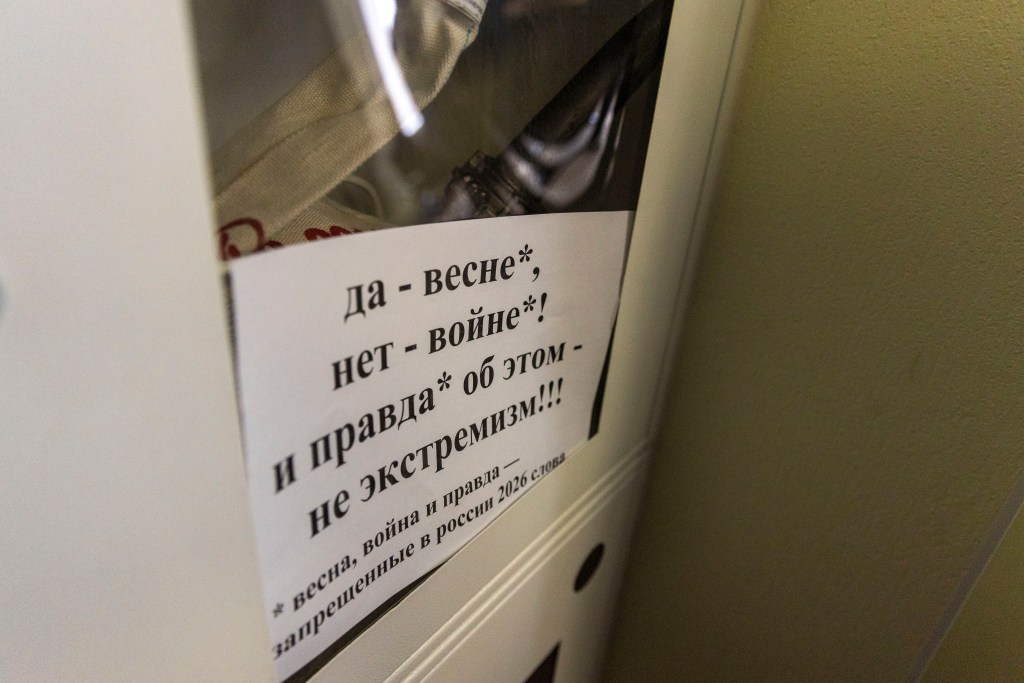
A placard hung in the courthouse on the day the verdict in the Vesna trial was read out: “Yes to Vesna,* / No to war*! / And the truth* about them / is not extremism. / *Vesna, war, and truth are words forbidden in Russia in 2026.” Photo: Mediazona
At nearly every hearing in the trial, the defense insisted that the prosecution had no evidence that the accused activists were involved in posting most of the messages mentioned in the case file. Moreover, some of the defendants not only did not know each other prior to their arrest, but were also not members of Vesna at the time it was classified as an “extremist” organization.
Who’s who in the Vesna case
Yevgeny Zateyev. Photo: Mediazona
Yevgeny Zateyev, 24 years old
A resident of Petersburg, Zateyev was charged with violating Article 354.1.4 (“condoning Nazism”) and Article 282.1.1 (“establishing an extremist community”) of the Russian Federal Criminal Code. The charge that he had violated Article 239.2 (“organizing an association that infringes on the personhood and rights of citizens”) was dropped due to the statute of limitations. The prosecutor asked the court to sentence Zateyev to ten years in a penal colony. The actual sentence was six years and two months.
Zateyev served as the press secretary for the Vesna movement’s Petersburg branch. In court, he insisted that his duties were limited to local topics: news about life in Petersburg, announcements of lectures, and film screenings.
He viewed the outbreak of the war as a “personal tragedy.”
“Vesna tried to prevent further destruction and loss of life on both sides of the border—among both civilians and military personnel—through peaceful means. I still regard this goal in an entirely positive light,” Zateyev said in court.
He was one of the first Vesna activists to face criminal charges in the spring of 2022. Some of his comrades left Russia, but Zateyev stayed behind and wound up in a pretrial detention center a year later.
In the summer of 2023, Zateyev wrote a letter from jail explaining why he had decided against fleeing the country.
“I made a very difficult and very painful choice. Was it a painful choice? Of course it was. I find it hard to imagine, though, how I could have left everything behind, gone away, and watched as my friends and acquaintances were imprisoned. This choice was easy for some, but I don’t judge them.”
In the same letter, Zateyev asked that his family not be judged for failing to “change [his] mind.”
In November 2023, Zateyev partially admitted his guilt in the hope of having his pretrial detention conditions eased. He was concerned about his family, especially his grandmother, who was seventy-seven years old at the time of his arrest. Zateyev was not released from pretrial detention, and so he withdrew his confession.
In January 2024, Zateyev’s grandmother died. Four months later, his mother also died, from cirrhosis of the liver.
Zateyev’s pretrial detention was extended once again shortly thereafter. Addressing the court, he mentioned the deaths of his loved ones. Judge Irina Furmanova interrupted him.
“Please do not try to pressure the court by bringing up the deaths of your relatives.”
“I am not putting any pressure on the court. I am simply stating the facts of my life.”
“We are familiar with them. You can merely note what you’ve been through. There’s no need to pressure us like that.”
“Your Honor, pressure—”
“Everyone has, or some people no longer have, a mother. There’s no need to pressure us in that regard. I’ll say it again. Let’s continue.”
In his closing statement, Zateyev said that he was forgiving the investigators, prosecutors, and judges.
“I caution against the false belief that forgiveness absolves one of responsibility. It does not. I do believe, however, that through forgiveness, we can understand the reasons behind what is happening—why and for what purpose. By ridding ourselves of an age-old evil, learning to treat one another with understanding, we can finally find love. I believe that this is possible and even inevitable in Russia. Spring [vesna] is inevitable. The season, of course. What did you think I meant?”
Mailing address for letters:
Russia 196655 St. Petersburg, Kolpino Kolpinskaya St., d. 9, str. 1 Pretrial Detention Center No. 1 Federal Penitentiary Service of Russia for St. Petersburg and the Leningrad Region Yevgeny Artemovich Zateyev, born 2001
Bank card number for donations: 2200 7009 1119 8470
Anna Arkhipova. Photo: Mediazona
Anna Arkhipova, 28 years old
A resident of Novosibirsk, Arkhipova was charged with violating Articles 282.1.1 and 282.1.2 (“organizing an extremist community”), Article 354.1.4 (“condoning Nazism”), Article 280.4.3 (“discrediting the Russian armed forces”), Article 212.1.1 (“repeatedly violating the law on public assemblies”), and Articles 207.3.2.b and 207.3.2.e (“disseminating knowingly false information about the Russian armed forces”) of the Russian Federal Criminal Code. The charge that she had violated Article 239.3 (“organizing an association that infringes on the personhood and rights of citizens”) was dropped due to the statute of limitations. The prosecutor asked the court to sentence Arkhipova to thirteen years in prison. The judge sentenced her to twelve years in prison instead.
Arkhipova joined Vesna in February 2021 to “take a civic stand, engage in publicly vital work, and meet new people.” She wrote posts for the movement’s social media accounts but quickly grew tired of “conflicts within the group” and left in May 2022.
Once the war in Ukraine had kicked off, Vesna’s work became “random and certainly not organized,” according to Arkhipova.
“Everything happened naturally,” Arkhipova said in court. “I felt the need to protest the war, as I regarded it and continue to regard it as a great catastrophe and tragedy. That is why I took part in a street protest in Novosibirsk on 24 February 2022.”
Of the ninety posts listed in the criminal indictment, she wrote one.
“I was involved in the publication dated 29 April 2022, [as charged] under Article 207.3, but I find it difficult to say exactly what role I played. [The text] was discussed at great length, and I didn’t really want to have anything to do with it at all. Either I acted as the author, after which it was heavily edited, or another person was the author, after which I heavily edited it,” the young woman explained in court.
Arkhipova’s support group runs a Telegram channel where her letters to the outside world are posted sometimes. In the “Cell Librarian” section, she talks about the books she has read in pretrial detention.
She also writes about the health problems typically experienced by prisoners. Due to poor nutrition, all women in the detention center lose their hair, and even a simple cold is dangerous.
“The worst part is that you’re not permitted to make your bed during the day, so you’re freezing and shivering, and all you have to cover yourself with is a towel. Illnesses are illnesses, but we still have to follow the prison rules!”
Arkhipova is a vegan. It is difficult to follow this diet in pretrial detention. She is very dependent on care packages, which arrive with considerable delays. Her support group secured permission to send her plant-based milk substitutes, but the detention center declined to accept them, stating, “We don’t even allow dairy products for mothers with children.”
“My motivation is simple: I oppose the war. I want a better future for Russia. I have tried to act on my conscience all my life, even though I haven’t always succeeded. When the war began, it was my conscience that wouldn’t let me stand idly by. People on both sides of the border deserve peace: soldiers should be with their families, not in foxholes, and those who were killed should have lived. I feel the same pain for everyone, regardless of their uniform,” said Arkhipova in her closing statement.
Mailing address for letters:
Russia 195009 St. Petersburg 11 Arsenalnaya St. Pretrial Detention Center No. 5 Federal Penitentiary Service of Russia for St. Petersburg and the Leningrad Region Anna Nikolayevna Arkhipova, born 1997
Bank account numbers for donations: 2200 7008 6021 1167 (T-Bank) • 2202 2071 9921 3904 (Sberbank)
You can follow the latest news on the Telegram channel of Arkhipova’s support group.
Vasily Neustroyev. Photo: Mediazona
Vasily Neustroyev, 30 years old
A resident of Petersburg, Vasily Neustroyev was charged with violating Article 280.4.3 (“publicly threatening national security”), Article 212.1.1 (“repeatedly violating the law on public assemblies”), Article 354.1.4 (“condoning Nazism”), Article 282.1.1 (“organizing an extremist community”) and Articles 207.3.2.b and 207.3.2.e (“disseminating knowingly false information about the Russian armed forces”) of the Russian Federal Criminal Code. The charge that Neustroyev had violated Article 239.2 (“organizing an association that infringes on the personhood and rights of citizens”) was dropped due to the statute of limitations. The prosecution asked the court to sentence Neustroyev to twelve years in prison, but the judge sentenced him to ten years instead.
According to the prosecution, Neustroyev was on Vesna’s federal audit commission and was one of its leaders. Neustroyev himself stated in court that he did not make any decisions within the movement. He did not even have access to social media and could not have published any of the posts ascribed to him. He met most of his “accomplices” only after his arrest. Before his arrest, he was acquainted only with Khoroshenin and Maximov, and knew Zateyev only by sight.
When asked about Litvin—whom investigators consider the leader of Vesna and under whose influence the movement allegedly turned into an “extremist organization”—Neustroyev laughed and said that the main topic of their conversations had been cats.
“Since the autumn of 2018, we’ve been the owners of cats—brothers from the same litter, which we got from the same source,” Neustroyev explained. “Since then, Bogdan Gennadyevich has left his cat with me to look after two or three times. You could say that we became something like in-laws through the cats. The cats were the main topic of our conversations in the years leading up to my arrest.”
The Petersburger did not renounce his anti-war views in court.
“I consider the actions of Vladimir Vladimirovich Putin not only a crime against both Ukraine and Russia in equal measure, but also a great folly.”
And yet, Neustroyev “remained skeptical of mass street protests.” He was a member of Petersburg Yabloko’s council and was heavily involved in elections work for a long time. He coordinated election monitoring, and since 2020 had been a voting member of one of the city’s Territorial Election Commissions.
In a letter from the detention center, Neustroev voiced deep regret that he had not yet managed to finish his university education. He had just resumed his studies before his arrest, and if not for the criminal case, he might already have a degree.
“Nevertheless, I still plan to eventually obtain a formal tertiary degree and put this source of anxiety behind me.”
He spoke about Russia in his closing statement.
“Russia is strong. Russia will survive all tyrants and dictators, just as it has done before. I know that Russia will be peaceful, Russia will be happy, Russia will be free. And all of us will be peaceful, happy, and free along with her.”
Mailing address for letters:
Russia 196655 St. Petersburg, Kolpino Kolpinskaya St., d. 9, str. 1 Pretrial Detention Center No. 1 Federal Penitentiary Service of Russia for St. Petersburg and the Leningrad Region Vasily Petrovich Neustroyev, born 1995
You can follow the latest news on the Telegram channel of Neustroyev’s support group.
Pavel Sinelnikov. Photo: Mediazona
Pavel Sinelnikov, 24 years old
A resident of Barnaul, Pavel Sinelnikov was charged with violating Articles 282.1.1 and 282.1.2 (“organizing and participating in an extremist community”) of the Russian Federal Criminal Code. The prosecution had asked the court to send him down for ten years, but instead the judge sentenced to him to seven and a half years in prison.
Sinelnikov served as Vesna’s executive secretary for several months but left the movement in 2021, long before it had been designated “extremist.”
“The work isn’t hard: you just sit there and write. But taking all those minutes is time-consuming and quite boring. So I really feel for the court clerk,” Sinelnikov explained in court.
He was baffled how the same person could be accused of both establishing an “extremist community” and participating in it, and he made no secret of the fact that the arrest had come as a shock to him.
“I didn’t expect at all that some police investigators would actually fly all the way from Moscow to Barnaul just to get me. As far as I’m concerned, the police search itself is a form of intense coercion, especially the way it’s done. They force their way into your life while yelling and shouting, don’t even let you get dressed, push you face-down on the floor, and then turn everything upside down while cracking high-school-level jokes,” Sinelnikov recalled.
He confessed immediately after his arrest, but later recanted his testimony.
“You can’t take away people’s opinions, but it’s easy to take away their freedom of speech. That’s what happened to me, even though I’m just a binnocent eyestander.”
In court, Sinelnikov explained that he had been fascinated by science and maths at school. He often traveled to academic competitions, and became interested in politics during one such trip to Moscow. He described himself as an introvert and a loner, and his mother even called her son a “slacker” in court.
“Well, Mom knows best,” Sinelnikov replied.
Sinelnikov began his closing statement by admitting that he didn’t really have much to say. But then he called the charges politically motivated and the trial “abhorrent.”
“There was no criminal extremist group. No one planned any crimes, no socially dangerous actions were committed, and there were no socially dangerous consequences either. No harm was done either to society or the public interest. We didn’t even have any motives for or intentions of doing so. Do I deserve ten years in prison for that?”
Mailing address for letters:
Russia 196655 St. Petersburg, Kolpino Kolpinskaya St., d. 9, str. 1 Pretrial Detention Center No. 1 Federal Penitentiary Service of Russia for St. Petersburg and the Leningrad Region Pavel Nikolayevich Sinelnikov, born 2001
Bank account number for donations: 2200 7019 7373 4749
You can follow the latest news on the Telegram channel of Sinelnikov’s support group.
Yan Ksenzhepolsky. Photo: Mediazona
Yan Ksenzhepolsky, 25 years old
A resident of Tver, Yan Ksenzhepolsky was charged with violating Article 280.4.3 (“discrediting the Russian armed forces”), Article 212.1.1 (“repeatedly violating the law on public assemblies”), Article 354.1.4 (“condoning Nazism”), Article 282.1.1 (“organizing an extremist community”), and Articles 207.3.2.b and 207.3.2.e (“disseminating knowingly false information about the Russian armed forces”) of the Russian Federal Criminal Code. The charge that he had violated Article 239.2 (“organizing an association that infringes on the personhood and rights of citizens”) was dropped due to the statute of limitations. The prosecution had asked the court to send him down for twelve years, but instead the judge sentenced to him to eleven years in prison.
Ksenzhepolsky joined Vesna’s federal coordinating council in August 2021. According to him, by October–November of that year his involvement in the council had become “nominal” due to his work commitments. He was employed as a welding production specialist at the National Welding Control Agency and served as an aide to a deputy in the Tver Regional Legislative Assembly.
“I realized that the Vesna movement made a lot of noise but didn’t accomplish anything tangible,” Ksenzhepolsky said in court. “Meanwhile, I was involved in real institutional politics at the Legislative Assembly and could actually influence things—or at least try to.”
On paper, however, Ksenzhepolsky remained a member of Vesna until the summer of 2022.
Ksenzhepolsky is accused of posting on the movement’s Telegram channels, although, according to him, he had access to only one of them, “Tver Vesna,” which had sixteen subscribers. He handed over the password to the new administrator in November 2021, when he left the organization.
In court, Ksenzepolsky reiterated that he believes street protests in Russia are ineffective.
“I believe these actions are completely pointless and do more harm than good.”
In September 2022, when Russia announced a military mobilization, Ksenzhepolsky, according to his own testimony, was on holiday in Georgia but returned home—after Vesna had been declared an “extremist” organization.
“In any case, I know that we will ultimately be vindicated in the eyes of society, history, and the Last Judgment. After all, everything was forever, until it was no more. This regime will come to an end too, and within our lifetimes, something tells me. If not, then the Kingdom of Heaven is not a bad consolation prize,” said Ksenzhepolsky in his closing statement.
Mailing address for letters:
Russia 196655 St. Petersburg, Kolpino Kolpinskaya St., d. 9, str. 1 Pretrial Detention Center No. 1 Federal Penitentiary Service of Russia for St. Petersburg and the Leningrad Region Yan Alexandrovich Ksenzhepolsky, born 2000
Bank account number for donations: 2200 2479 5715 1401
You can follow the latest news on the Telegram channel of Ksenzhepolsky’s support group.
Valentin Khoroshenin. Photo: Mediazona
Valentin Khoroshenin, 24 years old
A resident of Petersburg, Khoroshenin was charged with violating Article 212.1.1 (“repeatedly violating the law on public assemblies”) and Article 354.1.4 (“condoning Nazism”) of the Russian Federal Criminal Code. The charge that he had violated Article 239.2 of the Criminal Code was dropped due to the statute of limitations. The prosecution asked the court to send Khoroshenin to prison for eight years, but he was sentenced to six years and two months behind bars.
A co-founder of the now-shuttered Fogel lecture bar in Petersburg, Khoroshenin was the sole defendant who not only pleaded guilty to the charges but also testified against the other defendants in the case and many other Vesna activists.
The names mentioned by Valentin Khoroshenin in his testimony: Vladimir Arzhanov, Yekaterina Alexandrova, Makar Andreyev, Nikolai Artemenko, Anna Arkhipova, Yekaterina Bushkova, Alexander Vereshchagin, Yekaterina Goncharova, Timofei Gorodilov, Anastasia Gof, Lev Gyammer, Semyon Yerkin, Yevgeny Zateyev, Semyon Zakhariev, Anastasia Kadetova, Vladimir Kazachenko, Alexander Kashevarov, Gleb Kondratyev, Semyon Kochkin, Yan Ksenzhepolsky, Ilya Kursov, Maria Lakhina, Nikita Levkin, Bogdan Litvin, Andrei Lozitsky, Alexandra Lukyanenko, Yelizaveta Lyubavina (Sofya Manevich), Ilya Lyubimov, Timofei Martynchenko, Daria Mernenko, Anzhelika Mustafina, Anna Nazarova, Vasily Neustroyev, Maxim Potemkin, Konstantin Pokhilchuk, Kira Pushkareva, Lilia Safronova, Pavel Sinelnikov, Yevgenia Fedotova, Anastasia Filippova, Artur Kharitonov, Alexei Shvarts
Khoroshenin’s testimony came as a surprise to everyone in court. He requested that the testimony be heard in closed session and asked that the public and the press be removed from the courtroom, but the judge turned down his request.
Khoroshenin did not merely agree with the charge of “extremism.” He called Vesna “a sort of incubator for Navalny.” His testimony suggested that the movement’s branches were directly linked to the opposition politician’s field offices, where distinguished young activists would then “move up the ranks.” Khoroshenin mentioned the “grant support” that Vesna received, including from “undesirable organizations,” and complained that rank-and-file activists “spent the night in a back room, while Litvin bought himself a new apartment.”
“We systematically violated the law. We held protests and placed ourselves above the law. There were also slogans about undermining the country’s defense capabilities and justifying the use of violence. We organized events that violated existing laws but looked good on the surface,” Khoroshenin said in court.
“I have always believed that everything I am involved in should bring something positive to people. The Vesna movement was perhaps the only exception to this rule,” he argued, adding that he no longer supports any of the points in Vesna’s platform except for the one regarding support for “family and motherhood.”
Toward the end of his court testimony, Khoroshenin urged the other defendants to plead guilty—“to change their stance on the charges against them and set aside ideological pretense.”
“Don’t dig your own graves, colleagues!” he said.
In a letter from the detention center, Anna Arkhipova later quoted the words Khoroshenin had spoken after the hearing: “What really matters isn’t what actually happened, but how the investigator wrote it up.”
In his final statement, Khoroshenin lamented that his former comrades in Vesna had made him look like “some kind of Luntik,” once again acknowledged his guilt, asked for forgiveness “from society and especially from his family,” and voiced his hope that the court would allow him “to return to a normal life for constructive self-realization for the benefit of society.”
Mailing address for letters:
Russia 196655 St. Petersburg, Kolpino Kolpinskaya St., d. 9, str. 1 Pretrial Detention Center No. 1 Federal Penitentiary Service of Russia for St. Petersburg and the Leningrad Region Valentin Alexeyevich Khoroshenin, born 2001
Bank account number for donations: 4476 2461 7307 7443
You can follow the latest news on the Telegram channel of Khoroshenin’s support group.