Judging Them by How They Look

A Russian National Guard serviceman checks residency documents during a raid outside the Apraksin Dvor clothing market, in St. Petersburg, Russia, Friday, July 4, 2025. (AP Photo/File)

The immigrant worker from Uzbekistan entered the bank in Moscow, but when he reached the teller, she refused to serve him and she wouldn’t say why.

For him and others from impoverished countries across Central Asia who seek better lives in Russia, such hostility is woven into everyday life. Sometimes it bursts into outright violence.

“Mostly you notice it when you go to the hospital, a clinic, a government office: You stand in line and everyone shoots you dirty looks,” said the man, who spoke to the Associated Press on condition of anonymity because he feared repercussions.

Such xenophobia clashes with economic realities at a time when Russia has a labor shortage, primarily due to its war in Ukraine. In the first quarter of 2025, over 20% of Russian businesses said they were hindered by a lack of workers, according to the Central Bank. 

But rather than welcoming laborers, Russian officials are fomenting anti-migrant sentiment and increasing restrictions on immigrants, which the government says number 6.1 million, but is probably higher. The government is tracking their movement, clamping down on their employment and impeding their children’s rights to education.

A massacre and a backlash

The continued crackdown comes as a trial began this month for four Tajik nationals who are accused of the shooting and arson attack at a Moscow concert hall in March 2024 that killed 149 people. The four were arrested within hours of the attack and appeared in court with signs of being severely beaten. An Islamic State group claimed responsibility but Russia sought to blame Ukraine for the bloodshed.

Anti-migrant rhetoric had been growing in Russia since the early 2020s. But the massacre in particular launched a wave of “terrible violence” against immigrants, said lawyer Valentina Chupik, who has worked with the immigrant community for over 20 years. In the eight days after the killings, she received 700 reports of injuries to immigrants, including “faces smashed against the doors of police stations,” she said.

Parliament speaker Vyacheslav Volodin captured the public mood after the massacre, saying “migration control is extremely important” to ensure foreign nationals carrying out “illegal activity” could be deported without a court order.

The violence drew concern from human rights groups.

“Central Asian migrants seeking work in Russia due to dire economic conditions in their countries of origin today face ethnic profiling, arbitrary arrests, and other harassment by police in Russia,” Human Rights Watch said in a report on the anniversary of the attack.

“The heinous massacre cannot justify massive rights abuses against Central Asian migrants in Russia,” said its author, Syinat Sultanalieva.

Raids, roundups and restrictions

While some violence has subsided, it hasn’t disappeared. In April, police raided a Kyrgyz-run bathhouse in Moscow with video showing masked men forcing half-naked bathers to crawl across the floor and deliberately stepping on them before covering the lens of a security camera.

Police also reportedly rounded up immigrants in raids on warehouses, construction sites and mosques, then coerced them into joining the military to fight in Ukraine. Some are threatened with having their residency documents withheld, while others are recently naturalized citizens who failed to register for military service. In such cases, serving in the military is presented as the only alternative to prison or deportation. For others, a fast track to Russian citizenship is offered as an incentive for enlisting.

Speaking in St. Petersburg in May, Alexander Bastrykin, head of Russia’s Investigative Committee, said “20,000 ‘young’ citizens of Russia, who for some reason do not like living in Uzbekistan, Tajikistan (and) Kyrgyzstan” were serving in Ukraine.

Those immigrants who have avoided violence still are subject to new anti-migrant laws. Much of this is targeted specifically toward workers from Central Asia.

In 2024, 13 Russian regions banned immigrants from certain jobs, including in hospitality, catering and finance, and even as taxi drivers. A pilot program starting in September in the Moscow region requires migrants who enter Russia without a visa to be tracked via an app. Those failing to comply are added to a police watchlist, impeding access to services like banking, and subjecting them to a possible cutoff of cellphone and internet connectivity.

A nationwide law banned children of immigrants from attending school unless they could prove they could speak Russian. Less than six weeks after the law came into force, officials told local media that only 19% of children who applied for the language test were able to take it, and the most common reason for rejection was incomplete or inaccurate documents.

Another man from Uzbekistan who has worked in Russia for almost two decades and lives in St. Petersburg said he’s had to wait in line for over seven hours to get needed residency documents. The man, who also spoke to AP on condition of anonymity for fear of reprisals, hopes to stay in Russia but says the climate has worsened.

“It’s hard to get paperwork,” he said. “There just isn’t the time.”

The oppressive laws sometimes force immigrants to resort to paying bribes. Chupik, the lawyer, believes that Russia’s system results in “violations that cannot be avoided.”

“This is exactly what this mass regulation is striving for: not for all migrants to be here legally, but for everyone to be illegal,” she said. “That way, they can extract bribes from anyone at any moment and deport anyone who resists.”

Encouraging anti-migrant sentiment

Anti-migrant sentiment is unlikely to diminish anytime soon, mostly because it’s encouraged by authorities like the Investigative Committee’s Bastrykin, who said immigrants “physically occupy our territory, not just with their ideology but with specific buildings” — referring to sites such as mosques.

Ultra-nationalist lawmaker Leonid Slutsky said foreign workers “behave aggressively, causing conflicts and potentially dangerous situations.”

Migrants are an easy scapegoat for many social ills, and not just in Russia, said Caress Schenk, an associate professor of political science at Nazarbayev University in Kazakhstan.

“Closing borders, conducting migrant raids and tightening policies are all tools that are easy go-tos for politicians the world over,” she said. “It goes in cycles that are sensitive to geopolitical pressures, as we’re seeing now, but also things like election campaigns and domestic political rivalries.”

A surge of “anti-migrant propaganda” has dwarfed previous rhetoric of recent years, according to the Moscow-based Uzbek immigrant who was ignored by the bank teller.

“If every person paying attention to the TV, the radio, the internet is only told that migrants are ‘bad, bad, bad,’ if they only show bad places and bad people, of course, that’s what people are going to think,” he said.

Such anti-migrant rhetoric has become part of the nationalist narrative from President Vladimir Putin and others used to justify the 2022 invasion of Ukraine — that Russia is under constant threat.

“Russia has started lumping together all of ‘the external enemies’ that it’s created over the years for itself: the migrants, the Ukrainians, the West,” said Tajik journalist Sher Khashimov, who focuses on migration, identity and social issues. “It all becomes this part of this single narrative of Russia being this castle under siege, and Putin being the only person who is on the lookout for ordinary Russians.”

The Uzbek immigrant in Moscow said Russia has created conditions “supposedly to help people, to help migrants.”

“But the rules do not work,’ he added. ”Special barriers are created that migrants cannot pass through on their own.”

Source: Katie Marie Davies, “Immigrants from Central Asia find hostility and violence in Russia,” Associated Press, 22 August 2025


Source: SEIU California (Facebook), 8 September 2025


A prominent nonviolent activist from Moroccan-occupied Western Sahara has been detained by federal immigration officers. Jamal Fadel was seized by masked ICE agents at Manhattan’s notorious federal building at 26 Federal Plaza on August 25 after a routine immigration hearing — an arrest that was caught on video.

Fadel is from the occupied city of Boujdour in Western Sahara. He’s been protesting nonviolently against Morocco’s occupation since he was a high school student, and was threatened by Moroccan authorities so many times that he left to seek political asylum in the United States.

Fadel is currently being held by ICE at the Moshannon Valley Processing Center in Pennsylvania. His attorney expects ICE will move for an expedited removal hearing. If deported, Fadel faces lengthy imprisonment, torture — or worse.

Source: Democracy Now (Facebook), 9 September 2025


I spotted some of the Trump administration’s wanted men on Tuesday, the day after the U.S. Supreme Court granted immigration agents virtually unchecked permission to continue the “largest Mass Deportation Operation” in America’s history.

The wanted stood outside of a U-Haul truck rental outlet in the San Gabriel Valley. They polished other people’s BMWs and Range Rovers at a Pasadena car wash. I saw the wanted women too, walking to jobs as nannies and housekeepers.

They looked suspicious, all right, by the definition outlined Monday by Supreme Court Justice Brett M. Kavanaugh. They were natives of Mexico and Central America, seeking “certain kinds of jobs, such as day labor, landscaping, agriculture, and construction.”

They were suspect to many Californians too, but only of wanting to work, wanting to earn a little cash, wanting to pay their bills and feed their families. One hundred and seventy five years to the day after land that once belonged to Mexico became the 31st American state, California felt to many people Tuesday like it had reverted to a kind of frontier justice, where racial profiling had become the law of the land.

“I am just working hard and paying taxes,” said Mario, 50, between sips of coffee on the sidewalk outside the U-Haul station. Even before the Immigration and Customs Enforcement raids began three months ago, the Honduran immigrant said, life for street-corner workers was not easy.

“People are just looking for work. Some of them are even homeless,” said Mario, who declined to give his last name. “But some people are showing them hate, sometimes even hitting or kicking the homeless. We see it out on the street.”

At the Pasadena car wash where six workers were carted away in late August, those left behind continued their buffing and polishing Tuesday.

“It feels like we have come down low, really low,” said Cesar, between checking in customers. Though he was born just blocks away at Pasadena’s Huntington Hospital, he said he does not feel immune from the raids.

“If now they are just going to judge you by how you look, or maybe how you talk, I can get pulled over. Anyone can get pulled over,” said Cesar, who did not give his last name. “It’s gonna be harder for people to live a normal life. They’re gonna just have to deal with harassment. That’s not something I would want anyone to have to go through.”

Earlier raids by Trump immigration agents have spread far beyond snagging the criminals and drug traffickers the president and his allies claimed to be after. With 10 million Latinos living in the seven Southern California counties covered by the court’s order, a rights group said the high court’s action cleared the way for “an extraordinarily expansive dragnet, placing millions of law-abiding people at imminent risk of detention by federal agents.”

“We should not have to live in a country where the Government can seize anyone who looks Latino, speaks Spanish, and appears to work a low wage job,” Justice Sonia Sotomayor wrote. “Rather than stand idly by while our constitutional freedoms are lost, I dissent.”

The action offered portentous echoes of the mistreatment and greater violence unleashed on Chinese immigrants in the late 1800s. Today, it had U.S.-born citizens, such as The Times’ Gustavo Arellano, feeling they will have to carry their passports to prove their citizenship.

Outside the U-Haul, Mario said he holds a green card. So he will continue waiting on the sidewalk for his next job.

“I believe in God,” he said. “We might think different things, but we all have the same heart. There should be the same heart for everyone. Everyone.”

Source: James Rainey, “Essential California” newsletter (L.A. Times), 10 September 2025


The United States deported 39 Uzbek nationals on a charter flight to Tashkent, the U.S. Embassy confirmed in what it described as part of ongoing efforts to remove migrants without legal status. Earlier this year, more than 100 Central Asians, mostly Uzbeks, were repatriated in a similar U.S.-funded operation. The deportations attest to close cooperation between Washington and Tashkent on migration enforcement. That partnership has been accompanied by political overtures. Last week, Presidents Shavkat Mirziyoyev and Donald Trump held a phone call in which they pledged to broaden their strategic partnership ahead of an expanded dialogue session this autumn. U.S. officials have pointed to investment opportunities in Uzbekistan, particularly in critical minerals, while both sides also highlight cooperation on security and migration.

Source: Peter Leonard, “Central Asia’s week that was #70,” Havli, 10 September 2025
Scapegoats

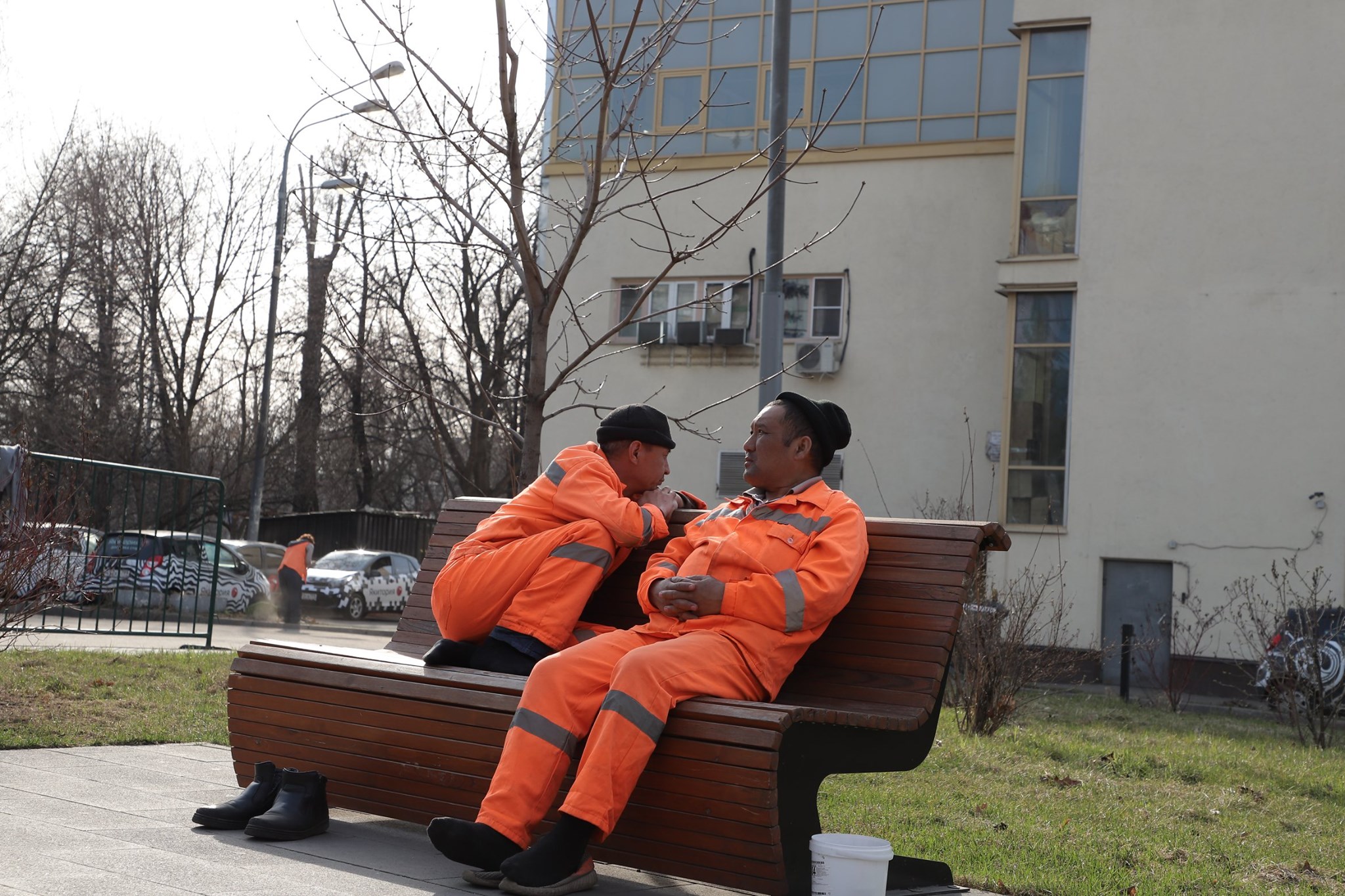
anatrrra-dvornikiCentral Asian yardmen in Moscow taking a break from their work. Photo by and courtesy of Anatrrra
‘People shout “Coronavirus!” at me as if it were my middle name’
Lenta.ru
March 29, 2020

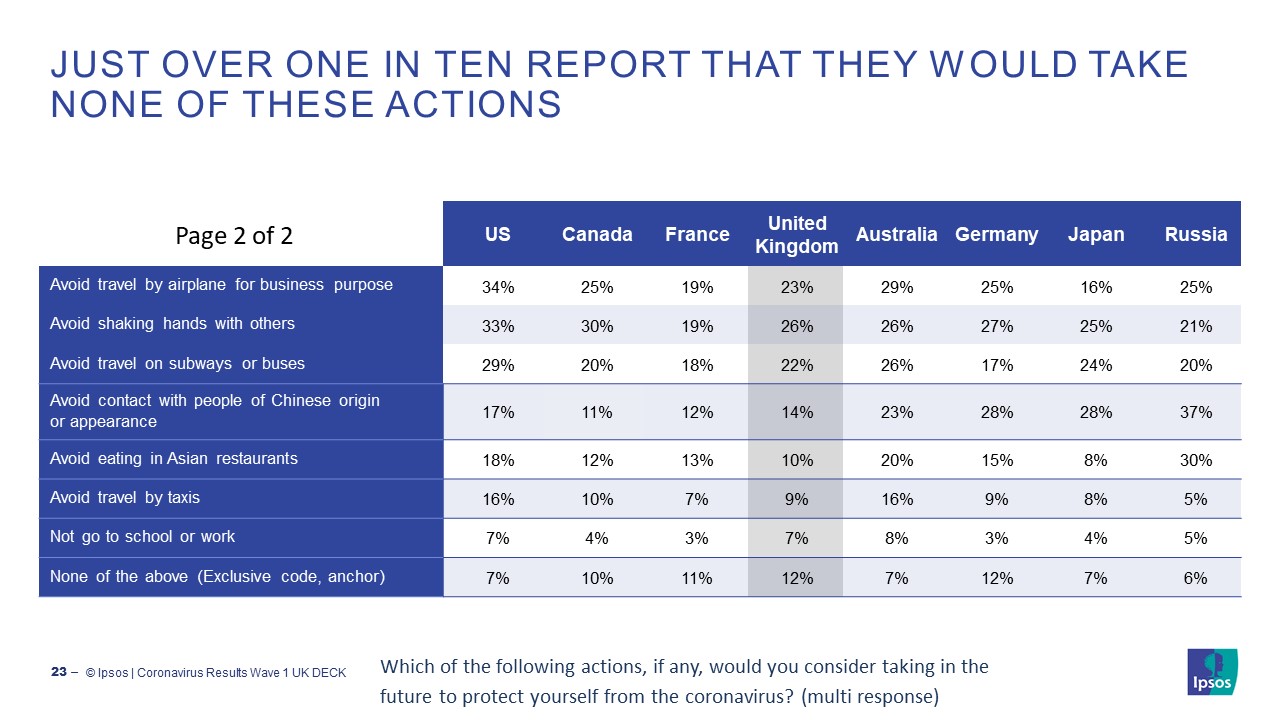
The coronavirus pandemic has led to an increase in xenophobic attitudes towards people of Asian background around the world, even though the US has already overtaken China in the number of infected people, as have European countries, if you add up all the cases. However, according to an international survey of several thousand people, it is Russians who are most likely to avoid contact with people of Asian appearance, although one in five residents of Russia is not an ethnic Russian. Our compatriots of Asian appearance have been subjected to increasing attacks, harassment, and discrimination. Lenta.ru recorded their monologues.

“Being Asian now means being a plague rat”
Lisa, Buryat, 27 years old

Sometimes I am mistaken for a Korean, and this is the best option in Russia, when you are mistaken for Chinese, Koreans or Japanese. The disdainful attitude is better than when you are mistaken for a migrant worker from Central Asia, because the attitude towards them is clearly aggressive. At least it was before the coronavirus.

Now, basically, being Asian means being a plague rat.

A couple of days ago, a young woman approached me at work—I’m a university lecturer. The lecture was on fashion, and naturally I had talked about the epidemic’s consequences for the fashion industry. The young woman works in a Chanel boutique. She said right to my face that “only the Chinese have the coronavirus,” and she tries not wait on them at her store, but “everything’s cool” with Europeans.

My mother has to listen to more racist nonsense because she has a more pronounced Asian appearance than I do, because my father is Russian. For example, there are three women named Sveta at her work. Two are called by their last names, but she is called “the non-Russian Sveta,” although she has lived in Petersburg since the nineteen-seventies. And when I enrolled in school, the headmaster asked my father to translate what he said for my mother, although five minutes earlier my mother had been speaking Russian.

In the subway, she can be told that immigrants are not welcome here and asked to stand up. A couple of times, men approached her on the street and asked whether she wasn’t ashamed, as a Muslim woman, to wear tight jeans. She is learning English, and when she watches instructional videos, people in the subway, for example, say, “Oh, can these monkeys speak Russian at all? They’re learning English!” Police are constantly checking her papers to see whether she’s a Russian citizen. When I was little, we were even taken to a police station because the policemen decided she had abducted an ethnic Russian child—I had very light hair as a child.

Recently, she was traveling by train to Arkhangelsk, and children from two different cars came to look at her. At such moments, you feel like a monkey. (By the way, “monkey from a mountain village” is a common insult.)

Everyone used to be afraid of skinheads. Everyone in the noughties had a friend who had been attacked by skinheads. Everyone [in Buryatia] was afraid to send their children to study in Moscow. But being a Russian Asian, you could pretend to be a tourist: my Buryat friend, who knows Japanese, helped us a couple of times make groups of people who had decided we were migrant workers from Central Asia leave us alone. Another time, the son of my mother’s friend, who was studying at Moscow State University, was returning home late at night and ran into a crowd of skinheads. They asked where he was from, and when he said he was from Buryatia, one of them said, “I served in Buryatia! Buryats are our guys, they’re from Russia,” and they let him go.

Now all Asians are objects of fear. People shout “Coronavirus!” at me on the street as if it were my middle name. They get up and move away from me on public transport, and they give me wide berth in queues. A man in a store once asked me not to sneeze on him as soon as I walked in. I constantly hear about people getting beat up, and I’m very worried. My Buryat girlfriends, especially in Moscow, are afraid to travel alone in the evening. People also move away from them on transport and behave aggressively.

You can put it down to human ignorance, but you get tired of living like this. When you talk about everyday racism with someone, they say they worked with an Asian and everything was fine. This constant downplaying is even more annoying. You haven’t insulted Asians—wow, here’s your medal! It doesn’t mean there is no problem with grassroots racism in multi-ethnic Russia.

“When are you all going to die?!”
Zhansaya, Kazakh, 27 years old

On Sunday morning, my boyfriend, who is an ethnic Kazakh like me, and I got on a half-empty car on the subway. We sat down at the end of the car. At the next station, an elderly woman, who was around sixty-five, got on. When she saw us, she walked up to my boyfriend, abruptly poked him with her hand, and said through clenched teeth, “Why are you sitting down? Get up! We didn’t fight in the war for people like you.”

I am a pharmacist by education, and I have seven years of experience working in a pharmacy. The pharmacy is next to a Pyatyorochka discount grocery store. Recently, I was standing at the register when a woman of Slavic appearance, looking a little over fifty, came in. She came over with a smile that quickly faded from her face when she saw me. I only had time to say hello when suddenly she screamed, “When are you all going to die?! We are tired of you all! You all sit in Pyatyorochkas, stealing our money, and then act as if nothing has happened!”

I didn’t hold my tongue, replying abruptly, “Excuse me! Who do you mean by you all?” The woman was taken aback as if something had gone wrong. Then she said something about “CISniks” [people from the Commonwealth of Independent States], ran out of the pharmacy, and never came back.

I had always dreamed about driving a car since I was a kid. At the age of eighteen, I found a driving school, where I successfully passed the classroom training, and after three months of practice I had to pass exams at the traffic police. I got 100% on the written test the first time. But during the behind-the-wheel exam, the examiner began talking crap the minute I got into the car. When I introduced myself by first name, middle name, and last name, he said something I missed since I was nervous. Then he, a rather obese man, hit me on the thighs and screamed, “Do you want me to say that in Uzbek?”

I immediately unbuckled my seat belt and got out of the car. I gave up for good the idea of taking the driving test.

covid-19-coronavirus-actions-ipsos-moriResults of an Ipsos MORI poll published on February 14, 2020

“The chinks piled into our country and brought this plague”
Anna, Buryat, 27 years old

We live in a multi-ethnic country that supposedly defeated fascism, but now every time I go into the subway, the police check my papers as if I were a terrorist. People really have begun to move away from me, give me a wide berth, and throw me contemptuous glances, as if to say “There goes the neighborhood!”

I live near University subway station [in Moscow], and there really are lots of Chinese students there. I feel quite sorry for them: they are constantly stopped by the police in the subway, and people look at them with disgust and demonstratively steer clear of them. If there are Chinese people who have stayed here, they probably didn’t go home for the Chinese New Year. Where would they bring the virus from? If they had gone home for the holidays, they would not have returned to Russia, since the border was already closed by the end of the holidays. Accordingly, the Chinese who are here are not carrying the virus.

Recently, I was going down an escalator. My nose was stuffy from the cold, and so I blew my noise softly. I thought I was going to be murdered right on the escalator: some people bolted straight away from me, while others shouted that I was spreading the contagion.

Recently, in a grocery store, a woman and her teenage daughter were standing behind me. The woman said something to the effect that all sorts of chinks have come to our country and brought the plague. She said it out loud and without any bashfulness, aiming her words at me. She and her daughter were less than a meter away from me, as if I didn’t understand them. My level of indignation was off the charts, but I didn’t say anything.

Another time, I went into my building and approached the elevator. A woman and her children literally recoiled and almost ran out—they didn’t want to ride in the elevator with me! I said I’d wait for the next one. They were not at all perplexed by the fact that I spoke Russian without an accent.

“I will always be second class here”
Malika, Uzbek, 21 years old

Recently, a mother and daughter passed by my house. Tajik yardmen were cleaning the yard. The girl asked the mother why she was rolling her eyes, and the mother explained that the yardmen were probably illegal aliens and terrorists. I walked next to them all the way to the bus stop—it was unpleasant.

During three years of living in Moscow, I very rarely felt like an outsider: the people around me were always sensible, and I was almost never stopped by police in the subway to check my papers. But when I decided to leave the student dorm, I realized that I would always be a second-class person here. It took four months to find an apartment. A girlfriend and I were looking for a two-room flat for the two of us for a reasonable amount of money, but every other ad had phrases like “only for Slavs.” There were jollier phrases like “white Europe” or “Asia need not apply.” But even in cases where there were no such restrictions, we would still be turned down when we went to look at flats.

After a while, I started saying on the phone that I was from Uzbekistan. Some people would hang up, while others would make up ridiculous excuses. In the end, we found a place through friends, but the process was quite unpleasant.

I’m no longer bothered by such everyday questions as “Why is your Russian so good?” I like talking about my own culture if the curiosity is not mean-spirited. But I am terribly disgusted to see how my countrymen are treated on the streets and realize that I’m left alone only because I’m a couple of shades lighter. Because of this, people take me for a Russian and complain about “those wogs” to my face.

“He shouted that I was a yakuza and had come here to kill people”
Vika, Korean, 22 years old

I’m an ethnic Korean. I was born and raised in North Ossetia, and graduated from high school in Rostov-on-Don. I have lived in Moscow since 2015, and I encounter more everyday racism here.

One day a woman on the street started yelling at me to get the hell out of Moscow and go back to my “homeland.” Another time, a madman in the subway sat down next to me and shouted that I was a yakuza and had come here to kill people.

When I was getting a new internal passport at My Documents, the woman clerk asked several times why I was getting a new passport and not applying for citizenship, although I had brought a Russian birth certificate and other papers.

Once my mother was attempting to rent an apartment for us and humiliated herself by persuading the landlords that Koreans were a very good and decent people. I wanted to cry when she said that.

There is a stereotype that Asians are quite smart and study hard, that they have complicated, unemotional parents, and so on. As a teenager, I tried to distance myself as much as possible from stereotypical ideas about Koreans. Now I can afford to listen to K-pop and not feel guilty about being stereotypical.

Generally, we are not beaten or humiliated much, but I don’t feel equal to the dominant ethnic group [i.e., ethnic Russians], especially now, when everyone is so excited about Korean pop culture, generalize everything they see in it to all Koreans and can come up to you out of the blue and say they love doramas. That happened to me once. It is very unpleasant—you feel like a pet of a fashionable breed.

In questionnaires on dating sites you can often find preferences based on ethnicity, and they can take the form of refusals to date people of a certain race, as well as the opposite, the desire to date such people. It is not a sign of tolerance, however, but the flip side of racism—fetishization. It still reduces a person to her ethnic group, suggesting she should be perceived not as an individual, but as a walking stereotype.

“Several times it ended in attempted rape”
Madina, from a mixed family (Tatar/Tajik/Kazakh/Russian), 25 years old

I was born in Moscow. My Russian teacher from the fifth grade on liked to repeat loudly to the entire class, “Can you imagine? Madina is the best Russian and literature student in my class!” By the end of the sixth grade, my classmates were sick and tired of this, but instead of boning up on Russian, they decided to throw me a blanket party. They got together, backed me into a corner, and kicked the hell out of me.

I recently returned from doing a master’s degree abroad and was looking for an apartment to rent in Moscow. Several times, landlords offered to rent an apartment without a contract, explaining that I undoubtedly needed a residence permit. When I showed them my internal passport and Moscow residence permit, they turned me down anyway.

Before moving to the United States, I had to forget about romantic relationships for several years because several times it all ended with attempted rape under the pretext “You’re an Asian woman, and I’ve always dreamed of fucking a woman like you  in the ass.”

Nor was it strangers I’d met on Tinder who told me this, but guys from my circle of friends at school and university. There were three such incidents, and all of them combined racism, objectification, and a lack of understanding of the rules of consent.

“She looked at me like I was death, shoved me, and ran out of the car”
Aisulu, Kazakh, 22 years old

Recently, I was a little ill: I had a runny nose and sneezed once in a while. I wouldn’t even say it was the flu, just the common cold. I decided to attend lectures and put on a mask for decency’s sake.

I went into the subway, where people got up and moved away from me twice. I wasn’t particularly offended, but it was unpleasant when I stood next to a women after moving to another car and sneezed. She looked at like I was death, shoved me, and ran out of the car. That was quite odd.

I told a classmate about the incident, and she asked why I was wearing a mask, because it attracts more attention. I felt even worse, and took it off.

Translated by the Russian Reader