Up to nearly a half of Russian casualties in the war against Ukraine could be men who had few or tenuous links to Russia, or were living on the margins of society, according to new research by the BBC. Their deaths are largely ‘unseen’ by ordinary Russians.
Alongside the independent media outlet Mediazona, and with the help of a network of volunteers, BBC Russian uses open source data to chart the names of Russian soldiers killed in the war. To date, we have confirmed the names of more than 95,000 of them – implying a true death toll of up to 235,000.
This figure doesn’t include those who were killed serving in the militia of the self-proclaimed Donbass republics which we estimate to be between 21,000 and 23,500 fighters.
BBC Russian, independent media group Mediazona and volunteers have been counting deaths since February 2022.
A map of Russia showing the number of people killed by returning Ukraine war vets in each region. The leaders are the Kostroma Region, Moscow and the Moscow Region, and the Rostov Region. Source: Vyorstka
Since the outset of the war in Ukraine, Russian servicemen returning from the front have killed 242 people and seriously injured another 227, according to a count made by the online news outlet Vyorstka based on court records and media reports. This brings the total number of victims to at least 469. The victims of these crimes resided in eighty different Russian regions.
A total of 350 criminal cases have been launched in connexion with these incidents. Of these, 114 cases, involving 139 victims, have resulted in charges of murder (per Article 105 of the Criminal Code). Eighty-five Russians were victims of seventy-five former inmates recruited for the war from penal colonies, while another fifty-four died at the hands of thirty-nine [ordinary] servicemen.
Other fatal crimes include sixty-four cases of grievous bodily harm (per Article 111 of the Criminal Code; sixty-four fatalities), twenty traffic violations (per Article 264 of the Criminal Code; thirty-one fatalities), five cases of involuntary manslaughter (per Article 109 of the Criminal Code; five fatalities), two cases of inducement to use drugs (per Article 230 of the Criminal Code; two underage victims) and one case of murder caused by excessive self-defense (per Article 108 of the Criminal Code).
Most of the offenses were committed by 246 former prisoners recruited to the front. The victims were also more often women. Another 180 defendants were ordinary servicemen. Of the 125 pardoned and paroled war veterans who murdered or caused injuries resulting in death, fifty-four had previous convictions for similar offenses, while another three had been convicted of rape.
The majority of the crimes were domestic crimes and occurred due to alcohol consumption. The victims of the Ukraine war veterans are more often people from their surroundings: relatives, neighbors, and acquaintances. The most “widespread” crime was voluntary grievous bodily harm. The journalists at Vyorstka tallied at least 220 such crimes, which resulted in sixty-four deaths and 158 injuries, including disabilities. The sentences in such cases for soldiers recruited in the penal colonies have ranged from four to twelve years in a maximum security penal colony, and from four to ten years in a maximum security penal colony for the other soldiers.
A further sixty-six victims who survived were severely injured due to attempted murder, excessive self-defense, attempted involuntary manslaughter, and traffic violations by war veterans.
One third of all the victims have been women, including minors: thirty-two out of eighty-five (thirty eight percent) were killed by ex-prisoners, and seventeen out of fifty-five (thirty-one percent) were killed by military personnel. Five of the seventeen women killed in the fire at the Kostroma nightclub Polygon were not intentional but accidental victims of serviceman Stanislav Ionkin, who set the blaze.
The sentences of the ex-convicts have ranged from six to fourteen years in a maximum security penal colony, while the sentences for the ordinary military men range from seven to ten years in maximum security. Some “veterans of the SMO” have been handed severe sentences, including life imprisonment. For example, ex-prisoner Viktor Budin was sentenced to nineteen years in a maximum security facility for murdering two retired neighbors, while the first life sentence was given to Grigory Starikov, who killed three acquaintances.
Out of 292 sentences made public, judges did not consider involvement in the war a mitigating circumstance in only fifteen percent of cases. It was even mentioned by the judge who sentenced Starikov. In addition, “state honors,” “involvement in the activities of the RF Armed Forces,” and “unlawful behavior on the part of the victims” were taken into account in some cases. For example, ex-servicemen have usually received minimum or suspended sentences for negligent homicide or in cases where the victims survived.
On the other hand, courts most often ignored alcohol as an aggravating circumstance in their verdicts. For both pardoned convicts and military personnel, it was taken into account in less than a third of the cases.
Jason Isbell and the 400 Unit, “Middle of the Morning” (2023)
Well, I’ve tried To open up my window and let the light come in I step outside In the middle of the morning and in the evening again
Yes, I’ve tried To be grateful for my devils and call them by their names But I’m tired And by the middle of the morning I need someone to blame
I know you’re scared of me, I can see it in your face I can feel it in the way you move around this place I know you’re scared of me, I can see it in your smile Like an unattended child you can’t quite trust
But I’m tired Of stepping on your shadow and feeling in the way Yes, I’m tired And by the middle of the morning I’m out of shit to say
I ain’t used to this, seeing everybody’s hand I was raised to be a strong and silent southern man I ain’t used to this, a thousand days alone In my bed or in my head or in my phone
Yes, I’m tired Of living in the moment and sleeping through the dream I step outside In the middle of the morning and the roses hear the scream
I know you’re scared of me, so I never get too close I just sit here on the tailgate like a farm hand’s ghost Watch the roses bloom, watch them wilt away and die ‘Til I notice I’ve been crying this whole time
Well, I’ve tried To open up my window and let the light come in I step outside In the middle of the morning and in the evening again
Source: Musixmatch. Thanks to Mark Rogers (Nashville Babylon) for the heads-up.
Russia continues to reap the consequences of its reckless campaign to release dangerous criminals from prisons to dispatch in their illegal war against Ukraine, RFE/RL’s Sever.Realii reported on Aug. 3.
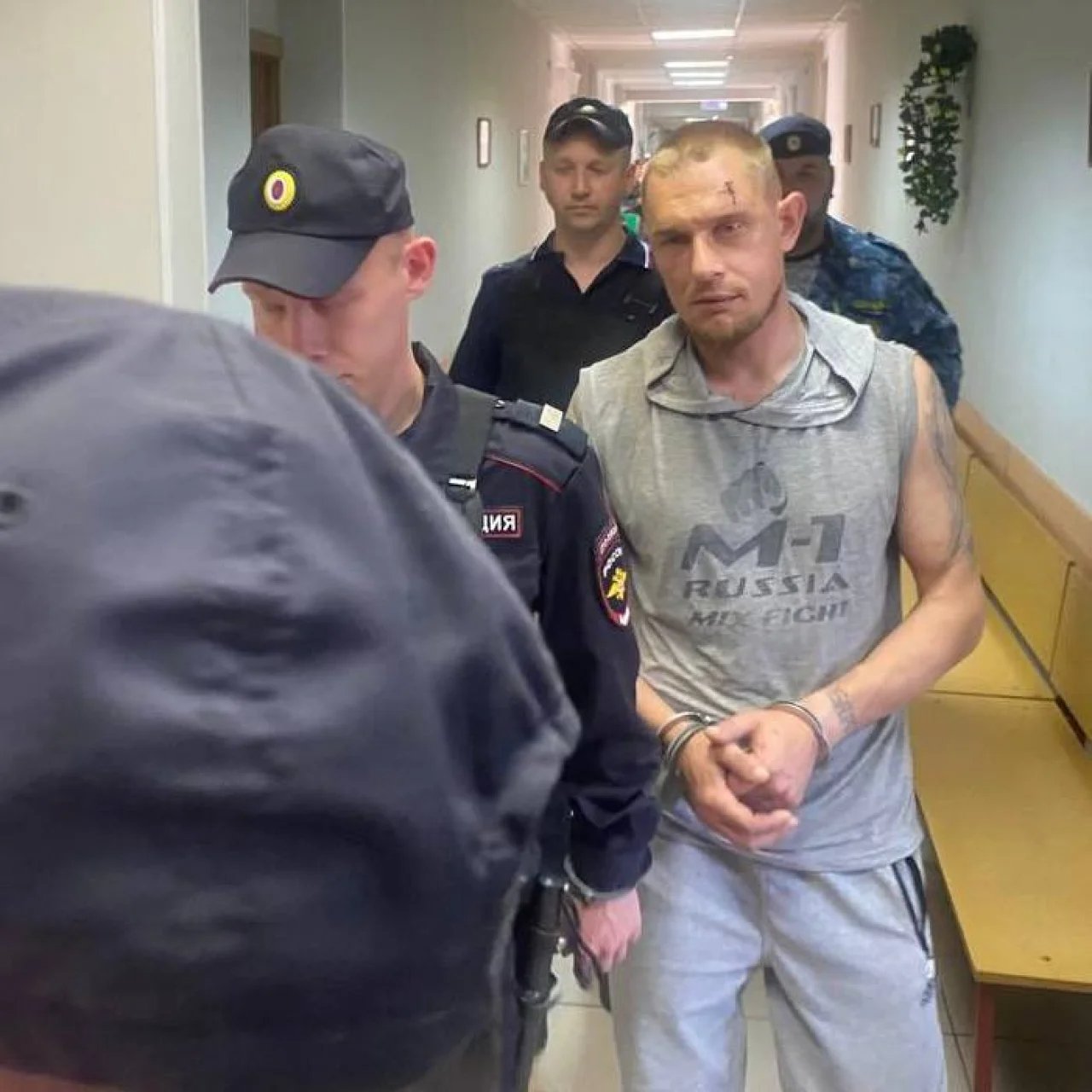
The latest case involves 37-year-old Igor Sofronov, who had previously served a sentence for robbery, attempted murder, and other crimes. Upon returning to his hometown of Dereviannoye in the Republic of Karelia after his involvement in the war, Sofronov spiraled into a series of alcohol-fueled binges.
During one of these drunken episodes, Sofronov, along with his drinking buddy, 38-year-old Maxim Bochkarev, who had also been imprisoned for theft, abduction, robbery, and rape, unleashed a brutal massacre, claiming the lives of six individuals.
“The murders were committed in two houses within 200 meters of each other. In the first house, two men (father and son) were killed, and in the second one, three men and a woman were brutally murdered. Both houses were set on fire after the killings. The suspects were apprehended six hours later,” the report said.
Local residents revealed that Sofronov had served as a mercenary for the Wagner private military company. There is also information suggesting that he fought as part of the “Storm Z” unit, which operates under the Russian Ministry of Defense and recruits prisoners for participation in so-called “meat grinder assaults.”
This tragic incident serves as yet another example of returning Russian aggressors turning their violence on their fellow citizens.
There was a time I thought I knew About life and what to do And now it’s plain I know nothing at all I should have known better
But I took it all on blind faith And now the bad guys have all run away
Lonely won’t leave me alone Tried I tried but you won’t let go It’s a pain that won’t go away Lonely won’t leave me alone
There was a time I had pride I had friends stood by my side And a smile was all I had to give Under a spell under a cloud I fell in with the wrong crowd And so I guess I learned my lesson well
Lonely won’t leave me alone Tried I tried but you won’t let go It’s a pain that won’t go away Lonely won’t leave me alone
Chalkin’ days on the wall Seems this night won’t end at all For me patience leaves Trace your smile on the glass Try to make it all last Till I come home again
Lonely won’t leave me alone Tried I tried but you won’t let go It’s a pain that won’t go away Lonely won’t leave me alone
There was a time I thought I knew About life and what to do