Security forces raid university lecturer’s home over donations
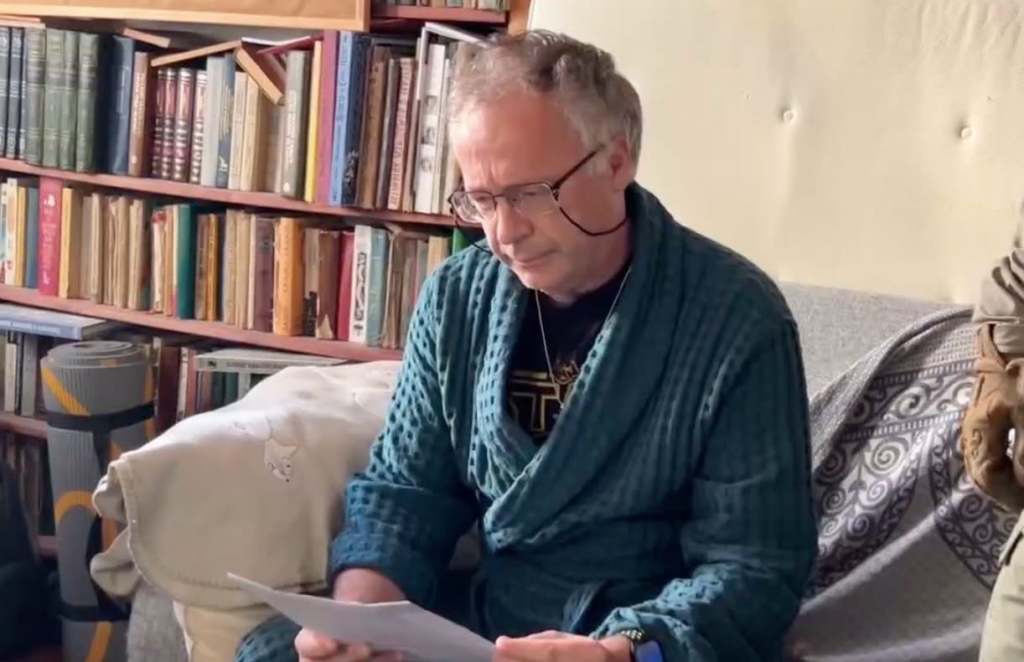
Petersburg police released a video of a search carried out at the home of 58-year-old Igor Zaitsev, a philosophy Ph.D. and lecturer at the European University. He has been charged with “financing extremist activities.”
The grounds for this action were donations totaling 3,500 roubles [approx. 36 euros] to [the late Alexei Navalny’s] Anti-Corruption Foundation. [The foundation, often known by its Russian acronym, FBK] was declared an “extremist organization” and banned by the Russian Federation in 2021. It is now classified as a “terrorist organization.” Zaitsev has been detained pending a remand hearing.
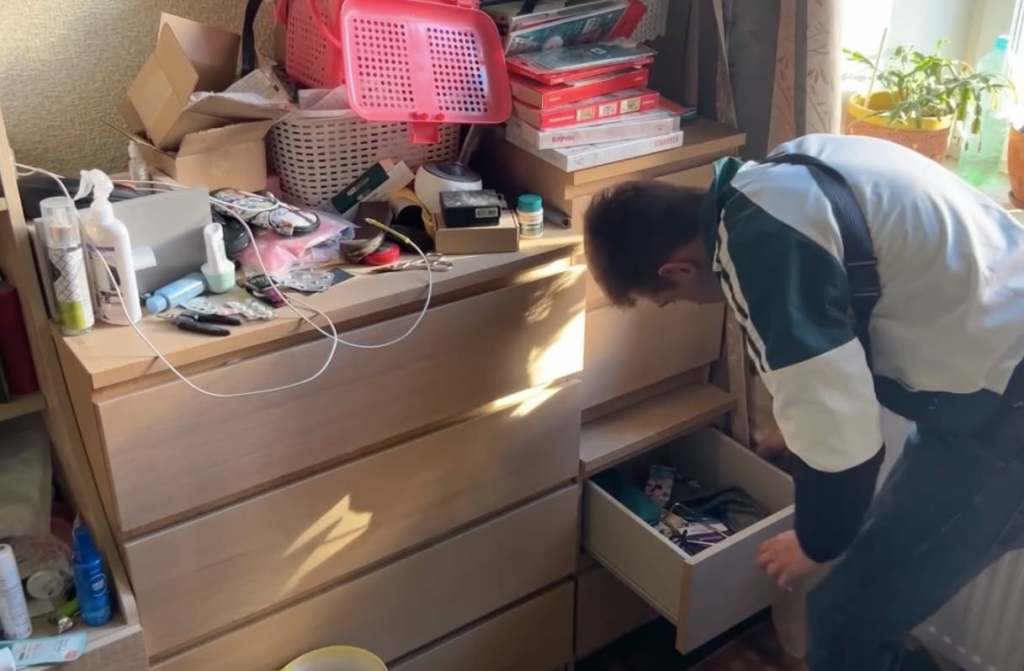
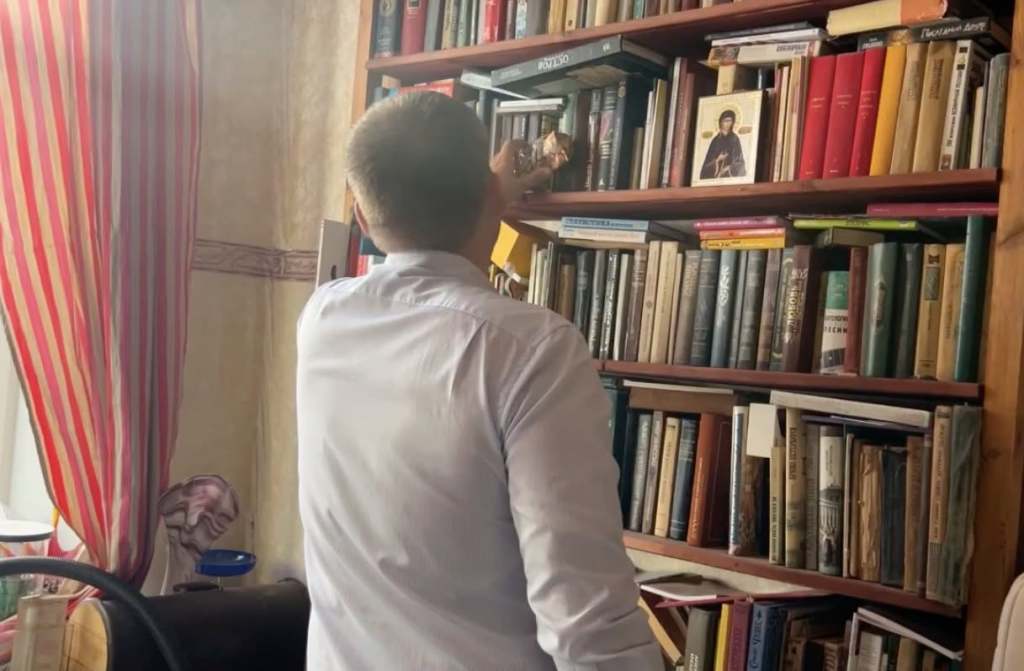
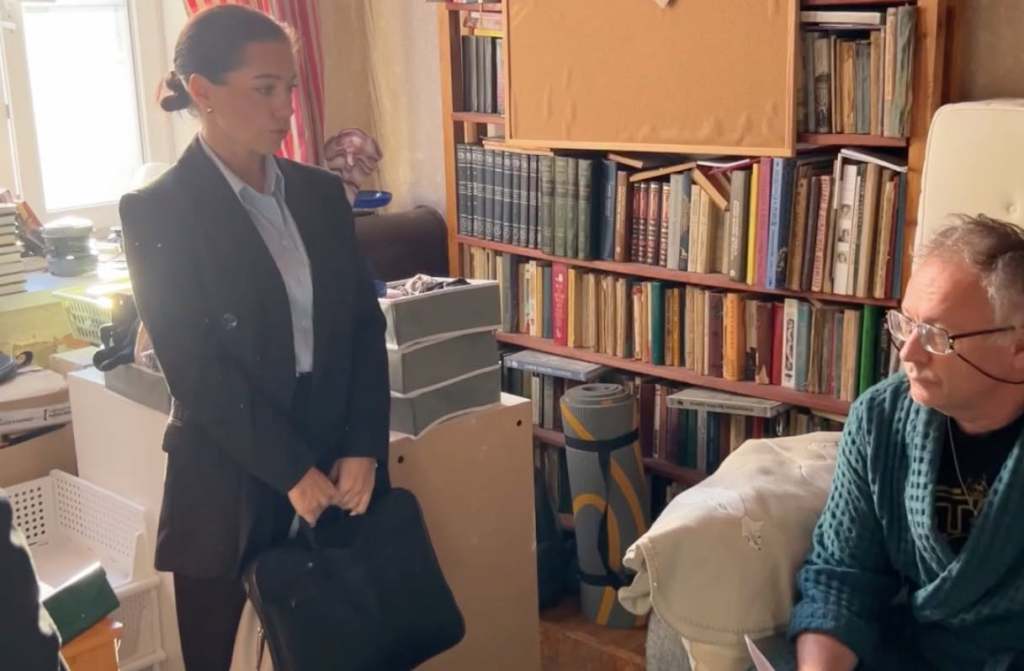
In a video published online, a female investigator, a security officer with his face concealed who handcuffs the lecturer, and at least three men in plain clothes who rummage through his belongings (including an impressive bookshelf) turn up at the Petersburg resident’s flat on Nevsky Prospekt at seven in the morning. Zaitsev admits that he personally supported Navalny. However, Petersburg police edited out the lecturer’s remark that he “considered [Navalny’s] anti-corruption efforts to be a good thing.” This statement appears in another video [see the next item below], which was leaked by the security forces to Baza, a Telegram channel with close ties to the police.
Igor Zaitsev, lecturer at European University, detained in Petersburg over donations to Anti-Corruption Foundation (FBK)
⚪ The details. Zaitsev has been charged with “financing terrorism,” according to the Telegram channel Baza. According to the channel, the lecturer is accused of having donated money to the Anti-Corruption Foundation on at least seven occasions between 2021 and 2022. Baza has published a video of Zaitsev’s interrogation. In the recording, Zaitsev states that he donated money to Alexei Navalny’s anti-corruption projects.
Neither the security services nor the university has publicly acknowledged Zaitsev’s arrest.
⚪ Who is he? Igor Zaitsev is a Ph.D. in philosophy and an associate professor at the European University in St. Petersburg. He is fifty-eight years old. He specializes in the history of philosophy, the philosophy of religion, and theology.
⚪ Cases against university faculty.Baza reports that in July, the Investigative Committee opened a criminal case concerning [the dissemination] of “fake” war reports against Mikhail Turchenko, a former associate professor at the European University’s political science department. According to Life.ru, the case was prompted by Turchenko’s post about a Russian missile strike that resulted in the deaths of Ukrainians. Turchenko had fled Russia in 2022. Last August, a complaint was filed against Vladimir Gel’man, a former faculty member at the European University, alleging that he had “discredited” the army.
Finland has denied asylum to a Russian man who donated to the late opposition leader Alexey Navalny’s Anti-Corruption Foundation (FBK), with migration authorities ruling that his political activity was not public or extensive enough to have drawn the attention of the Russian authorities.
Valentin Sergienko and his parents were ordered to report to police on 14 August after the Finnish Immigration Service rejected their asylum applications, former St. Petersburg municipal deputy Svetlana Utkina told TV Rain. If the family does not leave the country voluntarily, they could face forced deportation.
The Sergienkos fled Russia in September 2022 after Vladimir Putin’s announcement of mobilisation and initially sought international protection in Germany. Their case was transferred to Finland, where they filed asylum applications in July 2023. The Finnish Immigration Service denied their claims, and an administrative court subsequently rejected their appeal.
Authorities did not dispute that Sergienko had donated to FBK, the human rights group OVD-Info, and other organisations banned in Russia, or that he had taken part in protests. But officials concluded his political activity had not been large-scale or visible enough to put him at risk of persecution by the Russian government.
While the case was pending, Sergienko graduated with honours from Helsinki Business College, completed an internship, and received a job offer, which he was unable to accept as the asylum denial stripped him of his right to work in Finland. His mother is currently undergoing cancer treatment.
According to the independent outlet Mediazona, Russian authorities have opened at least 225 criminal cases over donations to FBK as of April 2026. Courts have handed down 167 convictions, with 24 people sentenced to prison time.
More than 2,300 Russians have applied for asylum in Finland since the start of the full-scale invasion of Ukraine, but only 604 have received the status, according to politician and former political prisoner Andrey Pivovarov. Even so, the Finnish migration service has acknowledged that convictions in politically motivated cases have tripled in Russia.
Kazakh authorities have granted Russia’s request to extradite activist Yulia Yemelyanova, a former employee of the late Alexei Navalny’s Petersburg office. According to the Russian opposition-in-exile’s Anti-War Committee, Kazakhstan violated its own protocols in making the decision to extradite Yemelyanova, as the Russian activist’s application for asylum is still under review in the country.
This past October, Kazakhstan’s Prosecutor General’s Office had guaranteed that extradition requests would not be considered until all administrative procedures related to obtaining asylum were completed. Yemelyanova’s defense intends to appeal the extradition decision to the country’s Supreme Court.
Yemelyanova was detained on Aug. 31, 2025, at Almaty airport while in transit to a third country. She has been held in pretrial detention ever since. In Russia, she is being prosecuted for theft (Part 2, Article 158 of the Criminal Code) in connection with a 2021 incident in which she allegedly stole a mobile phone from a taxi driver. Yemelyanova’s defense calls the case fabricated. It was sent to court in July 2022, by which time the activist had already left Russia.
Yemelyanova is the fourth Russian asylum seeker since late January to be handed a deportation decision from Kazakh officials. The others are Chechen Mansur Movlaev, an open critic of Ramzan Kadyrov; Crimean resident Oleksandr Kachkurkin, who is facing treason charges in Russia; and Yevgeny Korobov, an officer who deserted from the Russian army.
Dmytro Kulyk with his wife Oksana and daughter Elina. Source: Daily Beast
A Ukrainian dad escaped Vladimir Putin’s drone and missile attacks back home only to be grabbed by a band of ICE stooges in a Walmart parking lot in Minneapolis.
“I hoped I would find peace in America. I’ve done everything the government required, I don’t understand why I am behind bars,” Dmytro Kulyk told the Daily Beast from the Kandiyohi County Jail in Willmar, Minnesota.
The 39-year-old father was getting a pickup order at a Walmart in Maple Grove when he found himself surrounded by immigration agents last month. He’d been working as a delivery driver to make ends meet, while also supporting his family by doing roofing work.
Kulyk legally entered the U.S. in late 2023 along with his wife, 38, and daughter, who’s now 5. The family was sponsored by U.S. citizens as part of the Uniting 4 Ukraine program, a humanitarian program set up in April 2022 to allow Ukrainians fleeing Russia’s war to live and work in the U.S. on “parole.”
Once the initial two-year parole period expires, entrants can file for re-parole to remain in the country longer. That’s exactly what Kulyk says he did. His wife and daughter’s applications were approved. But his remained pending.
He said he was putting groceries in his car on Jan. 1 when he was approached by three ICE agents.
“I explained to the ICE officers that the war was killing people, that my wife had a disability, that it was violence, terrorism which we had escaped from but one of them began to laugh,” Kulyk told The Daily Beast. “I asked why he was laughing and I was told that he was pro-Russian, wanted Russia to win the war.”
DHS and ICE did not immediately respond to a request for comment.
He can’t understand why he’s been treated like a criminal. He did everything by the book, he says–paying taxes and filing his immigration paperwork on time, working multiple jobs to take care of his family. He had no criminal record to speak of.
His immigration attorney, Julia Bikbova, suggested his re-parole application may have intentionally been stalled to provide immigration authorities with a pretext to deport him.
“Our government, our Homeland Security, promised Ukrainians to protect them during the war. There are approximately 280,000 Ukrainians on U4U, Uniting for Ukraine program in the United States, including the Kulyk family,” she told the Daily Beast.
“My client did everything the government required him to do: on June 5 he applied for the re-parole and his wife paid $2,040 of fees for her and child’s granted applications. His wife and daughter have recently received their re-paroles but he has not, his application is pending.
“ICE detained him as ‘illegal’ and began deportation proceedings: This is a sick way of forcing a man with a clean criminal record to become unlawful in the U.S. by delaying the review of his application, which the very same authority had requested to file.”
Kulyk is now terrified he’ll be sent to the frontlines to fight Vladimir Putin’s troops if he is deported back home. He and his family endured relentless Russian attacks before finally deciding to flee their home in the Odesa region in 2023. When they saw ruins on their own street in Chornomorsk, they called their friends in Texas and asked for help, leading to their enrollment in the U4U program thanks to having U.S. citizens as sponsors.
Kulyk now can’t stop worrying about his wife, Oksana, and daughter, Elina.
“I am worried they can drag my wife and kid out of our home,” he told The Daily Beast, adding that he wanted to appeal directly to American authorities to make them understand he’d done nothing wrong.
“Please hear me: I came to America to escape the war, to pray in church and work hard. But now my heartbroken and sick wife has lost over 10 pounds since ICE arrested me on January 1. She’s been panicking, and my little daughter has been crying without me every night – this is unjust,” he said.
Oksana says she’s been too “terrified and lost” to leave home while her husband is locked up, afraid that immigration agents might return for the rest of the family.
“I am too scared to drive my 5-year-old daughter to school in my husband’s car. I’m terrified ICE will detain me and our daughter will end up alone,” she told The Daily Beast. “This is just as scary as the war in Ukraine, except now we don’t have Dmytro with us. Our daughter Elina cries herself to sleep with her cat plushie. She says the toy is daddy.”
Most Ukrainian refugees are women and children but some men have also left the country for various reasons. Kulyk was granted a permit to leave in order to care for a family member with a medical condition.
But Kulyk is not the only Ukrainian refugee to be swept up in the Trump administration’s controversial immigration crackdown.
Nearly 1,000 miles away, in Philadelphia, Zhanna was poring over messages in a group chat of 349 other refugees called “Ukrainians in Detention.” She joined the group last month, when her friends Andrii and Yaroslav ended up in detention. Although Bartosh has legal Temporary Protected Status, she stopped going to the office and now works from home.
“ICE rounds up men who buy tools or work in construction, so every day I call my husband, a construction worker, to check if he is OK. Even when the war started in Ukraine and we had to escape abroad, the same morning I wasn’t as stressed as I am now,” she told the Daily Beast. “In our chat I read that all arrestees are men, that at least five of them have signed up for self-deportation… but where is there to go now? Europe is also deporting Ukrainians. Our TPS is good until October but we want to understand, are we really legal in the United States, or is it time to pack up our suitcases again?”
Immigration attorneys count about 300 cases of detained Ukrainians across the United States and up to 150 refugees deported to Ukraine, Bikbova said.
“Most of the arrested Ukrainians are men, the majority of them have a clean criminal record but as we see in Kulyk’s case, they are equated to people who jumped the border, broke the law,” attorney Bikbova told the Daily Beast. “Behind every deported man, there are crying women and children, left without support. For some mysterious reason, we see male Ukrainian refugees being arrested and put on airplanes. If he gets deported, my client Kulyk will most certainly go to the front.”
Trump’s administration has also been deporting Russian asylum seekers. According to a report by Current Times, more than 50,000 Russians have fled the war and political repression to the U.S. since February 2022. Journalist Ilya Azar has been covering the deportations for Novaya Gazeta.
“They send out 40-60 people on each plane. There have been five airplanes,” Azar told the Daily Beast on Tuesday. The deportation planes transit to Russia through Egypt, and Russian security services meet the deported citizens. Azar’s report noted that “all men received draft notices” upon their arrival in December.
German authorities last week denied asylum to 47-year-old engineer Georgy Avaliani, who deserted from the front line in 2022. His wife and two children were rejected alongside him.
“There is no reason to believe that, upon returning to the Russian Federation, they would face a high probability of persecution or serious harm,” wrote an official from the Federal Office for Migration and Refugees (BAMF), despite Avaliani’s account of being tortured after fleeing the front.
Mediazona has reviewed BAMF decisions in Avaliani’s case and those of other deserters, discovering that officials are producing boilerplate documents that repeat one another almost word for word. In justifying the refusals, the German agency argues, for instance, that mobilisation in Russia was intended to “strengthen the armed forces” rather than repress dissent, and therefore cannot be considered political persecution. They further say that mobilisation has effectively ended because Vladimir Putin announced it—verbally.
When describing potential punishments for deserters, officials cite not the criminal code but an administrative article regarding failure to comply with military registration duties. They even specify that the maximum penalty is a fine of €302.
Most notably, in every decision examined, BAMF cites Mediazona’s own article from 2023, “Evading > refusing > fleeing. A year of mobilization in Russia through trials and verdicts”, as evidence that mobilised men face little more than a fine. That article noted that, at the time of publication, failing to respond to a summons did not yet carry a heavy penalty. While the situation has since changed—an eventuality the original article warned about—the original reference remains in the German files.
Relying on information from that article is also fundamentally flawed because BAMF applies it to people already wanted under serious criminal charges for desertion or abandoning their unit. In its rulings, the agency ignores the severity of these consequences, lumping deserters in with those who simply left Russia when mobilisation was first announced. This is exactly what happened to Georgy Avaliani.
A year in a refugee camp
Avaliani, an engineer, arrived in Germany with his wife, Oksana, and their two children on January 26, 2025. By then Georgy, who was drafted shortly after mobilisation began and later deserted, had been on a federal wanted list for over six months.
The family was granted asylum-seeker status without an initial investigation into the specifics of their escape. Like other applicants, they were placed in temporary housing: a small portacabin with two bunk beds at the former Tempelhof airport site. Their journey to Germany had been arduous. On January 18, Georgy, who had managed to leave Russia before his name appeared on the wanted list, met his wife and children in Bosnia. From there, they travelled to the Croatian border and requested asylum.
In Croatia, the asylum process is largely a formality; in practice, obtaining protection there is nearly impossible. Consequently, many migrants use it only as an entry point into the EU before heading to countries with functioning reception systems. The Avalianis did the same. After a preliminary registration in Croatia, they spent a week travelling to Berlin.
For nearly a year, the family was cramped in a camp with 2,000 other applicants. Finally, just before the start of 2026, they were moved to a hostel in western Berlin. But Georgy’s hopes of integration (he had been diligently learning German and hoped to return to engineering) were soon shuttered. On January 16, just two weeks after their move, BAMF rejected the entire family’s asylum claim.
Avaliani intends to appeal. If he fails, the family must leave Germany within 30 days or face deportation to Russia, where Georgy faces up to 10 years in prison for abandoning his unit during a period of mobilisation. Despite having clear evidence of persecution, the German authorities have ignored his claims.
The two escapes of Private Avaliani
Before the war, Georgy Avaliani was a well-paid engineer at the Moscow water utility, Mosvodokanal. He had no plans to leave Russia. Shortly before the full-scale invasion of Ukraine, he even enrolled in a seminary to pursue a religious education.
Georgy had never served in the army due to a heart condition. However, following the “partial mobilisation” announcement, he received a summons on October 6, 2022. At the time, his three children were minors; by law, as the father of a large family, he should have been exempt. The couple tried to contest the draft through the military enlistment office and the prosecutor’s office but failed. Georgy chose not to go into hiding, unwilling to abandon his family.
After a medical commission in November, he was sent to a training camp in the Moscow region and then to the occupied Svatove district of the Luhansk region. His unit was stationed in the village of Novoselivske, 20 km from the front line. After a few days, noticing the chaos within the unit, Avaliani decided to slip away, gambling that no one would notice his absence. He reached a nearby road and hitched a ride to the village of Troitske, a gathering point for mobilised men.
Part of a local hospital had been turned into a shelter for soldiers with nowhere else to go—some had lost their units, others were waiting to withdraw their pay, and some were recovering from wounds.
While staying there, Georgy met another mobilised soldier. They shared the same grim impression of the front and a desperate desire to return home. They found three others who felt the same and hired a taxi driver to take them to a spot where they could cross the border on foot.
After the driver dropped them off, the group split up. Along the way, Avaliani and his companion heard a helicopter. Georgy later told journalists and BAMF officials that the second group had been gunned down from the air. While there is no independent confirmation of this, Avaliani and the other man survived only to be detained in an abandoned village.
There is little doubt Georgy made this journey on foot; “Goodbye to Arms”, a project that assists deserters, thoroughly verified his route. Alexei Alshansky, a coordinator for the organisation, says the helicopter story is the only detail rights activists have been unable to confirm.
Following his capture, Avaliani was thrown into “a basement” for 10 days. He says he was beaten repeatedly and subjected to mock executions. Mediazona has previously reported on this location, known as the Zaitsevo Centre for the Detention of Servicemen, based on the testimony of another deserter, Sergei Savchenko. Volunteers from “Goodbye to Arms” identified the site in the occupied village of Rassypne by comparing testimonies with video footage.
From the basement, Georgy was sent to an assault unit. Two days later, an ammunition dump near their position exploded. Avaliani suffered a concussion and a heart attack. He was sent to a distribution point where he befriended the doctor issuing referrals. The medic sent him to a hospital inside Russia, hinting that he could just as easily head straight for Moscow instead of the ward.
Avaliani did exactly that. After reuniting with his family, he hid at a dacha in the Tula region. Occasionally, he ventured to Lyubertsy for medical treatment. As time passed he grew less cautious, but in mid-February 2024 military police arrested him outside his home.
He was sent to Kaliningrad in western Russia, the permanent base of his unit, to await his fate. When a commander learned of Georgy’s engineering background, he set him to work renovating his private dacha. Meanwhile, Georgy pushed for a formal medical commission. When it finally took place, the results were surprising: he was not only declared fit for service but his category was upgraded from “partially fit” to “fit with minor restrictions”.
In May, he was told to report for questioning regarding a criminal case. Georgy fled again. On the way to the commander’s dacha, he got a taxi and flew to St Petersburg. His wife met him there to hand over his passport. From there he flew to Belarus, then Uzbekistan, Georgia and finally Montenegro, where he was taken in by a Swedish artist for whom he helped build a swimming pool.
Oksana remained in Lyubertsy with the children. Weeks after her husband left, an investigator began calling her. Georgy was placed on a federal wanted list.
In September 2024, security forces raided the family home. They confiscated phones from Oksana and the children, returning them only two weeks later. The stress caused Oksana to suffer a nervous breakdown, leading to a month-long stay in a psychiatric clinic. The visits from military police continued; the last raid occurred on January 7, 2025. After that, Oksana finally agreed to leave Russia.
Georgy has spoken openly to the press about his escape. In Montenegro, he was interviewed by Current Time TV. The family crossed the German border accompanied by a journalist from Die Welt, which later published a detailed account. A report for the Franco-German channel Artewas also filmed by Russian journalist in exile Masha Borzunova.
The first six months in Germany were particularly precarious. Under EU law, the migration service could have deported the family back to Croatia, their first point of entry. To prevent this, Georgy sought help from the church.
The tradition of Kirchenasyl, or church asylum, began in 1983 after Cemal Kemal Altun, a 23-year-old Turkish activist, took his own life in a West Berlin court while facing extradition. His death moved church communities to unite to protect refugees from deportation. Every year, hundreds of people receive a reprieve through this practice. The Avalianis were among them.
“It is a semi-legal, more like a cultural phenomenon that works differently in different states,” explains Alshansky. “The church gives the applicant a document stating they are under their care, and the authorities leave them alone.”
Thanks to this intervention, BAMF could not reject the family simply because they entered via Croatia. They were forced to consider the case on its merits. They rejected it anyway.
BAMF’s motivation
During his personal hearing, Georgy Avaliani detailed his service and desertion. When asked what he feared if returned to Russia, he replied: “I fear for my life. Legally, I could be imprisoned for up to 20 years. But more likely, I will be killed before trial or in prison… I know for certain that if they find me, a subhuman death awaits me.”
His wife, Oksana, tried to explain the psychological toll the military police raids had taken on her and the children. The family provided lots of evidence: the mobilisation order, the wanted notice from the interior ministry’s website, a letter from a German humanitarian organisation, medical records and Georgy’s military ID.
In its rejection, the agency claimed the Avalianis were “apolitical people”, making it unclear why they believed the Russian state would view them as opponents. BAMF argued that if they were truly targeted, Georgy would never have been able to leave Russia so easily.
Having erroneously stated that Avaliani faced only an administrative fine, the official added that it was “not evident that in the applicants’ case, due to specific circumstances, a different [punishment] should apply”.
The document also asserted that officials found no evidence that mobilisation continued after Putin’s verbal announcement. Even if it were to resume, BAMF argued, it was not certain Avaliani would be called up again, given Russia’s 25 million reservists.
“Even taking into account that the applicant evaded mobilisation, it is not to be expected that… he would be subjected to the inhuman or degrading treatment required to grant asylum,” the decision stated.
The agency concluded the family could lead a dignified life in Russia. Despite the economic crisis, the official noted that people in Russia are still provided with food, social benefits and pensions. “It is not seen that… they would find themselves in a completely hopeless situation,” the ruling said. Their physical and mental health was also deemed insufficient to require treatment specifically in Germany.
A template for rejection
Alshansky attributes the BAMF decision to the wave of draft evaders who fled to Europe after 2022.
“A crowd of people rushed to claim asylum over mobilisation, some without even a summons,” he says. “I think they have exhausted the Germans to the point where, as soon as they see a Russian applicant and the word ‘mobilisation’, they just churn out this rejection.” Artyom Klyga, from the rights organisation Connection E. V., confirms that around 1,000 Russians have requested asylum in Germany due to mobilisation.
Alshansky points out that the rejection text clearly treats Avaliani as a mere draft dodger rather than a man who fled the front and is now a fugitive. He believes BAMF compiled the document from fragments of other cases without truly studying Georgy’s story. “I have compared this rejection with others. It is a template; paragraph after paragraph is identical. They just changed the personal details in a Word file,” Klyga agrees.
Mediazona compared several BAMF decisions regarding Russians who fled mobilisation. The similarities are striking. In the case of a young man who left after an attempt to serve him a summons, the agency also cited Putin’s words on the end of mobilisation. The description of the economic situation in Russia—including the detail that 15% of Russians live below the poverty line—is identical in both his and Avaliani’s files.
In another case involving a reservist who left on a tourist visa, the agency used the same argument: that mobilisation is about military strength, not political vengeance. That document also cited the same €302 fine.
The same arguments were used against Anton Sh., a deserter from Ufa whose story was covered by Sever.Realii. He had been tortured in the same Zaitsevo cellar, where guards pulled out almost all of his teeth. Despite his ordeal and the fact he is wanted in Russia, BAMF ruled he faced no danger because he had been able to leave the country freely.
Georgy Avaliani is now consulting with lawyers to appeal. “From my interview, it is perfectly clear that my situation is different [from other cases BAMF cited in the rejection]. This rejection shows that these people either cannot read or didn’t bother to try,” he said.
Even if his appeal fails, Georgy has no intention of returning. “I didn’t come here for tastier sausage, but to avoid dying in prison,” he says. “I had a good job in Russia. I will never reach that standard of living here; I’m not 20 or even 30 years old anymore. I didn’t travel far for a better life. I left solely because of persecution. Pity they don’t understand that.”
“Goodbye to Arms” estimates there are currently about 100 Russian deserters in Germany. For others planning to follow Avaliani’s route through Croatia, Alshansky recommends heading to other countries, such as Spain, where he says the bureaucratic logic remains more straightforward than in Germany.
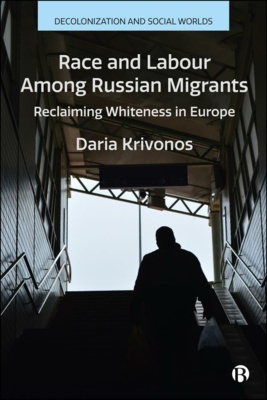
As racial boundaries are constantly negotiated in Europe and across the globe, this book explores how Russian migrant workers navigate racial capitalism in the Nordic region.
Challenging the idea of a ‘race-neutral’ Eastern Europe, the book reveals how Russian migrants actively claim whiteness, often finding themselves on the margins of acceptability. Uniquely combining postsocialist and postcolonial perspectives, the author examines how these migrants, seeking recognition as European, reinforce economic and racial divides shaped by global capitalism.
This timely work offers fresh insights into race, migration and the boundaries of whiteness across Europe’s borders.
Before the age of budget airlines and Instagram wanderlust, Russians journeyed west not for leisure but for enlightenment. In March 1697 Peter the Great set off from Moscow to take in the sights of Amsterdam, London and Vienna, among others. Travelling under a pseudonym, but much recognised thanks to his towering height and posse of over 200 hangers-on, the tsar’s odyssey included the expected museum visits and posh balls. But the point of the trip was to experience something that could not be found in 17th-century Russia: modernity. The incognito emperor spent time working as a ship’s carpenter in Holland, took stock of the latest naval warfare tactics in Portsmouth, then studied democracy in action in Westminster. Alas, news of insurrection back home brought the escapade to a close after a mere 18 months. Having experienced modernity on his sojourn, Peter sought to impose it on his people. He promptly decreed facial hair to be “superfluous” and imposed a tax on beards. On the rest of Europe he soon imposed a grimmer fate: the Great Northern war, which embroiled bits of Scandinavia and the Baltics for two decades.
Three centuries after Peter’s odyssey, and three years after his wannabe successor Vladimir Putin launched his own protracted war in Ukraine, Russian tourism is still alive and well in Europe. What it lacks in ambition—the grand tour of yesteryear has been replaced by the more modest Mykonos beach jaunt, Milan shopping spree or week’s skiing in Courchevel—it makes up for in numbers. Over 500,000 Russians were granted visas to the European Union’s Schengen zone in 2024, nearly half of which allow for multiple entry over many years. The visitor numbers are down by 90% compared with 2019. But that is still far too many for those Europeans who wonder how citizens from a country whose army is raining missiles on Ukrainian cities can cavort in its beaches and boutiques. On November 7th the EU announced Russians would no longer be granted multiple-entry visas in a bid to get the number nearer to zero. What seems commonsensical to some is decried as deeply misguided by others—including Mr Putin’s foes.
The ostensible cause for the tightening is security. Beyond invading Ukraine, Russia is needling Europe with subtler forms of aggression. Drones circling airports, Baltic ships dredging cables, cyber-attacks and other forms of mischief have set nerves jangling in Europe. Even if security services there struggle to pin such “grey zone” attacks on Russian operators, to them it makes sense to view every visitor from there as a potential spy, saboteur or propagandist. Ending multiple-entry visas is a way to ensure vetting happens before each visit, a sensible precaution.
But the driving force for the visa ban is moral outrage. “Starting a war and expecting to move freely in Europe is hard to justify,” said Kaja Kallas, the hawkish Estonian who serves as the EU’s foreign-policy chief. Along with others hailing from the bloc’s eastern fringe, she has long lobbied for Europeans to equate all Russians with the regime they live under. Whether oligarchs or mere members of the upper-middle classes, those Muscovites who can afford a jolly in Ibiza are tacitly propping up Putinism. They are our enemy, too, unless proved otherwise. Exemptions to the visa ban will be made for relatives of EU citizens, as well as dissidents and others who can prove their “integrity”.
The security argument seems hard to quibble with, even if GRU goons have plenty of fake Western passports in their double-bottomed attaché cases (and are said to hire locals to do their dirty work, often via social-media platforms). But the all-Russians-are-Putinists argument is trickier. Your columnist has felt the discomfiting “ick” of sharing a Parisian café terrace or Alpine chairlift with Russian visitors, enjoying a carefree interlude before (probably) returning to well-paid jobs back home that will generate tax revenue for Mr Putin’s war. Is this wretched invasion not, at least in part, theirs as well? How dare they enjoy themselves?
But just as discomfiting is to apply the sins of a dictatorship to all 144m citizens who live in it—some of the first victims of Putinism. Not so long ago, Europe promoted the idea that everyday Russians should be separated from the regime that patently does not represent them. Oligarchs and those close to the regime were to be sanctioned, but ordinary Russians were potential allies againstMr Putin. Why not welcome them to Europe? Every rouble spaffed in Milan boutiques drains Russia of resources.
From Russia with visas
With the war in Ukraine dragging on, a more hawkish line has prevailed. In EU circles it is now expected that Russia’s middle class should somehow “do more” to unseat Mr Putin, and that failure to do so amounts to collaboration. Yet for ordinary Russians to be held collectively responsible for “their” leader’s actions is to assume they have the agency to turf him out. Tell that to the thousands languishing in gulags for even the merest of protests. Indeed, some with intimate experience of gulagdom have opposed the EU’s move. Yulia Navalnaya, whose husband Alexei Navalny died in an Arctic penal colony, has argued the visa ban would isolate Russia from Europe in precisely the way Mr Putin has in mind.
As with sanctions designed to target the regime and not the people, it may be that anti-Putinists end up as collateral damage of an otherwise sensible policy. How could it be otherwise? Europeans are being told to expect a frontal confrontation with Russia, perhaps soon. It is one thing to feel no animus towards ordinary Russians, another to host them for a mini-break just as defence spending in Europe is surging to take on a threat from their backyard. To curtail Russians visiting Europe may be to lump the oppressed with their oppressor. But with apologies to (some) Russians, any other outcome would make Europeans appear hopelessly naive. Let’s have you all over when the war ends.
Join us for a discussion of Ambicoloniality and War: The Ukrainian–Russian Case with author Svitlana Biedarieva, in conversation with two prominent thinkers on issues of coloniality and Ukraine/Russia, Oksana Yakushko and Mykola Riabchuk.
Biedarieva’s book introduces the concept of “ambicoloniality” to describe the complex relationship between Ukraine and Russia, one in which Russia’s imperial desire to dominate Ukraine has paradoxically placed it under Ukraine’s symbolic influence. The work offers a fresh framework for understanding how colonial and decolonial dynamics have unfolded across shared borders rather than distant colonies, exploring the intertwined histories and cultural hybridities that continue to shape both nations.
Together, the author and discussants will examine how this new model redefines understandings of power, identity, and resistance in the post-Soviet space.
To force deserters back to war, Russia’s military tortures their families (Meduza, 12 November)
“Thou shalt not idolize your motherland”: Russian Orthodox priests on the war in Ukraine and the degradation of their church (The Insider, November 10th)
Tracked down, coerced, threatened: How Russia hunts down deserters and forces them back to the front lines in Ukraine (The Insider, November 10th)
The August sun was already warming Westlake Village when Anton Perevalov dressed in athletic shorts and decided to take an early morning stroll with his miniature pinscher, Ben, while his wife slept.
As he turned right onto Hillcrest Drive — a route he’d taken so many mornings before — an unmarked car stopped in front of him and a man he’d never met emerged and peppered him with questions: “Are you Anton Perevalov?” “Are you a citizen of Russia?”
When Perevalov, 43, answered in the affirmative, two other men exited the car and approached him. One took his phone and the other slapped handcuffs on him, ushering him and Ben into the car. As they drove toward his home, they instructed Perevalov to call his wife so she could come out and get the dog.
Perevalov pleaded with the men, saying that there had to be a mistake. He had documents proving he was legal to live and work in the United States. It didn’t matter, one of the men told him.
“You overstayed your visa,” he said. “You are under arrest and coming with us.”
Tatiana Zaiko sprinted out of the house in her pajamas and slippers, telling her 17-year-old son that his dad had been arrested and to lock the door. She’d be right back, she recalled telling him.
She wasn’t. Friends would later find the boy huddled under his parents’ bed, fearful that immigration agents may return for him too.
“I never imagined that something like this could happen in this country,” Zaiko, 43, said.
For years, Russian nationals and others seeking asylum in the United States were allowed to live and work here while their cases were being decided. That began to change in 2024 under the Biden administration and has been completely upended in the wake of President Trump’s efforts to boost deportation numbers, experts say.
Under Trump, those with a pending asylum claim aren’t exempt from being detained and deported. In fact, targeting asylum seekers in the United States makes it easier for immigration agents to carry out Trump’s stated plans of deporting at least 1 million people annually because they’re known to the government and easier to find, said Dara Lind, a senior fellow with the American Immigration Council.
“People who have done everything right are arguably easier for this administration to go after and more of a target than people who are actively trying to evade the law,” Lind said.
After Russia invaded Ukraine in 2022, the Kremlin introduced war censorship laws to make criticism of the war an offense punishable by significant jail time. Those who have been critical of the war and sought asylum in the United States are at risk of having property seized, being fined and spending significant time in prison if they were to return to Russia.
It was for this reason that Perevalov and Zaiko sought protection in the United States.
The couple applied for asylum in 2023 during what was initially a family vacation to New York City over Christmas. The trip was a longtime dream of their son’s, who grew up watching the movie “Home Alone 2: Lost in New York”, and wanted to spend the season taking in the sights of the Big Apple just like Kevin McCallister, the film’s lead character. Trump makes a brief cameo in the movie as himself.
But during the trip, the family received word from back home that the Russian police were looking to interrogate Perevalov about his opposition to the war in Ukraine. Perevalov hadn’t been shy about sharing his disapproval and had donated funds in support of Ukraine.
In schools, Perevalov said, they had introduced lessons of “military-patriotic education,” teaching children that Western countries wanted to take over Russia. At one point, their son’s teacher brought an AK-47 rifle to class and forced students to disassemble and reassemble it. The couple voiced their disapproval.
More than a week after arriving, the family decided returning to Russia would be too dangerous, so they contacted an attorney to help them apply for political asylum in the U.S. They filled out the application, Form I-589, and three weeks later received confirmation that their form had been accepted and they were scheduled for fingerprinting.
The document they received stated they were authorized to remain in the United States while their application was pending. They got work permits, settled in the San Fernando Valley and found jobs — Perevalov at a detailing studio and Zaiko as a house manager. They paid taxes and settled into the rhythm of life in America.
When immigration raids began ramping up across Southern California over the summer, the couple figured they had nothing to worry about since the Trump administration had emphasized it sought to deport dangerous criminals.
“We don’t understand,” Zaiko said. “We did everything right. We’re not criminals. We have documents. I thought it was a mistake, but it’s not a mistake.”
The Department of Homeland Security did not answer questions from The Times about the status of the couple’s immigration case.
“Perevalov and Zaiko will receive full due process and all their claims will be heard by an immigration judge,” Homeland Security Assistant Secretary Tricia McLaughlin said in an email. “For the record: a pending asylum claim does NOT protect illegal aliens from arrest or detention.”
The couple’s arrest — along with examples of others in similar circumstances being detained by federal officials — has spread fear through the Russian immigrant community in Southern California.
A Russian national living in Southern California who declined to provide his name for fear he could be targeted for deportation said he rarely goes out anymore. When he does leave his house, he scrutinizes every car that passes, wondering if it’s agents looking to detain him and his family.
His child has spent most of her life in the United States and doesn’t know what it was like in their home country. A return to Russia for him would probably mean death, he said.
“America was like a lighthouse of liberty for us,” the man said. “But it doesn’t feel that way right now.”
Despite the federal government’s assertion that it is targeting dangerous criminals, many of the Russian asylum seekers who have been placed in detention have no criminal records. Some have been victims of crimes, said Dmitry Valuev, president of the nonprofit group Russian America for Democracy in Russia.
Russian asylum applications to the United States rose sharply in the years since the country invaded Ukraine, as many Russians seek to leave for fear of political persecution or being conscripted into the military. This contributed to a growing backlog in immigration courts.
As of 2024 — the most recent data available — more than 14,600 asylum cases from Russia were pending in California, up from 1,771 in 2021, according to the Transactional Records Access Clearinghouse, which publishes immigration data.
In 2024, asylum applicants began landing in long-term detention while their cases were pending, a change that Valuev attributes to concerns about spies from post-Soviet countries infiltrating the United States and creating a national security risk.
After Trump’s inauguration, he declared a state of emergency at the southern border, where many asylum seekers including Russians showed up, allowing the federal government to deny them asylum and deport them back to their country of origin.
“Now they use any excuse, any reason to detain an individual whose immigration situation is pending,” Valuev said.
In June and August, two flights out of the United States involved the transfer of detained Russian nationals to Egyptian government custody. Those individuals were forcibly returned to Russia, including people who had been detained in the United States for more than a year after seeking asylum, according to Human Rights First, which tracks immigration flights out of the United States.
When they arrived at an Immigration and Customs Enforcement facility in downtown Los Angeles, Perevalov and Zaiko were again fingerprinted, had their belongings confiscated and were taken to roughly 1,000-square-foot holding cells separated by gender. On the men’s side, about 50 men were packed into the windowless cell. It felt like the air conditioning was always on and the concrete floor detainees slept on was freezing, the couple said.
They were given foil emergency blankets, which did little to warm them. Zaiko was given a thin mat to sleep on, a luxury not afforded to the men. The lights never went off. They dimmed only slightly at midnight, which was the only way to tell a new day had begun.
Meals were given at random times, sometimes at 1 a.m. or 2 a.m. When Perevalov asked for a toothbrush or other basic hygiene items, an officer told him it wasn’t “a hotel.” Zaiko, who takes medicine daily, had to have friends bring her pills from her home to the facility.
When the men flushed the toilet, the waste would back up into the women’s plumbing, creating a stench that Zaiko said was “unbearable.”
They were both questioned and given deportation documents, which they didn’t fully understand and refused to sign. They said their requests for translators were ignored.
After five days, they were shackled and transferred to separate detention centers — Zaiko to Adelanto and Perevalov to a center in San Diego — where they spent nearly a month before their attorney could get them released on bond.
Perevalov and Zaiko shared their story during a Los Angeles City Council meeting last month, a decision they made so that people could better understand the risks even asylum seekers face as immigration sweeps continue in Southern California, they said.
Standing at the lectern, Zaiko broke down in tears describing being handcuffed by immigration officers, then retreated into her husband’s arms.
Los Angeles City Councilmember Bob Blumenfield called the immigration raids a “crisis” for America during the meeting.
“There are many Russian couples who are here who would potentially be killed if they were sent back to Russia and they’re in this situation,” he said. “This administration is harming our communities and seem to be throwing our constitutional rights out of the window. This is America. This is not Russia.”
As of Friday, Perevalov and Zaiko were still waiting to hear what’s next for them in the immigration process.
In the meantime, they’re focusing on their son, who is still struggling with what happened even after his parents returned home. Zaiko will never forget the first thing he said to her when she arrived from detention — a simple plea that said so much.
The European Union has added new restrictions on issuing multi-entry visas to Russians who live in Russia as a response to the continuing war in Ukraine. Most will now only be able to obtain a single-entry Schengen visa. The decision is not only reasonable, but also a very mild measure considering that there are many exceptions, including family members of EU citizens and Russians residing in the EU, transport workers, and “persons whose reliability and integrity is without doubt,” including dissidents, independent journalists, human rights defenders and representatives of civil society organisations. Nevertheless, prominent Russian opposition activists have responded by condemning the move, which only casts doubt on their claims to genuinely care about the crimes their country is committing.
“You can’t blame a whole country for the actions of its government,” exiled Russian activist Ilya Yashin told the UK’s Guardian newspaper. Meanwhile exiled Russian journalist Sergei Parkhomenko called the EU decision “extraordinary in its idiocy, ineffectiveness and demonstrative helplessness”. Former US ambassador to Russia Michael McFaul posted on X “Progress” in response to the news of the visa restrictions, to which exiled Russian journalist Leonid Ragozin responded, “The man who is trying to make even most pro-Western Russians hate the West because this half-witted policy results in thousands of personal tragedies, ruined families and relationships, people unable to see their elderly parents as well as additional risks and headaches for opposition activists. Not even because he means it, but because he is a vain, unreflective, incompetent ignoramus, a typical representative of the community that handled Russian affairs for the US government over the last 30 years.”
The noise the exiled Russians are making about visas for frequent trips to the EU contrasts starkly with their silence about Russia’s latest attacks on Ukrainian civilians. Last night Russia launched a massive attack on Kyiv, striking blocks of flats with missiles and drones, killing at least six people and injuring 35 others. The Azerbaijani embassy in the Ukrainian capital was also damaged by Iskander missile fragments, which may or may not have been coincidental considering the poor relations between Russia and Azerbaijan in recent months.
“This was the bedroom. If we had been sleeping here we would have been crushed. All of this would have fallen onto the bed,” a young woman in Kyiv told a reporter, pointing to a pile of rubble and broken windows in the bedroom of her flat. “Everything will be fine, because despair is a sin,” her mother said. “Everyone is alive. But we hate Russians.” Last Friday night Russia also struck a block of flat in Dnipro with a drone, killing two people and injuring 12 others.
“Ukraine is responding to these strikes with long-range strength, and the world must stop these attacks on life with sanctions,” Volodymyr Zelensky posted on X in response to the latest attacks. “Russia is still able to sell oil and build its schemes. All of this must end. A great deal of work is underway with partners to strengthen our air defense, but it is not enough. We need reinforcement with additional systems and interceptor missiles. Europe and the United States can help. We are counting on real decisions. Thank you to everyone who helps.”
It is very hard to see why the EU or any other democratic countries should welcome Russians for holidays when so many of them are participating in the war against Ukraine. In the case of Russia, the whole country really can be blamed. And the EU has gone out of its way to help the Russian complainers who are living in freedom while demanding greater leniency and sympathy for their compatriots. If anything, more countries should follow the EU’s example, and the measures taken should be even stricter.
Two sentenced for murder of Kherson Oblast man who criticised war
A court in occupied Kherson Oblast has sentenced two Ukrainians for the murder of a man who criticised the war and Russia. 58-year-old Petr Martynchuk was abducted and strangled in March 2023 because he openly supported Ukraine and spoke out against the occupation of his village. Oleksiy Yansevich and Mikola Antonenkov, described as Ukrainian collaborators, were arrested for the murder, along with Russian citizen Andrei Timchenko. After drinking alcohol the three got into an argument with Martynchuk about the war, took him to a field and strangled him with a wire. When the wire broke they finished the job with a shoelace. Yansevich was sentenced to 16 years in a maximum-security prison and Antonenkov to 12 years. Timchenko, who watched the murder, helped to hide the body and burned the victim’s Ukrainian passport, was given no sentence due to the “statute of limitations”.
Stoptime buskers jailed for third time
Singer from the group Stoptime Naoko (Diana Loginova) and her fiancé Alexander Orlov, the group’s guitarist, were arrested for a third time on Tuesday after serving their second consecutive jail sentences and given third sentences of 13 days for performing the banned music of “foreign agents” in front of a crowd on the streets of St. Petersburg. The group’s drummer, Vladislav Leontyev, was released after serving two consecutive jail sentences. Meanwhile in Perm musician Katya Romanova, who performed in solidarity with Stoptime, was given a seven-day sentence followed by a 15-day sentence. Courts have used the excuse that the musicians organised an unlawful gathering.
More people sentenced for anti-regime activities
A military court has sentenced 56-year-old IT specialist Sergei Pravdeyuk from Irkutsk Oblast to 6 ½ years in prison for justifying terrorism for Telegram posts that supported Ukraine and criticised the Russian government. The same military court sentenced Mark Orlan from Irkutsk Oblast to five years in prison for justifying terrorism for a WhatsApp status that the FSB considered supportive of the ISIS attack on Moscow’s Crocus City Hall in March last year in which 149 people were killed.
A court in Kostroma Oblast has upheld an appeal by prosecutors and changed a suspended sentence to a real five-year prison sentence for bookshop owner Yan Kulikov from Soligalich for “spreading fakes about the army”. Kulikov was not in court for the sentencing because he was taking care of his sick mother, but the court ordered his immediate arrest. He was given the five-year suspended sentence in September, having been sentenced to six months of correctional work in 2023 for two VKontakte posts about the Russian army shelling Ukrainian cities. Kulikov’s lawyer argued that the defendant was not aware that anything he had posted was false. A photograph of Kulikov showed him with handmade signs saying “Turn off the zombiebox” and “War is evil, we know,” highlighting the Z symbol for the invasion of Ukraine.
“When I had decided to study Russia’s history and literature in college, my father warned me that our homeland was a country without a future,” Ioffe recalls. She returned to the United States in 2012 and is now convinced that he was right. She points out that Putin has deployed “traditional values” to consolidate control. Her conclusion is unsparingly bleak. “A new Russia had dawned, and it was a lot like the old one,” she writes. If there’s one change she notices, it’s this: Like the brief efflorescence of emancipation, all the people she loved there are gone.
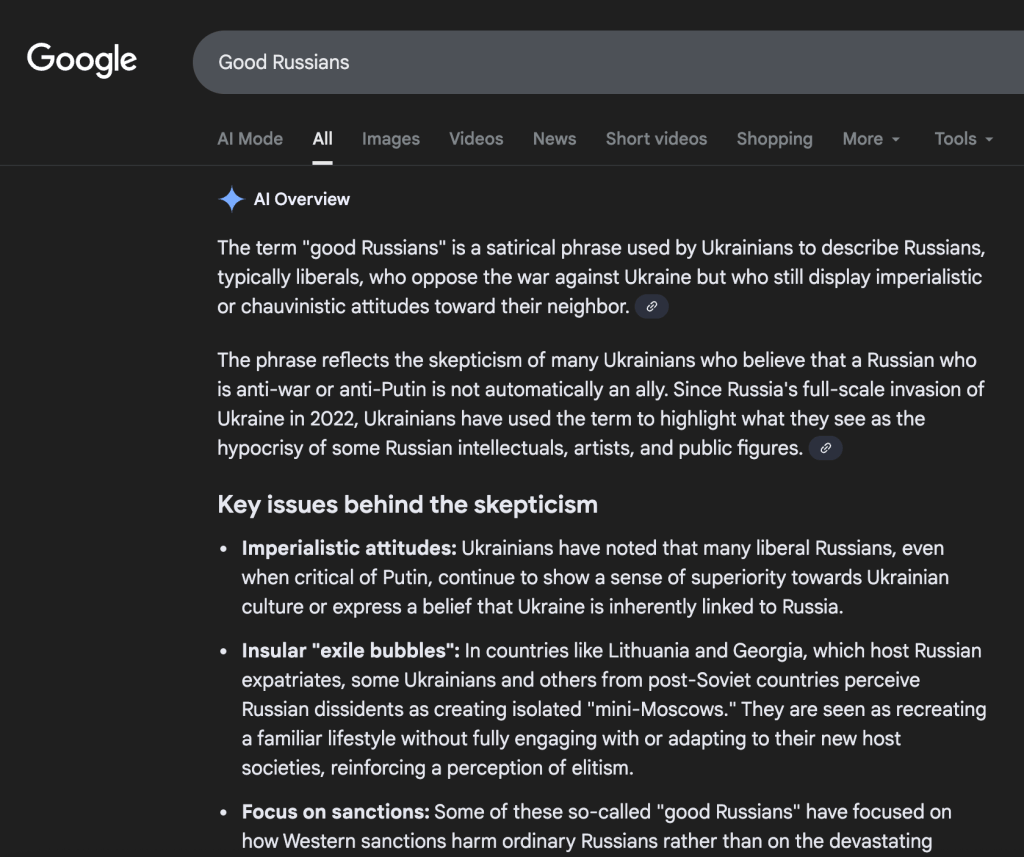
In exile, Bakunina will be free to speak and write what she likes. It is a long and honourable tradition. But it seems unlikely to bother Putin. He calls it “a natural and necessary self-cleansing of society [that] will only strengthen our country.” He could scarcely be further from the truth. The ones who are leaving are the Good Russians.
ICE agents in the U.S. have detained Alexander (“Sasha”) Bolokhoev, a cofounder of the movement Tusgaar Buryad-Mongolia, which advocates for Buryatia’s independence [from the Russian Federation].
Sasha left Russia in 2021—that is, before Russia’s full-scale invasion of Ukraine. In April 2022, he arrived in the U.S. and claimed political asylum. Unlike many of our compatriots, however, Sasha did not lie low and do nothing, pointing to the fact that he had been persecuted on ethnic grounds in Russia. He immediately joined the fight. He and Marina Khankhalaeva founded the Tusgaar movement, which has already been added to Russia’s official list of “extremists and terrorists.” He also spearheaded a congress of Buryat political organizations in New York.
Sasha’s detention by ICE was in no wise connected to his activism. He was detained in the state of Oklahoma during one of the anti-immigrant dragnets which have become a daily fact of life under Trump. Sasha was stopped on the highway and taken directly from his vehicle, which was left standing there.
Sasha is in the US completely legally. He has all the necessary papers, including a work permit. In the current reality, though, this may not matter much. Even green card holders and U.S. citizens have been detained and deported from the country.
Sasha is currently in custody in a deportation detention center in Oklahoma. He is held there along with a Chechen man who was also detained during a similar raid. The worst possible outcome for both of them would be deportation to Russia. I agree with Marina that torture and death would await Sasha in a Russian prison.
The Trump administration has instituted the systematic deportation of Russians on standalone flights to Moscow. As of October, at least three known charter flights have deported over a hundred people from the U.S. back to Russia. Upon landing in Moscow, all of these people are screened by the FSB (Federal Security Service) and they are often sent straight to a detention center.
Source: Julia Khazagaeva (Facebook), 21 October 2025. Translated by the Russian Reader. A special thanks to Ms. Khazagaeva for sending me the subtitled video interview with Sasha Bolokhoev, above.
The full interview with Buryat activist in exile Alexander Bolokhoev (in Russian and Buryat, with no subtitles)
Alexander Bolokhoev is a Buryat Mongol who immigrated to the United States and is a nationalist. He graduated from school with straight A’s, but soon left to work in Korea and then in the United States, where he currently is employed as a truck driver. In his featured spot “Saashyn Zam” (“Sasha’s Path”), Bolokhoev will talk about everyday life in the United States and his journey in life. You can join the discussion and ask questions every Wednesday at 8:30 p.m. (Ulaanbaatar time) on the channel @MiniiMongolGer.
Source: Buryadmongol (YouTube), 12 June 2024. You can watch a subtitled six-minute excerpt from this same interview in my translation of Ms. Khazagaeva’s Facebook post, above.
Buryat Emigrant Detained in US: Faces Deportation and Criminal Prosecution in Russia US
Immigration and Customs Enforcement (ICE) has detained Alexander Bolokhoev, an activist for the Buryat independence movement who has been living in the country since 2022 and seeking political asylum. The news was reported by Lyudi Baikala (People of Baikal).
According to the publication, Bolokhoev moved to the US in the spring of 2022, where he worked as a truck driver and participated in anti-war protests. He is an activist for the movement “Tusgaar Buryaad–Mongolia,” which is recognized as “terrorist and extremist” in Russia. In 2023, Bolokhoev participated in a congress of Buryat political organizations in New York, signed a declaration of Buryat independence, and joined the Buryat Independence Committee.
The movement’s leader, Marina Khankhalaeva, stated that if Bolokhoev is deported to Russia, he could face imprisonment or death due to his outspoken position and participation in the activities of the banned organization. The activist is currently being held in a detention center, and his status and a possible court decision on deportation are not yet known.
The movement “Tusgaar Buryaad–Mongolia” (“Independent Buryat-Mongolia”) was founded in the US by former opera singer and current homemaker Marina Khankhalaeva, and historian and professor Vladimir Khamutaev. The initiative advocates for “the self-determination of the Buryat people and the creation of an independent national state.”
Both founders have lived in the US for over ten years. Khankhalaeva was not previously involved in politics and stated she turned to activism after the start of the war in Ukraine. Khamutaev is known for his research on the annexation of Buryat lands to Russia and has been a proponent of Buryat autonomy since the 1980s.
The movement gained notoriety after Khankhalaeva spoke at the European Parliament during the Forum of Free Peoples of Russia, where decolonization issues were discussed. In 2023, the organization “Tusgaar Buryaad–Mongolia” was designated as terrorist and extremist in Russia.
According to Sota sources, the movement actively sought Buryat emigrants, suggesting they build their asylum cases through anti-war and “decolonization” speeches. However, after Trump came to power and mass migration acceptance was halted, such actions ceased to be beneficial for the emigrants but created a threat for them in Russia.
On a rainy evening in March, a Russian man named Dimitry stumbled through the dark, looking for a hole in a fence. In a former life, Dimitry worked as a fitness trainer for cops and bureaucrats in St. Petersburg, so he figured he could jump the barrier — “Honestly, with the shape I’m in, it wouldn’t be a problem.” But he was less confident about landing cleanly on the jungle terrain on the other side. Better, he thought, to look for a break in the chain-link.
The fence enclosed CATEM, a de facto immigrant detention center in Costa Rica where Dimitry, his wife, and their 6-year-old son were sent in February, along with 200 other asylum-seekers from Armenia, Afghanistan, Iran, Turkey, and Russia, among others. They were part of the first wave of migrants and asylum-seekers to be deported by the Trump administration to third countries — places other than their country of origin where, generally, the migrants had never been.
Dimitry’s plan, quickly formed a year earlier in an attempt to evade Russian authorities, had seemed straightforward. The family would fly to Tijuana, where they would download the U.S. Customs and Border Protection’s app, file a claim for political asylum, and wait to be given an appointment. But on January 20, 2025, after eight months of waiting, their appointment was canceled. They drove to the Tecate border crossing and restated their political-asylum claim. After being handcuffed and fingerprinted, the family was placed in a holding facility at the Otay Mesa border crossing. They spent a month there, separated, before they were put on a military plane to Arizona. In Arizona, they were led to a bus. One of the migrants asked the driver where they were being taken next.
“Costa Rica,” the driver replied.
Costa Rica, Dimitry thought. Is that a city or a country?
Russian activist Ilya Kapustin has fled to Finland, where he is currently seeking asylum. Photo by Pasi Liesimaa. Courtesy of Iltalehti
Russian Activist Ilya Kapustin, Seeking Asylum in Finland: “When the Stamp Thudded in My Passport, It Was Like a Huge Weight Had Been Lifted from My Shoulders”
Nina Järvenkylä Iltalehti
March 10, 2018
A familiar looking man sits opposite me. We have met earlier via video link, but now there are coffee cups between us.
“I now feel considerably better than in Russia,” says Ilya Kapustin, 25, but he grasps for words when I ask how things are going.
Iltalehti interviewed Kapustin in early February, just a few days after Russia’s security service, the FSB, most likely abducted and tortured him. At the time, Kapustin was still in Petersburg, and the interview was conducted via video link. Kapustin is currently in Finland. He has applied for asylum.
Kapustin is still the same quiet and slightly nervous man as when we spoke the last time.
“I feel a bit shakey. I still sleep badly and cannot get to sleep. But the situation in Russia was even worse,” Kapustin says at first.
He says he also feels sad.
“I may never return to Russia.”
“More importantly, however, there is no threat to my freedom,” he continues.
Kapustin said earlier he was not terribly politically active. Now he can speak more freely because he has left Russia. The connections with terrorism, alleged by the FSB, are absurd. Kapustin has been involved in politics, however. He has been involved in activities opposed to Putin’s regime and the dominant power structures in Russia.
Due to the trumped-charges against them, his fellow activists in Russia could be facing as many as dozens of years in prison.
Escape to Finland
Kapustin decided to escape from Russia to Finland, like many other Russian dissidents and members of minorities have done in recent times.
In an interview with Yle, Esko Repo, head of the Finnish Migration Service’s asylum, said that as a whole it was a matter of hundreds of Russians who had applied for asylum in Finland. In 2016, the number was 192, and last year it was over 400. Repo told Yle there had been 73 applications since the beginning of the year.
Last year, 21 Russians had their applications approved, and 12 of these were asylum seekers.
Kapustin traveled to Finland in a quite ordinary way. He bought a ticket for one of the minibuses that circulate often between Finland and Russia. The mode of travel was humdrum albeit nerve-wracking in Kapustin’s circumstances.
“At the border, one man was questioned for fifteen minutes,” Kapustin recounts how things went on the Russian side of the frontier.
He was afraid that he, too, would end up being grilled by officials. Luck was on his side, however.
“I noticed a second queue had been opened at the border checkpoint. I quickly moved over to it.”
“When the stamp thudded in my passport and the trip continued on the Finnish side, it was like a huge weight had been lifted from my shoulders,” Kapustin says.
Ilya Kapustin is now trying to put his life together in Finland. Photo by Pasi Liesimaa. Courtesy of Iltalehti
“My Mind Was Playing Tricks on Me”
Just a day before his escape, their minds had been playing tricks on Kapustin and his loved ones.
Kapustin fled to Finland as soon as his visa was ready. The last night at his sister’s home had been excruciating, however. Kapustin can now smile at what happened, but that night nearly a month ago was as frightening living through a nightmare.
A minivan with dark-tinted windows was parked on the street in front of his sister’s flat. His sister and her husband did not recognize the vehicle, but it was quite reminiscent of the one in which Kapustin had been kidnapped and tortured in January.
“I was really afraid. I immediately packed my belongings and left their place in the morning,” Kapustin recounts.
It later transpired the vehicle parked in the street was owned by his sister’s neighbor.
“He had bought a new vehicle,” Kapustin laughs.
“My mind, however, was playing tricks on me, because I was really afraid at the time. Until I arrived in Finland I wondered who was in the vehicle lest they do anything to my sister’s family.”
Kapustin’s loved ones are under surveillance in Russia. For example, his brother-in-law’s VK social network page has been hacked. He had posted several articles about Kapustin’s case on his page.
“The [hackers] posted only a single link on the page. It led to the site of a well-known reality TV show,” Kapustin says.
In the event, the ludicrous part was that the reality TV show in question, Dom 2, had been hosted by TV presenter and Russian presidential candidate Ksenia Sobchak. Kapustin regards the hack as bad police humor.
“They wanted to show us they can do whatever they like.”
Life in Finland
Kapustin’s parents and his sister and her family still live in Petersburg. The family urged Kapustin to flee after he had been abducted and tortured. Nevertheless, Kapustin told them about his escape only after he had arrived in Finland.
“Mom ordered me to leave, but I didn’t tell them ahead of time [when I was leaving] just in case.”
His parents and sister know about the events that led to the escape, but Kapustin did not tell them all the details. He believes the authorities will not go after his family.
“I’m not so interesting to them (the FSB),” he conjectures.
His life is in Finland now. Kapustin worked as an industrial climber in Russia and hopes he can find similar work in Finland.
“I worked in high places. We installed things, cleared snow from rooftops, and washed windows,” Kapustin recounts.
He understands the training he received in Russia is not necessarily valid in Finland and is prepared to study and do other work.
And how will he deal emotionally with the waiting, with going through the asylum application process, and coming to grips with the ways of a new society?
“I’m trying to think of it as an adventure so I can move forward. It is an episode in my life I’ll remember, and now I can remember it as a free man and not in prison,” Kapustin reflects.
Translated, from the Finnish, by the Russian Reader. Thanks to Comrade AR for the heads-up.
If you haven’t heard yet about the Penza-Petersburg “terrorism” case, you need to read the following articles and spread the word.




 Russian activist Ilya Kapustin has fled to Finland, where he is currently seeking asylum. Photo by Pasi Liesimaa. Courtesy of Iltalehti