Hafsa Sabr: Geneva or Bust

Refugees in Europe demonstrate in support of France and against ISIS terrorism. Photo by Hafsa Sabr. Courtesy of Maria José Ferreiro
Refugees in Europe demonstrate in support of France and against ISIS terrorism. Photo by Hafsa Sabr. Courtesy of Maria José Ferreiro

Geneva or Bust
antidotezine.com
January 28, 2016

AntiNote: Hafsa Sabr is a vital presence at the enormous, improvised, and barely survivable camp in Dunkirk, northern France. She has been instrumental both in coordinating with independent aid and solidarity organizations operating in the camp as well as in insurgent media work, filming conditions in camp and reporting day-to-day on activities and incidents there.

The following could be a model script for the dystopian road-trip movie of the future. Its hopeful, tragic anger not only fits the Antidote vibe, but it also reveals much about revered institutions and the real effects their often arbitrary decisions have on people. We have edited it lightly for clarity, and thank Hafsa for her kind permission to print it.

Geneva or Bust
23 January 2016
by Hafsa Sabr

We need to talk. Everyone asked us what we did in Switzerland. This is our answer.

One week ago we heard that the UN would make an urgent conference in Switzerland: A journalist from New York came with her team to film the miserable conditions in the camp. She also made interviews. Her video was supposed to be shown during the UN meeting!

At this moment we all thought that the UN could change the world, and would make huge decisions about the camps of Dunkirk and Calais.

On Tuesday morning we (Sarhang, Besh and I) prepared ourselves to go to Paris. We were in a hurry and positively excited, thinking about what we were going to say.

We had an invitation from the UN, and that’s right: Sarhang and Besh are refugees and they don’t have any passport or ID card, but according to international laws on humans rights after 1948, everyone is free to travel anywhere.

Anyway, in Paris we met the journalist, Dina. She organized the way to participate in the conference (the open forum “Immigration to Integration”) and talk, mainly about the jungle in Dunkirk and the more than three thousand refugees there—men, women and children, and babies of course.

In the train station the French police surrounded Sarhang and Besh. They said they could be potential terrorists! I told the police guy that the refugees ran away from ISIS; how can they be terrorists? After ten minutes of negotiations they let us go to take the train.

While we were in the train, the journalist told us that the UN warned the police! Because Sarhang and Besh don’t have any papers! And if they enter Swiss territory, some people who invited us will be fired from the their jobs. This is the UN.

We wanted to go back home! The UN canceled our invitation!

When we crossed the border from France into Switzerland, at the first train station the border police stopped us. They were looking for us! They put us in jail for almost six hours! We were interrogated! And one guy from the police told me, “I’m sorry, what I’m going to say might hurt you, but we received the order to focus on Arab people. We don’t distinguish between Kurdish or Amazigh.”

After a few hours they asked for a lot of money from us. They wanted 170 euros. Sarhang and Besh could not afford it, so they let them off it. We even showed them the paper of invitation, but they didn’t care…After that, they told us we were all free. On our way to the last train to go back to France, a woman and a man from the police team stopped me once again and told me to stay here, and to pay 480 euros in taxes!

Sarhang and Besh told the lady they would not go back to France without me. I warned the two police that I would not give one euro to them because this money in my wallet was not mine! This money was for the refugees! And in my religion it’s called amana, which means a trust! I was upset and crying. The police man was kind. He told us, “I know that, but it’s my boss’s orders…otherwise I’m so sorry for what’s happened to you.” We were disappointed about everything, and we went back to the police office.

I will stop here and go back to history, to the 1880s when the people of southern Europe ran away because of inequality and the dictatorial law of rich people. Many people sacrificed to get to a life with rights and safety. In 1908 the same thing happened in Europe with African people.

And now in 2016, in a period of modernity and technology: in power and politics, no one cares about people who fled because of war, even Kurdish people who are fighting ISIS.

Dina was in contact with UN staff to find a way to get us free of the Swiss border police. But after another five hours they fingerprinted Sarhang and Besh. Then the police started shouting among each other. And then they let us go. We were FREE. El hamdullilah.

We thanked the one kind policeman, he had tears in his eyes.

We returned by bus to Mulhouse, and we slept there; the day after, we took a train to Paris and from Paris to Dunkirk. We were “home.”

We had spent a lot of the money that the refugees raised to help Sarhang and Besh join the conference. But it’s the UN: everyone in the jungle was waiting for great news from Sarhang and Besh. Unfortunately, they didn’t have anything to say.

They had a last hope with the UN.
Just think about it: the UN made a conference about refugees in Dunkirk and Calais, but they didn’t let one refugee come to represent them.
Shame on them.

They called the cops! The UN.
I give up on humanity.

Please share this post as much as possible.

Sarhang, Besh and Hafsa

How Russia Treats “Compatriots”: The Case of Tatyana Kotlyar

A residence permit on Lermontov Street: why a human rights activist from Obninsk violates the laws of the Russian Federation
Julia Vishnevetskaya
October 3, 2015
Deutsche Welle

Human rights activist Tatyana Kotlyar, who has registered over a thousand immigrants at her home, is on trial in Obninsk. DW got to the bottom of the case.

0,,18759229_403,00
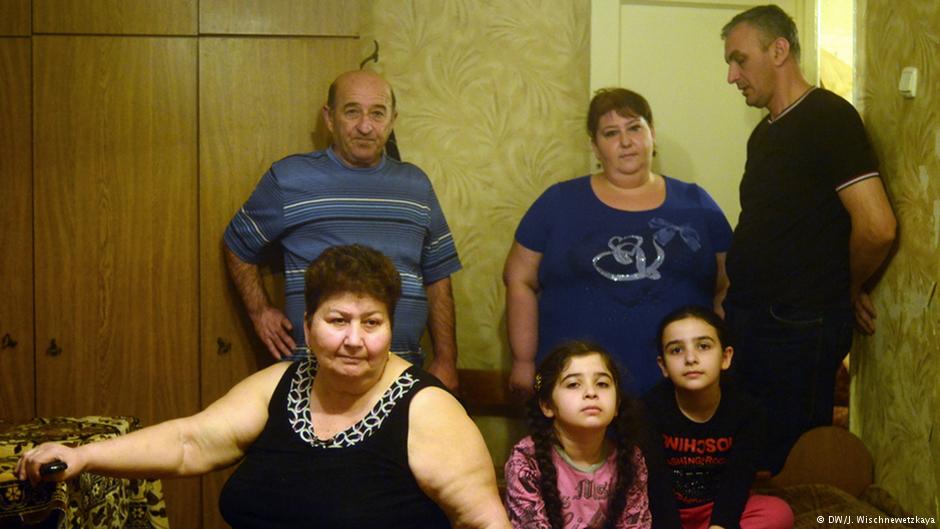
Human rights activist Tatyana Kotlyar

The latest hearing in the case of human rights activist Tatyana Kotlyar, on Friday, October 2, at the Obninsk Magistrate Court, began with a surprise. It transpired that the judge hearing the case had resigned a mere two days earlier.

“I wonder if there is an article in Criminal Code for causing a judge to resign?” joked defense counsel Illarion Vasilyev.

He does not rule out that the resignation was connected to the Kotlyar case. Earlier, 43-year-old Judge Svetlana Baykova sent the case back to the prosecutor’s office because new circumstances had come to light: the list of immigrants the defendant had been accused of having registered in her “rubber” flat had changed. Along with the new circumstances has come a new judge, Dmitry Trifonov. Now everything has to begin again, complains Vasilyev, although, during the previous phase, examination of the witnesses alone lasted two months. Since none of the witnesses was present at the October 2 session, a substantive consideration of the case was postponed until October 12.

The substance of the case
Former Obninsk City Assembly deputy Tatyana Kotlyar does not deny that she has registered over a thousand people in her three-room flat on Lermontov Street. She registered them deliberately and made no secret of the fact, even mentioning it in an open letter to President Putin. Former residents of such different countries as Kazakhstan, Ukraine, Tajikistan, Germany, Israel, and even Brazil are registered in Kotlyar’s flat.

“There were Old Believers from Brazil, who had decided to return to Russia seventy years later,” recounts Kotlyar. “They sold everything  and left. When they showed up on my  doorstep in their old-fashioned caftans, I thought a folk music ensemble had arrived. Now they have received land in rural areas, they have received Russian passports, and they are fine.”

Most of Kotlyar’s wards arrived in Russia under the state program for the resettlement of compatriots. In operation since 2006, the program involves a simplified procedure for obtaining Russian citizenship for people “brought up in the traditions of Russian culture, [and who] speak Russian and do not wish to lose touch with Russia.” Kaluga Region is one of the regions participating in the program. In these regions, new residents of the Russian Federation are supposed to get full support from the state, including assistance finding employment and even relocation expenses.

“But no one warned them that the first thing they would need to do would be to register themselves at their place of residence,” complains Kotlyar. “Without registration [propiska] it is impossible to draw up documents, send children to school, and register for care at a local health clinic.”

“She didn’t take a kopeck from us”
This was the problem faced by Diana Tigranyan, who moved with her family from Yerevan to Obninsk.

“At the Russian consulate in Armenia they promised us mountains of gold! No one said we would need a residence permit,” recounts Tigranyan. “But here it turned that the owners of the flat we rented were afraid to register strangers. There are firms that charge 15,000 rubles a person for this service. But I have a husband, parents, and two children. Where would I get this money?”

0,,18759230_403,00
Diana Tigranyan and family

It was not just anyone who advised Tigranyan to turn to Kotlyar, but the Federal Migration Service itself.

“The female employee who was processing my documents said, ‘I cannot help you in any way, but out in the hallway there is a woman. Try approaching her.'”

At first, Tigranyan thought Kotlyar also made money from residence permits.

“I offered her money, and she turned it down. When we told about this in court, no one believed it. But she really is a saint. She didn’t take a kopeck from us.”

Criminal case
Tatyana Kotlyar became an offender on January 1, 2014, when the so-called law on rubber flats came into force. It makes registering a person somewhere other than their place of residence a criminal offense. Criminal charges were filed in March 2014. Kotlyar was charged under Article 322.2 of the Criminal Code (“Fictitious residence registration of foreign citizens in residential accommodation in the Russian Federation”) and Article 322.3 (“Fictitious local registration of a foreign citizen in residential accommodation in the Russian Federation”). Interestingly, on the list of twelve names entered into evidence by the prosecution, there are two people whom Kotlyar has never seen herself.

“Apparently, some woman at the passport office or post office who handles registration knew about my flat and just registered some more people there, for money or as a favor.”

In recent months, Kotlyar has registered several hundred Ukrainian citizens.

“They come to see me every day. They include both refugees from hot spots and men from other regions who are threatened with being drafted into the army in Ukraine. The Russian government has promised to help, but ultimately these people face the same problem as all immigrants.”

Kotlyar is certain that the law on rubber flats violates human rights.

“This did not happen even under Stalin. Then they sentenced people to camps for residing without a passport or residence permit, but at least they didn’t punish the landlord.”

According to Kotlyar, the government is trying to fight the effect rather than the cause.

“Where there is demand, there will always be supply. The problem is not rubber flats, but the very institution of the residence permit. It should be a matter of simple notification, and its presence or absence should in no way affect the provision of civil rights.”

0,,18759231_403,00
Illarion Vasilyev, Tatyana Kotlyar’s defense attorney

She helped solved the crime
Illarion Vasilyev, Kotlyar’s attorney, understands that the human rights activist has deliberately put herself in the way of the new law to draw attention to the problem.

“Yes, it’s her civic stance. She knows she will be held liable, and she has issued a challenge,” says Vasilyev in an interview with DW. “Has she harmed anyone? Yes, she probably has. The service of legalizing compatriots costs a lot of money, and Kotlyar constitutes competition for the firms that make money on this. But the people who are questioned as prosecution witnesses at the trial bow at her feet and say thank you.”

Article 322.2 of the Criminal Code stipulates a fine of 100,000 to 500,000 rubles or imprisonment for up to three years for fictitious registration. The article, however, contains an important proviso.

“A person who commits an offense under this article shall be exempt from criminal liability if he helped solve the crime and if his actions do not constitute another crime.”

According to Vasilyev, no one has helped solve the crime as much as Kotlyar herself has.

Translated by the Russian Reader

Andrei Nechayevsky: Why I Left Crimea

juliawinston-nechaevsky pic
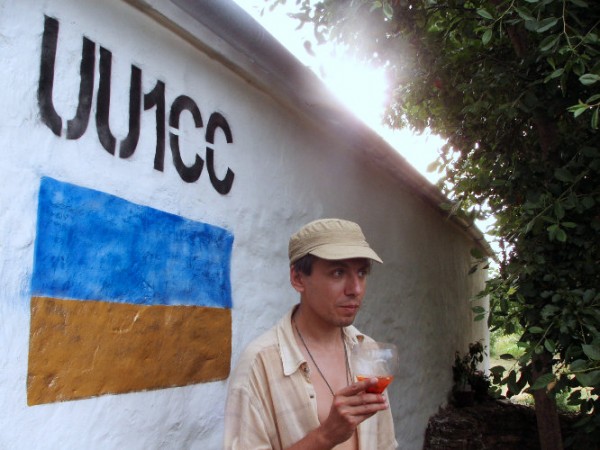
Andrei Nechayevsky

I am from Donetsk myself. My wife and I moved to Crimea ten years ago. We built a house outside of Kerch, in the backcountry. There isn’t a soul there in winter.

Suddenly, in February 2014, Russian choppers were flying over us every night. Then troops marched through Kerch. I saw it with my own eyes.

There was this fabulous thing: Russian religious pilgrims, columns of buses filled with people who were supposedly traveling en masse to worship Crimea’s Orthodox relics. I watched them change into army uniforms in a church yard.

Kerch was inundated with completely atypical characters: there were a huge number of Cossacks. I was getting hassled in town on the street, something that had never happened before. Drunken, fairly strong men would come up to me and ask, “Where you from, lad?” And this “lad”  is fucking forty-five years old!

I got the feeling that everyone had lost their minds. There were rumors all over Crimea that the Right Sector was coming to kill ethnic Russians. Everyone was nervous they would knock down the statue to Lenin, erect a monument to Stepan Bandera, and force everyone to pray to it. People were completely worked up.

An old friend friend rushed into my arms and cried, “Andryukha! Our boys shot down three Banderite planes today, cheers!”

“You mean, three of our boys were shot down?”

“What, are you on the side of the Banderites?!”

“Well, yes.”

“I’ve long known you somehow weren’t Russian.”

Then all the money I had to live on, forty thousand dollars, was confiscated: my bank account was blocked. When everything went totally south, Dinka (my wife) and I wrote a statement renouncing compulsory Russian citizenship, packed one bag each, and left. I am not sure we locked the door as we left the house.

We certainly did not want to leave. It was our whole life. We were very sad as we walked around the garden we had tended for ten years. Dinka took care of the plants, and I fixed things and pottered about, and even was into amateur radio. I left all my things there. I took two English radio tubes and one capacitor, more for the memories than for anything other reason, really. Maybe we will even try to sneak back there and get everything out.

It was a terrible pity, and it still is a pity. But there are things I cannot tolerate under any circumstances. It is like you wake up in the middle of the night and you are being raped. The guy keeps raping you all night, but in the morning he tells you that now you and he are going to the registrar to get married.

There was nothing good in store for us there. The propaganda phase lasts until the invasion, and after the invasion the mopping up and assimilation phase starts. I have read textbooks on how to invade countries. My grandfather was in SMERSH, he was a colonel in the KGB. He had all these amazing textbooks on integrating occupied territories. When I saw this shit was happening where I lived . . .

Good Lord, I would like to live in a province near the sea, but not in a place where “unreliable elements” are purged. All of these special operations are the same. They are taught the same way they were taught before. It is an old scheme, but it works.

We have now moved to Lvov. We are not exactly thrilled: there is no sea here. But life in the new Crimea was incompatible with my idea of a normal life.  If it hadn’t been Russia [that invaded Crimea], but an aggressive Finland, then I probably would have stayed. But Russia now heads the list of countries where I would not want to be.

I think something went wrong in Russia. and quite a long time ago, but I don’t know how to treat it. Dinka has sister whose husband is a priest. Both of them are very Orthodox, very observant. When the first Maidan happened in 2004,  they left their home and fled to the Volga region, because they had been told that the Ukrainians would now come and kill all the Orthodox believers. The Ukrainians didn’t show up, and they went back. You could have shot a sitcom about it.

For me the whole of human history is divided into two parts: the part that makes me ashamed to be a human being, and the other part, which doesn’t make me ashamed. You read the Malleus Maleficarum (“The Hammer of the Witches”), and you feel very ashamed. But then you read Faust,  for example, and you are not ashamed. What is happening in Russia is right out of “Hammer of the Witches.”

I realize the situation has to be resolved somehow, but I have no idea where to find such a number of psychoanalysts and couches. Dinka and I  imagined it in the form of a Martian landing, which drops the couches in on the first wave of parachutes, and the psychoanalysts on the second wave.

But then we realized it wouldn’t work. An individual approach is needed.  You cannot cure this thing with another propaganda campaign and another brainwashing: by the time it was over no one would have any brains left. In this case you have got to take each person by the hand, serve them tea, put a plaid throw over them and say, “That’s it. This shit is fucked. It’s all over. We’re going to kill you now. Everything is fine.”

If you asked me whom I pitied more, the Ukrainians or the Russians, I would say the Russians. Because the Ukrainians have a chance of getting out of this dreary shit in which they are sitting. But the Russians, on the contrary, are sinking ever deeper into it.

Do I find any Ukrainian  politicians likable? I like the fact they exist and they are at each other’s throats. As long as there is a real political struggle, adversarial decision-making, there is a chance things will develop. Imagine: people shit every day. Do I find the rectum likable because it does this? No, but I’m really glad it exists.

I would be happy if there were parliamentary elections once a month in Ukraine, and presidential elections every two months. Because the degree to which the body [politic] is intoxicated is such that it needs constant transfusions of blood and lymph.

It’s a shitty place, in fact, the corpse of the Soviet Union, where we live. Not a single country has emerged here yet. In my opinion, Ukraine has only been parasitizing this corpse all these years. But Russia tries with all its might to pretend this corpse is the best place on earth.

Mr. Nechayevsky’s testimonial is one of several such stories by Crimeans opposed to Russia’s annexation of the peninsula, published on the website Julia & Winston under the title “It’s All Captivity: Life in Occupied Crimea,” on July 23, 2015. Before leaving for Lvov, Nechayevsky and his wife lived in the village of Osoviny, in the far eastern region of the peninsula. Nechayevsky is forty-five years old. Photo courtesy of Julia & Winston.

UPDATE. Since I posted this in late July, the website Julia & Winston seems to have gone defunct for lack of cash. It wouldn’t be the first time.

Solidarity, Community, Internationalism (and Good Public Broadcasting)

Yle, the Finnish public broadcaster, asked four recent immigrants to Finland, people who are still in the process of studying Finnish and integrating into the society, to interview representatives of the country’s main political parties in the run-up to parliamentary elections, which will take place there on April 19.

The catch was that Yle also asked the parties to send as interviewees party members who were immigrants and had themselves learned Finnish as adults or teenagers. Among other things, the interviewees were asked to explain how they had come to join the particular parties they now represented.

Interestingly and unsurprisingly, the Finns Party (Perussuomalaiset), notorious for its anti-immigrant views, was unable to provide an interviewee for the program.

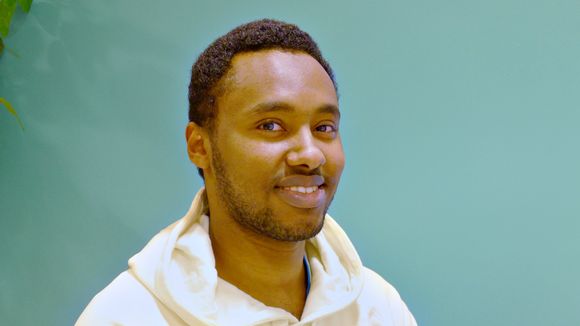
The Left Alliance (Vasemmistoliitto) sent as its representative Suldan Said Ahmed, a young entrepreneur and politician originally from Somaliland. (Somaliland is an autonomous region of Somalia that seeks recognition as an independent country from the rest of the world, but as yet hasn’t got it.)

According to Said Ahmed, solidarity, community, and internationalism are the three words that best sum up the Left Alliance for him.

If like me, you are someone studying Finnish, you should love listening to Said Ahmed, because his Finnish is much easier to understand and “correct” than that spoken by “real” Finns, what with their variety of local dialects and reliance on puhekieli (conversational language), which is often shockingly at variance from the “proper” textbook Finnish we foreigners and immigrants learn on courses.

I found a recent article profiling Said Ahmed in the leftist Finnish newspaper Kansan Uutiset.

Selkouutisten+puolueprojekti+Suldaan+Said+vas

Suldaan Said Ahmed. Photo: Kalevi Rytkölä / Yle

It seems Said Ahmed has political ambitions in his native Somaliland as well. He would like to become the youngest MP there and is planning to stand, apparently, in this year’s upcoming parliamentary elections there.

Said Ahmed would also like sometime in the future to be president of Finland, but that job, alas, is constitutionally only open to native-born Finns. (So far, I would like to think for his sake.)

I find all of this so fascinating in part because, just last week, I had to go verbally postal on a few of my classmates in the advanced Finnish course I have been taking here in the former capital of All the Russias. For the second or third time this semester, they regaled the rest of us with dark tales of how Somalians like Said Ahmed are ruining the fair country of Finland by moving there in droves to become—yes—welfare scroungers. Meanwhile, the government has decided, allegedly, not to let more Russians to move to Finland, even though generally it wants to encourage more immigration to the country to help care for its aging population, etc.

You get the drift.

It might rock my classmates’ world to find out that one of the interviewers in the “Let’s Meet the Parties” program (along with a man from the Philippines, a woman from Lithuania, and a woman from South Korea) is Svetlana Siltanen, who emigrated to Finland from Russia last year.

selkouutisten+puolueprojekti

Svetlana Siltanen. Photo: Mikko Kuusisalo / Yle

My “dream a little dream” today would be to put Yle in charge of public broadcasting for a year in Russia. What a difference that could make to people’s outlooks here.