The Ninth Circle of Hell

Woodcut for Inferno, canto 34. Pietro di Piasi, Venice, 1491

So now, after more than a decade of pretending that he is not associated with Russia and that he would honor the U.S. national security position of support for Ukraine and our European allies, Trump is openly backing Russia’s president Vladimir Putin.

Asked today by a reporter about concerns that his dropping of sanctions against Russian oil yesterday would funnel money to Putin’s war on Ukraine, Trump blamed Ukraine president Volodymyr Zelensky for prolonging the war:

“Zelensky could have settled this war many times. Many, many times,” Trump said, “And he chooses not to.” Trump blamed Zelensky for the high cost of diesel because Ukrainian forces have targeted Russian oil refineries, although since Russian oil was sanctioned, the actual chokepoint for diesel prices is the Strait of Hormuz, largely closed because of Trump’s war on Iran.

Trump accused Zelensky of wanting “to make problems for the world. He wants to make problems for our farmers, our ranchers, with diesel fuel, because Russia supplies a large portion of the diesel fuel throughout the world.” Ukrainians have hit Russian oil refineries to stop the flow of money into Russia as it evades sanctions and sells oil through its so-called shadow fleet. Russia, in contrast, has been striking civilian targets in violation of the laws of war.

Trump continued with a warning to Zelensky, saying “he’d better damn well stop.”

Ukraine continues to fight against Russia because Russia has invaded Ukraine and is trying to occupy Ukraine’s eastern industrial area in violation of the United Nations charter that vows no country will use threats or force against another’s territorial integrity. Until Trump took office, the United States was the key guarantor of this principle.

The U.S. has stood against Russia’s 2014 and 2022 invasions of Ukraine not only because of the principle of territorial sovereignty, but also because of security guarantees the U.S., along with the United Kingdom and Russia, gave to Ukraine in 1994. After the Soviet Union crumbled in 1991, Ukraine had the third-largest stockpile of nuclear weapons in the world. In exchange for Ukraine’s giving up those weapons, the United States, the United Kingdom, and Russia agreed to secure Ukraine’s borders. In the 1994 Budapest Memorandum on Security Assurances, they agreed they would not use military force or economic coercion against Ukraine.

Then Russian leader Vladimir Putin worked to bring Ukraine under the sway of the Russian oligarchs who rose to replace the region’s communist leaders, monopolizing formerly publicly held industries as those industries were privatized. American journalist Paul Klebnikov, the chief editor of Forbes in Russia, was murdered in 2004 after calling attention to what the oligarchs were doing.

In that same year, a Russian-backed politician, Viktor Yanukovych, appeared to be elected president of Ukraine. But the election was so full of fraud—including the poisoning of a key rival who wanted to break ties with Russia and align Ukraine with Europe—the government voided the election and called for a do-over. Yanukovych needed a makeover fast, and for that he called on an American political consultant with a reputation for making unsavory characters palatable to the media: Paul Manafort.

For ten years, from 2004 to 2014, Manafort worked for Yanukovych and his party, trying to make what the U.S. State Department called a party of “mobsters and oligarchs” look legitimate. He made a fortune thanks to his new friends. In 2010, Yanukovych finally won the presidency on a platform of rejecting NATO, the North Atlantic Treaty Organization through which Europe joined together to oppose first the USSR, and then the rising threat of Russia. Immediately, Yanukovych turned Ukraine toward Russia. Then, in 2014, after months of popular protests, Ukrainians ousted Yanukovych from power in what is known as the Revolution of Dignity. He fled to Russia.

Shortly after Yanukovych’s ouster, Russia invaded Ukraine’s Crimea and annexed it, prompting the United States and the European Union to impose economic sanctions on Russia itself and also on specific Russian businesses and oligarchs, prohibiting them from doing business in the United States and in its territories. These sanctions hurt Russia and froze the assets of key Russian oligarchs, including Putin.

Now without his main source of income, Manafort owed about $17 million to allies of Yanukovych and Putin, especially Russian oligarch Oleg Deripaska. By 2016, his longtime friend and business partner Roger Stone was advising the presidential campaign of Donald Trump, and Manafort was happy to step in to help. He did not take a salary. He began as an advisor in March 2016 and became the campaign chairman in late June, after meeting on June 9 with Don Jr., Jared Kushner, and Russian operatives.

It turned out that Russia was looking for a way to grab the Ukrainian land it wanted without continuing to fight. Special Counsel Robert Mueller’s 2019 report on Russian interference in the 2016 presidential election explained that Manafort and his partner, Russian operative Konstantin Kilimnik, in summer 2016 “discussed a plan to resolve the ongoing political problems in Ukraine by creating an autonomous republic in its more industrialized eastern region of Donbas, and having [Russian-backed Viktor] Yanukovych, the Ukrainian President ousted in 2014, elected to head that republic.”

The Mueller Report continued: “That plan, Manafort later acknowledged, constituted a ‘backdoor’ means for Russia to control eastern Ukraine.” The region that Putin wanted was the country’s industrial heartland. He was offering a “peace” plan that would carve off much of Ukraine and make it subservient to him. This was the exact opposite of U.S. policy for a free and united Ukraine, and there was no chance that former secretary of state Hillary Clinton, who was running for the presidency against Trump, would stand for it. But if Trump were elected, the equation changed.

According to the Republican-dominated Senate Intelligence Committee, Kilimnik wrote: “[a]ll that is required to start the process is a very minor ‘wink’ (or slight push) from D[onald] T[rump] saying ‘he wants peace in Ukraine and Donbass back in Ukraine’ and a decision to be a ‘special representative’ and manage this process.” Kilimnik further suggested that Manafort “could start the process and within 10 days visit Russia ([Yanukovych] guarantees your reception at the very top level, cutting through all the bullsh*t and getting down to business), Ukraine, and key EU capitals,” and that “once then–Ukrainian President Petro Poroshenko understood this ‘message’ from the United States, the process ‘will go very fast and DT could have peace in Ukraine basically within a few months after inauguration.’”

According to the Senate Intelligence Committee, the men continued to work on what they called the “Mariupol Plan” at least until 2018. Trump could not make it happen during his first term, although his operatives spent a great deal of time messing around in Ukraine and trying to smear Democratic presidential candidate Joe Biden from there, and after Biden took office, Putin invaded Ukraine again in 2022.

As Jim Rutenberg wrote in his coverage of the Mariupol Plan in the New York Times Magazine, once his troops were in Ukraine, Putin claimed he had annexed Donetsk, Luhansk, Zaporizhzhia, and Kherson, two of which were specifically named in the Mariupol Plan, and instituted martial law in them, claiming that the people there had voted to join Russia.

Biden pulled together countries from the North Atlantic Treaty Organization (NATO), along with other allies and partners, to stop Russia’s attack and to support Ukraine’s heroic efforts to repel the Russian invasion. Russia’s troops, meanwhile, have committed atrocities and are attacking civilians. The International Criminal Court (ICC) has indicted several Russian officials and commanders, including Putin himself, for war crimes and crimes against humanity.

But once Trump was back in office in 2025, he promptly tried to swing the U.S. behind Russia. His appointees insisted that the real story of the 2016 campaign was not Russia’s support for Trump, but rather a Democratic conspiracy to push the story of the Trump campaign’s ties to Russia. Repeatedly, Trump has threatened Zelensky and tried to cajole him into surrendering the territory Russia wants.

After the ICC indictment, Trump welcomed Putin to American soil in Alaska in August 2025, ordering U.S. soldiers to roll out a red carpet for him, and he has invited Putin to a gathering of the Group of 20 nations with advanced economies at Mar-a-Lago in December. Yesterday, the U.S. announced sanctions on the ICC itself, and Secretary of State Marco Rubio has vowed to take the organization apart “brick by brick.”

Meanwhile, Putin has behaved like someone who has a strong hand over Trump. In August 2025, Russian foreign minister Sergey Lavrov showed up at the Alaska meeting wearing a sweatshirt with the Cyrillic letters “CCCP,” which translates to USSR, suggesting that the Soviet Union had won the Cold War after all.

On Friday, despite the fact that Russia is backing Iran, whose military is killing U.S. soldiers, Trump proudly announced he was removing sanctions to let Russia sell its oil on global markets. Ukrainian attacks have curtailed Russian production, so the amount it has available to help the diesel squeeze in the U.S. is negligible, but the ability to rake in cash as the world’s current oil shortage has driven up prices is invaluable to Putin for his desperate war effort.

Also yesterday, Trump asked the Supreme Court to weigh in on a lawsuit over the 2016 election that he brought in 2022 against Hillary Clinton and former members of the Department of Justice, including former director of the FBI James Comey, Clinton’s campaign chair, and a grab bag of others. Trump sued them for conspiring to tie him to Russia in order to undermine his campaign.

As John Fritze of CNN reported yesterday, a federal court dismissed the lawsuit as “frivolous” and ruled that Trump’s attorneys were liable for nearly $1 million in sanctions. The 11th U.S. Circuit of Appeals upheld most of that decision last year. “This case should never have been brought,” U.S. District Judge Donald Middlebrooks of the Southern District of Florida wrote. “Its inadequacy as a legal claim was evident from the start. No reasonable lawyer would have filed it.” Now Trump is appealing to the Supreme Court.

But at this point, how much more evidence is necessary to assess that Trump has undermined U.S. national security and is working for Russia? And how much longer will Republicans in Congress continue to protect him as he does it?

—

Notes:

https://www.icc-cpi.int/news/situation-ukraine-icc-judges-issue-arrest-warrants-against-sergei-kuzhugetovich-shoigu-and

https://www.icc-cpi.int/news/situation-ukraine-icc-judges-issue-arrest-warrants-against-vladimir-vladimirovich-putin-and

https://www.jurist.org/news/2026/07/us-to-seek-dismantling-of-international-criminal-court-rubio-announces

https://foreignpolicy.com/2025/08/15/lavrov-ussr-russia-trump-putin-ukraine-summit-alaska/

https://www.cnn.com/2022/03/24/politics/trump-sues-hillary-clinton

​​https://www.cnn.com/2026/10/09/politics/trump-supreme-court-hillary-clinton-lawsuit

https://apnews.com/article/ukraine-war-russia-sanctions-trump-congress-b322eec6b33610ebf4048daa5d621483

https://ia903105.us.archive.org/10/items/mueller-report/mueller-report.pdf

https://www.intelligence.senate.gov/wp-content/uploads/2024/08/sites-default-files-documents-report-volume5.pdf, pp. 99 and following

https://www.politico.com/news/2026/09/23/trump-putin-g20-miami-01089850

https://www.nytimes.com/2022/11/02/magazine/russiagate-paul-manafort-ukraine-war.html?searchResultPosition=111

https://www.sfgate.com/news/article/U-S-journalist-author-shot-to-death-in-Russia-2742901.php

Bluesky:

thesauruswrecks.bsky.social/post/3mxjxyzk4ec27

ssiderod.bsky.social/post/3lwje6wb7gc2n

anne.sheshed.rocks/post/3lwjrlxxals22

Trump’s Truth:

statuses/42215

Source: Heather Cox Richardson, Letters from an American, 10 October 2026


[…]

First, the big news on U.S. foreign policy was that Trump announced that he was buying 300,000 tons of Russian diesel. He’s not allowed to do this: Sanctions preventing purchase of Russian oil are law, not a choice on Trump’s part. But under Trump laws are suggestions at most, so it might happen anyway. In any case, the main lesson here, as Phillips O’Brien explains, is that Trump isn’t even hiding the fact that he is supporting Putin’s war of aggression against Ukraine.

But being a nerdy economist, my first printable reaction to the announcement was, 300,000 tons??? That’s a bit over 2 million barrels. America consumes approximately 4 million barrels of distillates — diesel (mostly) and heating oil — every day.

So Trump is betraying an embattled democracy, demonstrating our faithlessness to the whole world, seriously damaging whatever is left of America’s leadership in the world, for the sake of maybe 12 hours’ worth of diesel. Really?

Of course, Trump and those around him don’t care about the national interest. But I would strongly guess that they didn’t do the math, that 300,000 tons sounded like a lot to them and that they had no idea that it was trivial for an economy the size of America’s. I might add that this is general issue with Trump: he often touts trivial policies as major achievement, and it often seems obvious that he has no idea how big America and the world are.

Arithmetic, I guess, suffers from Trump derangement syndrome.

[…]

Source: Paul Krugman (Substack), “Arithmetic Suffers from Trump Derangement Syndrome,” 12 October 2026


A bipartisan group of six senators on Sunday called for President Donald Trump’s administration to “immediately reverse course” on a plan to purchase diesel from Russia as part of an effort to lower high fuel prices.

Trump shocked lawmakers when he announced on social media Friday that he struck a deal with Russian President Vladimir Putin in a phone call. He said Russia will immediately supply more than 300,000 tons of diesel to the American and global market, followed by an additional 500,000 tons in November and 1 million tons “immediately thereafter.” Russia will deliver an additional 3 million tons “within a short period of time” after that, he wrote.

Four Republican senators and two Democratic senators signed onto the statement released Sunday in protesting the deal. They said the administration failed to consult with Congress or submit any explanation to justify its decision as required by statute.

“The United States should not provide Putin with a financial lifeline while Russia continues to kill Ukrainian civilians. The Administration must immediately reverse course,” they wrote.

The Republican senators who signed onto the statement are Sens. Susan Collins of Maine, Lisa Murkowski of Alaska, Thom Tillis of North Carolina and John Curtis of Utah. The Democratic senators are Sens. Jeanne Shaheen of New Hampshire and Richard Blumenthal of Connecticut.

Tillis, in an interview that aired Sunday on NBC’s “Meet the Press,” said there’s a legitimate case for saying the president is not following the law if the administration goes through with its diesel purchase plan.

“We were very clear that Russia is the aggressor. Russia is the one who can end this war by backing out of territory that they occupied,” Tillis said.

Trump’s announcement came just a few weeks after Congress passed legislation that directed Trump to impose substantial tariffs on the top importers of Russian oil or natural gas, with an exception for countries that import less than 15% of Russia’s natural gas exports and have taken significant steps to reduce those imports.

The congressional effort was aimed at cutting the flow of money Russia receives from oil and gas sales to finance its war against Ukraine.

The lawmakers also noted that Congress explicitly banned Russia energy imports in 2022 to prevent the United States from financing the war.

“Congress was clear: the U.S. should not import oil from Russia until it ends its aggression against Ukraine and ceases threats against our NATO Allies,” the six lawmakers wrote in their statement. “President Trump’s decision to allow Russian diesel imports to the U.S. runs directly counter to that law.”

Sen. John Barrasso, R-Wyo., said Trump is focused on reducing the cost of energy when asked whether the president’s action would be in violation of U.S. law.

“The president is balancing and has to make tough decisions,” Barrasso said on CBS’s “Face the Nation.”

He also encouraged Trump to enforce the sanctions law that Congress passed last month.

“This is just another point of leverage for the president to use against Putin in an effort to get a long-term solution in that part of the world,” Barrasso said.

Energy experts say the Russia deal is unlikely to make a dent in high prices at the pump.

Richard Nephew, a senior research scholar at Columbia University’s Center on Global Energy Policy, noted that the total amount of diesel appears to be less than what the U.S. uses in a day.

Nephew argued that Iran and Russia might benefit more than the U.S.

“The Iranians are probably very excited because it shows that there’s a lot of pressure still on the U.S. And the Russians are excited because it puts a big hole in the sanctions regime,” he said.

Trump has recently sought to blame record U.S. diesel prices on Ukraine rather than the U.S.-led war in Iran, which has elevated world energy prices.

Source: Kevin Freking, “Six senators call for Trump administration to ‘immediately reverse course’ on Russian diesel plan,” Associated Press, 11 October 2026

Terry Burke: Russiagate, Syria, and the Left

dezaOnce again, years of experience and research have been poured into an article challenging entrenched narratives on the anglophone institutional left, and once again, fear of retaliation from the purveyors of these entrenched narratives has made this challenge unpalatable even to left and liberal publishers with an obvious interest in countering them.
So, once again, the Antidote Writers Collective is pleased to participate in a decentralized effort to bring this challenge out into the open.

The following was initially published on CounterVortex with the understanding that the website’s publisher would be backed up by cross-posts from sympathetic websites in order to reduce the authoritarian left’s ability to target one vulnerable person with their classic arsenal of trolling, threats, abuse, and lawsuits.

Comrade of the zine Terry Burke has been a dedicated peace activist her entire life and has already heard the worst of it even from former comrades who have unthinkingly taken on Putinist narratives and allowed themselves to be played against the emergence of effective opposition to rising fascism in the United States. We salute her years of persistence and are proud to have her back. Enjoy.
—
Antidote Zine

Russiagate, Syria, and the Left
Terry Burke
CounterVortex
June 27, 2019

The last major national protest in the US was “Families Belong Together” in June 2018. Hundreds of thousands of people across the country demonstrated against the Trump administration’s policy of separating children and families at the border. People who had never protested before brought their families. It’s now a year later and the situation for immigrant families has only gotten worse. Where is the outrage?

Plans for an ICE raid targeting millions of immigrants. Initiating a military strike on Iran and then canceling it. Environmental policies that disregard climate change. Pulling the US out of treaties. Rising alt-right and nationalism around the world. Ignoring congressional subpoenas. Corrupt, incompetent people heading every federal agency. The list of destructive Trump policies seems endless.

Trump’s recent visit to London brought tens of thousands of protesters into the streets. Where are the protests in the US? Where are the coalitions in the US organizing against Trump’s anti-democratic, inhumane policies? Where is the left?

Part of the problem is the enormous amount of disinformation that has been specifically directed at the left, disinformation that most people don’t recognize. The disinfo uses anti-imperialist language and is posted on “left” and “progressive” sites that usually have nominally accurate stories on Palestine, Israel, climate change, corporate corruption, and other progressive issues. In addition to the disinfo media sites, respected left authors have confused their readers by dismissing Russiagate as a hoax, claiming that Russian interference in the US elections has been greatly exaggerated to provide the Democrats an excuse for Clinton’s loss.

Eight years of steady disinformation on Syria have created a split in the peace movement. The enormous amount of time and energy spent debating Syria could have gone to building the peace movement instead of dividing it. The doubts raised repeatedly about Russian interference and Mueller’s investigation have weakened the opposition to Trump. Some people don’t know which news sources they can trust. Others restrict themselves only to sources that support their ideological line.

Steve Bannon famously said, “The Democrats don’t matter. The real opposition is the media. And the way to deal with them is to flood the zone with shit.” That is exactly what has happened. There are thousands of new and unaccountable media organizations on the internet.

As Syria solidarity activists, we have been struggling against extensive, sophisticated disinformation regarding Syria for years—and it’s largely not from the US mainstream media. Syria is not Iraq, where the New York Times helped Bush lead us into war with fake information about WMDs. Syria is not Kuwait, where there were false stories planted about babies in incubators.

The mainstream media articles “demonizing” Assad are fundamentally true: his regime is one of the world’s most repressive, with a police and prison torture system of historic proportions. Unlike Iraq and Iran, and contrary to the propaganda claims, the CIA did not instigate a serious covert regime change operation in Syria. The US efforts in Syria are well documented in Shane Bauer’s recent two-part article for Mother Jones. He writes, “American involvement in Syria has been as fragmented and volatile as the conflict itself.” In this groundbreaking article, he documents how the US has spent billions, initially aiding the Free Syrian Army, but ultimately focused on combating ISIS, forbidding US-backed groups from fighting Assad’s forces.

His article corroborates the stories of anti-Assad Syrians of a genuine uprising against a brutal dictator evolving into a proxy war; of Assad bombing and starving civilians. The Syrian people were caught up in the fervor of the Arab Spring and surprised themselves (and the CIA) by going to the streets in the hundreds of thousands, demonstrating for democracy, overcoming their deep fears of reprisal.

However, most of the peace movement still doesn’t recognize the legitimacy of the Syrian people’s eight-year struggle against the Assad dictatorship. There have been so many articles in “progressive” media promoting Assad’s narrative of another US regime change effort that they have buried the voices of Syrians.

The voices of Syrian communists, anarchists, democracy activists, writers, artists, intellectuals, and nonviolence activists have rarely been represented in “progressive” media. The majority of these media’s articles on Syria have been written by non-Syrians and they usually promote Assad’s line that he is protecting his sovereign country from US-backed terrorists.

Research from the University of Washington has shown how dominant the pro-Assad political messaging is from an “echo system” of sites that follow Russian, Iranian, and Syrian government-funded media. Researchers examined Twitter conversations about the White Helmets (a Syrian volunteer rescue group) in the summer of 2017. There were four times as many tweets from the echo system as there were from other media sources. Articles from the echo system claimed the White Helmets were a “propaganda construct,” “crisis actors” who staged events, and “they worked with or were themselves terrorists.”

The UW study noted that this echo system of sites claiming to be “independent” and “alternative” shared the same stories and writers. A few of these sites are Global Research, RT, Mint Press News, Sputnik News, Free Thought Project, The Anti-Media, 21st Century Wire, Veterans Today, Zero Hedge, and many others.

For Syria activists, the UW research wasn’t a surprise. It confirmed our experiences over the last six years, that our struggle to get the truth out was up against a substantial, coordinated disinformation effort. We were familiar with this “echo-system” well before the UW study. While they claim to be “independent,” their political line was almost always the same on Syria, Crimea, Putin, and Trump. They played a role in electing Trump by bashing Clinton, equating Clinton and Trump, going easy on Trump, and disparaging voting.

While the sites claim to be funded by their readers and ads, they actually have very few ads and do not disclose information on their funding sources. In 2013, a former writer at Mint Press News, Joey LeMay, told BuzzFeed News, “It was incredibly secretive.” The article goes on to say there were “barely any ads on the website, and whenever LeMay asked about where they got their money, ‘it was brushed off as a non-issue. I would go home feeling not squeaky clean,’ he said.”

The sites in this echo system have all also posted numerous Russiagate articles. It’s understandable that progressives would question how extensive and effective Russian propaganda was in the 2016 elections. The mainstream media hasn’t examined Russian propaganda that targets the left. The UW research has not been mentioned in mainstream or progressive media. But it’s not an either/or proposition: we can criticize Clinton’s campaign and still acknowledge that Russian interference helped Trump win in an election where Clinton won the popular vote by a substantial margin.

The claim that a few Facebook ads bought with Russian rubles could have influenced the 2016 election may have seemed preposterous back in 2016. However, since then, there have been numerous exposés of Russia’s sophisticated use of social media and information warfare—something we had thought was mainly the province of our CIA.

While Russian disinformation is a new concern for Americans, not so for Europeans. In June 2017 the Washington Post reported that “across the [European] continent, counterintelligence officials, legislators, researchers, and journalists have devoted years—in some cases, decades—to the development of ways to counter Russian disinformation, hacking and trolling.” There have been numerous articles on how Sweden, the Baltic states, Finland, Germany, France, Italy, and others are dealing with Russian cyber attempts to influence elections and sway popular opinion.

When well-known left writers like Glenn Greenwald, Matt Taibbi, Katrina vanden Heuvel, Norman Solomon, and Max Blumenthal immediately denounced the evidence of Russian interference back in 2016, it had a silencing effect. After that, few well-known left writers pursued the serious possibility of effective Russian involvement. In the two and a half years since Trump’s election, there have continued to be new articles and research on Russian bots, trolls, Twitter campaigns, fake accounts, and continued Russian interference in the EU, but the Russiagate authors have ignored this information. Dark Money author Jane Mayer has also written on how Russia helped elect Trump.

After the release of the highly biased Barr summary which seemed to vindicate them, Chris Hedges, Glenn Greenwald, Stephen Cohen, Matt Taibbi, Aaron Mate, Paul Street in Counterpunch, and Katie Halper from FAIR castigated the US press for its extensive coverage of the Russia/Trump allegations.

However, they wrote nothing revising their Russiagate-is-a-hoax position after the subsequent release of the redacted Mueller report in April and Mueller’s public statement in May. The Mueller report explicitly documents extensive Russian interference in the 2016 elections, but they have refused to acknowledge this.

Greenwald wrote on April 18 that “the actions in which Trump engaged were simply not enough for Mueller to conclude that he was guilty of criminal obstruction.” After Mueller clearly stated on May 29 that he would not exonerate the president for obstruction of justice, Greenwald wrote a series of articles on Brazil and wrote nothing to correct his earlier misstatements about obstruction.

It is critical to understand that the Russiagate narrative is Trump’s narrative. By insisting for over two years that Russian interference was overblown, these authors have been defending the worst president in US history.

The UW-identified echo system of “alternative” media sites has also had numerous articles promoting Russiagate skepticism and Barr’s disingenuous summary of the Mueller Report. Global Research, Mint Press News, Free Thought Project, The Anti-Media, Zero Hedge, 21st Century Wire, Activist Post, and others have also continued to argue for the Russiagate conspiracy thesis, despite Mueller’s statement and all the information on Russian cyberwarfare.

Even Fox News occasionally departs from supporting Trump’s position on Russian interference, as summed up in a May 2019 Newsweek headline: “Fox News Legal Analyst Says Mueller Evidence Against Trump ‘Remarkably Similar’ to Nixon, Clinton Impeachment Charges.” But the left’s Russiagate skeptics have not conceded anything. Stephen Cohen recently wrote that Russiagate “is the worst and […] the most fraudulent political scandal in American history.”

The echo system and the Russiagate authors have published very little criticism of Putin’s Russia. They have many articles criticizing the US mainstream media, the corporate ownership of US media, “censorship” by Facebook and YouTube, but nothing on the new law in Russia whereby people can be jailed for fifteen days for “disrespecting” the Russian government online. An open internet in the US means there are thousands of sites with articles criticizing the US, but even one site with critical articles in Russia could result in fines and jail time. The difference is dramatic, and there have been no articles from the Russiagate skeptics on this oppressive law.

It’s rarely mentioned that Hedges has had a weekly show on RT (formerly Russia Today) since June 2016, which is funded by the Russian government. He’s scathing in his criticism of the US, but it’s hard to find his criticisms of Russia. After the Barr summary, he chastised the US press for “one of the most shameful periods in modern American journalism” and somehow never mentions the Russian restrictions on “disrespecting” the Russian government online.

Rania Khalek is also paid by the Russian government. Her site In the Now is one of three that were recently exposed as being owned by RT. Facebook briefly took them down until a small mention of RT’s involvement was placed on the page – a mention most people will never notice.

It is difficult to determine the motivation of the Russiagate writers and the echo system. Kate Starbird at the University of Washington writes about the echo system that “[their] efforts […] consist of diverse individuals and organizations who are driven by a variety of different motivations (including political, financial, and ideological).”

There is a certain amount of hyperbole to the Russiagate articles. The investigation is blamed for “Manufacturing War with Russia,” for “Endangering American Security,” for “Media Malpractice,” for being “This Generation’s WMD,” for “Target[ing] Any Dissent in US,” and so forth. When examining these authors’ lists of articles, one would prefer they had spent as much analysis on the dangers of a Trump presidency as they have spent on promoting their Russiagate thesis.

Stephen Cohen talks about the origins of the allegation that Trump was an agent of the Kremlin. Was it “begun somewhere high up in America by people who didn’t want a pro-détente president?” He suggests that “this originated with Brennan and the CIA.” It is all speculation, with no corroborating evidence.

For a starkly different perspective, consult authoritarianism scholars Sarah Kendzior or Timothy Snyder’s interviews, writings, and videos for detailed documentation of Trump’s dealings with Russia. They have been warning for the last three years about the dangers of the US sliding into autocracy under Trump. They have researched Trump’s ties to Russia in the decades before the 2016 elections and have tried to warn us about what is coming.

Contrast Cohen’s speculation with Snyder’s detailed factual information. Snyder is a Yale historian who wrote The Road to Unfreedom about Russia’s return to an authoritarian government under Putin and the rise of nationalism in Europe and America. He has put together a series of videos to explain what is happening here and internationally. In a concise Twitter thread, he documents fifty very specific reasons (with citations) why Trump owes a debt to Putin. He discusses the people in Trump’s campaign and in the Trump administration: “It is astounding how many of them are more directly connected to the Russian Federation than to the US.”

Kendzior lived in Uzbekistan during its transition from democracy to autocratic rule. When she started covering the Trump campaign in 2016, it reminded her of what she’d seen from the regime in Uzbekistan. Her website and podcast Gaslit Nation, which she presents together with journalist Andrea Chalupa, is an unparalleled source of information about Trump and his Russian connections and crimes. Kendzior and Chalupa advocate impeachment hearings so that the rest of the country can learn about these crimes.

Snyder and Kendzior have no doubts about the Trump-Russia collusion. There are other independent authors and researchers who are documenting and exposing what’s happening. Even without the Mueller report, there is an enormous amount of public information about Trump’s ties to the Kremlin, Russian interference, and the loss of our democracy.

When Syria solidarity activists first read the November 2016 Washington Post article about Russian propaganda influencing the 2016 elections, we were relieved. Finally, the Russian propaganda we had struggled against for years was being exposed! We assumed the propaganda on Syria would also be exposed. We thought the propaganda sites on the internet would be discredited.

We didn’t anticipate that prominent left writers would immediately denounce the Russian propaganda story as the “new McCarthyism” and Russiagate and that they would still be defending this narrative two and a half years later, in the face of so much evidence.

We didn’t understand how difficult it would be for the techies at Facebook, YouTube, and Twitter to discern propaganda from the truth and how clumsy they would be in taking down sites, usually with almost no explanation, and occasionally taking down legitimate sites at the same time.

From our viewpoint as Syria solidarity activists, we are still in the same position now as we were in November 2016. Disinformation still dominates the internet. Syrian and Russian planes have been bombing civilians in Idlib for the last month, initially bombing twenty-five hospitals. While Physicians for Human Rights and Amnesty International have condemned the strikes on hospitals, sounding the alarm, there is no international pressure on Russia and Syria to end them. The echo system of media sites is distracting the left with disinformation about Assad’s 2018 chemical attack on civilians in Douma being supposedly “staged” by the rebels.

The persistent Russiagate articles from prominent left writers have many progressives feeling unsure what to believe. It has put us in the strange position of claiming that a former FBI director is more trustworthy than Chris Hedges or Stephen Cohen. But there is much more information validating what Mueller has reported than there is for the Russiagate skeptics and Trump.

There is no easy solution to the problem of massive disinformation on the internet. Certainly, we should be listening to the voices of progressive Syrians, Venezuelans, Palestinians, Ukrainians, Sudanese, not media pages that follow Putin’s line. Information about who is funding web pages would be one step towards transparency. Independent university research labs could evaluate the accuracy of media sites.

Another voice we should be listening to now is the authoritarianism scholar based in St. Louis. Sarah Kendzior says the Trump administration is a transnational crime syndicate masquerading as a government and he should be impeached. It’s time for us to be in the streets.

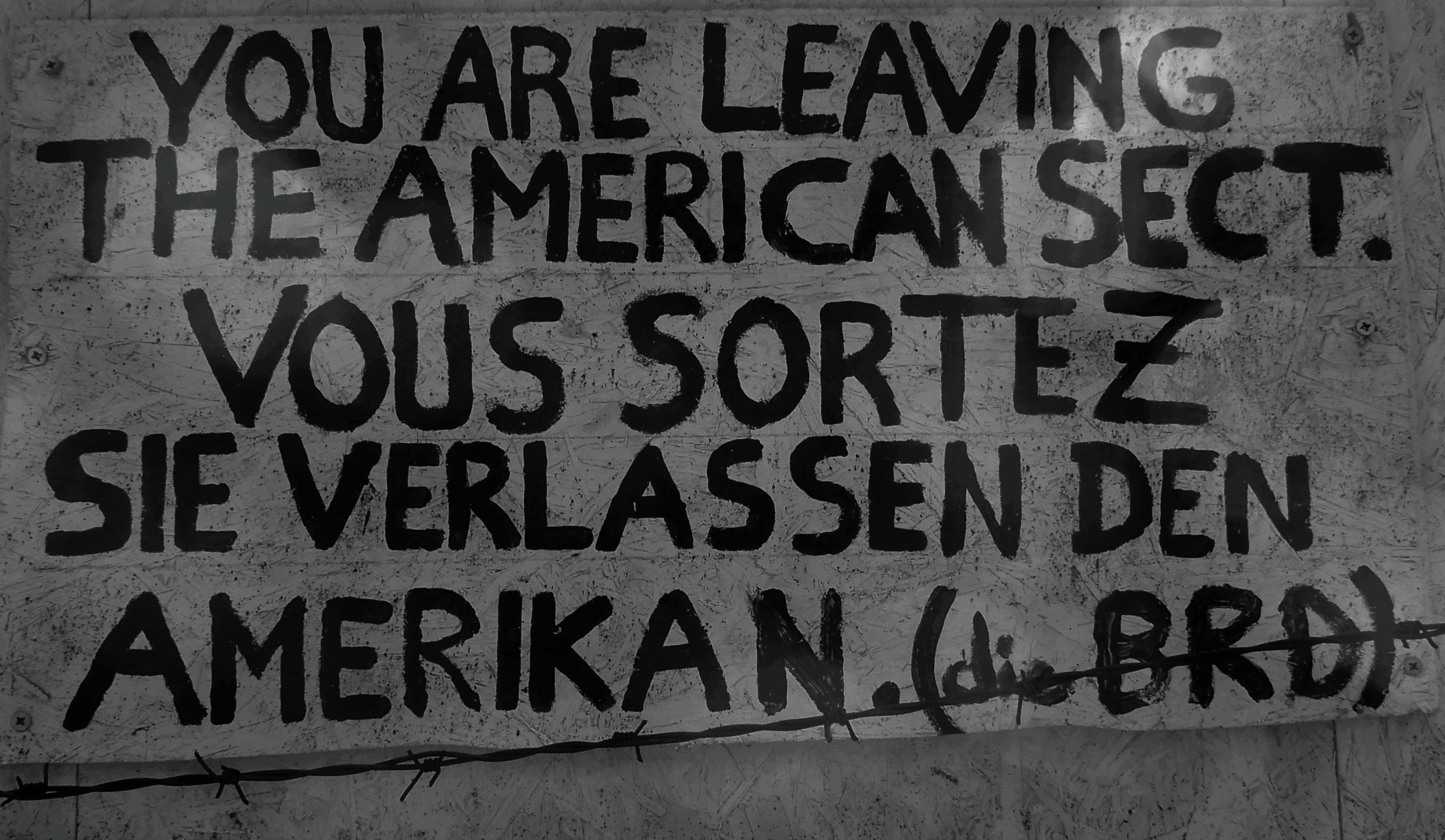
Terry Burke is an activist with the Committee in Solidarity with the People of Syria (CISPOS) in Minneapolis. Thanks to Comrade Ed Sutton and Antidote Zine for the heads-up. The article has been edited slightly to meet this website’s unwritten standards. Photograph by the Russian Reader, December 15, 2018, Ligovsky Prospect, Petersburg. In Russian slang, the word deza means “disinformation.”

Feckless Lowlifes and Incompetent Bounders

american sect

Mark Schrad’s new article in Foreign Policy is yet another attempt to absolve the Putin regime of its crimes and make it seem like a harmless posse of bumbling, extemporizing clowns.

What observers like Schrad fail to realize is that the Putin regime is organized in its own peculiar way in order to achieve objectives that themselves are peculiar or, rather, not political in the usual sense of the world.

From Putin on down, the regime’s satraps and foot soldiers see themselves as an indefinitely massive police force for guarding Russia’s wealth and sovereignty as they have come to define them and thus, their own roles, over the last twenty years.

This ostensibly noble mission does not preclude its adepts from engaging in highway robbery and rampant corruption. Rather than preventing them from amassing vast personal fortunes, the mission implicitly encourages them to do so. Better that Russia’s vast wealth should be located safe and sound in their “patriotic” hands rather than the hands of the opposition, who are by definite treacherous. God forbid that foreigners should get their hands on much of it, either.

Generally speaking, the Putin regime of self-consciously bad cops on a noble mission has been wildly successful at defining and achieving most of its objectives, even if its victims (the Russian people) and outside observers have often been baffled.

It is thus another matter altogether whether Plan Putin is ultimately good for Russia and Russians themselves, not to mention other countries that have had the misfortune of ending up in its cross-hairs as friend, foe, neighbor or “partner.”

Returning to Schrad’s article, no one in their right mind has ever seriously claimed Putin is “the all-seeing, all-knowing puppet master of U.S. politics.” But nor has there been such a deliberate, massive attempt by a foreign government to subvert US domestic politics since the Cold War, and I would suspect the same thing could be said about many of the other countries where Putinist Russia has been fighting hot wars and hybrid wars during its twenty years of high-minded bad governance and “wholly understandable” revanchism.

I have never understood why this circumstance, whose existence has been proven beyond a doubt by mountains of direct and indirect evidence, should drive so many otherwise intelligent, knowledgeable people into fits of denial and hysteria. These same people are able to acknowledge the existence of any number of large-scale, well-organized, murderous criminal conspiracies and terrorist groups in our fallen world, from Mexican drug cartels to the Islamic State, but they think, apparently that the segment of Russian society obsessed with absolute power, who have been ringing the changes on abject, outright tyranny and ruthless imperialism for a thousand years, are suddenly incapable of anything more than petty crime and feckless corruption on tiny scale that hardly bears nothing..

In reality, the Putin regime has only been doing to US politics what it has done to Russian politics and civil society for the last twenty years, but when it comes to the US its means are, obviously, much more limited and its aims, correspondingly, more modest.

Finally, there can be no question of Putin’s associating himself personally with operations like this. When the situation requires it, he is capable of admitting mistakes and exposing himself to a bit of criticism, but like any chief of an utterly corrupt police force, he always makes sure to have his underlings do all the dirty work and take the rap when it goes south. Whether it is practically true or not, he has to be seen by his inferiors and his target audiences, including the Russian public and US leftist academics and journalists, to be above the fray.

_______________________________________________

The foggy notion that the Kremlin’s efforts to subvert the 2016 US presidential election is actually nonsense, a fiction, a comedy of errors staged by low-level hustlers and bumblers who could not have wanted anything of the sort, much less accomplished it, now passes as common knowledge among the growing camp of Trump-Russian collusion denialists and so-called Russophiles in the west, who have managed to pull off their own hustle by roundly and pointedly ignoring nearly all the numerous developments in Russia itself during the same period, reactionary policy outbursts and crackdowns on any number of real and imaginary dissidents and political opponents that would tend to reinforce the baleful analyses of the so-called Russophobes.

These circumstances point to the fact that the Putin regime, which by definition could only consist of hustlers, bounders, and thugs, with a smattering of well-spoken “liberal economists” to balance the books as best they can and make the regime look respectable at international gatherings like Davos, has been playing a long game aimed a establishing a new-model police state.

Ever since the events that exploded around the moving of the Bronze Soldier in Tallinn in 2007, the Kremlin’s long game has had a “foreign policy” aspect as well.

Masha Gessen has been pushing the new spiel (“It was all a crazy, meaningless mix-up”) harder than her earlier writings would have lead us to expect. Currently a staff writer at the New Yorker and nearly everyone’s darling the world over, she routinely gets away with writing things lesser lights would have trouble getting past their editors’ desks. In the past several years, she has made a huge effort to persuade the entire Anglophone world that she knows more about Russia, Russian politics, and Putin than anyone else, but at least half the time her analyses are so wide of the mark you wonder whether she really knows all that much about Russian politics.

For a very long time, especially since she spent two or three years “leaving Russia” (due to entirely legitimate concerns for her family’s safety and happiness given her status and that of her partner as LGBTQI) in an astonishingly public way, granting several dozen interviews and writing just as many as first-person accounts of her plight in the process (a plight much more for Russian lesbians with families who have neither her means or her connections), she has mostly been involved in promoting the Masha Gessen brand, not doing real reporting.

The point of her latest shout-out to her devoted fans in the New Yorker is to reinforce the now-fashionable notion that the Kremlin had nothing whatsoever to do with Trump’s election to the US presidency and that anyone who thinks otherwise is a fool.

In this case, Gessen has pretended to read Mueller’s report so her readers need not bother to read it. Happily, she has reached all the conclusions the denialists and Russophiles want everyone to reach, also without reading either the report or the whole icebergs of great journalism out there that might persuade them otherwise.

No, argue Gessen and the denialists, the whole affair was a lot of fuss about nothing, dust kicked into everyone eyes by a surprisingly large number of invariably mendacious lowlifes whose actions and statements have signified absolutely nothing at the end of the day.

I have been waiting patiently for someone with more clout and cultural capital than I have to call Gessen on the carpet, especially since she has been rapidly encroaching on Leonid Bershidsky’s slippery beat.

Like Gessen, Leonid Bershidsky is a former big-time Russian journalist and editor who loudly went into exile in the west several years ago, allegedly, because it was impossible to do real journalism at home anymore.

Bershidsky, like Gessen, is an extremely smart cookie and a good writer. He scored a prominent gig writing op-ed pieces for Bloomberg, mostly but not exclusively on Russian affairs.

During his tenure at Bloomberg, Bershidsky has managed to defend the Putin regime’s supposedly benign or not altogether malign intentions at least as often as he has attacked its follies and failures, producing a bewildering picture of the Russian political elite and its actually wildly damaging effects on the country and world for anyone who has had the misfortune to read his column regularly.

That is, Bershidsky, for reasons that are not clear to me, has because a part-time mouthpiece for the Putin regime. He also doubles, confusingly, as its part-time trenchant critic.

For reasons that are just as unclear to me, Gessen has been trying, on occasion, to squeeze herself into the odd niche Bershidsky has carved out.

As the Mueller investigation has dragged on, and the press and public have paid more mind to it, Gessen has more and more often adopted the contrarian position that the subversion and collusion were manifestations of hysteria, of the US’s complexes about itself, not the consequences of a treacherous presidential campaign and a Russian “active measures” operation that produced more outcomes and wildly contradictory aftereffects than anyone involved in “masterminding” them had ever bargained for. {TRR}

Photograph by the Russian Reader