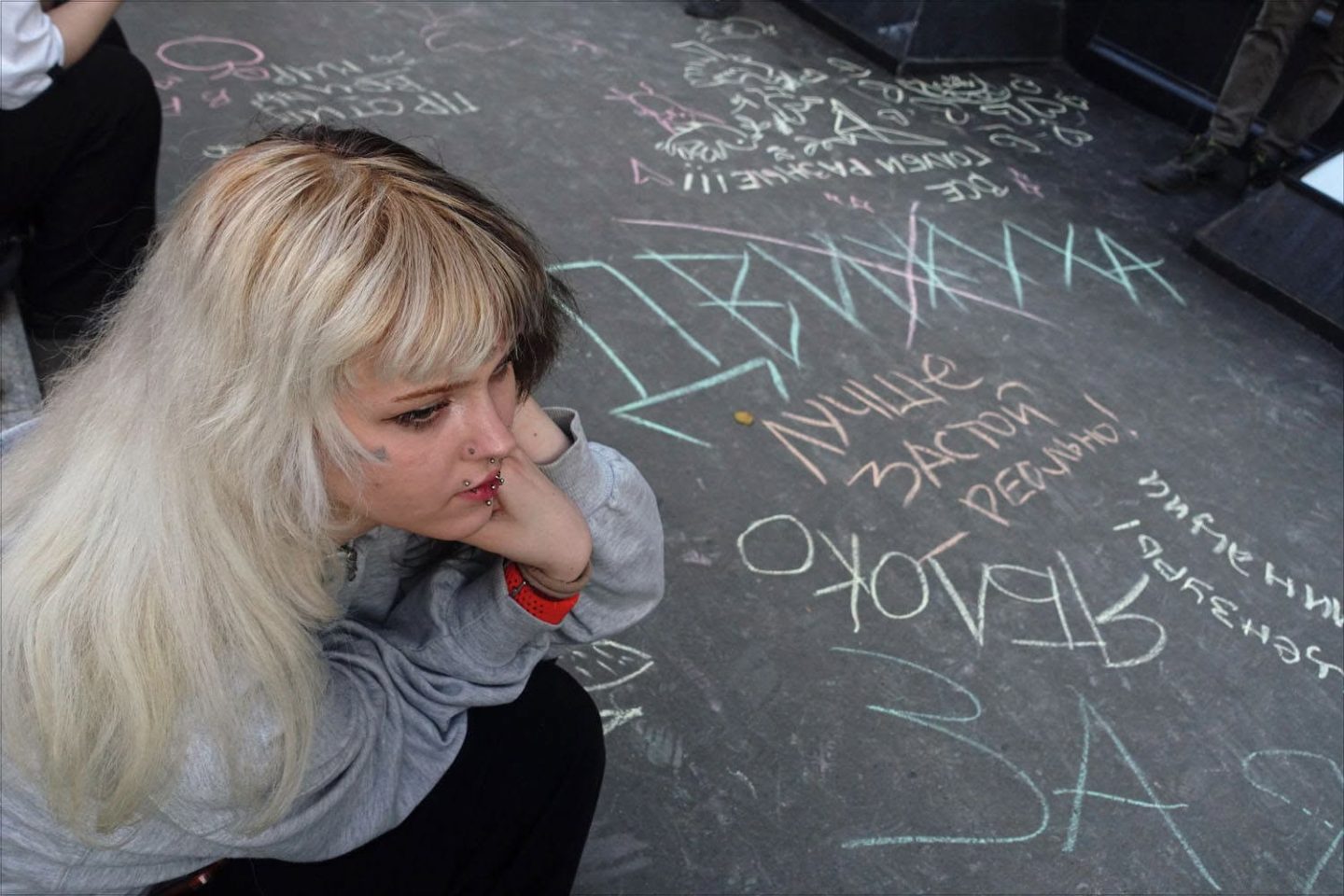
Valery Zen
Facebook
October 21, 2017
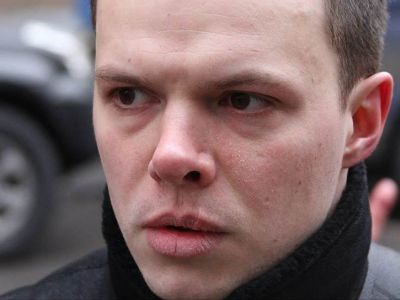
A couple of days ago I met Dima Borisov’s mother. Dima is the young man facing trumped-up charges for, allegedly, kicking a policeman. Dima now faces up to five years in prison. I don’t want to be a pessimist, but it’s highly likely that he will be sent down and sent down for a long time. But the topic of political prisoners has, apparently, has ceased to interest the opposition crowd.
Do you remember the hullabaloo over the Bolotnaya Square defendants? Nothing even remotely like that has been happening for the guys arrested in connection with the June 12 and March 26 protests. Yet, some of them, by the way, have already been handed sentences twice as long—five years in a penal colony—as the sentences handed out in 2012 and 2013 for the exact same charges.
Realizing that people are unable to free an innocent person on their own or in small groups, I asked Dima’s mom (Irina Andriyevskaya) what could be done to alleviate his plight. She said that people could repost stories about the case. If they couldn’t attend his court hearings, they could tell other people about Dima.
Guys, let’s just support Dima. Let’s show that we know about his misfortune and are not ignoring it. It’s not likely to change anything, but at least Dima and his mom, who is basically fighting this fight alone and certainly has it rougher than we do, will feel that they are not alone, that they have not been abandoned. Especially since nowadays absolutely anyone in this country can become a political prisoner.
I’m not making any demands or blaming anyone. I’m just asking decently.

Moscow City Court Denies Borisov’s Request to Be Released from Police Custody
Tivur Shaginurov
Kasparov.ru
October 2, 2017
Moscow City Court has refused to release Dmitry Borisov, an activist with the 14% Movement. As our correspondent reports, the court heeded the arguments of police investigators, who claimed that Borisov was a flight risk or could influence the investigation.
A reinforced brigade of court bailiffs and two plainclothes policemen were present at Borisov’s appeals hearing. Ultimately, the court extended his term of detention for a month.
Investigators argue that Borisov’s guilt is confirmed by a videotape they have in evidence, adding that the accused has not admitted his guilt and, allegedly, resisted arrest. The accused claims he was resisting unknown men in uniform.
[In the videotape, inserted below, it is clear the police officers who detained Borisov were not wearing badges, as requiredd by the Russian law on police conduct—TRR.]
In turn, the defense argue Borisov is not a flight risk since both his foreign travel and domestic internal passports have been confiscated, and he is not a national of any other country. Borisov’s movements could be tracked with a special bracelet issued by the Federal Penitentiary Service. Nor, according to the defense, could Borisov influence witnesses, especially as the alleged victim and witnesses are police officers.
The defense likewise denied that Borisov had a prior conviction. Borisov explained himself that criminal charges had been filed against him due to a conflict with a drunken man who had insulted his mother. The defendant’s mother, who was present in the courtroom, confirmed her son’s story.
After a heated argument, Borisov’s relatives were removed from the courtroom along with a reporter from the publication Sota [?] who photographed the incident.
They were charged with administrative violations. We should note that the reporter was accredited and had the court’s permission to take pictures. However, court bailiffs argued their actions were justified because she had taken pictures of their faces.
Boris’s attorney noted that the requirements for keeping a defendant or suspect in police custody, as stipulated in Article 97 of the Criminal Procedural Code, were not contained in the prosecution’s demand that Borisov be kept under arrest.
In the video that police investigators cite as evidence of Borisov’s guilt, it is not apparent when and how Borisov kicks a police officer.
Borisov’s supporters plan to organize a flashmob during which they will submit appeals to the Prosecutor General, asking him not to approve the charges against Borisov.
Dmitry Borisov has been accused of twice kicking a police officer in the head when police dispersed a peaceful grassroots protest on March 26, 2017, in Moscow.
Translated by the Russian Reader. Thanks to Comrade NE for the heads-up. Photos courtesy of Kasparov.ru and the 14% Movement.
The next hearing in Dmitry Borisov’s case is scheduled for 4 p.m. on November 1, 2017, in the Tverskaya District Court in Moscow. Borisov was arrested on June 6, 2017, and has been recognized as a political prisoner by Memorial’s Human Rights Center.
 Screenshot from Roskomnadzor website