
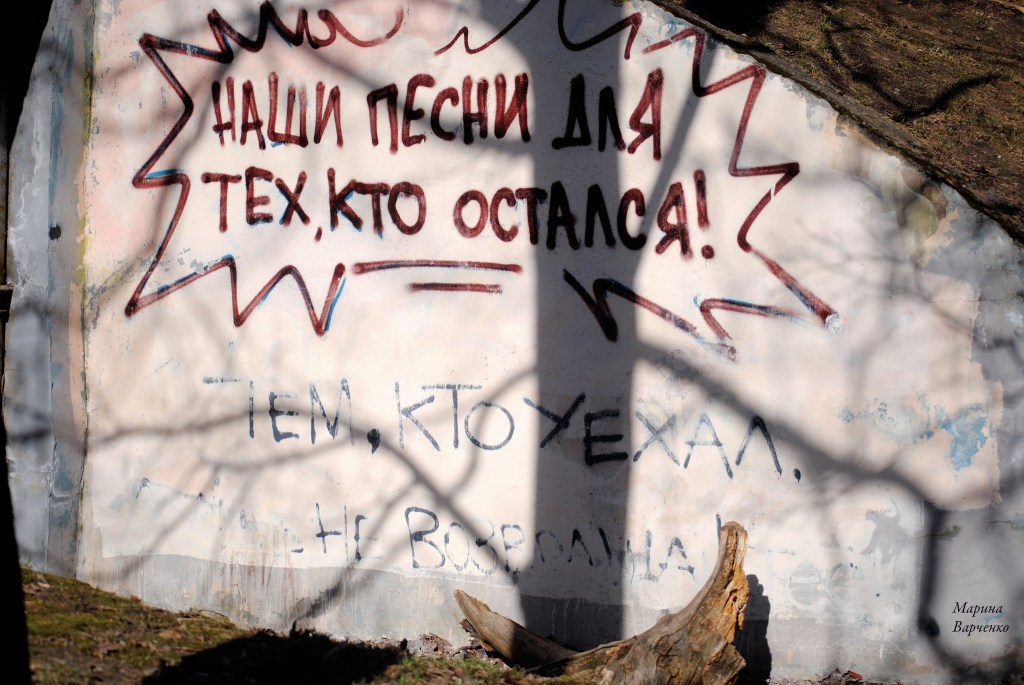
Photographed by Marina Varchenko on Vasilyevsky Island in Petersburg, 13 April 2023
Today, coming out of the front door of my building, I saw the following tableau. A neighbor from the third floor, who is somewhere between thirty-five and forty, was, on the contrary, coming in the front door. Judging by the bag he was carrying, he had just been grocery shopping. He doffed his baseball cap, clamped it under his arm, and crossed himself three times as he looked at the mailboxes. Then he peered into his own mailbox and let out a sigh of relief. His draft notice had not yet arrived, apparently. To be honest, it took a while for the meaning of his maneuvers to dawn on me. Of course, I pretended that I hadn’t noticed any of it.
Source: Marina Varchenko (Facebook), 13 April 2023. Translated by TRR
On Wednesday, April 12, Samara journalist Sergei Podsytnik posted on the website Change.org a petition calling for the repeal of amendments paving the way for the introduction of electronic military draft notices, as passed the previous day by the State Duma and the Federation Council.
“These amendments violate our rights. A citizen cannot be stripped of their rights without a trial, but now this right has been given to the staff of military enlistment offices,” the petition says. Podsytnik draws attention to the fact that the public services portal Gosuslugi, through which it is planned to serve draft notices to Russians, has a number of vulnerabilities. In addition, not all residents of the country have access to their accounts on the portal, and almost thirty percent of Russians over thirty are not active internet users.
According to the amendments as adopted, if a conscript did not receive a paper summons and did not log into his Gosuslugi account, the summons will still be considered delivered within seven days after it was entered into the register of draft notices. He will then be banned from leaving the country. After twenty days, new bans will come into effect: those who failed to report to a military enlistment office will not be able to work as individual entrepreneurs, manage real estate, drive a car, or take out loans.
“To deprive people of the ability to sell real estate, drive a car, or travel abroad at the request of a person with no specialized legal education is an outrage against our rights and freedoms,” the petition says. At the time this story went to press, the petition had been signed by more than thirty thousand people, and their number was growing rapidly. For the amendments to go into effect, they must be signed by Vladimir Putin and published.
Source: Dmitry Vadchenin, “Tens of thousands sign petition against electronic draft notices,” Deutsche Welle, 12 April 2023. Translated by TRR. As of 11:54 p.m. Moscow time on April 13, the petition had been signed by over 94,453 people.
[…]
The legislative changes mean that once a Russian citizen has received a military summons online, they will be automatically forbidden from leaving the country, and therefore avoiding the call-up.
If they fail to appear at a draft office within 20 days, they will face a range of restrictions, including a ban on using their own vehicle, selling property or receiving a loan. They also face a fine of between 500 and 3,000 rubles (£5 to £29).
The head of Russia’s parliamentary committee on defence claimed that these measures will only come into force during the next conscription campaign.
The new system also anticipates a unified database where personal data about Russian reserve personnel can be collated by a range of government institutions, such as the tax service, law enforcement, the pension fund and medical facilities.
Such a database will make it “practically impossible” for reservists to avoid being called up, anti-conscription lawyer Alexey Tabalov told independent Russian media outlet Verstka, because military registration offices will have more detailed information about an individual’s home and work address.
This changes the advice he has been giving people who want to avoid mobilisation, Tabalov says.
Whereas he previously recommended that people avoid receiving the physical summons document, that “recommendation has lost all meaning” now, he said. “If you don’t want to serve, don’t go to the military registration office, but you’ll still face restrictive measures,” Tabalov said.
[…]
Source: Thomas Rowley, “Russia plans crackdown on men avoiding the draft,” openDemocracy, 11 April 2023
[…]
Andrei Kartopolov, head of the State Duma defense committee, spelled out tough penalties for those who do not respond to electronic summonses, including potential bans on driving, registering a company, working as a self-employed individual, obtaining credit or loans, selling apartments, buying property or securing social benefits. These penalties could apply to the thousands of men who are already outside the country.
The electronic summons will be issued via a government services portal, Gosuslugi, used for all manner of state payments and services including taxes, passports, housing services, social benefits, transport documents, medical appointments, employee insurance and countless other matters.
Under the law, personal data of conscripts including identity documents, personal tax numbers, driver’s license details, phone numbers and other information will be transferred by Gosuslugi to military enlistment offices. Universities, business employers, hospitals and clinics, government ministries, law enforcement agencies, the electoral commission and the tax authority are also required to transmit data to the military.
[…]
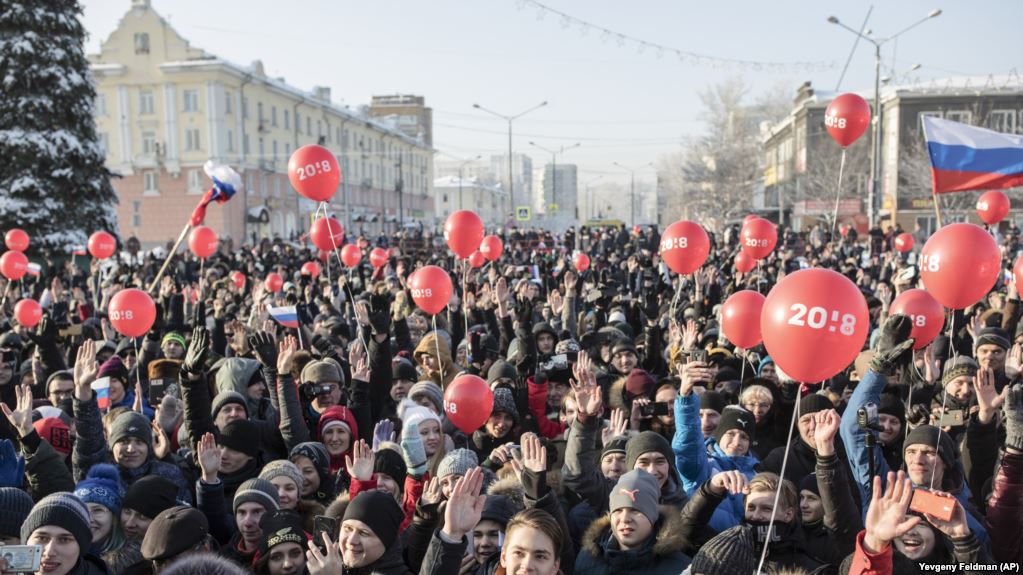 Rally by Alexei Navalny’s supporters in Novokuznetsk, Siberia. Photo courtesy of