The Same Old Tapes Spin Round in Our Heads

kom

We don’t ever think. We just have a small collection of tapes we stick in slots in the back of our heads when the need to say something “smart” arises.

* * * * *

Russian speakers living in Finland are not a homogeneous group, but one thing unites them strongly: a large number of them regard asylum seekers with a grain of salt.

“I relate to the phenomenon negatively. I think the people coming here do not have the necessary information on how people live here. They are trying to come here with their own traditions and customs, and at the moment this hinders their adaptation,” say Gleb Ulanov, who lives in Helsinki.

[. . .]

Despite the fact that the Russians themselves are immigrants, they do not want to compare themselves to the people now arriving from the Middle East. Russian speakers are of the view that they do not have similar adaptation problems.

“The biggest difference is the mentality. Most Russian speakers adapt, find work, and respect Finnish customs and celebrations. In my experience, only a small minority of people from the east does this. They prefer to form their own communities,” says Grigory Berkinfand, who lives in Helsinki.

[. . .]

Many Russian speakers fear that Finns have a naive attitude toward the asylum seekers, and do not properly distinguish those who are genuinely in need of protection.

Just like Finns, Russians are primarily concerned about safety. Many say that traditionally peaceful Finland is changing at a rapid pace.

Gleb Ulanov, who in Soviet times lived for about a year in the Caucasus, is of the opinion that merely integrating the refugees is not enough. In addition to telling the asylum seekers about Finnish customs and laws, Finns should also tell the refugees about culture and how they should behave around them.

[. . .]

Even a man from Russian Karelia who is living in a reception center and applying for political asylum questions the motives for coming to Finland of many of the people living with him. The man wished to remain anonymous.

“I can see what is happening here. They do not appreciate either the local culture or the help they receive. The majority are of the opinion that the Finns are obliged to help them. Many of them say that one can live here without working, and everything is given free of charge. They are quarrelsome if they notice they have not been given something and they complain about conditions. For example, I am really satisfied with everything here. I have not received such a warm reception in my own country,” he said.

* * * * *
Excerpted from “Suomen venäläiset varoittavat: Ei kannata olla liian sinisilmäinen turvapaikanhakijoiden suhteen” [Russians warn Finland: do not be too gullible with regard to asylum seekers], YLE, January 30, 2016. Image courtesy of nashehobby.narod.ru. Translated, from the Finnish, by the Russian Reader

Solidarity, Community, Internationalism (and Good Public Broadcasting)

Yle, the Finnish public broadcaster, asked four recent immigrants to Finland, people who are still in the process of studying Finnish and integrating into the society, to interview representatives of the country’s main political parties in the run-up to parliamentary elections, which will take place there on April 19.

The catch was that Yle also asked the parties to send as interviewees party members who were immigrants and had themselves learned Finnish as adults or teenagers. Among other things, the interviewees were asked to explain how they had come to join the particular parties they now represented.

Interestingly and unsurprisingly, the Finns Party (Perussuomalaiset), notorious for its anti-immigrant views, was unable to provide an interviewee for the program.

The Left Alliance (Vasemmistoliitto) sent as its representative Suldan Said Ahmed, a young entrepreneur and politician originally from Somaliland. (Somaliland is an autonomous region of Somalia that seeks recognition as an independent country from the rest of the world, but as yet hasn’t got it.)

According to Said Ahmed, solidarity, community, and internationalism are the three words that best sum up the Left Alliance for him.

If like me, you are someone studying Finnish, you should love listening to Said Ahmed, because his Finnish is much easier to understand and “correct” than that spoken by “real” Finns, what with their variety of local dialects and reliance on puhekieli (conversational language), which is often shockingly at variance from the “proper” textbook Finnish we foreigners and immigrants learn on courses.

I found a recent article profiling Said Ahmed in the leftist Finnish newspaper Kansan Uutiset.

Selkouutisten+puolueprojekti+Suldaan+Said+vas

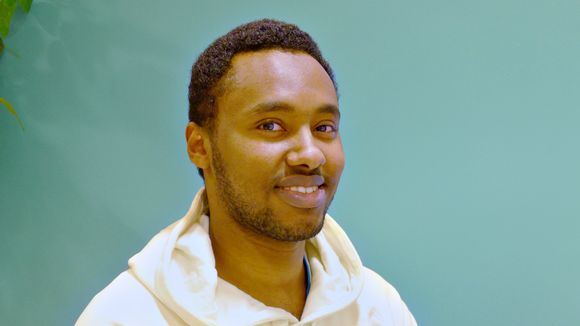
Suldaan Said Ahmed. Photo: Kalevi Rytkölä / Yle

It seems Said Ahmed has political ambitions in his native Somaliland as well. He would like to become the youngest MP there and is planning to stand, apparently, in this year’s upcoming parliamentary elections there.

Said Ahmed would also like sometime in the future to be president of Finland, but that job, alas, is constitutionally only open to native-born Finns. (So far, I would like to think for his sake.)

I find all of this so fascinating in part because, just last week, I had to go verbally postal on a few of my classmates in the advanced Finnish course I have been taking here in the former capital of All the Russias. For the second or third time this semester, they regaled the rest of us with dark tales of how Somalians like Said Ahmed are ruining the fair country of Finland by moving there in droves to become—yes—welfare scroungers. Meanwhile, the government has decided, allegedly, not to let more Russians to move to Finland, even though generally it wants to encourage more immigration to the country to help care for its aging population, etc.

You get the drift.

It might rock my classmates’ world to find out that one of the interviewers in the “Let’s Meet the Parties” program (along with a man from the Philippines, a woman from Lithuania, and a woman from South Korea) is Svetlana Siltanen, who emigrated to Finland from Russia last year.

selkouutisten+puolueprojekti

Svetlana Siltanen. Photo: Mikko Kuusisalo / Yle

My “dream a little dream” today would be to put Yle in charge of public broadcasting for a year in Russia. What a difference that could make to people’s outlooks here.

News of South Karelia, Finland

Two Russian Homosexuals Awaiting Asylum in Lappeenranta
January 19, 2015
Lappeenrannan Uutiset

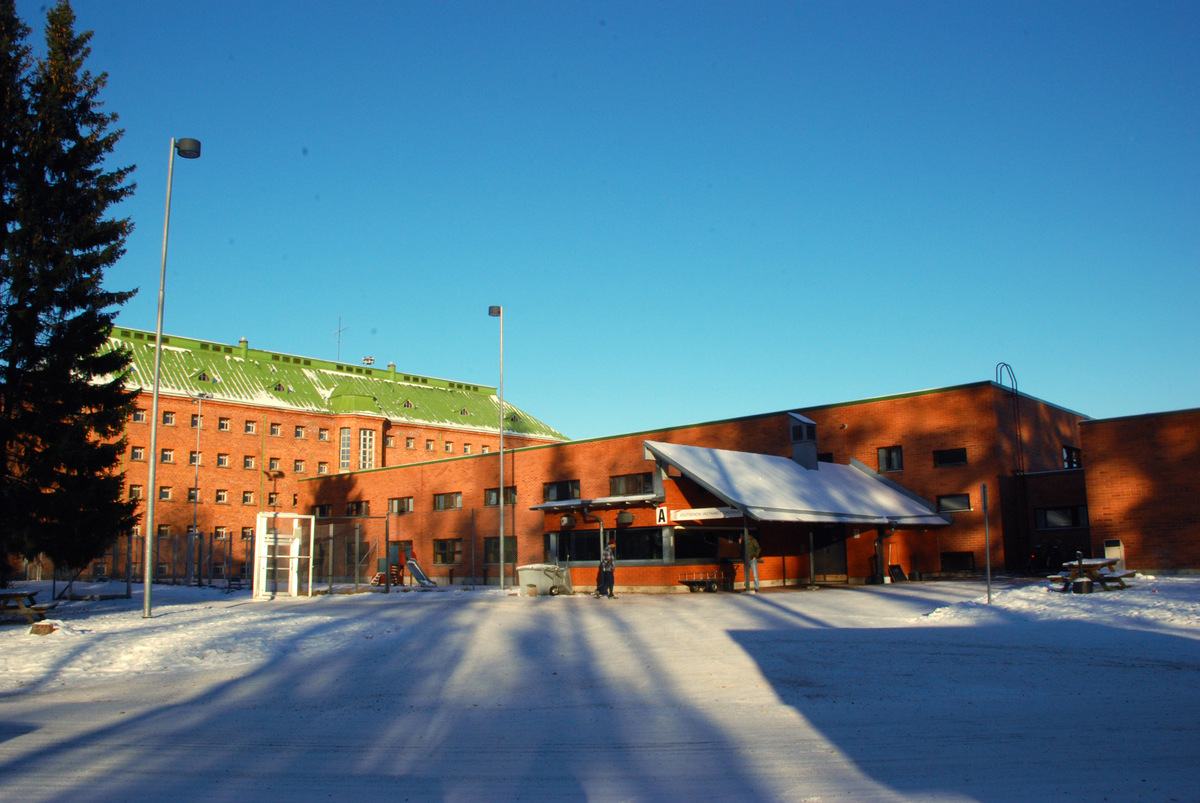
vastaanottokeskusThe men are awaiting asylum at the Konnonsuo reception center. Photo by Janne Koivisto

Two Russian gay men are seeking asylum in Finland.

They are currently waiting at the Konnonsuo reception center in Lappeenranta, where they have been since September.

According to the men, they have been treated very badly in Russia. In recent years, Russia has made laws against homosexuals more severe.

The men are 24 and 36 years of age.

______

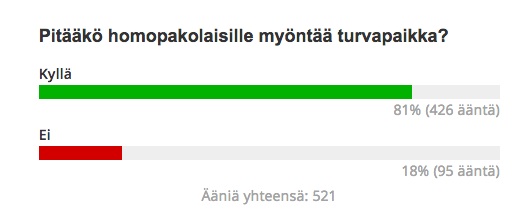
Lappeenranta Uutiset has asked its readers whether gay refugees should be granted asylum.

As of five p.m. Finnish time on January 21, 2015, 81% of readers who responded to the poll said that yes, gay refugees should be granted asylum.

turvapaikka

Time Is Not on Their Side

1379536_750553751626565_683907952_n

If the following article makes no sense to you, don’t worry. It makes no sense to me, either.

MOSCOW, October 11 – Reverting to Winter Time especially for the Sochi 2014 Winter Olympics would cost the Russian budget in excess of $300 million, the head of the organizing committee said Friday.

Russia used to set its clocks back by an hour in the winter, as is done in the rest of Europe, but canceled the practice in 2011 under former President Dmitry Medvedev.

The International Olympic Committee was among those who called for a return to Winter Time to bring Russia’s broadcast schedules closer to the West for February’s Winter Games.

President Vladimir Putin ruled that out earlier this year, and Sochi 2014 chief executive Dmitry Chernyshenko elaborated on the reasons why in an address to lawmakers in Moscow on Friday.

“We forecast, other than the reputational risk and discomfort to our athletes, logistical issues and financial risks,” were winter time to be reinstated, Chernyshenko said.

“The extra expenditure needed from the federal budget to compensate international broadcasters who might lose advertising contracts in the event of a time change will lead to penalties, and we will have to compensate for it. The sum of the risks could exceed $300 million,” he said.

Reverting to winter time, he said, would lead to “fatal changes in the timetables” of Sochi’s logistics, including transport and cargo schedules.

The Games, Russia’s first Winter Olympics, are set to run February 7-23.

Source: RIA Novosti

Image courtesy of Hymy Huulet Facebook page and Comrade Tiina. The cartoon reads (in Finnish):

“I changed the clocks to winter time.”

“It’s nice to know that at three in the morning.”

Because of Russia’s inexplicable rejection of winter time, there is a two-hour difference between Estonia and Finland and the neighboring Russian regions of Pskov, Novgorod, Murmansk, Karelia, Leningrad Region and St. Petersburg during half the year.