While having a gander this morning at how Novaya Gazeta, Russia’s premier liberal newspaper, has been covering the Syrian conflict in recent months, I stumbled across this op-ed piece, essentially an open letter to the British establishment, dated November 6, 2015. Published in the (mostly nonexistent) “English version” of the paper’s website and headlined “Britain must make Vladimir Putin an ally in the disaster that is Syria,” the piece is attributed to “Eygeny [sic] Lebedev, Publisher, The Independent, London.”
To cut to the chase, Evgeny Lebedev (his actual name) who has dual UK-Russian citizenship, it transpires in the piece, wants Britain to make common cause with Russia against the Islamic threat, to wit:
“There may be up to 7,000 Russian nationals who are in Syria as a result of being radicalized. Moscow, not a multicultural city in the way that London is, and run by an administration that is much more militarily decisive because it doesn’t put all big decisions to Parliament [sic], is clear: these terrorists must be killed, before they return to Russia to wreak havoc.
“On that point, Britain and Russia should be of like mind. We, too, know that there are many British citizens who have been radicalised and, for unfathomable reasons, decided to flee to this anarchic region and fight against all the things readers of this newspaper take for granted: democracy, peace, civilization.
“We have common cause with the Russians [sic], a common enemy. The biggest threat to humanity today is cancerous, Islamist ideology that is growing fast right across the world—one that claims, with what truth we don’t yet know, to be behind the weekend’s tragic plane crash in Egypt’s Sinai desert.
“Not for nothing did the head of our [sic] security services say last week that the terror threat in Britain is the highest it has been in his 32-year career.
“Destroying this cancer, or plague, at source could hardly be more worthwhile or urgent; and yet, rather than work with the Russians [sic] to do this, we seem intent on cutting ties instead.
“Britain should not be leaving it to the French to mediate between Russia and the West. For all the greatness of this island nation, for all its hard and soft power, there is a laxity in our [sic] approach to the Syrian crisis.”
If you want to find out more about the exciting life of the fine fellow who penned this, avail yourself of Wikipedia’s bio of the man.
I think your eyes should pop out of your head when you realize that the son of a KGB First Chief Directorate spy and Russian oligarch is nowadays a respectable man about town and media mogul in London, the exact same place where his wealthy dad used to do his spying back in the bad old days. But then again, neither you nor I are as worldly as publisher Lebedev and his dad, so what do we know?
On a number of issues and events you have opposed Putin’s policies, and now you are at the Moscow Biennale [of Contemporary Art] attheVDNKh, a venue where the order of things is supposed to be questioned [sic]. Do you believe that here, in the current political situation, there can be a place for real criticism that is both anti-Putinist and anti-capitalist?
Yanis Varoufakis, anti-anti-Putinist
[Yanis Varoufakis:] Absolutely. But let me clarify something. I am not an anti-Putinist. Anti-Putinism is too strong a word. I am very critical of Putin, but his demonization in the West is something I also resist. We should be smarter and think about what it means to be critical. I am extremely critical of what Putin did in Chechnya, and I have not forgiven him for it. But on the other hand, Putin was absolutely right about what happened in Georgia, and the West was absolutely wrong. I think that the West’s position on Crimea has also been inconsistent. Russia was surrounded [sic] by NATO when Latvia, Lithuania, Estonia, and other countries were included in the alliance. And for Russia it was an insult, as well as something close to violating the agreement between Reagan and Gorbachev [sic]. And Putin has been right about this, too. So I have never supported the policy of demonizing Putin. And I am afraid that Russians will have to suffer the awful consequences of this process, consequences which they do not deserve.
So I believe that spaces like this give us hope for the existence of another, rational, critical approach that does not take one side or the other and allows people from the West and Russia to get together and develop a more sophisticated optics for seeing the world and politics, for being critical without demonizing.
—Excerpted from Sergei Guskov, “Yanis Varoufakis: ‘Being critical without demonizing,’” Colta.Ru, October 2, 2015. Translated, from the Russian, by the Russian Reader
__________
There are only a few things I would add to Mr. Varoufakis’s remarks, above. First, he presumably made them in English, not Russian. Since he is an extremely persuasive speaker and conversationalist, it is quite possible some nuances in what he said at the Moscow Biennale of Contemporary Art were flattened or distorted when translated from English (?) into Russian, and these distortions have only been amplified further in my back translation.
But I doubt this is the case. The point of his remarks seems quite plain, so they are either a fabrication on the part of Colta.Ru or what Mr. Varoufakis more or less said in the event, minus the “static” of two consecutive translations.
If this is what he said, then Mr. Varoufakis is only another in a long line of Western leftist thinkers and activists who, seemingly, have found something “anti-hegemonic” or “anti-imperialist” or “productively” anti-American or, God forbid, “anti-capitalist” about Putin’s policies and actions, or have found it possible to hobnob with or shill for Putinists, on the Putinist dime, in the name of some kind of “criticality” or “third position” above the current fray, or just because they were bored and wanted an all-expenses-paid junket to Moscow or Petersburg or Rhodes.
A smarter person than me (and an actual Russian leftist activist to boot) has pointed out that Putin is nothing remotely like an anti-imperialist or anti-capitalist. On the contrary, my smart friend has argued, folks in the west should make an effort to find out about grassroots social and political activism and activists in today’s Russia and look for ways to make common cause with them. Or, at least, not stab them in the back by supporting Putin explicitly or implicitly.
Because Russia, like “the West,” is not a monolith. And that is the second way in which Mr. Varoufakis went wrong in his remarks in Moscow. “The West” is not a single entity, even among its political, intellectual, and media elites. It is not an organism singularly hellbent on “demonizing” Putin, whatever that means. It requires no effort at all to compile a very long league table of Putin’s wholehearted or partial supporters in “the West,” from Stephen Cohen to Donald Trump, from Silvio Berlusconi to Mary Dejevsky, from Nick Griffin to any number of leftist and centrist politicians in Europe. For reasons I haven’t been able to explain, that table has been growing fatter as Putin’s actions have become more aggressive and “demonic,” both at home and abroad.
Neither is Russian society nor the fabled (and utterly imaginary) “Russian people” monolithic, but over the past fifteen years the Russian state apparatus, the Russian mainstream media (especially television), and Russian mainstream political parties have become a monolith, one of whose primary goals, especially in the last two or three years, has been to demonize “the West” and the domestic opposition any way it can, no holds barred.
You would have to have been in the middle of this properly demonic media hysteria, moral panic, and “cold civil war” to appreciate just how thoroughgoing and thoroughly frightening it has been, and since I have been following Mr. Varoufakis’s own adventures over the past year or so, I can imagine he simply has no clue about what has really been happening in Russia since the blocks came off completely post Maidan, because he was very busy with more important matters.
One job this blog has taken on has been to provide little snapshots of that awfulness while also, more importantly, giving non-Russian speakers a chance to hear Russian voices other than Putin’s, however unimpressive or inaudible they might seem to big shots like Putin and Mr. Varoufakis.
Finally, I would like to address the question of why Mr. Varoufakis imagines, apparently, that big hoedowns like the Moscow Biennale of Contemporary Art are such perfect places for elaborating a “sophisticated optics for seeing the world and politics, for being critical without demonizing.”
Just a year ago, my hometown of Petrograd hosted Manifesta 10, another such prominent venue for “criticality.” In the midst of an occupation and invasion of a neighboring country by the host country, the host country and host city’s continuing legal demonization of LGBT, and a local election campaign, for the city’s governorship and district councils, that involved making sure the non-elected incumbent in the gubernatorial race would face no real opposition in his bid to legitimize his satrapy and, on election day, threatening independent election observers with murder, the Manifestashi did absolutely nothing that would really ruffle anyone’s feathers, least of all their sponsors from city hall and the State Hermitage Museum, and they barely reacted to the maelstrom of neo-imperialist hysteria and officially authorized criminality raging around them. Basically, they partied like it was 1999, while providing their fellow citizens with the welcome illusion that the shipwreck wrought by fifteen years of Putinism in politics, the economy, civil society, culture, education, medicine, science, industry and, most painfully, people’s minds could be conjured away or endured and understood a little better by taking a sip of contemporary art’s renowned and heady “criticality” and pretending Petersburg was Helsinki or Barcelona, if only for a summer.
What has got better on Russia’s broken social, political, and art scenes since last autumn to make it even more desirable to engage in “criticality” at a biennale in one of Russia’s capitals, this time with the Russian Federal Ministry of Culture footing the bill?
And then there is Alexei Gaskarov, who, if he lived in a more democratic country, would be running a party like Syriza or Podemos (minus the “criticality” and verbal cuddling up to other people’s dictators), but instead looks to be facing another two and half years in a penal colony, again, for no particular reason other than his own staunch opposition to Putin’s regime.
In the current dreadful “conjuncture,” a good day is a day that goes by without news of yet another anti-Putinist activist being arrested, an art exhibition’s being trashed by “Orthodox activists” or otherwise shut down because it might offend the sensibilities of someone’s grandmother, or a new law’s speeding down the State Duma assembly line so as to tighten up the screws on dissent and “treason” yet again.
In fact, I had a bit of such good news earlier today, when I learned that Andrei Marchenko, a Khabarovsk blogger whose case I have been following, was only fined 100,000 rubles (approx. 1,350 euros) instead of being sent down for two years to a work-release prison, as the prosecutor had demanded, for the horrible crime of writing one untoward sentence about Putin’s Ukrainian misadventure on his Facebook page in 2014.
Where does Mr. Varoufakis fit into this picture? Probably nowhere, which is probably where he should have stayed instead of playing to Moscow’s art and hipster crowd, always happy to let itself off the hook when it comes to taking responsibility for the ongoing disaster, and to the invisible figure up in the emperor’s box, especially at an opera with the almost deliberately ham-fisted and parodical title of Acting in a Center in a City in the Heart of the Island of Eurasia.
According to the text of the invitation to the forum (which RBC has in its possession), in the conflict between two fundamental principles of international law—the inviolability of state borders and the right of nations to self-determination—the event’s participants come down on the side of the second position. The conference’s stated aim is the creation of an international working group for coordinating the actions of independence fighters throughout the world. The planned outcome is a communiqué defending the right of peoples to self-determination, which organizers suggest submitting as a draft resolution to the United Nations.
The Anti-Globalization Movement of Russia (ADR), a Russian NGO, is organizing the congress.
Foreign Partners
In December 2014, ADR held a similar gathering in the capital. The “anti-war” faction made up a significant portion of the foreign delegation then. The largest group of this sort was the United National AntiWar Coalition (UNAC), an American organization that advocates against police abuse at home in the States and against Washington’s military interventions abroad. UNAC was represented at December 2014 forum by five co-coordinators. One of them, Joe Lombardo, informed RBC that members of his organization had not been invited to the September conference, and even if they had been invited, the Americans were unlikely to come because of their tight schedules.
ADR leader Alexander Ionov refused to reveal the exact guest list for the September forum, citing “security concerns.” According to him, western authorities could hinder delegates from flying to Moscow. His fears are not groundless. In February 2015, the FBI raided the offices of the Texas Nationalist Movement (TNM), confiscating equipment and detaining several activists. The TNM was among the organizations involved in the December 2014 forum, and it will return to Moscow in September. [According to articles in The Houston Chronicle and The New York Times, no one was arrested during raid, which took place at a meeting of a secessionist group calling itself the Republic of Texas—TRR.]
Generally, according to ADR, this time the vast majority of delegates will represent separatist movements fighting against western governments. They include separatists from Hawaii, Puerto Rico, Catalonia, and the Western Sahara, and a delegation from the Irish party Sinn Féin, which last year proposed holding a referendum on Northern Ireland’s secession from Great Britain, citing the Scottish independence referendum. [What Sinn Féin actually proposed was “a Border poll on a united Ireland”—TRR.]
The Russian Side
According the Russian Ministry of Justice, the Anti-Globalization Movement of Russia has the status of a regional nongovernmental organization and was registered on March 15, 2012.
ADR was created “to support countries and peoples who are opposed to the unipolar world’s diktat and seek to propose an alternative agenda.” Before ADR was formed, Ionov was co-chair of the Committee for Solidarity with the Peoples of Syria and Libya (which was headed by ex-State Duma deputy Sergey Baburin). In the spring of 2013, an ADR delegation traveled to Damascus, where it presented President Bashar Assad with an honorary membership in the organization. Mahmoud Ahmadinejad, the former president of Iran, is another honorary member.
The President’s Patronage
According to the invitation to the forum, ADR is prepared to pay for foreign visitors’ flights, airport transfers, and accommodation in Moscow. Ionov confirmed this information to RBC. According to him, ADR and its foreign guests are NGOs with limited means, and according to an unwritten rule, the hosts take care of basic expenses, which had also been the case during the trips the Russian activists made to, say, the Middle East.
Ionov said that ADR’s two main sources of financing are donations from supporters and government grants. These funds are enough to hold an international conference at least once a year, he said.
RBC failed to find information about the grants issued to ADR in the databases of the Ministry of Justice and the Ministry of Economic Development. At the same time, ADR has regularly participated in grant competitions held by the National Charity Fund. Thus, ADR received a grant of one million rubles from the fund last year for its December forum, and this year it won an earmarked grant of two million rubles to organize the September conference. In the latter case, ADR was among ninety-nine winners from a total of over four hundred applications.
The National Charity Fund was founded in late 1999 at the initiative of Prime Minister Vladimir Putin as the National Military Fund. Its goal was the financial support of military personnel and military-patriotic projects. Lieutenant General Vladimir Nosov has been the fund’s director since 2009. Prior to this, he was first deputy head of the FSB’s military counterintelligence department. The fund’s budget is formed by voluntary contributions from the public and by grants. Donors include both public figures (e.g., Roman Abramovich and Suleiman Kerimov) and major companies (e.g., Sberbank, Lukoil, Severstal, and ONEXIM Group), and ordinary citizens may also transfer funds via SMS. The fund operates under the patronage of the President of Russia and his administration, which is stipulated on the organization’s website.
Probably because of the limited budget, it was decided to hold the event on Sunday. According to the hotel chain, rental of a conference room at the President Hotel costs 45,000 rubles an hour on the weekend, which is twenty-five percent cheaper than on weekdays. In addition, the final press conference will be held on Monday, September 21, at the Izmailovo Hotel Complex. Renting a conference room there for a period of one to four hours costs twenty to thirty thousand rubles, depending on the room.
The trait that unites all those invited to Moscow—from leftist Irish nationalists to Latin American anti-globalists—is their anti-Americanism, notes Anton Shekhovtsov, an expert at the Institute of Euro-Atlantic Cooperation (Kyiv).
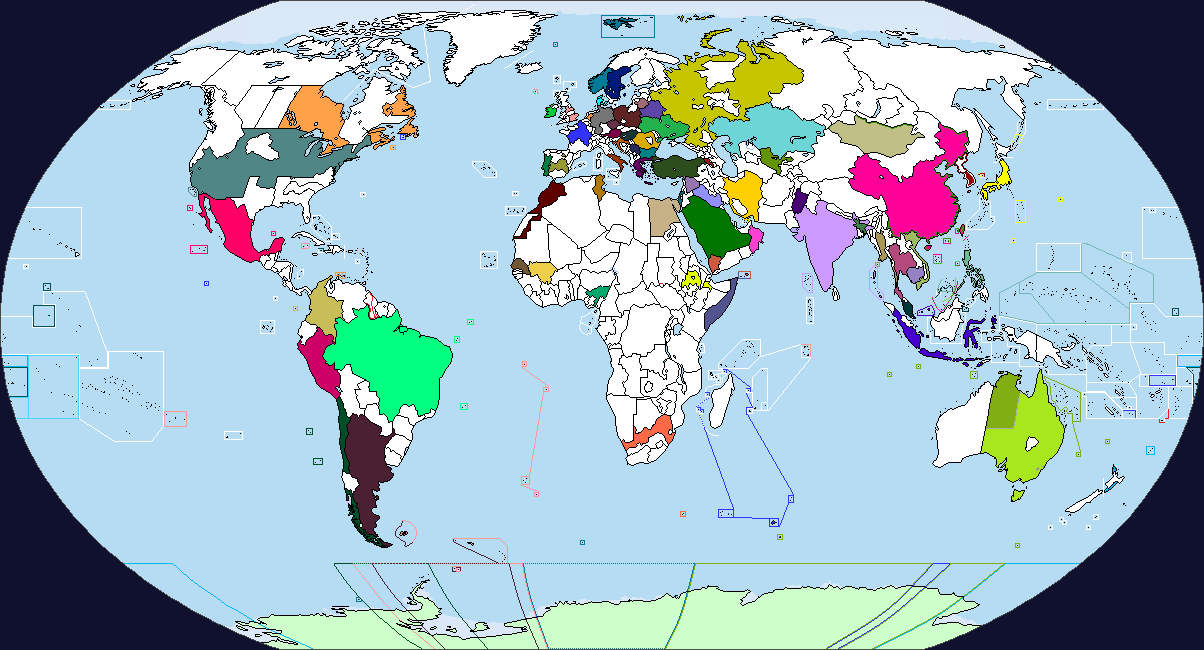
Translated by the Russian Reader. Thanks to Anton Shekhovtsov for the heads-up. Map courtesy of alternatehistory.com
_________
New Law Could Punish ‘Separatist Views’ With 5-Year Prison Sentence
RIA Novosti
January 11, 2014 The Moscow Times
President Vladimir Putin signed a law makes spreading separatist views a criminal offense punishable by up to five years in jail.
Under the law submitted to the State Duma by the Communist Party, people will face a fine of up to 300,000 rubles ($9,200) for calling for action against Russia’s territorial integrity.
Lawmakers said the legislation was an effort to curb increasing public support for the idea of relinquishing mainly Muslim territories in the North Caucasus but the measure has also drawn criticism for drawing attention away from more serious problems in Russian society.