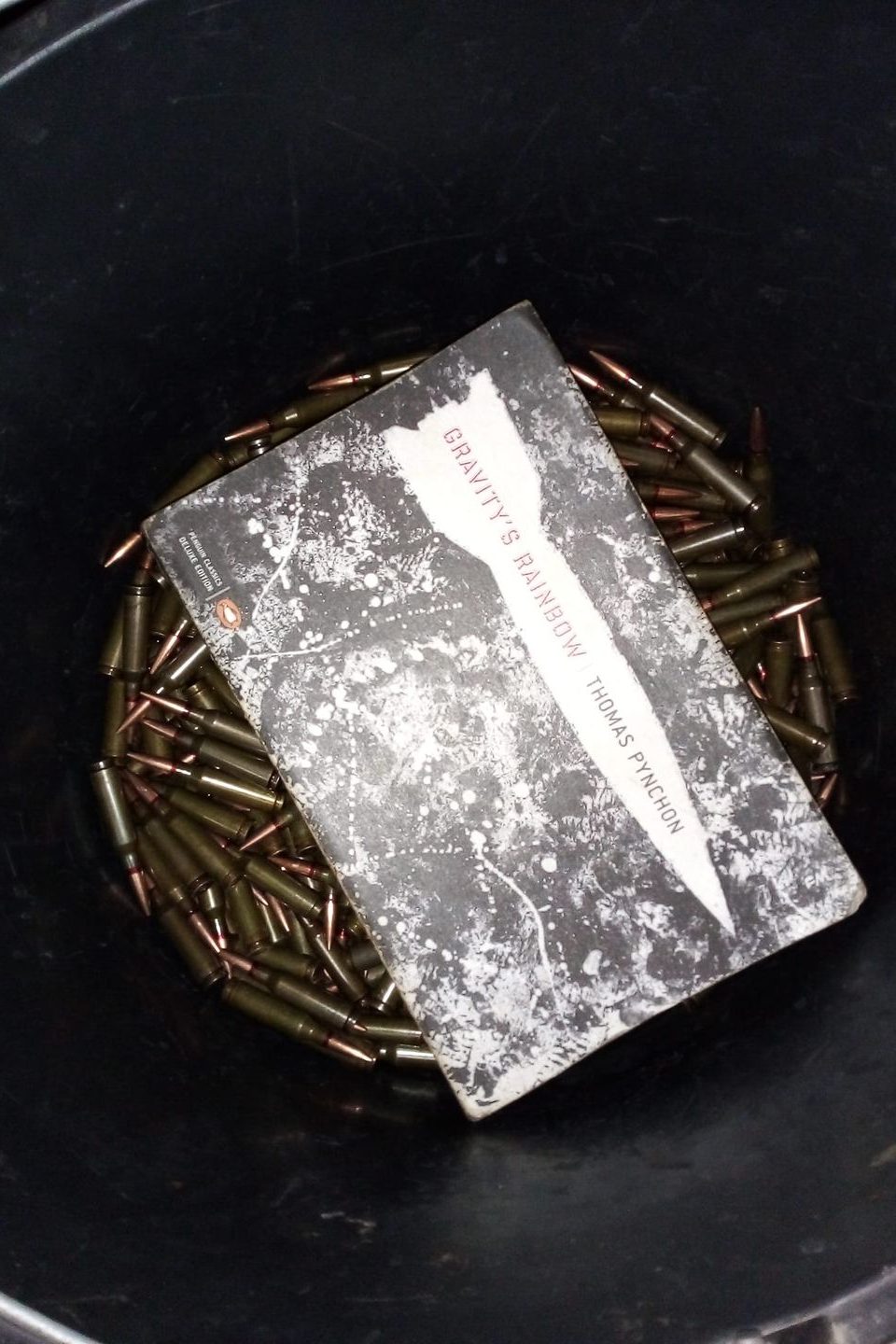
“Underwear and swimsuits from 900 rubles.” An image from a circular I got this morning from Russian online retailer Ozon
We are not ashamed
I’ve been doing my favorite thing for almost the whole month—hanging out with ordinary Russians, not only in Moscow, but also in the regions—in my capacity as a sociologist, via focus groups. Ten random people are brought together, and we sit and simply talk “about life,” and I’m among them with a dictaphone. It’s the best format, and ordinary folk like it too.
Naturally, I was curious about people’s opinions about what was happening: their reactions were very different, expressing a whole range of emotions. In most cases, people sense the crisis, and they complain especially about prices… Although then they cheer up and say that “life is livable.” Some even argue that this is not a crisis, but that there are “certain crisis phenomena.” However, after thinking about it, they usually said that it would get worse; this is the easy part now, they said.
I won’t describe everything they said, because I want to get to the main point, the horrible point.
People voiced a variety of emotions (and I carefully monitor them: focus groups are not so much about information as about feelings, about which events excite people more): despair, apathy, depression, anger, patriotic enthusiasm, complacency, and braggadocio… Some still “believe in victory,” some already have doubts, but most are unable to articulate what “victory” would look like… But one emotion—and I conducted more than a dozen focus groups both in Moscow and in the back of beyond—was practically absent, manifested by no one.
I’m talking about shame. There was “we’ve been betrayed,” or “we can still win,” or even “we shouldn’t have started it at all,” but there was no shame. And this, in my opinion, is a very bad symptom, showing that society has not even started down the road to recovery yet. And it may well happen that they will lose and fall face first in the mud, but will still not understand a thing.
This is sad. I’m not trying to show off my own “moral rectitude.” I don’t claim to have it, of course: I’m just as much a bastard as my dear compatriots. My claim is purely pragmatic: if we are still not ashamed, it means that for the time being we are a long ways away from the only emotion that gives us a chance at rebirth—horror towards ourselves. While everyone continues to justify themselves (even if by citing their own weakness: “What can I do?”), the cart won’t budge an inch.
We know that no one ever feels sorry for anyone in Russia. We have always known this, and we didn’t need Sergey Shnurov to tell us that. But the complete absence of shame, and in its place, again, this incredibly vulgar self-pity, pity for us poor unfortunates, “the whole world is against us,” is still quite eye-opening. You listen to how enthusiastically folks pity the “Russian people,” and all you can do is feel gobsmacked. They screwed up completely, betrayed everyone, they are up to their elbows in blood, they can’t do anything, they don’t know how to do anything – but no, they don’t feel even a smidgen of shame.
Nothing’s going to change their minds. Indeed, this, apparently, is the Russian people’s principal tragedy.
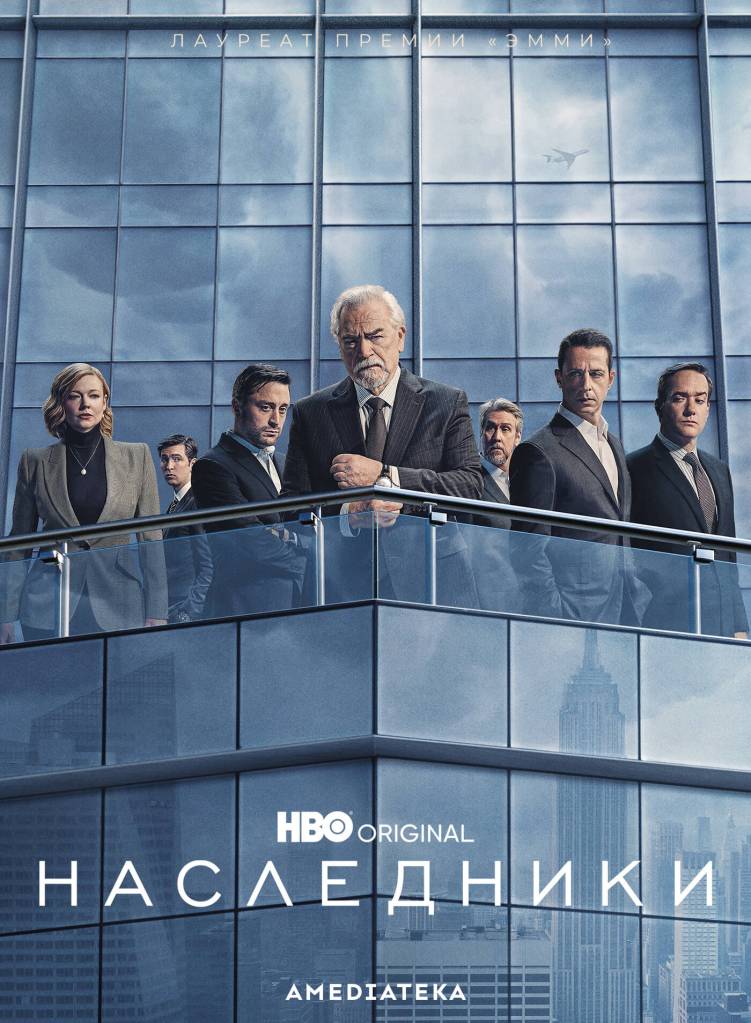
HBO and Russian streaming service Amediateka have made sure that wartime Russians are au courant when it comes to prestige television, as illustrated by this image from a circular I found in my mailbox the other day.
[…]
After witnessing the country’s crackdown on opposition activists and independent journalism — and the prosecution of hundreds of people who do not support the war or President Vladimir Putin — many emigres expect to encounter a dystopia when they arrive in Russia.
The reality is more banal.
“It’s corny, but the first thing that caught my eye after returning was that Twitter and Instagram don’t work without a VPN,” said Yulia, referring to Russia’s wartime ban on several foreign social media sites.
“Moscow bars were packed with visitors even on Monday evenings,” added the 25-year-old screenwriter who returned in April after fleeing to Georgia last year.
“Recently, my friend and I went out for a glass of wine. All the tables were occupied.”
“A week of discounts from domestic brands! We’re celebrating Russia Day! Russian goods at discounts from 12%” A screenshot of the email flyer I received earlier today from Ozon, Russia’s answer to Amazon.
I read with my own eyes a post by a journalist (a well-read woman and so on) that there have been shortages of Dijon mustard in France (the seeds came from Ukraine). She says it’s not good to gloat, but it’s still somehow hard to resist.
Since the norms of behavior forbid us to analyze the psyches of strangers without their asking, it remains only to say in the words of one classic author, addressed to another classic author:
“What, should I die and not live?” “Who would I make happier by getting arrested?” “I have my health, elderly parents, mortgage (crossed out), cat (crossed out), students, and deadlines to worry about.” “Why doesn’t Syria get so much sympathy?” “One must stand with one’s country, right or wrong.” (Crossed out.) “We have one life to live, and we should think about eternity and loved ones, not politics.” Have you been saying such things to yourself? I have been, constantly, usually silently, only to myself. But then I think that it is a way of normalizing the abnormal, of normalizing the fascist situation, that it is the next stage in the collapse of my personality, and perhaps of the country, morality, culture, and sociability, a new stage and state into which I and all of us are entering.
“You’re not Peter the First [Peter the Great], you’re Adolf the Second.” Source: Rustem Adagamov, Twitter, 12 June 2022: “The town of Siversky, near St. Petersburg.”
A close female friend writes to me from Moscow that “fun” is in the air again there on the streets and “in the corridors.” “The war has boiled over and cooled down”: it has been put on the back burner. The shock has passed and “the war is somewhere else.” The summer routine has overtaken it. “Well yeah, there’s the war, but does that mean we’re now supposed to stop living?”
“Wait [for his death]. Press the button to cross the road.” Source: @d_valkovich, Twitter, 11 June 2022: “The voice of the Moscow streets.”
So you bitches are enjoying the summer, right? The birds are singing, the lilacs are blooming, the mosquitoes are buzzing… But it’s no fucking summer, it’s your eternal black February in summer guise, it’s the horseman of the apocalypse pounding his hooves, you see a cloud of dust in the distance… These are the end times.
Sometimes I have dreams where someone falls off a roof or gets hit by a train. I never see the death itself, but only sense that something irreparable has happened. Something very scary, because it is forever. Then I wake up.
Like many people, I am waiting for this horror to end. The fact that the end exists at all gives us some hope in our helplessness. But we’re not going back to a world where none of this happened. Something irreparable has happened. Tens of thousands have been killed, and probably hundreds of thousands have been crippled in one way or another. It is forever. It cannot “end.”
________________
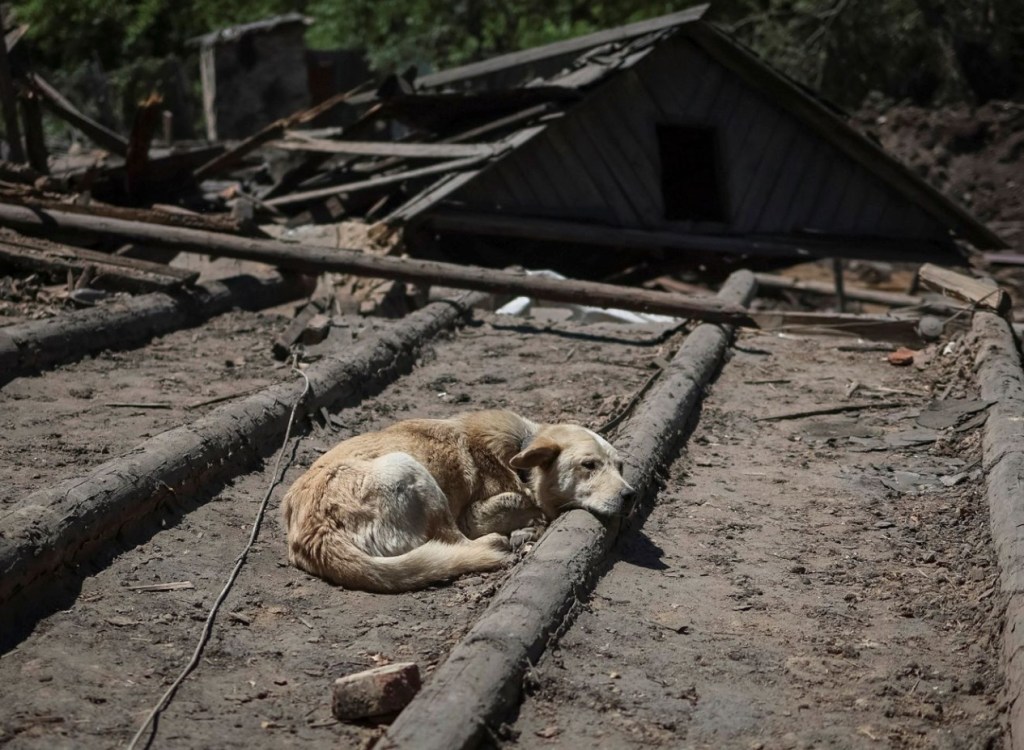
A dog near its house, which was destroyed by a shell, Kostiantynivka. Photo: Gleb Garanich for Reuters/Scanpix/LENTA
Source: Natalia Vvedenskaya, Facebook, 12 June 2022
Dmitry Poletayev, Vyacheslav Kryukov, Ruslan Kostylenkov, and Pyotr Karamzin, defendants in the New Greatness trial, during a court hearing. Photo by Pyotr Kassin. Courtesy of Kommersant and Republic
Russia’s Most Important Trial: The New Greatness Case as a Model of Relations between State and Society
Ivan Davydov Republic
July 11, 2019
The term “hybrid war” has been in vogue for a while. The folks on Russian TV, who long ago unlearned how to do anything good or, maybe, never knew how to do anything good constantly mention the “hybrid war against Russia.” The term is infectious. At any rate, I have the sense you could not coin a better phrase for describing the Russian state’s attitude toward Russian society.
The Russian state has been waging a hybrid war against Russian society, and it has also been a guerrilla war. It is as if the state has been hiding on the edge of the woods, lying in ambush, sometimes leaving the woods on forays to do something nasty, like hitting someone over the head with a billy club, fining someone, passing a law that defies common sense and threatens the populace or just blurting out something terrifying and stupid. Then it goes to ground in the woods again. The sound of steady chomping is audible and, occasionally, peals of happy laughter.
Russian society sometimes tries to fight back, of course. Actually, society exists only when it tries to fight back. When there is no fightback, there is no society, only confused, atomized individuals whom the “guerrillas,” happily chomping their food in the woods, consider food. Society rarely tries to fight back, and it scores victories even more rarely. This summer, it managed to drag reporter Ivan Golunov out of jail before the guerrillas could chew him up. I cannot recall any other victories.
Although I am mistaken. Last summer, for example, society secured house arrest for the two teenaged girls, Maria Dubovik and Anna Pavlikova, accused in the New Greatness case. They were nearly killed in remand prison, but they were finally released. There was a tidal wave of articles in the press, an angry buzz on the social networks, and a March of Mothers that the authorities decided not to disperse.
It is not clear why: the riot cops would have made short work of the mothers. The tough guys who constitute the rank and file of the OMON would have enjoyed beating up women armed with stuffed animals.
Even Margarita Simonyan emerged from the woods to shout something about the “serious people” in the Kremlin who cut short their summer holidays to make the right decisions. Then it was back to the woods, whence the steady sound of chomping and slurping could be heard.
I still cannot get used to the fact that we in Russia consider house arrest for the victims of police lawlessness a victory for our side and incredibly good luck. I mean to say I understand why people think this way, but I cannot get used to it.
And now all of them—Maria Dubovik, Anna Pavlikova, Vyacheslav Kryukov, Ruslan Kostylenkov, Sergei Gavrilov, Pyotr Karamzin, Maxim Roshchin, and Dmitry Poletayev—are on trial.
Pavel Rebrovsky and Rustam Rustamov have already been convicted. They made a deal with investigators and prosecutors before the case went to trial. They were sentenced to two and a half years in prison and two years probation, respectively.
It is not as if there is no buzz in society about the case, but it amounts to background noise at most. Our society is short of breath: it has enough air in its lungs to make one attempt at resistance. Meanwhile, amazing things have been happening at the trial.
Courtroom Miracles
In brief, the story is that young people who were not entirely happy with their lives shared their thoughts in chat rooms. (By the way, have you ever seen young people who were completely satisfied with their lives? Didn’t you feel like going out of your way to avoid them?)
A nice man emerged in their midst. He suggested they organize a group to fight for everything good and oppose everything bad. They met in real life a couple of times. Prompted by the nice man, they drafted a charter for their movement. The nice man, it transpired, was a police provocateur, and the members of the so-called New Greatness movement were detained by police, not without a certain amount of pomp and ceremony, right before the 2016 presidential election.
And how could the security services get by without pomp and fanfare? They had apprehended dangerous criminals and exposed an entire group of “extremists.” If you believe the case investigators, New Greatness were planning “mandatory participation in popular uprisings, revolutionary actions, [and] clashes with authorities of the current Russian regime.”
Can you imagine someone using the phrase “voluntary participation in popular uprisings”? Security services officers who specialize in such matters have decided to destroy the lives of these unfortunate young people. In fact, they have already destroyed them. But these same security services officers have a slippery grasp of Russian and are not terribly worried whether what they write makes any sense. The takeaway message is that the New Greatness kids have to be sent to prison whatever the cost and the words used to do it play an auxiliary role.
The goings-on at their trial leave no one in doubt that this is the point. None of the defendants has pleaded guilty. Pavel Rebrovsky testified against his friends as part of the pretrial deal he made with prosecutors. In court, he testified he had been promised probation, and so he had agreed to say what state investigators wanted him to say, not tell the court what had actually happened.
“You call me. Do you have Whatsapp? I’ll send you the testimony you need to give in court,” Investigator Anton Malyugin had said to Rebrovsky to encourage him.
I don’t know how to judge Rebrovsky’s actions. It is easy to feign you are an honorable person when you are not locked up in remand prison. Rebrovsky was locked up in remand prison. Nevertheless, the investigator pulled the simplest trick in the book on him. Rebrovsky was sentenced to actual prison time, not probation, but he had the guts to tell the truth in court.
Except the court does not want the truth. Prosecutor Alexandra Andreyeva petitioned the court to examine the witness again, and Judge Alexander Maslov granted her motion. Investigators now have the time they need to explain clearly to the defenseless Rebrovsky how wrong he was to do what he did and what happens to people who pull what he pulled so everything goes smoothly the second time around.
It is vital we know the names of all these people. They should become household names. We should not think of them as generic investigators, judges, and prosecutors, but as Case Investigator Anton Malyugin, Judge Alexander Maslov, and Prosecutor Alexandra Andreyeva, who pulled out all the stops to send these young people down on trumped-up charges.
Rustam Rustamov, whose testimony is also vital to the investigation’s case, mysteriously vanished the day he was scheduled to testify in court. He was in the court building, but he did not appear in court. Apparently, the prosecution decided not to risk putting him on the stand. There are also ways of making a person on probation realize that the desire to tell the truth can be quite costly. It is better to coach the witness properly. There is no hurry.
The Russian State’s Self-Defense
The whole story is quite pointed. The case has been cobbled together haphazardly. This was already clear last year, but now it has become completely obvious. No one plans to retreat, however. When the Russian state’s guerrillas come out of the woods, they always bag their prey. Otherwise, their prey might get funny ideas.
This is a story about decay, you see. It is not that Russia’s law enforcement agencies have nothing else to do. Unfortunately, there are real criminals aplenty. Nor have the Kremlin’s military adventures abroad been a panacea for terrorists. But it has been harder and harder for Russia’s law enforcers to find the time to deal with real criminals and real terrorists.
Recently, a friend’s elderly mother was taken to the cleaners by scammers. When he went to the police, they worked hard to persuade him there was no point even trying to investigate the crime. Everyone remembers the case of the serial poisoner in Moscow, who was released by police after he was detained by passersby. He was apprehended again only when a scandal erupted, the press got involved, and the big bosses voiced their outrage.
Who has the time to work on silly cases like that if you have been ordered to take down a reporter who has been snooping around? And why should you bother when you can “solve” a terrible crime you concocted in the first place and you also had the good sense to detain your homemade “extremists” right before an election?
All you have to do is remove one rotten log from this house for the whole thing to come tumbling down immediately. The Golunov case, which cost several police commanders their jobs, was an excellent illustration of this fact.
By the way, there are no suspects in the new Golunov case, which has been entrusted to the Russian Investigative Committee. The drugs planted themselves on the reporter. They were treacherous drugs. No wonder they say drugs are bad.
The investigators, the judge, and the prosecutor handling the New Greatness case understand this perfectly well. They will use all the means at their disposal to put away the defendants, most of whom have been locked up in remand prison for over a year. As they themselves like to say, it is a matter of honor or, simply put, a matter of self-defense. The investigators, the judge, and the prosecutor are defending themselves: if the case comes unglued, a scandal would be inevitable, and a scandal could cost them their cushy jobs. It would also do irreparable damage to the system, to the fabled woods, because the more such unhappy endings there are, the less comfortable it will be for the guerrillas to chow down in the woods.
This is a curious aspect of what I have been describing. When the current Russian authorities engage in obvious wrongdoing, they do not experience discomfort. Of course, they don’t: when they defend themselves in this way they only aggravate the injustice. The lives of villagers who are raped and pillaged by brigands hiding in a forest mean nothing to the brigands, naturally. What the big men of the woods do not like is noise. The sound of their own slurping is music to their ears. If a hullabaloo arises, they could lose the little things that make life in the woods so pleasant.
So, I would like to write that the New Greatness case is the most important criminal case in Russia at the moment. The lawlessness and injustice evinced by the Russian authorities have been obvious and flagrant. But there is also the Network case, whose takeaway message is that the FSB can torture anyone it does not like, and it is nearly legal for them to do it.
There is also the case of the Khachaturian sisters, in which the lesson is that “traditional values” are interpreted in Russia in a way that can tear society apart.
There is also the war on environmentalists who have been trying to prevent the opening of a giant landfill for garbage from Moscow near the town of Shies in Arkhangelsk Region.
Finally, there is a mountain of smaller cases, which are no less terrifying even though they have generated less buzz or no buzz at all.
The menu of the forest brothers is too extensive, while Russian society is short of breath, as I wrote earlier. All arguments about Russia’s future boil down to a simple question: are their appetites hearty enough to eat all of us? None of them have complained about a lack of appetite so far.
And yet it would be unfair not to mention Anna Narinskaya, Tatyana Lazareva, and the other women involved in March of Mothers, who have been forcing their way into the courtroom and supplying accounts of what has been going on there. This is no easy task: the Lyublino District Court simply lacks room, but the judge has refused to have the trial moved to another court.
Then there are the musicians (Alexei Kortnev, Boris Grebenshchikov, Andrei Makarevich, Roma Zver, Pyotr Nalich, Vasya Oblomov, Maxim Leonidov, and MANIZHA) who recorded a video with Lazareva in which they performed an old song by the group Chizh & Co. about the “commissar contagion” as a way to draw attention to the case.
Finally, there is the website Mediazona, which has scrupulously chronicled the deeds of Russia’s law enforcers. It has also attempted to make the investigators, the prosecutor, and the judge in the New Greatness case household names.
It says a lot about Russia that a news website wholly devoted to covering the lawlessness of so-called law enforcers can function here and enjoy well-deserved popularity. Thank you, colleagues.



 Dmitry Poletayev, Vyacheslav Kryukov, Ruslan Kostylenkov, and Pyotr Karamzin, defendants in the New Greatness trial, during a court hearing. Photo by Pyotr Kassin. Courtesy of Kommersant and Republic