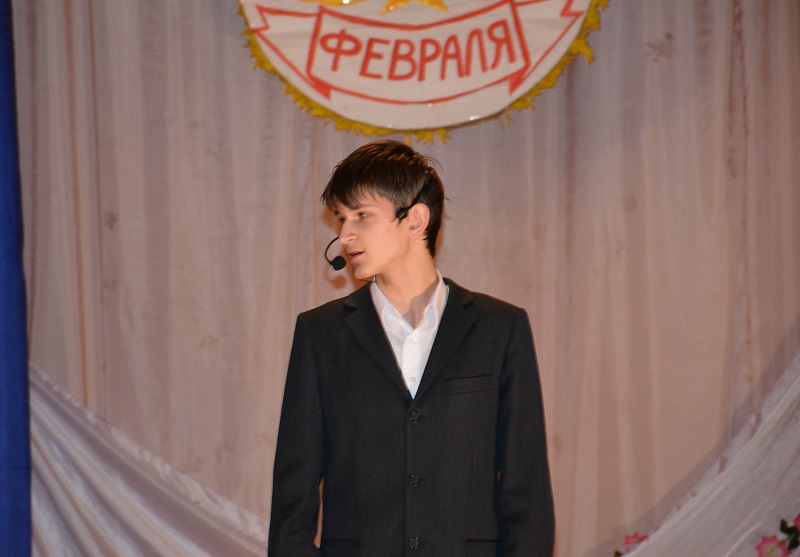
Life’s Rich Pageant: The Case of Yan Sidorov

Yan Sidorov. Photo courtesy of Memorial Human Rights Center

Minus one:Yan Sidorov, a former political prisoner in the Rostov Case, has volunteered for the war.

Sidorov served four years in prison in the Rostov Case, in which the court decided that two posters and thirty leaflets were evidence of “attempted organization of mass disturbances.” The Memorial Human Rights Center recognized him as a political prisoner.

Yan was released from prison a year ago, and he had planned to work in human rights protection. There were no vacancies in human rights organizations, however, and so he had to get a job as a food delivery courier.

Yan socialized with many leftist and liberal activists, but he also maintained relations with the red-brown National Bolsheviks.

Apparently, the latter were nicer to him. Several mutual friends have informed me that Yan Sidorov has joined the ranks of Eduard Limonov’s Other Russia and gone to the front.

I still don’t get how the National Bolsheviks degenerated from a flamboyant opposition party into the vanguard of the Kremlin regime. The late Limonov was always an imperialist, however.

But how — how?! — former political prisoners become defenders of Putin’s dictatorship, no one seems to understand. As one of my cellmates used to say, “Everyone has gone off their fucking gourd!”

Well, before he starts shooting, it’s not too late for him to change his mind. Maybe he will shake himself free of this delusion after all.

Source: Ivan Astashin, Facebook, 27 October 2022. Translated by the Russian Reader


Russian human rights activist Yan Sidorov is facing the prospect of three years under harsh probation conditions, when he is released next week from the penal colony where he has spent the last two years, Amnesty International said today.

Yan Sidorov is a prisoner of conscience, whose attempts to hold a peaceful protest in 2017 resulted in an imprisonment at a Dimitrovgrad penal colony after he had spent two years in pre-trial detention. He is set to be released on 3 November, but on 29 October Dimitrovgrad City Court will hear a request by the authorities to impose a severely restrictive probation period.

“Russian authorities are sending a clear signal to all young activists that participation in peaceful protests can come at huge personal cost. Yan Sidorov has already served four years in prison; he may now have to spend three more under strict police surveillance, forbidden to go out after 10 pm and banned from travelling outside the Krasnodar region,” said Natalia Zviagina, Amnesty International’s Moscow Office Director.

“The Russian penitentiary authorities must immediately withdraw their request to impose additional arbitrary restrictions on Yan Sidorov and release him unconditionally. Yan Sidorov has done nothing but exercise his rights to freedom of expression and peaceful assembly, and this outrageous campaign of punishment must end.”

Background

Two weeks ahead of Yan Sidorov’s release from penal colony IK-10 in Dimitrovgrad (Central Russia), the penitentiary administration requested that the court impose a three-year probation period on him. Conditions include obligatory biweekly registration at the local police station and a curfew between 10 pm and 6 am; Sidorov would also be banned from leaving his native Krasnodar region, and banned from attending or participating in any mass events. The Dimitrovgrad City Court will hear this case on 29 October. On 15 October, the penal colony authorities accused Yan Sidorov of violation of the prison regime regulations – allegedly for not attending morning workout – and placed him in a punishment cell for seven days.

In October 2019, Yan Sidorov and his friend Vladislav Mordasov, who spent almost two years in pre-trial detention, were found guilty of “attempted organization of mass disturbances”, and each sentenced to more than six years imprisonment for organizing a peaceful protest in November 2017. The protest was in support of dozens of people in Rostov-on-Don (Southern Russia) who had lost their homes in mass fires. Their sentences were subsequently reduced to four years on cassation. Vladislav Mordasov serving his sentence in IK-9 penal colony in Shakhty (Rostov-on-Don region) is due to be released on 3 November as well.

Source: “Russia: Prisoner of conscience Yan Sidorov faces further restrictions after release,” Amnesty International, 28 October 2021

Website Builder Tilda Cracks Down on “Political” Website

tilda

A screenshot of Tilda’s homepage

Website Builder Tilda Blocks Rostov Case Website
Mediazona
January 16, 2020

Website builder Tilda has blocked a website containing information about Vladislav Mordasov and Yan Sidorov, defendants in the so-called Rostov Case, according to a Telegram channel dealing with the criminal case.

The page’s creators received an email from Tilda’s legal service.

“We wish to inform you that your project has been blocked for publishing politically directed information. Tilda is a platform designed for creating business projects,” the letter said.

The legal service stressed that Tilda was not designed for the “posting and publication of information and/or projects involving exposés, scandals, offensive content, and other such things.”

“Personally, we understand you and your position, and would like to help. But we cannot jeopardize the sites of our other users by working with such content, since it is impossible for us to moderate such projects,” the letter said.

The activists said that Tilda had allowed them to download their website in order to publish it on another platform.

In October of last year, the Rostov Regional Court sentenced 24-year-old Vladislav Mordasov and 19-year-old Yan Sidorov to six years and seven months, and six and half years, respectively, in a maximum-security prison. In December, the Third Appellate Court upheld the verdict.

rostov case

“Blocked.” The Rostov Case Telegram channel announces Tilda’s decision to shut down their website.

Mordasov and Sidorov were found guilty of attempting to organize riots (punishable under Articles 30.3 and 212.1 of the Russian Criminal Code). The young men frequented a chat room for supporters of Vyacheslav Maltsev, and on the day of his promised “revolution,”they picketed the Rostov regional government building.

Tilda Publishing is a service that lets users create their own websites using pre-designed blocks. Russian businessman Nikita Obukhov launched the platform in 2014.

Translated by the Russian Reader

__________________

Why is this an important story? Because more Russian grassroots activists than I can count have created websites on the Tilda platform to champion their causes, and that has included publicizing political trials like the one described above. For example, human rights activists in Petersburg have used Tilda to create a website about the frame-up of immigrants from Central Asia, who were charged and, recently, convicted of helping to organize a bombing in the Petersburg subway in April 2017. Thanks to Julia Murashova for the heads-up.

__________________

Manifesto

In 2017, Yan Sidorov and Vladislav Mordasov took part in a peaceful picket. They were arrested, accused of involvement in rioting, tortured into confessing, jailed for a few years in a remand prison, and recently sentenced to seven years in a maximum-security prison.

There is no reason to doubt that the case against them was cooked up by the Investigative Committee and Center “E”, if only because there was no rioting. Amnesty International and the Memorial Human Rights Center have recognized the young men as prisoners of conscience.

We demand the immediate release of Sidorov and Mordasov, the reversal of the court rulings in their case, and the prosecution of those in the security forces responsible for fabricating charges against them and torturing them.

Source: rostovcase.ru. Translated by the Russian Reader

__________________

Russia: Two youth activists jailed in deplorable act of injustice
Amnesty International
October 4, 2019

Today a court in Rostov-on-Don (southern Russia) sentenced two youth activists, Yan Sidorov and Vladislav Mordasov, to six years and six months and six years and seven months in a penal colony respectively and another, Viacheslav Shashmin, to three years on probation on fabricated charges of “attempted organization of mass disturbances” and “attempted participation in mass disturbances”. Denis Krivosheev, Deputy Director for Eastern Europe and Central Asia, said:

“Yan Sidorov, Vladislav Mordasov and Viacheslav Shashmin are prisoners of conscience detained solely for exercising their rights to freedom of expression and peaceful assembly. Throwing these human rights activists behind bars is a deplorable move which serves as an indictment of the state of the Russian justice system.

“These young men organized a peaceful picket with nothing more than a piece of paper and a loudspeaker. In falsely characterizing this protest as a violent ‘mass disturbance’, Russian investigators have fabricated a story designed to destroy the lives of these activists and their families. The charges brought against them contradict most apparent facts and go against international law and standards.

“During a plainly unfair trial the court closed its eyes to the evidence supporting Yan Sidorov, Vladislav Mordasov and Viacheslav Shashmin’s innocence. We call on the Russian authorities to quash the sentences and release these two young men immediately and unconditionally. Peaceful protest is not a crime and the right to peaceful assembly is enshrined in international law.”

Background

On 4 October, the Rostov-on-Don Regional Court found Yan Sidorov and Vladislav Mordasov guilty of “attempted organization of mass disturbances” and sentenced them to up to six years and seven months in a penal colony. In the same decision, Viacheslav Shashmin was found guilty of “attempted participation in mass disturbances” and was given three years of probation.

The human rights activists were prosecuted for trying to stage a peaceful protest in November 2017 in support of residents who had lost their houses in mass fires in Rostov-on-Don in August that year. Yan Sidorov and Viacheslav Shashmin were 18 years old when they were arrested in November 2017. Vladislav Mordasov was 21 years old.