Arrested Penza Antifascists Talk about Torture in Remand Prison

“He Would Check My Pulse by Touching My Neck and Monitor My Condition.” Arrested Penza Antifascists Talk about Electric Shock Torture in Remand Prison Basement
Anna Kozkina and Yegor Skovoroda
Mediazona
February 9, 2018


Dmitry Pchelintsev. Photo courtesy of his relatives and Mediazona

Ilya Shakursky and Dmitry Pchelintsev, arrested in Penza and charged with involvement in a “terrorist community,” have told their attorneys that Russian Federal Security Service (FSB) officers tortured them in the basement of the city’s remand prison. Mediazona has decided to publish the story told by Shakursky’s defense counsel and the transcript of what Pchelintsev relayed to his lawyer.

••••••••••

In October 2017, the FSB  detained four antifascists in Penza: Yegor Zorin, Ilya Shakursky, Vasily Kuksov, and Dmitry Pchelintsev. In early November, they detained Andrei Chernov in Penza, and Arman Sagynbayev, who was in Petersburg at the time. All six young men have been accused of involvement in a “terrorist community” (a criminal offense under Article 205.4 Part 2 of the Russian Federal Criminal Code). According to the FSB, the six had established an organization, known as The Network (Set’). They planned a series of bomb blasts during the presidential election, in March, and the World Cup, in June and July, that would “sway the popular masses in order to subsequently destabilize the political situation [in Russia]” and set off an armed insurrection.

The Network allegedly had cells functioning in Moscow, Petersburg, Penza, and Belarus [an independent country]. On January 23, 2018, antifascist Viktor Filinkov was detained in Petersburg, followed two days later by Igor Shishkin. Friends and family could not find either of them for over a day. A court had remanded both of them in custody as members of the alleged “terrorist community.”

In Penza, relatives of the detained activists told how law enforcement officers had planted weapons in the men’s cars and flats, and subjected them to torture by shocking them with electrical wires and hanging them upside down. According to friends and loved ones, all the detained men had been airsoft enthusiasts.

“All they ever did was learn how to render first aid in field conditions and survive in the woods. Is that illegal?” Angelina Pchelintseva, Dmitry Pchelintsev’s wife, asked OVD Info.

Initially, all the men in custody, except Kuksov, who invoked his right not to incriminate himself, as stipulated by Article 51 of the Russian Constitution, confessed to their alleged crimes.

After he was detained, Viktor Filinkov said that siloviki had tortured him with an electric shocker and forced him to memorize the wording of his testimony in order to repeat it later to investigators. Ilya Kapustin, interrogated as a witness in the case, also spoke of torture. FSB officers had shocked him with an electric shocker and threatened to break his legs and abandon him in the woods.

Igor Shishkin has not said anything about torture. The case file contains a letter written by Shishkin after he was detained. It is addressed to Alexander Rodionov, head of the FSB’s Petersburg Office. In the letter, Shishkin explains he received all his injuries while playing sports. Doctors confirmed Shishkin suffered a fracture to the lower wall of one eye socket, as well as numerous bruises and abrasions. Members of the Public Monitoring Commission on Conditions in Places of Imprisonment who visited Shishkin in a remand prison made note of numerous traces on his body of what looked like burns from electrical wires. Recently, Shishkin sent a petition to the authorities asking to cooperate with the investigation and requesting a pretrial agreement.

A Letter by Igor Shishkin from the Remand Prison
Greetings to friends, relatives, acquaintances, and sympathizers! In my stupidity, I got caught up in a very serious and unpleasant situation. I’ll skip the details. I just want to advise everyone to think a hundred times about what you are doing and how the consequences do not affect just you. I also want to send my sincerest apologies to the people whom my problem has affected. Sorry, guys! […] I really ask everyone not to generate a media buzz. We don’t need that right now.

“He Said, ‘I Couldn’t Take It. I Broke Down.'”
Attorney Anatoly Vahterov, Ilya Shakursky’s defense counsel, has written the following. Mr. Vahterov visited Mr. Shakursky in Penza Remand Prison No. 1 on February 7, 2018.

It follows from my client’s statement that he was one of six people simultaneously detained on suspicion of violating Article 205.4 of the Russian Federal Criminal Code. The article refers literally to “organization of a terrorist community.” During my conversation with my client, I did not have the slightest doubt he had not been involved in these actions.

I said to him, “I know that you signed a confession. How could that be?” 

He wrote a note to me, “I was beaten.”

Later, he gave me a more detailed account of how he had been tortured in the remand prison.

He said the plan was to implicate them in the Maltsev case. He said this. I was surprised. What was the connection? In my view, this case was fabricated on formal grounds. They grabbed one comrade by the name of Zorin. He was the weakest of them and testified against all his friends. Moreover, his testimony is absolutely far-fetched. It was grounds for detaining the other guys on suspicion of having committed the particular crime.

This is where it gets interesting. According to my client, all of them were tortured in the basement of the remand prison. The torture was sophisticated. Officers in masks and camouflage uniforms would enter their cells. They took them to a room in the basement, forced them to strip, attached electrodes to their fingertips, and cranked up a so-called dynamo. 

He just said, “I couldn’t take it. I broke down.”
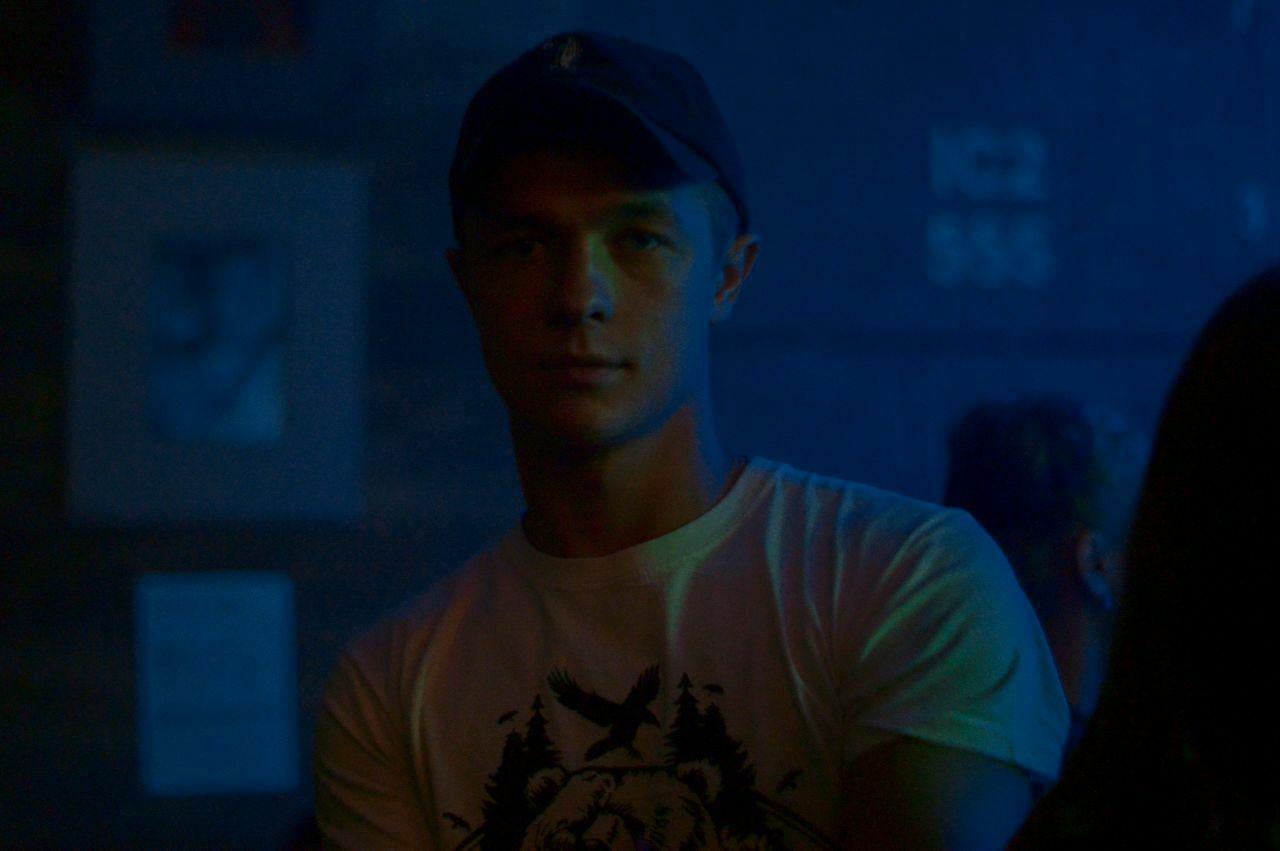
9df5e576b811a2658cced24c766cda70Ilya Shakursky. Photo from personal archive and courtesy of Mediazona

Torture was also used against Pchelintsev, according to my client. They talk to each other in the remand prison. Sagynbayev has also been tortured. This is savagery, you realize? As if the year now were 1937.

There can be no question of any terrorist activity whatsoever. I would venture to say that during the preliminary investigation and trial we will try and prove it. The guys only played role-playing games. They were into airsoft and running round the woods. Yes, the guys gave each other nicknames. It was just easier for them to address each other that way. None of this is anything other than child’s play. Yes, there were nicknames, yes, there were assigned roles. Why not? We played war when we were kids. We also pretended to be medics, sappers, and snipers. Each had a role to play. There were role-playing games and nothing more.

The had their own group and their own music. They were involved in the antifascist movement and environmentalism. The authorities have been trying to accuse them of espousing anarchism, but the thing is that my client and the other comrades are antifascists. A person who opposes Nazism cannot preach Nazi ideas and chauvinism, engage in any kind of propaganda, and advocate overthrowing the social order.

Ilya Shakursky is a totally sensible, regular guy. I would say he is the salt of the Russian earth. He’s a normal, genuine, good Russian lad, raised in our society’s best traditions. He is not a criminal, that is for sure. But when he speaks, you can see the pain and resentment on his face. It happens. But he is hanging in there and hoping for a good defense. His mother was immediately fired from her job when the first articles about Pchelintsev and so on were published.

In order to be involved in a group, especially a terrorist group, a strict conspiracy, as my client has been accused of, there must be exclusively friendly relations, based on mutual respect, decency, and the knowledge that your comrade will not turn you over to the relevant authorities. But Shakursky and Pchelintsev had a falling-out over a young woman. They had fought with each other, and one even spit in the other’s eye.When there were conflicts like this, what kind of tightly knit team can we speak of?

In order to justify what I regard as groundless detentions, criminal charges, and remands in police custody, the men were accused of committing another crime, possession of weapons and explosives, Article 222 in the Criminal Code. Law enforcement planted two grenades and a pistol under the back seat of Shakursky’s car. If he and his friends were such conspirators, he would not have done something as amateurish as leaving two grenades in his car.  

Ilya Shakursky’s letter to his girlfriend 

Ilya Shakursky’s Letter to His Girlfriend
Today is exactly three months since I’ve been in the remand prison. If I were on the outside I would definitely go to the event commemorating two great heroes, Nastya Baburova and Stas Markelov.

We now find ourselves in circumstances in which we miss these people like never before. They fought injustice and helped people who were in very difficult situations in life. I sincerely hope that with the help of friends, loved ones, and concerned citizens we can get out of this pickle, which is one enormous misunderstanding and injustice.

Goodness will triumph!

January 19, 2018

All my acquaintances and friends should see this text.

“My Mouth Was Full of Blood, and One of the Torturers Stuck My Sock in It”
On February 6, 2018, attorney Oleg Zaitsev visited Dmitry Pchelintsev and interviewed him. Like most of the defense attorneys in the case, the investigator made Zaitsev sign a non-disclosure agreement concerning evidence in the preliminary investigation. Zaitsev notes that, under the circumstances, he has not violated investigatory privileges, but nevertheless he felt obliged to discuss all the violations of rights his client has suffered. What follows is a transcript of his interview with Pchelintsev.

I can say the following. On October 27, 2017, I left the house at around six o’clock in the morning to meet my grandmother. Near the end wall of the building, as I was nearing my car, four men in plain clothes suddenly approached me. I was so surprised I put my hands up in front of me. These men immediately beat me up and threw me on the ground. Their faces were not covered. I could identify them. Later, some of them escorted me from the remand prison to the FSB office. One of them looked to be thirty-five years old. He had light-brown hair, was wearing a gray jacket, and had a stout face and thickset build. They asked me my surname and struck various parts of my body. They reproached me for having putting up my dukes when I was being detained by the FSB. They confiscated the keys to my flat and used them to enter the place when my girlfriend was sleeping and search the place.

On October 28, 2017, after the court had remanded me in custody to the remand prison on Karakozov Street, I was in solidarity confinement cell 5-1. It was around four o’clock in the afternoon when a special forces policeman, the senior shift officer, and a major from the local office of the Russian Federal Penitentiary Service entered my cell. They told me to exit the cell and go to the nearby punishment cell, which I did. Six or seven men immediately entered the cell. Half of them were in MultiCam camouflage uniforms, while the other half were in plain clothes. But all of them wore balaclavas. Despite the headgear concealing their faces, I could identify some of these people by their voices, physique, and clothes. Subsequently, I recognized some of them when I was being transported and escorted.

They told me what to do, and I followed their orders. I stripped to my shorts, sat down on a bench, stretched my arms backwards, and put my head down. At first, I thought this was some examination everyone sent to the remand prison had to undergo, so I voluntarily submitted to it. Then they taped my hands behind me, tied one of my legs to the foot of the bench with more tape, and stuck a wad of gauze in my mouth.

One of the men was wearing white rubber medical gloves. He took out a dynamo and set it on a table. He stripped two wires with a boxcutter and told me to stick out my big toe. Another man checked my pulse by touching my neck. He would subsequently do this more than once: he was monitoring my condition. He was surprised my pulse was normal and I was not agitated. That was because I did not realize at first what was happening.

Then the man in gloves cranked the dynamo. The current flowed to my knees. My calf muscles contracted, and I was seized by paralytic pain. I screamed. My back and head convulsed against the wall. They put a jacket between my naked body and the stone wall. This went on for about ten seconds, but when it was happening, it felt like an eternity to me.

One of them spoke to me.

“I don’t know the word ‘no.’ I don’t remember it. You should forget it. You got me?” he said literally.

“Yes,” I replied.

“That’s the right answer. Attaboy, Dimochka,” he said.

The gauze was stuck in my mouth again, and I was shocked four times, three seconds each time. […] Then I was tossed onto the floor. Since one of my legs was tied to the foot of the bench, when I fell, I seriously banged up my knees, which bled profusely. My shorts were pulled off. I was lying on my stomach. They tried to attach the wires to my genitals. I screamed and asked them to stop brutalizing me.

“You’re the leader,” they repeated.

“Yes, I’m the leader,” I said to make them stop torturing me.

“You planned terrorist attacks.”

“Yes, we planned terrorist attacks,” I would reply.

One of the men who measured my pulse put his balaclava on me so I would not see them. At one point, I lost consciousness for awhile. […] After they left, a Federal Penitentiary Service officer entered the room and told me to get dressed. He took me back to my solitary confinement cell.

The next day, October 20, 2018, I broke the tank on the toilet and used the shards to slash my arms at the wrists and elbows, and my neck in order to stop the torture. There was a lot of blood from the cuts on my clothes and the floor, and I collapsed onto the floor. They probably saw what I did via the CCTV camera installed in the cell. Prison staffers entered my cell and gave me first aid. Then the prison’s psychologist, Vera Vladimirovna, paid me a visit.

As regards the video cameras installed in my cell, as well as in the punishment cell and the corridor, I can say that when FSB officers show up, the cameras either are turned off or the recording is later erased, or something is done with the sensors. The FSB officers completely control the local Federal Penitentiary Service officers.

On November 8, 2017, at around five o’clock in the afternoon, the senior shift officer was getting ready to leave.

“Will everything be alright with me?” I asked him.

“Don’t worry, I’ll be right back,” he replied.

I had connected his departure with the fact that the last time he left, the day before, Saginbayev’s scream was audible on the floor. I realized he was being tortured. Later, our paths crossed, and he apologized for testifying against me.

A lieutenant from the Federal Penitentiary Service then came to my door.

“Am I safe here?” I wrote on a piece of paper that I showed to him.

“Yes,” he replied in big letters.

After that I showed him the enormous bruise on my chest and stomach to let him know I had been tortured. After awhile he opened the cell door, and four men wearing prisoner’s uniforms dashed into the cell. Civilian clothes were visible under these uniforms, all of which were baggy. They were all wearing what looked like Buff masks, black tube scarves.

They beat and kicked me in the stomach, kidneys, and head. I had bruises from their blows, but they hit me like in a gym, so they would leave fewer visible traces. They informed me they were from the “underworld committee”: because of me they had been put on lockdown. They gave me a week to solve my problems with the “pigs.” If I didn’t solve them, they would punk me. One of them filmed the whole thing on a smartphone. The Federal Penitentiary Service officer was outside in the hallway the entire time. The four FSB guys from the “underworld committee” left. Later, I also recognized some of them when I was being escorted and transported.

Then the senior shift officer, a captain, returned.

“How can I believe you when FSB guys just came into my cell and beat me up?” I asked him.

He looked puzzled.

Afterwards, FSB agents have visited me many times in the remand prison. They wear no masks and chat with me in the visiting room. When they talk with me, they exert psychological pressure on me. They threaten, blackmail, and manipulate me. 

During an interrogation, the investigator told me it was he who gave the agents permission to visit me. They took their orders from him and they had their own work.

After I tried to commit suicide by slashing my veins open, I was put under special watch in the remand prison. The cuffs are not removed from my hands even when I am signing interrogation reports.

I want to add that, when I was tortured with electrical shocks, my mouth was full of “crushed teeth” due to the fact I gritted my teeth since the pain was strong, and I tore the frenulum of my tongue. My mouth was full of blood, and at some point one of my torturers stuck my sock in my mouth. 

I was beaten so badly I had open wounds on my head.

••••••••••

According to Republic, which has seen the case file, the FSB has named Pchelintsev the organizer of The Network terrorist group. He met his accomplices at concerts and allegedly founded the organization in 2014. According to the FSB, since 2015, every member of The Network has had his own role. Investigators believe Pchelintsev is The Network’s leader and ideologue. He has a deputy, nicknamed Redhead, who recruits new members.

The case files indicate that, in the summer of 2016, several cells joined The Network. The Penza cell was dubbed 5.11 (November Fifth) or Sunrise; the Moscow cell, MSK (Moscow Standard Time); and the two Petersburg cells, Field of Mars and Jordan. In addition, investigators believe The Network has a branch in Belarus, and that the cells were managed out of Penza. The FSB refers to all the detainees as anarchists.

Translated by the Russian Reader. Thanks to NV and PK for the heads-up

Anna Karetnikova: Monitoring Moscow’s Prisons

karetnikova
Anna Karetnikova

Anna Karetnikova: “The worse things are in Russia and the less money there is, the worse things are in the system”
OVD Info
October 27, 2016

As promised, OVD Info has published the full version of our interview with Anna Karetnikova, civil rights activist and member of the last three Moscow Commissions for Public Monitoring of Detention Facilities. The term in office of the third Moscow Public Monitoring Commission (PMC) is coming to an end, and by law anyone who has sat on the same commission for three consecutive terms cannot apply to serve on it again. Karetnikova had applied to serve on the Moscow Region PMC, but was not included in the new commission’s lineup. Similar things happened to a large number of civil rights activists who tried to get appointments to PMCs in other parts of Russia.

The interview was conducted shortly before the new lineups of the oversight commissions were made public. In conversation with OVD Info, Karetnikova summed up the work of the Moscow PMC and talked about the Russian penitentiary system’s numerous problems.

What is a PMC?

A PMC is a public monitoring commission of detention facilities. On the basis of Federal Law No. 76, its members are admitted into institutions that have such facilities, from police stations to remand prisons, including temporary detention centers, military prisons, and so on. They see the conditions of detention and can make recommendations on enforcing the law, eliminating violations, and otherwise furthering the legal interests of the persons imprisoned there.

How would you assess the work of the current commission? During your term have you been able to effect changes in the system, in the treatment of inmates, and the way the system interacts with civil rights activists?

I would rate it quite highly. I can speak only about the Moscow PMC. We succeeded in implementing serious reforms in meal services, accountability, and expanding the range of products that can be delivered to inmates in remand prisons. We made definite improvements to the Kaluga Federal Unitary State Enterprise, the [online] prison store or shop where inmates’ relatives can order things for them.  We definitely improved the conditions in Women’s Remand Prison No. 6. Unfortunately, among the things that have remained beyond our control and are getting worse, in my opinion, is medical care. The more we try and get on top of it, the worse it gets.

Medical care has remained a fallow field despite the huge effort we made to improve it just a bit. It was like running up the down escalator.

Nothing can be done. I understand the situation with healthcare is the same nationwide, but it is particularly horrible in our remand prisons.

What do you mean by accountability?

Registering complaints. If we are not around, say, the only way an incarcerated inmate can get something is by filing a complaint or petition. We expended a great deal of effort making sure these complaints and petitions were registered normally, because basically they save lives. It can happen that someone asks to see a doctor for six months and submits petitions to this effect, but none of them is registered. Then he dies, and we are sent an official reply that he never requested medical treatment. Continue reading “Anna Karetnikova: Monitoring Moscow’s Prisons”

Maria Eismont: The Case of Ildar Dadin

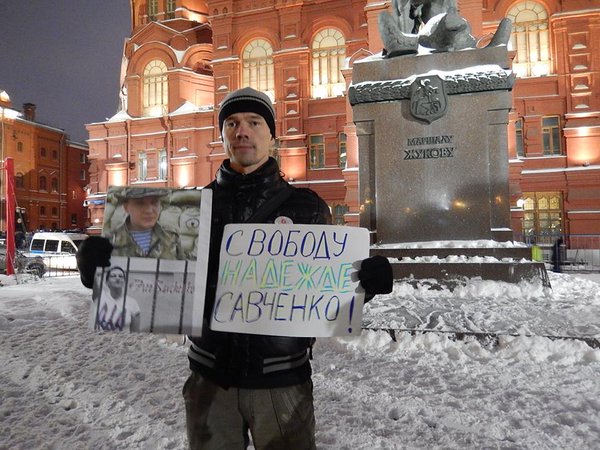
Ildar Dadin, protesting the imprisonment of Ukrainian pilot Nadja Savchenko. Photo courtesy of Russian Avos
Ildar Dadin, protesting the imprisonment of Ukrainian fighter pilot Nadja Savchenko. Photo courtesy of Russian Avos

Maria Eismont
The Case of Ildar Dadin
Why Society Has Not Ignored a Story about Torture in Prison
Vedomosti
November 10, 2016

The controversy provoked by activist Ildar Dadin’s letter about the torture and abuse to which he and other prisoners have been subjected in the Segezha prison colony has been simmering for two weeks. The longer the topic of the inhumane treatment visited on people in penitentiaries occupies the media, including state TV channels, which have been forced to join the discussion of Dadin’s plight, the more likely society will be able to change things. Daily publications containing fresh testimonies about torture in Russian prisons have shown Dadin’s case is not unique. However, no controversies over violence in prisons have yet led to serious reforms of the penitentiary system or even a significant descrease in the number of “torture” colonies.

So what is different about the Dadin case? First, even Dadin’s ideological opponents have recognized him as a prisoner of conscience. Who seriously believes in the necessity of sending somone to prison for a series of peaceful solo pickets? Second, his obvious innocence in the eyes of the rank and filke attracts the attention of people unable to sympathize with criminals to torture in prisons. Third, Dadin has declared he is fighting not just for himself but for all convicts who are beaten and humiliated. He has conveyed via his lawyer that he has no wish to be transferred to another prison.

“He is convinced he has no right to be saved if he doesn’t help those who stay in the colony,” said Ksenia Kostromina, his attorney.

His conviction, bordering on obstinancy, his idealism on the verge of naïveté, and his sincere willingness to sacrifice himself to save others have made Dadin a much greater threat to the system than its consistent and predictable foes.

Dadin and the prison wardens are two different worlds, worlds that do not understand each other. And when Dadin speaks about constitutional rights from a libertarian viewpoint, the prison wardens think they are being mocked in a sophisticated way,” Igor Kalyapin, member of the Human Rights Council, told Vedomosti.

This difference in outlooks manifested itself recently in the trial of Nizhny Novgorod policemen accused of employing violence against detainees. (Ultimately, they got off with probationary sentences.) Their defense attorney assured the court they had in fact been “fulfilling the president’s May decrees,” while the accused themselves claimed they had been “defending the Motherland.”

Yet there are reasons to regard the situation with cautious optimism. One of them is the offer made to Anna Karetnikova, the most active member of the Moscow Public Monitoring Commission’s last three rosters, to work in the Federal Penitentiary Service. The second is the unexpected encounter between activists who had gathered outside the Federal Penitentiary Service’s central office, after the publication of Dadin’s letter, with Valery Maximenko, deputy head of the service, and his public promises to meet regularly with the activists to discuss pressing issues. The third is the proposal to hold primaries for the Public Monitoring Commissions, which could result in the return of prominent human rights activists to the commissions. All this will be possible if civil society maintains its interest in the topic.

Translated by the Russian Reader. Thanks to Comrade Uvarova for the heads-up.

Socrates Has Not Surrendered: The Plight of Political Prisoner Alexei Sutuga

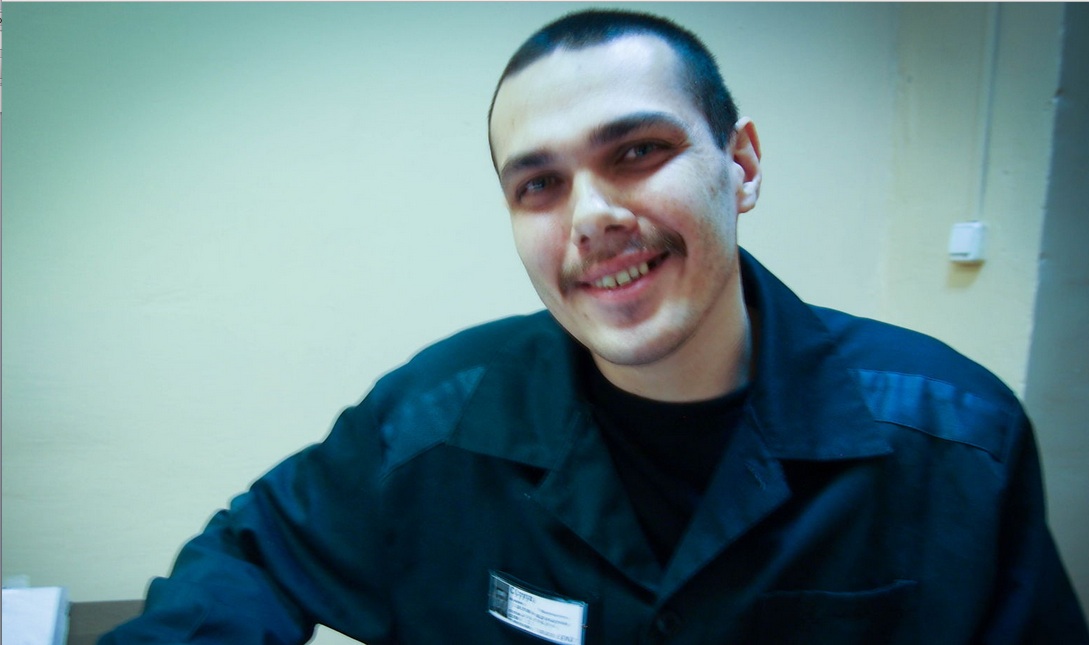
Alexei Sutuga, December 10, 2015. Photo courtesy of Svyatoslav Khromenkov

PERSCECUTION
No medical treatment, no letters, no visits. A political prisoner’s life in a penal colony. Zoya Svetova and Alexei Glukhov investigated the conditions of antifascist Alexei Sutuga’s imprisonment
December 14, 2015
Open Russia

29-year-old Muscovite Alexei Sutuga is an antifascist activist known among antifa by the nickname Socrates. On September 30, 2014, the Zamoskorechye District Court in Moscow sentenced Sutuga to three years and one month in prison for disorderly conduct for his alleged involvement in a fight at a Sbarro restaurant in the city. Sutuga’s defenders believe the criminal case was revenge on the part of Center “E” officers who had already tried to put Sutuga behind bars for his alleged involvement in a fight at the Moscow nightclub Vozdukh, for which he had been amnestied.

The Memorial Human Rights Centre has declared Alexei Sutuga a political prisoner.

In March 2015, the antifascist was sent to Correctional Colony No. 14, a medium-security facility, to serve his sentence. He was soon put in solitary confinement, and two months later he was sentenced to a new type of punishment, a year’s imprisonment in a single-space cell. Now Sutuga is serving his sentence at Correctional Colony No. 2 in Angarsk, Irkutsk Region.

Olga Sutuga, Alexei’s mom, explained to Zoya Svetova how and why her son is being pressured in the colony.

Solitary confinement and single-space cells are forms of penitentiary repression. Is this improvisation on the part of local wardens or are there orders from above? Is there a plan to break your son?

It began in Moscow, when the FSB wanted Alexei to cooperate with them. They came to him while he was still in the remand prison and suggested he collaborate. They said he would serve his sentence in far from the best conditions, in a colony far from Moscow Region. That is what happened: he was sent to Siberia. And there, in the remand prison, he was again visited by two Center “E” officers who suggested he collaborate and promised that in exchange he would do his time in the Irkutsk Remand Prison and get parole. But he did not agree to these proposals.

What exactly do they want from him? To snitch on anarchists?

Apparently, yes, because he knows a lot of people, is a fairly authoritative person in that world, and has his own opinion. Not only anarchists but also other activists listened to him. He is a very inconvenient person for the secret services. He always spoke the truth, and they decided it was vital to break him and force him to cooperate with them.

How do you keep in touch with your son? He is not allowed visits, letters, and telephone calls. How do you find out what is happening with him in the penal colony?

Only through his lawyer. When his lawyer battles his ways through to see him, he finds out that Alexei has not been getting letters from his wife, from me or from his friends. On November 30 he was released from solitary confinement, where he had spent ten days. Now he is in a single-space cell in Correctional Colony No. 2 in Angarsk, Irkutsk Region. He is supposed to spend a year there—until May 2016.

Is he considered a repeat offender of prison rules?

Here are some of the violations he has been charged with: not making his bed, having his nametag torn from his clothing, and sleeping during the daytime while sitting on a stool. For all these things he was deemed a repeat offender. When in late May he was transferred for a year to the single-space cell, the warden of the single-space cell facility told him he would not be getting out of there, that he would be spending the rest of his sentence in the “jug,” that he would not be returning to the medium-security facility, although by the verdict of the court he should be serving his sentence in a medium-security penal colony.

Is Alexei in solitary?

No, there are four people in there.

How can we help him?

He has asked that people do not stop paying attention to the whole situation, because if they do not write and talk about it, the prison wardens will see they can do anything they like and will use even more repressive methods against him.

How long does he have till the end of his sentence?

One year and five months.

Do members of the Public Monitoring Commission (PNC) visit him?

Employees of the PNC come to see him every two or three months. They constantly file complaints about violations of his rights with the Federal Penitentiary Service. But it does not help: no one pays any mind to the complaints.

Those violations of the rules in the remand prison for which he has been punished, were they real or contrived?

It is impossible to comply with all the rules there one hundred percent. Maybe the nametag really was torn off his clothing. But Alexei definitely did not have a shiv, because when he was transferred from the remand prison to the penal colony, six people searched him, and the trip from the prison to the colony takes half an hour. [Angarsk is forty kilometers away from Irkutsk — Open Russia.] So it is completely unclear how he could have got hold of a shiv if he was in a paddy wagon with guards the entire half hour.

When is your next visit with him?

I was authorized to visit him in October but I was unable to go. I will go in late December. I wanted to get to see him during the January holidays. But I am not sure it will work out. When the lawyer went to see the head warden of the colony and find out whether I might be able to get this visit, the warden replied there would be no visits due to the fact that Sutuga was socially dangerous.

Is that even legal?

No, of course not. By law I have the right to visit him. I wrote to the head warden of the colony asking him to give me a visit. If he does not respond to me within fifteen days, then we will file another complaint. Unfortunately, though, complaints have no impact. We write to the Federal Penitentiary Service, the prosecutor’s office, and the court.

How does Alexei spend his time? Is it true he has no books and is unable to get periodicals?

The prison does not accept books sent to him, and it also does not give him the periodicals we subscribed to for him. I wrote to the warden and asked what happened to the periodicals that were sent by mail in my son’s name to the penal colony. After all, we had paid money for the subscriptions. It smacks of petty theft.

What is his mood?

When attorney Svetlana Sidorkina went to see him in October, she said that Alexei was very depressed, sick, and his knees were swollen and painful. He was diagnosed with acute arthritis and tossed out of the infirmary back into the cell. He receives no medical treatment or medical examinations. Sidorkina brought him letters from me and from his friends. That supported him. The local lawyer, who visited him the other day, says that Alexei’s mood has improved. Generally, he is a very active person, and if he has no opportunity to do anything he gets depressed. But now, apparently, he has realized we are fighting for him, his friends wrote that he has not been forgotten, and so his mood has been normal and he is holding up. He will turn thirty on January 24. It’s a big birthday.

How Alexei Sutuga Was Made a Repeat Offender

After his trial in Moscow, Alexei was sent to the Irkutsk Remand Prison. When the prison staff confiscated his personal belongings and letters, Sutuga protested by declaring a hunger strike and demanding to be transferred to a penal colony. Three days later, Sutuga was transferred to Correctional Colony No. 14 in the city of Angarsk, Irkutsk Region.

However, as soon as Alexei arrived at the colony, a shiv was found on him. Sidorkina believes prison colony staff planted the shiv on him.

Before his transfer from the remand prison, Sutuga was undressed completely, all his personal belongings were examined, and the procedure was filmed on a video recorder. No forbidden items were found. The paddy wagon in which he was transported in the company of three guards was also inspected.

At the penal colony, Sutuga was immediately taken to the search room, where in the presence of ten colony staff he was again forced to strip and put all his things on a table. As Sutuga was undressing and simultaneously replying to the questions of penal colony staff, one of them suddenly discovered a sharpened metal object in Sutuga’s cap. Sutuga claimed he had nothing to do with the shiv.

Sutuga was placed in solitary confinement for seven days.

Over the next month, Sutuga received three more disciplinary reprimands: for not wearing a badge, for not reporting to the on-duty guard, and for not cleaning his room.

Due to these clearly fabricated violations, Sutuga was declared a repeat offender of prison rules and was first transferred to a high-security cell, then to a single-space cell.

What Is a Single-Space Cell?

Sutuga is now imprisoned in a single-space cell [edinoye pomeshchenie kamernogo tipa or EPKT] at Correctional Colony No. 2 in Irkutsk Region.

Single-space cells were instituted in penal colonies after July 1997. Previous to this, each penal colony had contained an “internal prison”—a cell-like space [pomeshchenie kamernogo tipa or PKT]. Now single-space cells have been devised that are no longer managed by the particular correctional facility, but by the regional office of the Federal Penitentiary Service. Prisoners placed in single-space cells are often in the process of transfer to another city and sometimes another region. But Alexei Sutuga has been left in the very same city, in Angarsk.

Members of the Irkutsk Public Monitoring Commission reported what they saw at Correctional Colony No. 2 in June 2015.

“There were heaps of construction debris in the yard in front of the entrance to the space. The cells were dimly lit, there was no ventilation, and the radio was not working. The tables were ninety by fifty centimeters, and there were benches ninety by twenty centimeter benches on each side. They were in the middle of the room, so it was problematic for four people to fit in the room at the same time. There was also very little space to move around. The drinking water was poured from the tap into tanks in the rooms.”

Top brass at the Irkutsk Regional Office of the Federal Penitentiary Service reacted to the remarks, but as of October 2015 the construction debris had not been removed. In conclusion, the PMC wrote:

“Slag mixed with ash that is loosened up every day is scattered near the entrance to the building and around the entire perimeter of the room. It is not only that the slag exudes harmful substances (sulfates, phenol, etc.) but also that the dust from the slag and ash gets into the air and from there, through the windows, into the cells and exercise yards, harming the health both of convicts and staff.”

Alexei Sutuga Does Not Receive Medical Treatment in Prison

The antifascist has several ailments that require treatment.

“In October, the public monitors established that Alexei was not being given packages with medicaments: they were being sent back. Staff at the facility explained that they do not let packages through if the permitted number of them is exceeded. And yet they do not look inside to determine whether they contain medicaments or not, but just send them back. They say the sender has to personally come to the facility and submit the package through the infirmary,” recounts Irkutsk human rights defender Svyatoslav Khromenkov.

In the presence of members of the PMC, Sutuga was prescribed an x-ray. At the time of the visit Sutuga was in the facility’s medical solitary confinement cell with a foot injury. According to him, he had an old sports injury, which had flared up after he had struck his foot against a nightstand. Sutuga also complained about lung problems: he said he was having trouble breathing. He believed he had pneumonia.

Lawyer Denis Ivanets says the trauma specialist in the infirmary at Correctional Colony No. 6 diagnosed Sutuga with first- and second-degree severe arthritis in both knee joints. This is a chronic illness. Civilian trauma specialists told the lawyer that, given such a diagnosis, medication was insufficient. Sutuga would also need physiotherapy, including massage, as well as special orthopedic aids.

On December 10, 2015, the public monitors once again visited the antifascist. He said he had been given the package of medicaments that had been brought to the prison personally by his comrades. Sutuga was very happy that he had finally got the pills. According to Sutuga, a doctor, who had told him there was no need for an immediate operation, had examined him and it could wait until his release.

Lawyers and Public Monitors Are Often Not Allowed to See Alexei Sutuga

During the course of the calendar week (five working days) beginning November 25, 2015, lawyer Denis Ivanets and human rights defenders constantly attempted to visit the political prisoner.

Every time the visitors appeared at the headquarters of Correctional Colony No. 2, the Federal Penitentiary Service officers found a pretext to turn them away. Either the warden of the facility, who had to sign the lawyer’s request to visit the convict, was not there (although, as later transpired, he had been in his office having an intercom meeting with the head office), or the warden of the single-room cell facility was gone all day, and he was allegedly the only staff member who could escort the lawyer to the premises behind the barbed wire (although the warden of Correctional Colony No. 2 had signed off on the paperwork for visiting the convict).

Now members of the Irkutsk PMC are appealing in court Correctional Colony No. 2’s ban on holding a personal conversation with Alexei Sutuga under conditions of acoustic isolation from penal colony staff. The law “On Public Monitoring” directly stipulates this right.

Letters and Newspapers Are Not Delivered to Sutuga

According to lawyer Denis Ivanets, “Alexei’s mom says her son does not reply to letters from his spouse, parents, and friends. When I talked to him about it, it turned out that more than two thirds of the letters had simply not got to him! These letters had been sent to Alexei over a month ago.”

According to Article 91.2 of the Russian Federal Correctional Code, letters, postcards, and telegrams sent and received by convicts are censored by the wardens of the correctional facility, after which they must be given to the convicts.

In addition, Sutuga’s relatives took out subscriptions to several newspapers and magazines (Kommersant, Novaya Gazeta, Rossiiskaya Gazeta, GEO, Vokrug sveta), but Sutuga had not been receiving them. Staff in the warden’s office at Correctional Colony No. 2 could not give the lawyer an intelligible answer as to why this had been happening. According to the Article 95.1 of the Russian Federal Correctional Code, convicts are permitted to receive stationery supplies in parcels and packages, purchase literature through retail distributors, and subscribe to newspapers and magazines without limitation at their own expense.

Socrates Has Not Surrendered

Alexei Sutuga was placed in solitary confinement from November 20 to November 30 for his latest “rules violation.” As his lawyers report, the number of reprimands grows with each passing month, and this will make it impossible for him to be paroled.

On December 10, 2015, the members of the PMC were able to chat with Sutuga, who sent greetings to everyone, especially his loved ones, his mom, wife, and child. Sutuga asked for new photographs of them, as well as books on psychology, sociology, and political science.

Translated by the Russian Reader