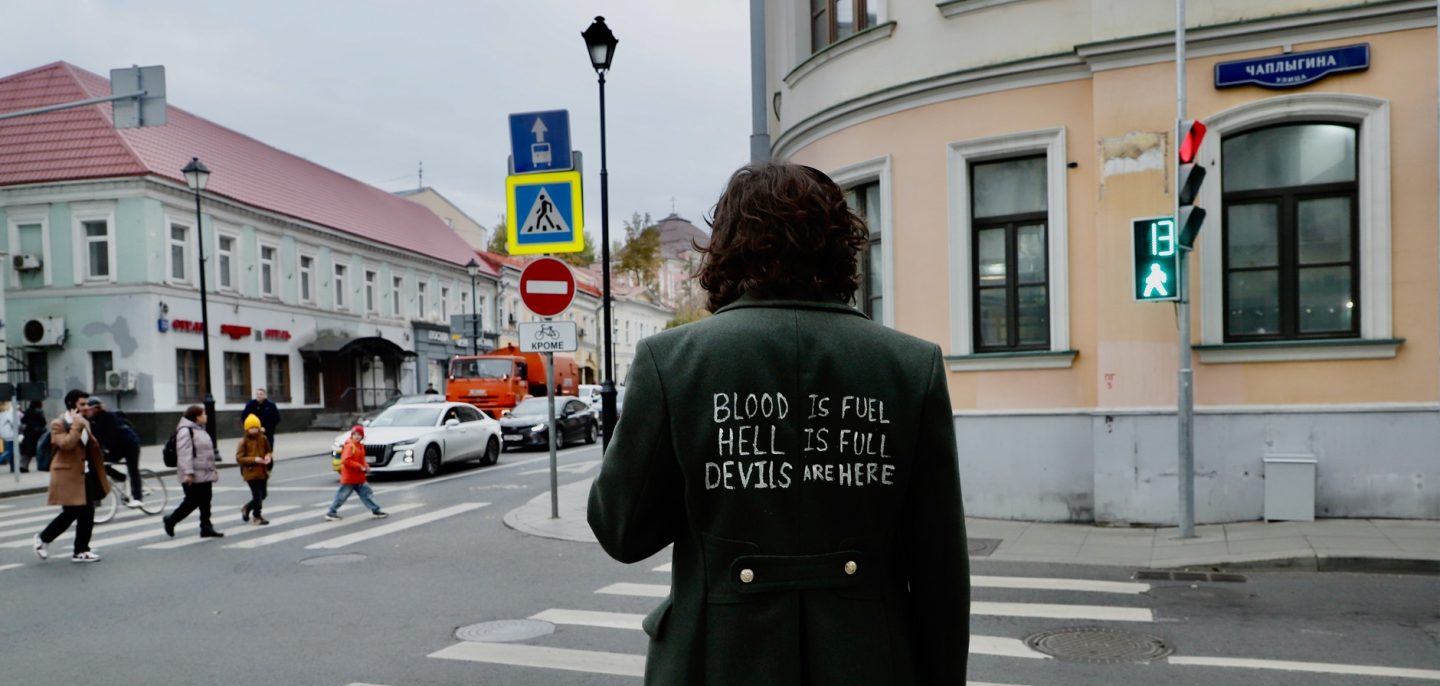
Teachers’ Day in Bryansk

A martial dance performance, given, allegedly, at the recent Teachers’ Day celebration in Bryansk

Source: Kolokol XXI (Telegram), 6 October 2024


Distinguished teachers awarded for their many years of work and achievements

On October 5, the country and the Bryansk Region celebrate Teachers’ Day. This is the day when our teachers are thanked and given flowers, and concerts and matinees are organized in their honor.

Celebrations were also held at Prep School No. 27 in the Bryansk Region’s Fokino District. District head Alexander Gavrilov, Department of Education director Alevtina Andreyeva, and others made welcoming speeches.

All of them noted the importance of pedagogical labor, and the huge role which educators and teachers play in the life of every individual. Distinguished teachers were given awards for their many years of work and for their achievements.

A warm atmosphere and positive emotions reigned at the event. The festive mood was supplied by artists from the Railroaders Cultural Center and the village of Belye Berega.

Source: Marina Frolova, “On eve of Teachers’ Day in Bryansk, celebrations held at Prep School No. 27,” Bryansk bez formata, 3 October 2024. Translated by the Russian Reader


“Happy Teachers’ Day!”

On October 3, on the eve of Teachers’ Day, a festive event was held in Bryansk to honor the region’s pedagogical workers — teachers, educators, master trainers, and continuing education instructors. The event was held at the Yuri Gagarin Bryansk Regional Governor’s Palace of Children’s and Youth Creativity. Among the honored guests were Valentin Subbot, chair of the Bryansk Regional Duma, and Alexander Bogomaz, head of the region, as well as representatives of the government, trade unions and educational organizations.

Teachers’ Day is a holiday celebrated in Russia on October 5, coinciding with World Teachers’ Day. The quality of education is annually improved, innovative technologies are introduced, new schools are built, and modern educational centers are opened annually in the Bryansk Region. These achievements have been recognized at the federal level and generate favorable conditions for teachers and students.

In his address to the teachers, Governor Alexander Bogomaz, who himself grew up in a family of teachers, emphasized the importance of their profession. He noted that, thanks to the supreme professionalism and wisdom of teachers, patriots ready to serve their Motherland were being brought up in the Bryansk Region.

The Governor also touched upon the issue of awarding teachers. Seven years ago, the law on awarding the title “Honored Educational Worker of the Bryansk Region” was adopted, but only three such titles are awarded per year. The head of the region proposed increasing this number to ten, taking into account the difficult conditions in which teachers work, especially in border areas. This decision would be a well-deserved recognition of their contribution to the development of education in the region.

Source: Yulia Sumner, “Teachers honored on eve of Teachers Day in Bryansk,” Moi Bryansk, 3 October 2024. Translated by the Russian Reader. The emphasis is mine.


Prices for flowers have skyrocketed in Bryansk in the run-up to Teachers’ Day. This holiday, like March 8, is one of the key days for the flower business. The same picture is observed throughout the country.

According to Izvestia, the average check for a bouquet for Teachers’ Day comes to about three thousand rubles (approx. 28 euros), while the demand for flowers has increased by thirty percent. They note an increase in flower sales on online platforms as well.

The newspaper writes that consumers are increasingly choosing more expensive and complex arrangements, including original bouquets and mono bouquets.

A “teacher’s” bouquet in Bryansk will cost between two and three thousand roubles, on average. Roses, especially bush roses and peonies, as well as chrysanthemums and lilies are traditionally popular on Teachers’ Day.

Earlier, we reported that the Governor of Bryansk Region had proposed amending the regional law on awarding the honorary title “Honored Educational Worker of the Bryansk Region.” The head of the region said that he considers it fair to increase the number of awards to ten per year, as the teachers of the region do a tremendous job.

Source: “Flower prices in Bryansk predictably increase before Teachers’ Day,” Bryanskie novosti, 4 October 2024. Translated by the Russian Reader


The Russian government has submitted a draft federal budget for 2025 and budget projections through 2027 to the State Duma. Although it is called a “draft” budget, no major changes will be made to it, of course. Budget revenues are supposed to increase by 11.6%, while expenditures will rise by only 5.2%. However, before this happens, both revenues and expenditures will grow, especially expenditures: up to 39.4 trillion rubles, against the planned 36.7 trillion.

A year ago, approximately the same people in the government were determined to curb military expenditures in 2025, hoping to end the war in Ukraine. Now it is clear that the war may not end in 2025 either, so the projections for the next two years do not provide for a significant reduction in defense spending. In 2025, 32.4% of Russia’s money will be blown up, buried, shot, crushed, pulverized, etc.: 13.49 trillion rubles! In last year’s forecast, defense spending also took a huge chunk — 29.4% (10.77 trillion rubles) — but it was still not that much.

Projected Russian federal budget expenditures for 2025, in trillions of rubles. “National defense” tops the list, at 13.49 trillion rubles (approx. 128 billion euros), while education (ОБРАЗОВАНИЕ) warrants a meager 1.58 trillion rubles (approx. 15 billion euros). Source: Kommersant, via the Moscow Times Russian Service

Economist Igor Lipsits argues that it will be quite difficult for the financial authorities to cope with this task. It’s not that they won’t find the money; it’s that the conditions under which they find the money will hurt the populace. But the populace is no stranger to that!

As they say, to buy something you don’t need, you have to give something up. The list of things that will have to be given up includes support for Russia’s regions, and money for them has in fact been cut. Although they won’t get any money, they will have their budget debts canceled. The Jesuitic twist here is that they probably wouldn’t pay them back anyway. That’s the practice. In other words, that’s how the federal government supports the regions.

Another funny thing is that the funding for civilian drones has been cut. On the one hand, this is understandable: what do they need civilian drones for? They need military drones! On the other hand, this money has been partially used to finance “voluntary” designs, which subsequently, again in a voluntary fashion, make their way to the front and play a quite significant role there.

If we return to the revenue part of the budget, as usual, almost a third of it derives from oil and gas revenues. Oil and gas analyst Mikhail Krutikhin explains that not all is rosy with these revenues; they may even go downhill. The fact that some of the most unprofitable Russian companies are state-owned gives some insight into what the prospects for taxing Russian business might look like. And when analysts speak about dividends from oil companies, they argue that they will decrease. The trend, as described by oil and gas experts, is that prices will decline in 2025.
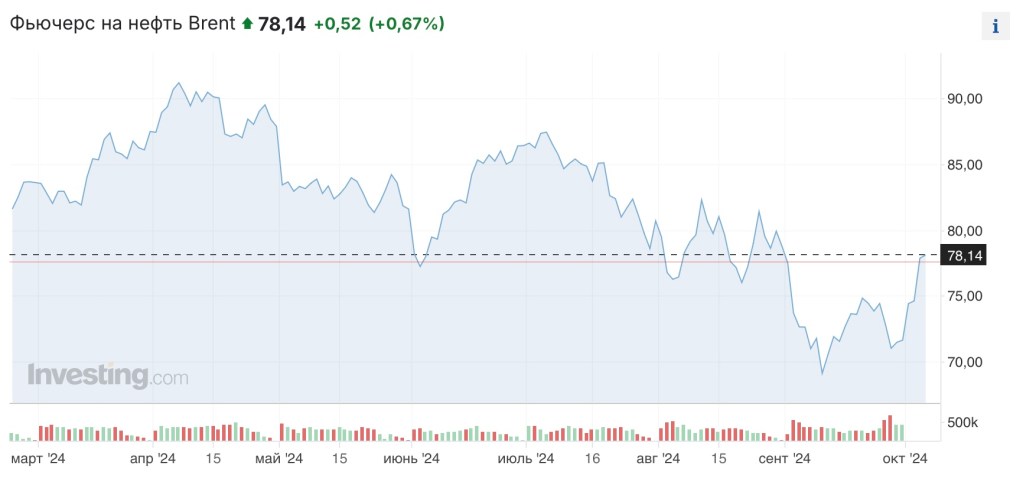
Brent Oil Futures, March 2024–October 2024. Source: Investing.com, via Moscow Times Russian Service

Prices probably would have continued to fall, but then Israel launched a war against Hezbollah, and oil reacted sensitively, triggering a rise in futures prices.

Source: Moscow Times Russian Service, weekly newsletter, 6 October 2024. Translated by the Russian Reader

Thousands of Muscovites Protest Hospital Closures and Layoffs

Around 6,000 People Rally against “Collapse of Medicine” in Moscow
Farida Rustamova and Artyom Filipenok
November 2, 2014
rbc.ru

A rally against health care reform in Moscow brought together six times more protesters than originally announced, uniting medical and educational trade unions and people from entire spectrum of the political opposition. They protested against the city government’s plans to close twenty-eight medical facilities in the near future. The protesters demanded the resignation of Moscow deputy mayor Leonid Pechatnikov and the heads of the capital city’s health department. According to organizers, another protest, this time nationwide, has been planned for late November.

The Stop the Collapse of Moscow Medicine rally took place on Sunday [November 2, 2014] on Suvorov Square in Moscow. According to rally organizer Alla Frolova (leader of the civic movement Together for Decent Medicine) around six thousand people came out for the rally, despite the fact the announced number had been one thousand.

“We are grateful to the doctors who were not afraid of being laid off and came. Seventy percent of the speakers were doctors, and many people wanted to speak at the open mike we announced at the end of the rally,” Frolova commented.

She told RBC that the trade union Action planned to hold a nationwide protest against medical care reform on November 29, and Together for Decent Medicine would support it.

The speakers included representatives of Yabloko, the December 5th Party, and the CPRF, and Andrei Nechayev, leaders of the Civic Initiative party and former economics minister. The rally was also attended by activists from independent trade unions (Confederation of Labor of Russia, Action, Paramedic.ru, a trade union of ambulance workers, the trade union Teacher, and opponents of reforms at the Russian Academy of Sciences) and opposition movements, from far-rightists (the National Democratic Party) to anarchists.

The rally was attended by people of all ages, but the attendees were mainly middle-aged and elderly. Several protesters wore uniforms of doctors and orderlies. The slogan on the placards borne by protesters called for “bureaucrats to get a conscience shot,” “demolish old Soviet residential buildings, not maternity hospitals,” and so on. Many of the attendees were health care workers who had either been fired or threatened with layoffs. All the protesters with whom RBC spoke wished to remain anonymous, for fear of losing their job and not finding a new one.

ukraine

Protester at Sunday’s rally: “They screwed up with Ukraine, now they’ve moved to medicine. Let’s say a firm no to closures and layoffs. The people who busted the budget should be fired.” Photo courtesy of RBC

Psychiatrist Alexander still works at Psychiatric Hospital No. 14, but the hospital is among those slated for closure by 2017.

“We have slowly been cut back. Over the past two years, half of our 1,100 beds have been slashed. My salary has not been cut yet, but it has been kept afloat by layoffs of coworkers,” he said.

According to Alexander, the elimination of clinics will primarily affect the most disadvantaged people. He warned of a possible increase in the number of offenses and suicides committed by patients, who will be left to fend for themselves at inpatient facilities.

“Western Europe already went through this in the seventies, when psychiatric hospitals there were closed. Later, they had bring them all back,” said the psychiatrist.

The doctors, nurses, trade unionists, and party activists who gathered at Suvorov Square in Moscow demanded an end to layoffs of doctors and wage cuts, and a moratorium on the reorganization of medical facilities. Another demand was the dismissal of all the top managers of the Moscow health department involved in reorganizing the Moscow health care system. During the rally, doctors even promised to organize a Doctor at Hand protest rally where attendees would be able to get free medical advice. Organizers said that doctors who had been planning to attend the rally had been threatened with dismissal.

Marina, a nephrologist, received a layoff notice on Friday.

“I, a highly qualified nephrologist, will be unemployed as of January 1 of next year due to a downsizing of beds. Ten of sixty beds are left in our department at Izmailovo Municipal Children’s Hospital, which has been merged with the Morozovskaya Hospital. Since April, only a third of our five hundred employees are left. I have come here in the hope that we will be heard, because as these reforms continue it will only get worse,” said the fired doctor.

Elena, an anesthesiology nurse, expects to be fired after the New Year.

“Our hospital, Gynecological Hospital No. 5, was merged with Municipal Clinical Hospital No. 57: now we are Medical Diagnostic Unit No. 3. In the past two years, eighty beds have been slashed at our hospital. The remaining one hundred and ten beds will be cut to sixty, meaning only one of five wards will be left,” she said.

Despite the fact she has worked twenty-one years, she is the first to face redundancy, she says. Her salary is now 22,000 rubles a month [approx. 400 euros at the time of publication]. Over the past two years, it has been cut by forty percent.

“Who is now going to provide qualified gynecological assistance to women in our place? We are told that we aren’t wanted,” said Elena.

Ekaterina came to the rally instead of her relatives, who were threatened with dismissal if they went.

“My relatives work in Moscow’s oldest eye clinic, on Mamonovsky Alley. In December, the clinic will turn a hundred and ninety years old. Now it is Branch No. 1 of the Botkin Hospital. This clinic is being vacated. It is on the timetable of hospitals slated for downsizing, and by 2017 there will not be any doctors or patients there,” said Ekaterina.

Not everyone could make it to the rally. As an ob-gyn doctor from Medical Unit No. 33 who identified himself as Dmitry told RBC, a shift prevented him from going to Suvorov Square. According to him, layoffs have also been made in his unit, which is attached to Hospital No. 40.

“Many of my colleagues no longer believe the situation can change,” he said, expressing hope that the rally would have some impact.

In a number of Moscow hospitals, Sunday had been declared “Health Day,” which, people in the crowd claimed, had been done specially to prevent doctors from taking part in the rally. Rain TV reported this, in particular, citing a source in Clinical Diagnostic Center No. 1.

In the resolution adopted by the rally, protesters demanded an immediate halt to “pseudo-reforms to health care in Moscow.” Organizers were also interested in the fate of the real estate vacated after the closure of the health care facilities. There were also demands for the immediate resignations of Moscow deputy mayor Leonid Pechatnikov and the top managers of the Moscow city health department, who had been “discredited by their involvement in the destruction of Moscow’s health care system.” As Frolova told RBC, rally organizers had invited Pechatnikov and health department chief Alexei Khripun, but the deputy mayor’s office only promised to pass the invitation on to him, while Khripun was represented at the rally by an aide, who “remained incognito.”

Protesters called for a public debate on the present state and future of the Moscow health care system involving members of the medical community, the Pirogov Doctors Movement, Together for Decent Medicine, and other public organizations. They demanded that all discussions be public, and the proceedings be published in the media.

“The demands in this resolution will be sent to municipal and federal authorities,” the conclusion of the resolution states.

Cuts to medical institutions in Moscow have been underway since late last years. According to the working version of the timetable for closing Moscow clinics and maternity hospitals, employees at twenty-eight facilities, including fifteen hospitals, will be fired and their premises vacated. Employees have already been laid off at several hospitals listed in the timetable. The bulk of the closures will take place by April of next year.

hospital closures infographic

Plan for eliminating medical facilities in Moscow. Courtesy of RBC

“We did not want to publish [the timetable] because we were crying softly in our offices. But since it has already gone public, we can now all cry together,” said Pechatnikov, commenting on the document.

__________

Read more about the planned hospital closures in Moscow and the public outcry:

  • Andrei Kozenko, “‘You closed a hospital, open a cemetery’: doctors rally against health care reforms,” Meduza, November 2, 2014 (in Russian)
  • Alison Quinn, “Moscow’s Deputy Mayor Attempts to Allay Panic over Health Care Reforms,” Moscow Times, October 29, 2014 (in English)
  • Lyudmila Alexandrova, “Russia’s fast-tracked health service reform sparks protests,” Tass, October 21, 2014 (in English)
  • Ilya Matveev, “Who built them?” OpenLeft.ru, October 17, 2014 (a list of facilities scheduled for closure, in Russian)
  • “We were crying softly in our offices,” Navalny.com, October 17, 2014 (in Russian)
  • Dina Yusupova and Konstantin Gaaze, “Why hospitals are being closed in Moscow,” Bolshoi Gorod, October 17, 2014 (in Russian)

__________

Meanwhile…

Moscow, October 16, 2014, Interfax. On Thursday, Admiral Vladimir Komoyedov told Interfax that, according to the draft budget, a record sum of 3,286,800,000,000 rubles [approx. sixty billion euros] which amounts to 4.2% of GDP, would be spent on the national defense in 2015. This exceeds 2014 spending by 812,160,000,000 rubles.

In 2016, the government plans to spend 3,113,240,000,000 rubles on defense; in 2017, 3,237,820,000,000 rubles.