
Turning Her Back on Propaganda
What does daily life consist of in a prison camp? It consists of work, of course, work which is dull and exhausting. It consists of sleep, which is fitful, as sometimes there are inspections every two hours. And it consists of spending time with people whom you didn’t choose to spend time with. The wardens make sure to burden convicts so that they have nothing that is theirs alone, so that they have no time to think about anything, so that they are entirely subordinate to the powers that be. The goal of prison camp “re-education” is the same: breaking the will of the prisoners, turning them into obedient robots who obey all the orders of their superiors.
This is especially true for political prisoners—people who think independently and have their own principles. The overarching mission of the wardens is to attain voluntary submission, joyful and proactive submission, from political prisoners. But the wardens rarely succeed in this mission.
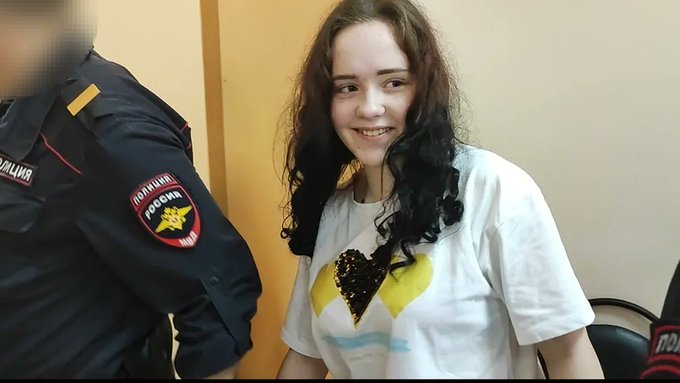
They have utterly failed with Valeria Zotova, a political prisoner at Kostroma Penal Colony No. 3. The wardens have insistently offered her a path to redemption, that is, cooperating with the authorities and taking part in “civic life.” Zotova has turned it down.
Recently, the prison camp’s club showed a movie, a Russian propaganda film titled Callsign: Passenger. Here is what Wikipedia says about the movie: “The movie is set in 2015. The movie’s main character is Nikolai Ryabinin, a trendy Moscow writer and carefree party animal. His brother volunteered for the war in Donbass and has gone missing. Nikolai goes looking for his brother and joins a separatist unit, the Aurora Battalion, in which his brother previously served. There, he gets the ironic nickname “Passenger” and under the leadership of the commander (callsign: Trigger) reevaluates his own life and comes to support the separatists.”
It’s an unimaginative piece of propaganda based on Alexander Prokhanov’s novel The Murder of Cities. It’s cheap trash, of course, like the writer himself, but the convicts are obliged to drink this cinematic concoction down to the dregs. All of them are herded into the club. Zotova refuses to go. Ultimately, it’s her right to watch the movie or not. But what do rights matter when it comes to Russian patriotism! Zotova is forcibly escorted into the auditorium. Watch our high art: look what talented filmmakers made it, what actors starred in it! But Lera Zotova turns her back on the screen and looks the other way.
Turning one’s back on propaganda is simple—simple but dangerous. The pressure on Valeria continues unabated. The harassment has been endless. The wardens summoned a friend of Zotova’s and stipulated to either: “Either freedom or Zotova—you choose.” They have been trying to create a vacuum around the political prisoner, depriving her of contact with those who are close to her in any way. The young woman is twenty-one years old, but she has been bullied like a hardened criminal. Because, as prison authorities envision it, she should be like everyone else: obedient, involved in the prison camp’s civic life, acting in plays, fulfilling the production quotas, and not smarting off to her superiors.
Source: Alexander Podrabinek (Facebook), 24 August 2025. Thanks to VA for the heads-up. Translated by the Russian Reader