







Gartenstadt Falkenberg and Preussensiedlung
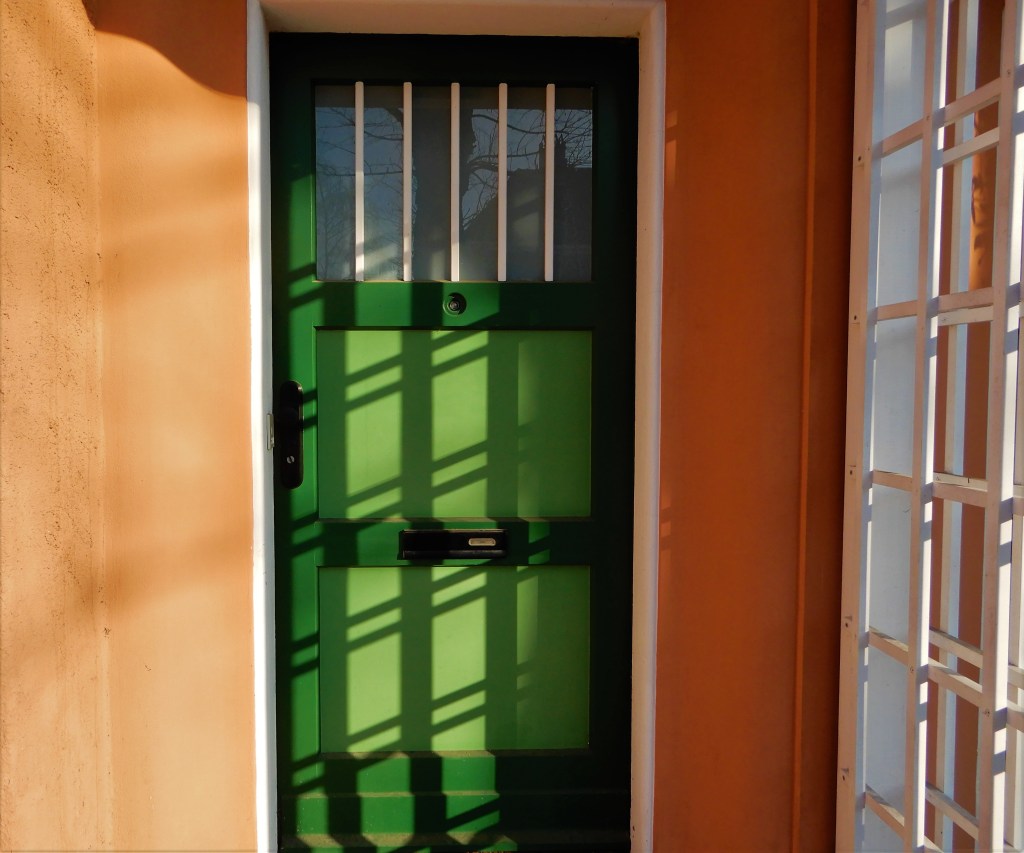
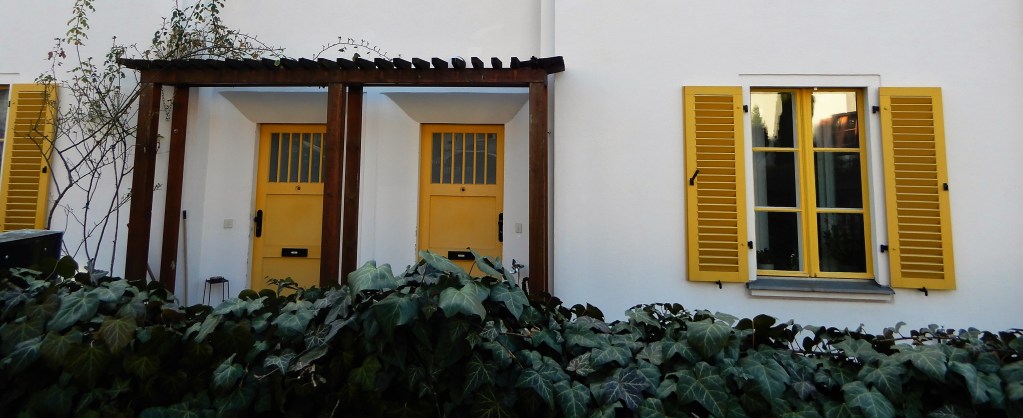
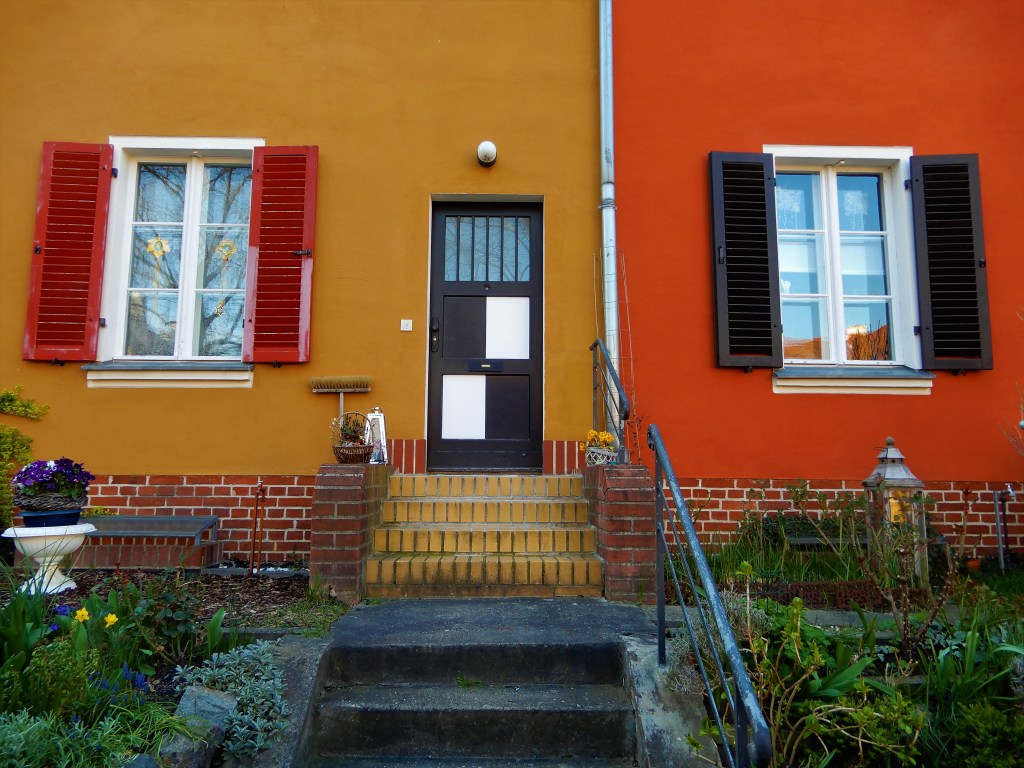
Yesterday was a rare sunny, warm day, so my boon companion and I traveled to the city’s far southeast to walk through Bruno Taut’s Falkenberg Garden City in Berlin-Bohnsdorf. It was like a tiny vision of heaven.
As it happened, it was also a short walk from Max Bel, Franz Clement, and Hermann Muthesius’s Prussian Street Estate, which was also quite handsome and built to a properly human scale.
I’ve noticed Berlin’s modernist housing estates seem to have had a beneficent effect on their neighborhoods, so that even current architects designing new houses and developments there try to get into the Tautian spirit, as it were. The overwhelming impression, however, is that you’re looking at a future we have lost forever.
The Russian Reader, Berlin-Friedrichshain, 30 March 2019
And now we come to this verb “see.” Within fifteen lines it’s been used six times. Every experienced poet knows how risky it is to use the same word several times within a short space. The risk is that of tautology. So what is it that Frost is after here? I think he is after precisely that tautology. More accurately, non-semantic utterance. Which you get, for instance, in “’Oh,’ and again, ‘Oh.’” Frost had a theory about what he called “sentence-sounds.” It had to do with his observation that the sound, the tonality, of human locution is as semantic as actual words. For instance, you overhear two people conversing behind a closed door, in a room. You don’t hear the words, yet you know the general drift of their dialogue; in fact, you may pretty accurately figure out its substance. In other words, the tune matters more than the lyrics, which are, so to speak, replaceable or redundant. Anyway, the repetition of this or that word liberates the tune, makes it more audible. By the same token, such repetition liberates the mind—rids you of the notion presented by the word. (This is the old Zen technique, of course, but, come to think of it, finding it in an American poem makes you wonder whether philosophical principles don’t spring from texts rather than the other way around.)