Lyudmyla Khersonska
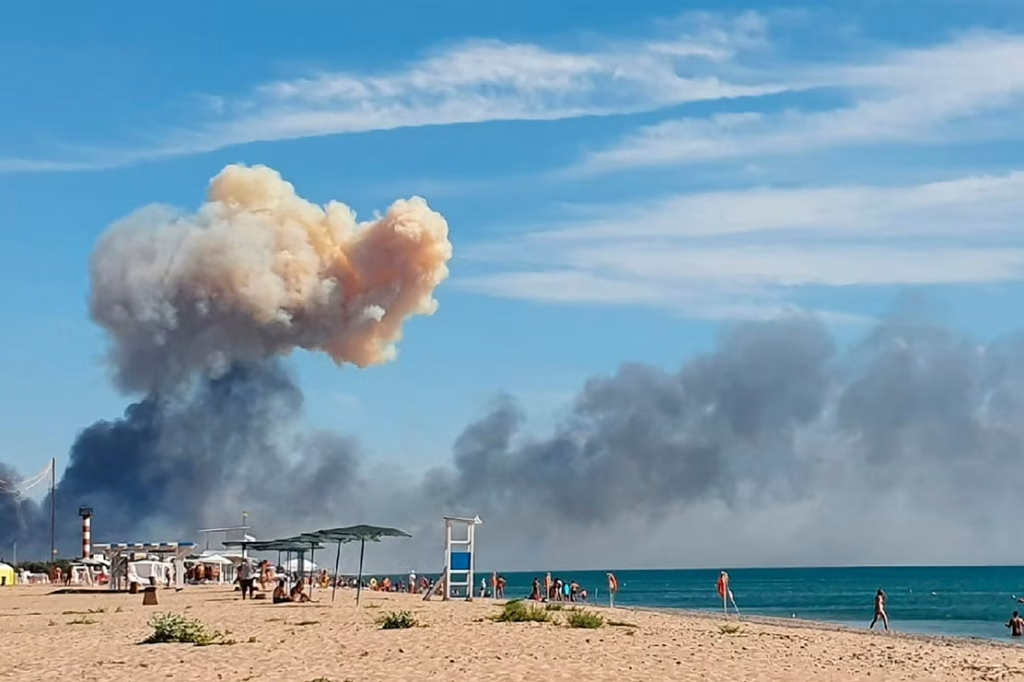
When Crimea was still a place of light,
when gulls
were free
of orders,
when sandals
beat light
on the border
of water,
and gulls were the only patrols in the sky;
when women in bright dresses
walked barefoot or in cheap sandals,
in sandals, in sandals
instead of boots,
before missiles.
Before missiles,
I, too, loved it all.
Translated from the Russian by Ilya Kaminsky and Katie Farris
Когда-то во времена Крыма,
когда Крым еще не был горем,
когда Крым еще был морем,
и над морем летали чайки,
а в море резвились дельфины,
когда по берегу ходили в сандалиях,
а не в тяжелых берцах,
когда-то во времена солнца,
когда не было дыма снарядов,
когда в море не вбивали сваи
и не строили железную сушу,
тогда я все это любила.
Lyudmyla Khersonska is the author of About Today Is a Different War (Arrowsmith Press, 2023), and The Country Where Everyone’s Name Is Fear: Selected Poems (Lost Horse Press, 2022), coauthored with her husband, Boris Khersonsky, and translated by Ilya Kaminsky and Katie Farris.
About this Poem
“I [wrote] this poem after Russia annexed the Crimea. After this beautiful Ukrainian place [was] violently transformed into a Russian military base. I visited Crimea many times before the annexation. I loved its poetic tranquillity and inspiring landscapes. Now it is all gone. I might never be able to see it again. But I have it in my memory. I often think of my friends who used to live there before the annexation. They had to flee. Their house stays empty with the memory locked behind the door.”
—Lyudmyla Khersonska
“Katie Farris and I [collaborated] to translate this poem by Ludmyla Khersonsky [sic] who is a poet from Odesa, Ukraine, who is also a war refugee, currently living in Italy. Her writings have appeared widely in the U.S., including in The New Yorker and World Literature Today. She has written about war for many years and, to my mind, her writing stands in the tradition of other Eastern European poets, including Anna Swir, who write about crisis with hypnotic clarity and restraint.”
—Ilya Kaminsky
Source: Poets.org. In the original publication, the translators are credited right below the author’s name. Although this might have been an editorial decision, it does point to a sense of authorship on the part of the translators. I have tried to contest this claim by moving their names underneath their text, in keeping with convention, and by providing my own more literal translation of the poem, below. ||||| TRR
Back in the days of Crimea,
when Crimea was not yet sorrow,
when Crimea was still the sea,
and over the sea flew seagulls,
and dolphins frolicked in the sea,
when the shore was trod in sandals,
not heavy combat boots,
back in the days of sunshine
when there was no missile smoke,
no piles driven into the sea,
no building of an ironclad land,
in those days I loved all of it.
Translated, from the Russian, by the Russian Reader