
Brothers and sisters, colleagues,
I reach out to you in anger and pain concerning the arrest of my sister and colleague Daria Egereva and the new, large-scale crackdown against representatives of Russia’s Indigenous Peoples. Phrases like “isolated incident” or “local overreach” do not describe what is happening today. This is a deliberate, targeted state policy of intimidating, suppressing, and criminalizing Indigenous leaders, of destroying the will of our peoples.
I speak about this not only as a member of the UN Permanent Forum on Indigenous Issues but also as someone who has fallen victim to this crackdown myself. On 17 December 2025, my home in the village of Lovozero was searched. Security forces broke into my personal space and confiscated computer equipment, communication devices, and documents. Similar searches and interrogations took place in the homes of other Indigenous minority activists throughout Russia. It was a planned, well-coordinated campaign of intimidation.
This is not a new reality for us. Back in 2014, I and other representatives of Indigenous Peoples were persecuted by the security forces for trying to convey the truth about the circumstances of Indigenous Peoples in Russia to the international community when we were prevented from leaving the country to attend a UN conference. Today, this practice continues in a much more brutal form, and it has been happening across the country. Crackdowns against the people involved in the events in Baymak, criminal cases against Erzya activists, and the detention of social movement activists in the Altai Republic are just recent examples of how the state has been trying to destroy the independent voice of the peoples of Russia.
Indigenous human rights activists have been labeled “extremists” and “terrorists” simply because they have used peaceful means to defend their peoples’ rights to their traditional lifestyles, cultures, languages, and basic human dignity. This is punishment for those who are not afraid to speak the truth openly, including outside their country, at the UN and other human rights forums.
Particularly outrageous is the fact that the Russian authorities accuse activists of terrorism, a crime for which Russia today imposes monstrous sentences of fifteen to twenty years in prison on people who have not committed violent acts and have never called for violence. These sentences are not intended to “combat terrorism” but to intimidate. The Russian authorities have laid their hands on those who have led a traditional way of life for centuries, herding reindeer, fishing, hunting, and foraging for wild plants on their own land, thus preserving their knowledge of Nature bit by bit.
We must not mince words: this is not a fight against terrorism, it is political vengeance. It is direct punishment by the state for the fact that representatives of Indigenous Peoples dare to appeal to the UN, speak out about violations of their rights, take part in the work of international bodies, and tell the truth about what is happening in Russia. The Russian authorities are deliberately criminalizing the very idea of cooperating with the United Nations.
There is virtually no room left in today’s Russia for free and independent opinion. Any criticism, any dissent, any independent social activism is harshly squashed. It is particularly cynical that the blow is being dealt to the most vulnerable—to the Indigenous Peoples of Siberia and the Arctic, who are socially disadvantaged, dwell in remote settlements amid harsh natural conditions, have no political clout, and are invisible to “mainstream society.” Our peoples cannot defend their rights except through international law, and nd that is precisely why we are being punished today.
I would particularly like to emphasize the Russian state’s profound hypocrisy. While formally declaring its commitment to protecting the rights of Indigenous Peoples, it has been systematically destroying independent Indigenous Peoples’ organizations for many years by persecuting their leaders and using state-controlled structures such as RAIPON and councils attached to regional governments as puppets on the international stage. These puppets do not represent the real interests of Indigenous Peoples, serving only as a front for repressive policies and a means of propagandizing the “happy lives” of our peoples in Russia.
What is particularly cynical about the current developments is that just recently, in November 2025, Vladimir Putin decreed April thirtieth “Russia’s Indigenous Minorities Day” and September eighth “Languages of the Peoples of Russia Day,” and declared 2026 “Peoples of Russia Unity Year.” While the Kremlin announces celebrations and talks about “supporting” our peoples, the searches, interrogations, and arrests of their leaders continue at the local level.
I appeal to states, UN bodies, special procedures, international human rights mechanisms, international Indigenous peoples’ networks, and civil society organizations. A clear, principled, and public position is what is needed today. We must demand the immediate release of Daria Yegereva and the other activists who have been detained, as well as the immediate cessation of all forms of repression, criminal prosecution, and pressure against representatives of the Indigenous Peoples in Russia. We must demand an end to criminal prosecution for engaging in peaceful human rights work and cooperating with the United Nations.
For my part, I intend to raise this issue at the UN Permanent Forum on Indigenous Issues and other UN bodies. I will seek international condemnation of what is happening, protection for those who have been illegally persecuted, and attention to the gross and systematic violations of the rights of Indigenous Peoples in Russia.
In conclusion, I would like to address Daria personally.
Dasha, sister, you are not alone. Your courage and your voice have struck fear in those who are used to acting in silence and with impunity. We are with you, and we speak out and demand justice! The solidarity of Indigenous Peoples is stronger than prisons and political crackdowns. We are in this together!
—Valentina Sovkina, member of the United Nations Permanent Forum on Indigenous Issues (UNPFII)
Source: Valentina Sovkina (Facebook), 22 December 2025. Valentina Sovkina is a Russian-Sami politician and chair of the Kola Sámi Assembly. Thanks to Comrade Koganzon for the heads-up. Translated by the Russian Reader
For Immediate Release
19th December 2025
The International Indigenous Peoples Forum on Climate Change (IIPFCC) condemns the wrongful arrest of IIPFCC Co-Chair, Daria Egereva, and demands her immediate release.
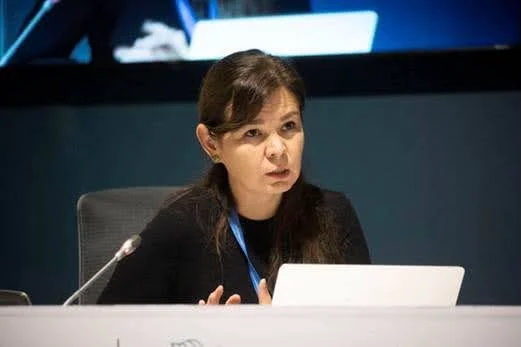
Daria Egereva is a Selkup Indigenous person of Russia and a long-time member of the Centre for Support of Indigenous Peoples of the North (CSIPN). After many years of valued involvement in the Indigenous Peoples’ Caucus at the UNFCCC, she was elected Co-Chair of the IIPFCC in 2023.
On December 17th, Russian authorities searched Ms. Egereva’s home, confiscated her digital devices, and arrested her under accusation of participating in a ‘terrorist organisation’ in direct retaliation for her Indigenous rights advocacy, including her leadership of accredited Indigenous Peoples at last month’s COP30 United Nations Climate Conference in Belém, Brazil.
A court hearing held on December 18th determined that Ms. Egereva will continue to be detained for two months, pending a further investigation into her case. The accusation carries a potential prison sentence of 10 to 20 years.
“For the last three COPs, Daria has been foundational to the effectiveness of the IIPFCC. Not only a principled leader, she is warm and generous to friends and colleagues alike. Her arrest is completely unfounded and our whole caucus is very concerned for her,” says Dr Graeme Reed, former IIPFCC Co-Chair
Ms. Egereva’s arrest was part of a coordinated operation by the Federal Security Service of the Russian Federation (FSB), which targeted at least seventeen Indigenous leaders across Russia whose homes were raided, electronic devices confiscated, and who were accused under spurious terrorism-related charges.
This targeted attack on Indigenous leaders represents direct retaliation for their participation in United Nations processes, and sets a dangerous precedent for the treatment of Indigenous Peoples who participate in global human rights and climate change meetings.
“These reprisals are part of a broader pattern of repression affecting Indigenous Peoples across the globe, and are an unacceptable attack on the right of Indigenous Peoples to engage in the global human rights and climate change processes,” says Sineia Do Vale, Ms. Egereva’s fellow Co-Chair, IIPFCC
The IIPFCC is deeply concerned for Ms. Egereva, and calls upon all state parties to the UNFCCC, and all allies of Indigenous Peoples to mobilise in solidarity to:
1. Publicly and privately call for Ms. Daria Egereva’s immediate release and the dropping of all charges against her, which constitute an illegal retaliation for her legitimate and peaceful participation in COP30 and other UN processes.
2. Acknowledge and register this complaint as a case of intimidation and reprisal connected to participation in UNFCCC processes under the Code of Conduct for UNFCCC Events, and keep the IIPFCC informed of steps taken.
3. Raise this case without delay with the Government of the Russian Federation through appropriate diplomatic channels, stressing that criminalizing a UNFCCC Indigenous Co-Chair as a ‘terrorist’ is incompatible with the UNFCCC Code of Conduct and with Human Rights Council resolutions/determinations.
“This is not a prosecution of terrorism. It is a defiance of the Human Rights Council’s findings and an attempt to use domestic courts to override international human rights determinations and silence Indigenous Peoples.”
– Joan Carling, Executive Director of International Peoples Rights International
“Around the world, Indigenous leaders face criminalization, persecution, and judicial harassment mechanisms designed to silence our voices, dismantle our institutions, and weaken our collective efforts to defend our rights and territories. These targeted practices constitute serious violations of human rights and international law.”
– Hindou Oumarou Ibrahim, Vice Chair of the UN Permanent Forum on Indigenous Issues and former Co-Chair of the IIPFCC
The IIPFCC firmly rejects this unjust intimidation and detention. We stand with Daria, the other Indigenous leaders who have been detained, their families, and all Indigenous defenders whose safety, dignity, and freedom are under threat.
The IIPFCC echoes the messages of the ICIPR, and recommends reviewing their statement here for further details.
Contact: ipofocalpoints@gmail.com
About the IIPFCC: The International Indigenous Peoples Forum on Climate Change (IIPFCC) was established in 2008 as the caucus for Indigenous Peoples participating in the UNFCCC processes. It represents the collective positions of Indigenous Peoples from all seven socio-cultural regions.
Source: International Indigenous Peoples Forum on Climate Change (IIPFCC)
