Ukraine has been carrying out intensive attacks on Russia’s export infrastructure along the Black Sea coast and on oil refineries across the country. Optimistic observers predict significant challenges for the Russian economy and, as a result, a depletion of the resources it needs to wage war. In light of this, common sense dictates that responsible politicians should return to the negotiating table.
The outlook is bleak because the Russian regime is devoid of responsible politicians who would be swayed by common sense. The political elite inhabit another reality—a reality in which they are doing a crackerjack job with the economy, inflation remains at tolerable levels, there are no hiccoughs with petrol (the Kremlin’s limousines don’t fill up at ordinary petrol stations plagued by kilometers-long queues, after all), the populace unanimously supports the war, and the deaths of hundreds of thousands of men at the front are mere collateral damage, not a serious demographic blow to the country. The regime are doing a great job with everything, and there is nothing to worry about. And the regime has the police, the FSB, the Investigative Committee, the prosecutor’s office, the Russian National Guard, obedient judges, and the penitentiary system to deal with the malcontents.
That is why the political crackdown will ratchet up in synch with the worsening of the military or economic situation and the rise of popular discontent. Russian history is chockablock with examples of when growing discontent, fueled by grassroots hardships, was nipped in the bud by the most brutal terror. Examples include the Russian Civil War and the Holodomor. The Russian authorities have never spared their fellow citizens, whether to further the war effort or to protect their own privilege.
Certain dreamers among the opposition bank all their hopes on a Ukrainian victory: in their reckoning, it would open a window of possibility to rebuilding politics in Russia. This is actually possible: it has happened in Russian history that military defeats have kickstarted democratic reforms. But it happened under weak regimes, despotic regimes which were frittering away their potential. Does anyone imagine that the current dictatorship is on its last legs and willing to make concessions to society?
Pinning hopes on the force of Ukrainian arms is not only naive but also dubious morally speaking. It is naive because by and large Ukraine could not care less about Russian domestic politics. No one will roar into Moscow on Abrams tanks and bestow either liberty or an occupation government on Russians. This is unrealistic, especially considering that Russia’s irresponsible politicians have their hands on nuclear weapons (a big thanks to Soviet physicists). Hypothetically, military defeat could embolden the society to protest, but in this case, as I noted earlier, the Kremlin has a wide range of tools for cracking down on dissent, and it has a wealth of experience in using them.
The hope that Ukraine will emerge victorious from the war is quite popular among Russian political exiles. This is partly because there is nothing else they can do to liberate Russia. Well, almost nothing. Donating to the Ukrainian Armed Forces is easy, and it washes away all their sins as exiles. It’s like going to church, lighting a candle, making a small offering, and assuming you’ve earned your place in heaven. As gestalt therapy it will do the trick, but it is quite dubious politically. It is disgraceful to reap the rewards of others’ hard work. Counting on a Ukrainian victory as a means of liberating Russia from dictatorship is not a particularly honorable strategy for the opposition. Victory must be forged with one’s own hands, not those of others.
In the last century, the White émigré National Alliance of Russian Solidarists (NTS) had a fine slogan: “No one will do Russia’s business for us.” Bitter experience gave birth to this slogan: the White movement’s betrayal by the Entente, the West’s economic aid in industrializing USSR, the surrender of anti-Stalinist military units at the end of the World War Two, and the Yalta Conference, which left the Eastern Europe at Stalin’s mercy. No one cared in the slightest about our misfortunes. At best, they voiced extreme concern.
That’s how it happened in the past, and it’s still the case today. Had Russia not invaded Ukraine, the West would have gone on buttering up the Russian dictatorship regardless of who sat at the very top of the Kremlin’s power vertical. If the war were to end, Western politicians would gradually go back to their old ways of pursuing mutually beneficial trade and joint ventures, exchanging sweet nothings, and turning a blind eye to what is going on inside Russia. It’s not our business, and they should take care of it themselves, the West shall always decide. This is not a particular attitude toward Russia but realpolitik. Wasn’t that the case at the outset of this year, when the West simply stood by as tens of thousands of demonstrators were gunned down in Iran? Does the communist reign of terror in China really have any impact on the West’s economic interests? There are many such example
We must concede that liberating Russia is Russia’s business. There is no use in our relying either on the empathy of foreigners or on their arms. While Ukraine’s current military successes cannot fail to gladden all opponents of the war, of course, there is no point in our placing unwarranted, exaggerated hopes on them when it comes to Russia’s long-term future. It is highly unlikely that these military successes will bring about a sea change in the Kremlin’s political priorities and thus open the floodgates to democracy.
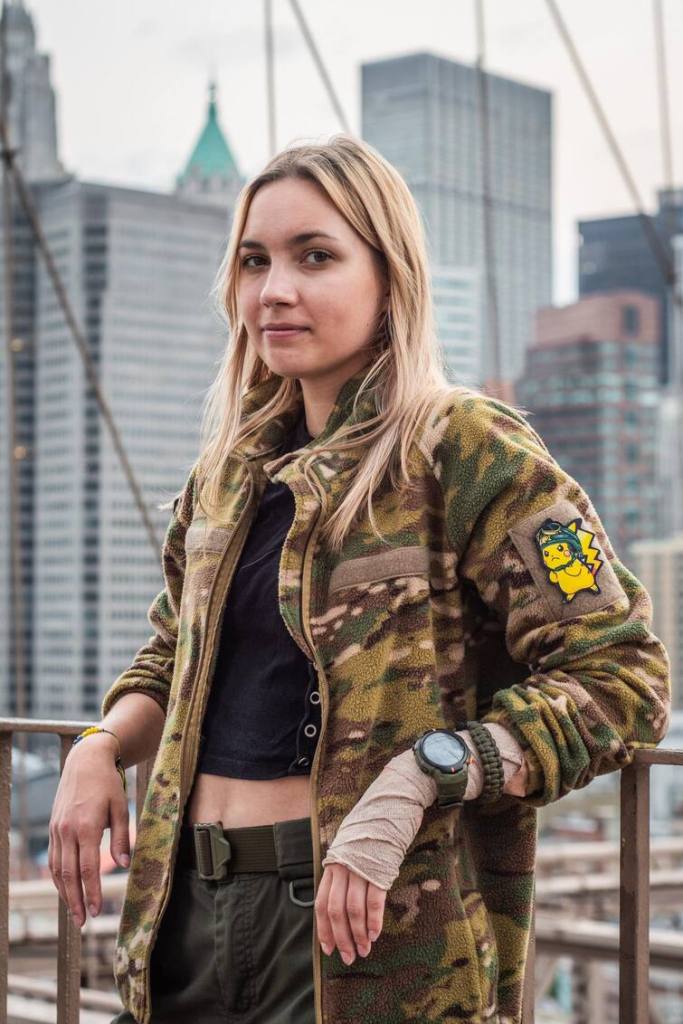
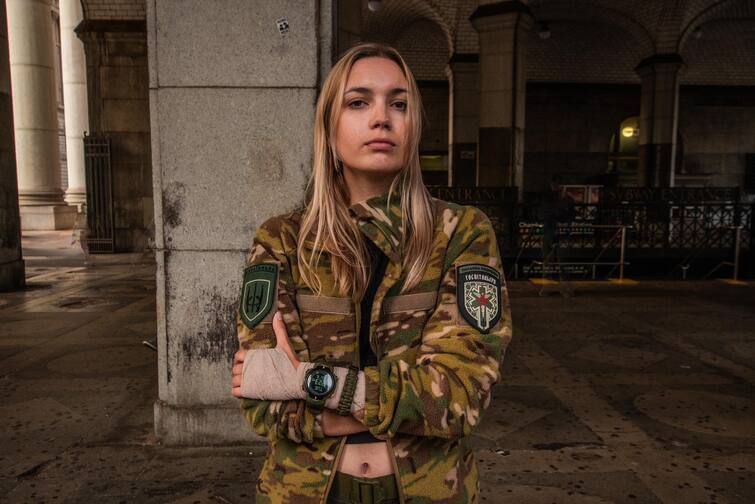
She had traveled the world, had ambitious plans in business and finance, and worked on Wall Street at a major US bank, but returned to defend Ukraine side by side with her family.
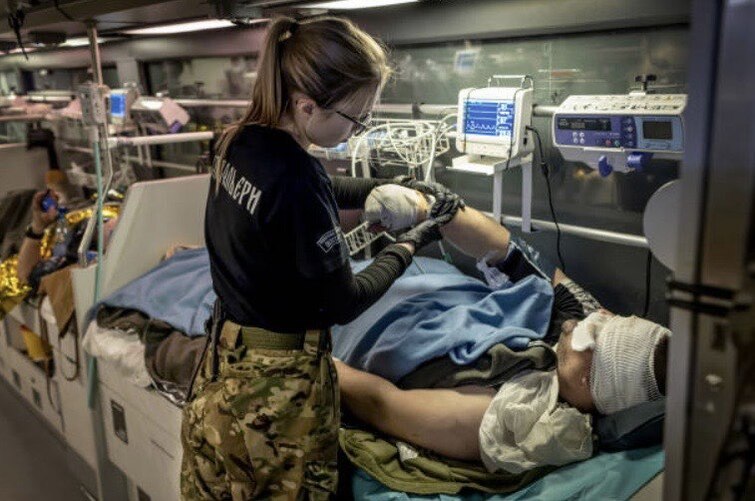
Ukrainian Victoria Honcharuk graduated from the innovative Minerva University in California. Nowadays, however, she is one hundreds of combat medics at the frontline, saving the lives of wounded soldiers as they try to save us.
Ukrainska Pravda: Life recounts how Victoria’s life, full of hope and plans, changed after the outbreak of the full-scale war and how she made her choice for her homeland.
Life before the full-scale war
Victoria grew up in the small town of Baranivka in the Zhytomyr Region in an ordinary family. Her parents never traveled outside of Ukraine, so at the age of twelve she started earning money on her own because she wanted to study abroad. She admits that she could count only on herself to fulfill this desire.
As a teenager, Victoria won a grant from the U.S. State Department’s FLEX cultural exchange program, on which she studied at a high school in the United States and, after graduation, at a university in Lithuania. However, she studied at that university for only a year. Victoria says she realized that she could not spend four years in one place.
That was when she found out about Ukraine Global Scholars, an organization that helps Ukrainian children get a free education at schools and universities abroad, including in the United States.
“I grew up in a small community, and after I learned English and went to America on the FLEX program, I realized that there were so many interesting things outside of Ukraine. I always thought, We are such a big and free country, why can’t we take our resources and use them to become a country we can be proud of?
“I realized that to do this, we needed to learn from the know-how of other countries. That’s why I had a plan to go study, work for a while, gain experience, return to Ukraine, and make it the best country in the world,” recalls Victoria.
At the age of fifteen, she went to study in Texas on the FLEX program, where she lived for a year, and after studying in Lithuania, she enrolled at Minerva University, which Vika calls her “dream university.”
“It’s a university based in California, but the most interesting thing about it is that you travel and live in different countries every semester,” she says.
During her first year of study, Victoria lived in San Francisco. Later, her geography expanded significantly, and she gained knowledge and experience in South Korea, India, the United Kingdom, Germany, Argentina, Taiwan, and elsewhere.
“I had two majors there: computer science and business and finance statistics. I was most interested in combining and using statistics and data science in business and finance.
“During my last two years, I wrote a research paper on M&A (mergers and acquisitions) at large companies. During my studies, I worked in startups as an investment analyst, data analyst, and financial manager. My two specialties have always been intertwined in my work,” says Honcharuk.
After graduating in 2022, Victoria worked with technology companies in Citigroup’s investment banking department, as well as in the investment banking department of Morgan Stanley, a major holding company.
Victoria traveled the world and worked on Wall Street at a major U.S. bank, but returned to defend Ukraine side by side with her family.
From Wall Street to the frontline
When the full-scale war broke out, Victoria’s entire family—her sister, mother and father—decided to join the ranks of Ukraine’s defenders.
In the early months of the Russian invasion, Victoria was involved in volunteer work, throwing her energy into helping her family and the units in which they served.
“My goal was to provide my family and their units with everything they needed. It turned into small project of mine, then into an NGO registered in Britain. That’s what I was doing before I came back to Ukraine,” she says.
Victoria raised funds and was involved in delivering tactical medicine supplies. Thanks to her sister, who worked in medical evacuation, Vika always knew what to deliver and when and where to deliver. However, she could not stay in the United States for long, so in the winter of 2022, she decided that she had to return to Ukraine and “help with her hands.”
She admits that this decision was a “big leap” for her. Mentally, she readied herself for the worst—that she would live “in the open air in a puddle” and not eat anything. Nevertheless, she stresses that she “didn’t think twice” about leaving her warm New York office to help her family and her country.
“I worked on Wall Street at the largest bank in the country. The day before I went to Ukraine, we had a big gala event for clients, and then I got on a plane the next morning, went to Ukraine, put on my uniform and set off. It was winter, it was cold. A very big contrast.
“I had been preparing myself for this, and it was what I really wanted. As soon as I found the opportunity to be on the frontline, to work with my hands, to be part of the units, everything fell into place,” says Victoria after a year of service as a combat medic.
By the way, she acquired the skills for working as a paramedic by training with the Hospitallers. She learned some things from her sister and other combat medics, and the rest was gained on the frontline.
“As soon as I found the opportunity to be on the frontline, everything fell into place,” says Victoria Honcharuk.
The most difficult choice
Victoria serves in one of the hottest areas of the frontline—Bakhmut. Before that, she worked in Avdiivka. Now she is the leader of her crew. For the last six months she has been working as a paramedic in the brigade where her sister serves as an assault rifleman.
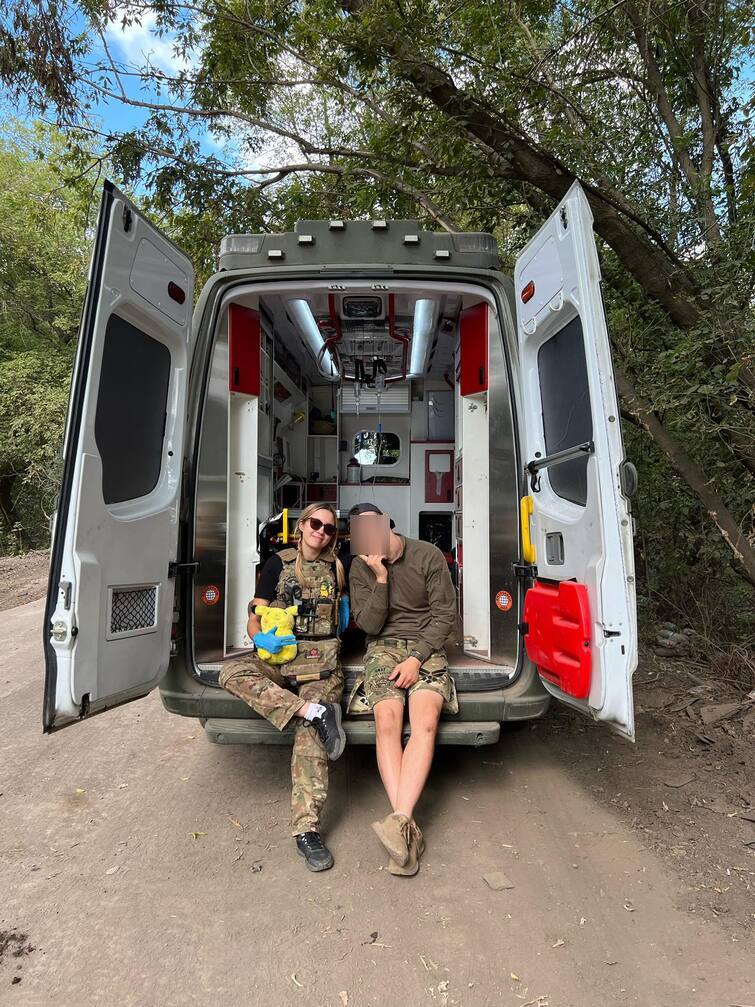
As the combat medic explains, there are two stages of evacuating the wounded: “case evacuation” and “medical evacuation.” Case evacuation is the first stage of evacuation from the frontline, when an armored vehicle or pickup truck enters the most difficult areas and evacuates the wounded from the battlefield to a stabilization center.
A medevac unit is a medical crew that takes the wounded from a casevac unit and evacuates them to the stabilization center. Vika initially worked in casevac, before switching to medevac.
“This person often changes. At first, I had a doctor with too much experience, and he was transferred to a stabilization center, and we were given a third person by the battalions we worked with.
“Broadly, we work like a crew, just like mobilized military medics. We are just an additional team. We arrive on the battlefield, take the wounded, and hand them over to experienced medics,” says the paramedic.
According to Victoria, her team has changed several times during her year of service, as the people who make up the team work on a volunteer basis. Many of them have regular jobs, which they alternate with volunteering at the front.
“They are at work for a month, and with me for a month. Right now, the most stable members of my team are my driver and me. My driver’s cousin was my sister’s commander, who unfortunately was killed in August this year, just as we started working with them. The driver and I found common ground and continue to work together. The third person is a doctor,” says Victoria.
Paramedic Victoria Honcharuk
The paramedic also spoke about the most difficult moments she has had to face during her year at the front. According to her, the most difficult thing is to make decisions in circumstances in which other people’s lives depend on them.
“There were moments when we came under shelling and had to decide what we were going to do: move, find shelter, or not evacuate at all. It was a choice between evacuating the wounded or hiding from the shelling. We needed to weigh the chances that we would get injured or that the injured person would die if we didn’t evacuate them,” says Victoria.
There were situations in which they had to approach the battlefield in an unarmored vehicle. They then had to carefully weigh all the risks.
“We drove an ordinary ambulance to within 500 meters of the contact zone. We were on duty together with an armored car and realized that if something hit within twenty meters of us, we were finished.
“My vehicle still has a broken windshield after one of these collisions from ten meters away. After that, we would have to decide what we were going to do, so it can be stressful,” Victoria admits.
According to Victoria, the hardest part is making decisions in situations in which other people’s lives depend on them.
Amid the challenges she faces today, Vika recalls her studies and experience abroad with gratitude, saying that working on Wall Street toughened her up, because sometimes she had to work hard, to the point of exhaustion. She could not sleep for days or even weeks until she got the job done.
“It’s the same here. If the enemy mounts an assault, we don’t sleep—we work. Sometimes you just have to wait, just like waiting four hours on Wall Street for someone to send you a financial model. Here [on the frontline — ed.] you wait for a challenge. Very transferable skills [in English in the original — TRR],” she says with a smile.
Frequent traveling also played a significant role in her “toughening-up.” Thanks to this, Victoria has all the necessary vaccinations.
“It is a very good thing when you are a combat medic, because I come into contact with blood. When your gloves get torn, you can get infected with something. But I lived in India and Korea, so I have all the vaccinations. I can adapt quickly, and I don’t need much to feel comfortable, so I didn’t need to get used to the minimalist life,” she says.
In addition to her work as a paramedic, Victoria is also involved in military tech projects with Ukrainian developers.
“I consider the development, use, and integration of AI into military operations to be one of my main priorities,” she stresses.
At first, Vika worked in “casevac,” before switching to “medevac.”
“Everyone I want to spend my time with is at war”
According to Victoria, she has short leaves from work, but she lives with her crew. She admits that it is hard to see people in the rear who are “disconnected from the war and think that they will be spared.”
“I have literally two or three friends left. Unfortunately, I don’t even want to talk to them now—all the same, I live with my crew. I need one day to see my parents, another day to eat everything I want to eat, and that’s it, I can go back.
“There is no connection due to this. Everyone I want to spend my time with is at war. We have leave for a couple of days, but we come back to civilian life with the people we live with on the frontline, and we live in our own bubble,” says Victoria.
Given how her life and realities have changed, she underscore that she doesn’t regret any of her choices. When asked what advice she would give to her fifteen-year-old self if she could, Victoria said:
“Well done. I don’t have any regrets. I would have worked harder on my physical fitness. (Laughs.) I would have told her that no matter what your profession and lifestyle is, you need to be strong and in the best shape you can be, because it’s physically hard nowadays.”
“There is nothing I regret,” the paramedic stresses.
Victoria’s experience as a woman in the military
According to Honcharuk, women in the army need to work “a little harder” at their positions, as there are gender biases there, as well as in the broader society.
“Every newcomer has to work hard to gain attention, but women have a little more difficulty due to prejudice. But if you don’t give up and show that you are a good fighter, that you joined up for the right reason, that you will work hard, you will get respect from people.
“I think the problems in the army are the same as the problems in society. It’s just a smaller version [of society],” Vika adds.
Vika is convinced that the fight for Ukraine is not only the duty of men.
And yet, she denies that men treat women in the army badly.
“I often hear that men treat women in the army badly, but this is not entirely true. Many women in Ukraine, unfortunately, position themselves as weak and needing protection. But we have to stand up for ourselves, stand up for Ukraine,” the paramedic argues.
She is convinced that the fight for Ukraine is not the duty of men, but of every citizen.
“Love for Ukraine is nurtured, and not necessarily from an early age. It’s not something you can kill. My sister and I are probably a very good example,” says Honcharuk.
The interview was recorded by Veronika Harmash, communications manager at Ukraine Global Scholars, and adapted by Diana Krechetova, journalist at Ukrainska Pravda: Life. All photos are from Victoria Honcharuk’s personal archive.
Tamara Parshina Photo courtesy of the BBC via Activatica
A Khabarovsk woman, detained in March on suspicion of treason for financing the Ukrainian armed forces, has been identified by BBC journalists as twenty-three-year-old Tamara Parshina. Parshina’s initials and surname appeared in a judicial database in late April, when her term of detention was extended at the FSB’s request.
Parshina graduated from the Far Eastern State University of Railway Engineering (DVGUPS) with a degree in information systems and information technologies. Prior to that, the accused studied at the prep school on Leningrad Street, which was also where she was detained. The young woman was employed at the Khabarovsk Regional Compulsory Health Insurance Fund.
After Parshina’s arrest, there were rumors that she was an activist in the I Am/We Are Furgal movement. However, the regular attendees of the pickets in support of ex-regional governor Sergei Furgal said that no one they knew had been arrested in the case. Furgal’s headquarters called the claim that the detainee was an activist in the movement an attempt to discredit it.
The attorney Kaloy Akhilgov reported that Parshina had donated a total of 2,500 rubles [approx. 29 euros] in small amounts to various Ukrainian charitable foundations. She is currently in custody at Moscow’s Lefortovo remand prison.
Parshina is the youngest person so far detained on suspicion of treason in Russia. She faces up to twenty years in prison if convicted. The toughening of the punishment for treason occurred after Parshina’s arrest. Also, women are not given life sentences in Russia: the maximum sentence for women is twenty-five years.
“The FSB has detained a Khabarovsk woman, an activist in the I Am/We Are Furgal movement, on suspicion of treason for financing the Ukrainian armed forces, the FSB’s public relations office has told us. Criminal charges have been filed. Video footage courtesy of Russian Federal Security Service Public Relations Office.” Source: TASS (Telegram), 13 March 2023
In March, the FSB began accusing Russians of providing financial assistance to the Ukrainian armed forces and charging them with treason. The BBC has discovered that 36-year-old Nina Slobodchikova from Novosibirsk was the first to be detained, followed by 23-year-old Tamara Parshina from Khabarovsk (who is the youngest Russian woman so far accused of treason). Both women were employed in the IT field before their arrests. One of them has relatives in Ukraine.
Two men in camouflage walk briskly, skirting snowdrifts, down a snow-covered sidewalk. They chase down and grab a young woman in a light-colored down jacket carrying a small bag. Her face has been blurred: only a strand of hair that has escaped from under her cap is visible. She is confused and crying. Something falls from her hands to the ground; one of the men picks it up and says, “Calm down.” The girl is bundled into a black minibus with tinted windows.
This is video footage shot by the FSB. In the next scene, the detainee, now carrying a backpack, enters the FSB’s Khabarovsk Territory offices, escorted by security forces officers. She is then seen being led up the gangway of an Aeroflot Boeing 777 named in honor of Marshal of the USSR Vasily Chuikov. The sign above the airport reads “Khabarovsk.” At the end of the video, the young woman disembarks from the plane at Moscow’s Sheremetyevo airport. In the final shots, she is led through the courtyard of Lefortovo remand prison. Her hands are cuffed behind her back.
The video appeared in the media on March 13, the same day the FSB reported that it had detained a Khabarovsk woman on suspicion of treason for financially aiding the Ukrainian army. The BBC was told by the Lefortov court that pretrial restraints had been imposed on Parshina on March 9 in Khabarovsk. According to information obtained on the website Flightradar24, the Chuikov Boeing flew to Moscow around three o’clock in the afternoon on March 9.
[…]
The BBC tracked down classmates and acquaintances of 23-year-old Tamara Parshina on social media. One of them recognized the young woman in the video released by FSB. “Those are her sneakers,” she said. “And she seems to be sobbing too. I remember because she often cried at school. The hair is curly, like hers. She also wore glasses.” Her description matches photos of Parshina on social media.
Parshina’s friends do not know the exact nature of the charges against her. “It seems that she donated money last spring [in 2022] to some organization that helps someone in Ukraine,” an acquaintance of the young woman wrote to the BBC. Parshina’s mother declined to speak with the BBC about her daughter.
The FSB reported that the young woman was detained on Leningrad Street in Khabarovsk “near the train station.” According to a friend, [that was a coincidence]: she merely lived in the neighborhood. Leningrad Street is also the location of the prep school that Parshina attended and where she won academic competitions. [I was unable to access this link from my computer — TRR.]
In 2021, Parshina graduated from the Far Eastern State University of Railway Engineering (DVGUPS) with a degree in information systems and information technologies. “Novice web developer […] looking for remote work, but would also consider relocating,” she wrote about herself on LinkedIn.
After graduating from university, the young woman worked at the Khabarovsk Regional Compulsory Health Insurance Fund, said a former university classmate.
Friends of Parshina with whom the BBC spoke had lost contact with her in the winter. “[In February] some friend of hers wrote to me: he was also looking for her. I wrote to her wherever I could, but she didn’t reply to me,” one of them said. Another friend of Parshina from a group in which they played board games together claims that Parshina had not been in touch with him since late January.
The FSB alleged that Parshina was “an activist in the ‘I Am/We Are Furgal’ movement.” With this as their slogan, thousands of the region’s residents protested in support of ex-governor Sergei Furgal after his arrest [on murder charges] in the summer of 2020. In February of this year, Furgal was sentenced to 22 years in prison. According to the FSB, the Khabarovsk woman, motivated, allegedly, by “political hatred and enmity,” donated money to the Ukrainian armed forces for the purchase of weapons, ammunition, and uniforms. Now she is housed in the same Moscow prison as Furgal.
Parshina’s friends were not aware of her protest activities. “To be honest, I don’t think she was involved in that,” a former university classmate told the BBC. “I know that she was subscribed to various environmental activists and feminists on Instagram.”
Six months before his arrest, Furgal paid a visit to DVGUPS, where Parshina was studying at that time. There were many students in attendance, and the Khabarovsk Territory government published a report about the visit on its website. [This website seems to be blocked to users outside Russia — TRR.] Parshina is not in any of the photos of this event.
On March 13, Khabarovsk regional MP Sergei Bezdenezhnykh, a Furgal ally, wrote on his Telegram channel that “none of the I Am/We Are Furgal activists recognized the detainee.”
“As a member of the Furgal team, I can say that she has nothing to do with us. I have the sense that certain forces want to link financing of the Armed Forces of Ukraine with the ex-governor’s name. The movement is not official, it is not registered anywhere. First and foremost, it is an indefinitely large group of people,” Bezdenezhnykh wrote. The Furgal team, he claims, supports Russia, not Ukraine.
The FSB alleges that Parshina donated “personal funds” to the Armed Forces of Ukraine on grounds of “political hatred and enmity,” without specifying at whom these feelings of hers were directed.
It was this motive that the Khabarovsk Regional Court had previously ruled an aggravating circumstance in another treason case. In the autumn of 2022, it sentenced Vyacheslav Mamukov to twelve and a half years in a maximum-security penal colony for, allegedly, attempting to sell information on the design of thirty Russian bridges to the Ukrainian special services.