Aided by a team of volunteers, journalists at Mediazona and the BBC’s Russian Service have identified 41,731 Russian soldiers killed in the war in Ukraine using open sources. This number includes employees of the Wagner mercenary group, but it does not include those who fought on Russia’s side in military units fielded by the self-proclaimed Donetsk and Luhansk “people’s republics,” the BBC noted in an article published on Friday, 12 January.
According to the article, more than 1,100 Russian military personnel killed in the war were under 20 years of age. Since the State Duma approved amendments to the relevant laws, in April 2023, thus permitting 18-year-old high school graduates to sign military service contracts, 48 Russians born in 2004 and five born in 2005 (who were thus “barely 18 years old” when they enlisted) have perished in the war.
As of 11 January, 2,377 airborne troops, 913 marines, 537 members of the Russian National Guard’s special forces, 450 members of the GRU’s special forces, 206 military pilots, and 77 FSB and FSO officers have been killed in combat operations.
The BBC points out that the number of casualties among those who voluntarily signed a contract to serve in the Russian armed forces has increased in recent months. Thus, volunteers, prisoners, and private mercenary company “recruits” now account for 37 percent of all confirmed losses 0n the Russian side. Another 12 percent of the identified casualties were draftees (of whom 5,005 died in Ukraine and 62 in Russia).
Source: Yevgeny Zhukov, “Journalists have confirmed the deaths of 41,700 Russian soldiers in Ukraine,” Deutsche Welle Russian Service, 13 January 2024. Translated by the Russian Reader
According to Ukrainian intelligence, the Russian forces in Ukraine currently consist of 462,000 military and 35,000 National Guard troops, responsible for the functioning of the occupation regime. This number of troops allows the Russians to carry out rotation — to withdraw units and subdivisions and bring them to the front line.
Source: Monique Camarra, “Jan 13: E-Stories,” EuroFile, 12 January 2024
When looking for a new advertising/PR agency in Ukraine in autumn 2023, PepsiCo made it a condition for a potential partner to exclude any mention of the war, or support for Ukraine and its army in future communications, according to a brief seen by B4Ukraine.
“NO: mention of war, hostilities, aggression, military personnel (from Brand side), Armed Forces of Ukraine. NO: support Ukraine and the army. NO: negative connotation, creating a feeling of ‘unsafe,’” states the “Pepsi restrictions” section of the brief.
The B4Ukraine Coalition contacted Pepsi offices in Ukraine and the US to ask for comment on this article but at the time of publication had not received any response.
In the meantime, the October 17 message on PepsiCo’s Instagram page announced that “PepsiCo volunteers distributed food kits to 1,200 families in the city of Borodyanka, whose homes were destroyed.” The message does not specify who exactly brutally destroyed the homes of these people.
Perhaps because PepsiCo’s Russia net profit increased by 333% to $525 million last year and the company paid about $115 million in taxes to the Kremlin? Treating such contributions as support for the economy of the aggressor state, Ukraine’s National Agency on Corruption Prevention (NACP) in September included PepsiCo in the list of international sponsors of war.
PepsiCo produces soft drinks, juices, chips, snacks, dairy products and other food products under the main brands Chester’s, Chipsy, Lay’s, Mirinda, Pasta Roni, Pepsi, Propel, Sandora, 7Up, Simba, Snack a Jacks, Sonric’s, Tropicana, etc.
The company has 19 factories, about 20,000 employees, 40,000 agricultural workers, and 600 open vacancies in Russia, according to the NACP.
The company announced the cessation of advertising activities and the production of some beverages in Russia in March 2022, while still allowing other products, such as infant formula and baby food to be sold, in order, as PepsiCo put it, “stay true to the humanitarian aspect of its business.” Yet in fact, the company continues the production and distribution of chips, snacks, and soft drinks. According to Bloomberg, PepsiCo’s revenue rose 16% in Russia and profits quadrupled, and the soda maker said operations in Russia accounted for 5% of consolidated net revenue for 2022, up from 4% a year earlier.
Now the iconic Pepsi cola is sold under the Evervess-Cola brand, although regular Pepsi Cola is still easy easily purchasable in Russian supermarkets due to the so-called parallel imports, when goods are imported without the manufacturer’s permission.
At the beginning of September last year, PepsiCo came under fire over its Russian business when the firm’s products were dropped by the Finnish parliament and Scandinavian Airlines’ operator SAS, and already on September 21, ironically, [a] Russian missile damaged a PepsiCo plant near Ukraine’s capital Kyiv.
A global [c]oalition of civil society organizations, B4Ukraine, is calling on PepsiCo to exit Russia ASAP and for the US government to issue a business advisory, warning US businesses of the growing legal, reputational, and financial risks of doing business under military control in Russia.
Source: “‘No support for Ukraine and its army’: PepsiCo restricts mentions of war in its PR,” B4Ukraine. Thanks to Monique Camarra (EuroFile) for the heads-up.
The war has markedly changed the Russian economy. Moscow has had to adjust its policy to fund its armed conflict against Kyiv, maintaining its military apparatus and police force, and integrating the territories it has annexed from Ukraine. These priorities have necessitated significant spending commitments that collectively threaten Russia’s economic stability. The Kremlin will spend six percent of GDP (more than eight percent when combined with spending on national security) on the war in 2024. This is more than the 3.8 percent of GDP that the United States spent during the Iraq war, although it falls short of the prodigious sums the Soviet Union allocated during the years of stagnation and its invasion of Afghanistan (18 percent of GDP).
Military spending has even eclipsed social spending—currently less than five percent of GDP—for the first time in Russia’s post-Soviet history. This pivot toward a militarized economy threatens social and developmental needs. The four annexed regions of Ukraine have already received the equivalent of $18 billion, and in 2024 almost $5 billion is expected to be transferred from the federal budget to regional budgets. No other regions in Russia receive this level of investment, which only increases interregional inequality. Rather than restore dilapidated housing in Russia, the Kremlin prefers to spend money on building houses and roads in annexed territories, to replace the houses and roads that Russian troops destroyed during their brutal invasion.
Russian industry has been transformed, with defense sectors now overshadowing civilian industries. The defense sector’s enterprises are now operating at a fever pitch and, as a consequence, any surge in demand is likely to force prices to rise because of the sector’s inability to increase supply. The military sector is receiving a disproportionately high amount of government spending, and it is also siphoning off labor from the civilian workforce, leading to an abnormally low unemployment rate of 2.9 percent. Before the war, Russia’s unemployment rate typically stood at around four to five percent. The military and public sectors now employ 850,000 more people than in late 2022–23. The invasion of Ukraine also prompted about 500,000 Russians to emigrate in 2022, driving shortages of qualified specialists and blue-collar workers.
Meanwhile, living standards have risen across Russia, and the percentage of Russians living below the poverty line has dropped to 9.8 percent, the lowest since 1992. Naturally, there are regional variations, and areas that have sent a significant number of their men to fight in Ukraine—including Altai Krai, the Altai Republic, Buryatia, Chechnya, and Dagestan—have witnessed the fastest income growth in low-income groups. This relative increase in prosperity can be expected to continue as Moscow disburses funds to the families of the deceased and wounded.
Overall, the Kremlin wishes to maintain an illusion of normality and even increasing prosperity for its citizens. The distortions in the labor market have pushed up salaries in military industry, as well as in civilian manufacturing, because of the need to compete to attract workers from well-paying military plants. Moscow is, meanwhile, making high payments to soldiers and people mobilized to fight in Ukraine, which are driving consumption. At the same time, thanks to a supply of cheap credit, the government is handing out subsidized mortgages, that are, for the moment, shielding families from economic reality.
Elsewhere there are signs that the invasion of Ukraine may have disrupted the Russian economy more severely than the frothy party scene suggests. The Olivier salad, a mayonnaise-drenched confection of root vegetables, sausage and boiled eggs, is a staple at every table during the holidays. This winter the price of eggs suddenly rocketed (no one is quite sure why, but it may have been because farms were short of labour since so many workers have been conscripted or left the country). In some regions people cannot afford a box of six eggs and have to buy them individually. One pensioner even raised this with Putin during the president’s annual end-of-year call-in with the public. Putin promised to look into it.
In the two years that have passed since the start of Russia’s large-scale invasion of Ukraine, residents of Ukraine have become less likely to use the Russian language, according to a press release on the outcome of research done by the Ludwig Maximilian University of Munich in cooperation with the University of Bath and the Technical University of Munich, which was published on Wednesday, 10 January.
Language plays a leading role in the identity of post-Soviet Ukraine, the authors of the study say. Many Ukrainians are fluent in both Ukrainian and Russian. And yet, only a few years ago, 50 to 60 percent of the country’s residents called Ukrainian their principal language of communication. After the Maidan protests in late 2013, sparked by then-Ukrainian President [Viktor] Yanukovych’s refusal to sign an association agreement with the EU, and Russia’s subsequent annexation of Crimea in 2014, more Ukrainians abandoned Russian.
[…]
The researchers explore this trend in a study published in the journal Communications Psychology. Using artificial intelligence and statistical analysis, they examined more than four million messages posted by 63,000 Ukrainian users on the social network X (formerly Twitter) between January 2020 and October 2022.
According to the study’s authors, users began switching from Russian to Ukrainian even before the large-scale Russian invasion, but this trend increased dramatically after the war began. In their opinion, this change in user behavior was a political reaction to events. Users wanted to distance themselves from both support for the war and Russia as such, so they started using Ukrainian en masse.
Source: Sergei Gushcha, “Ukrainians use Russian less since war began,” Deutsche Welle Russian Service, 10 January 2024. Translated by the Russian Reader
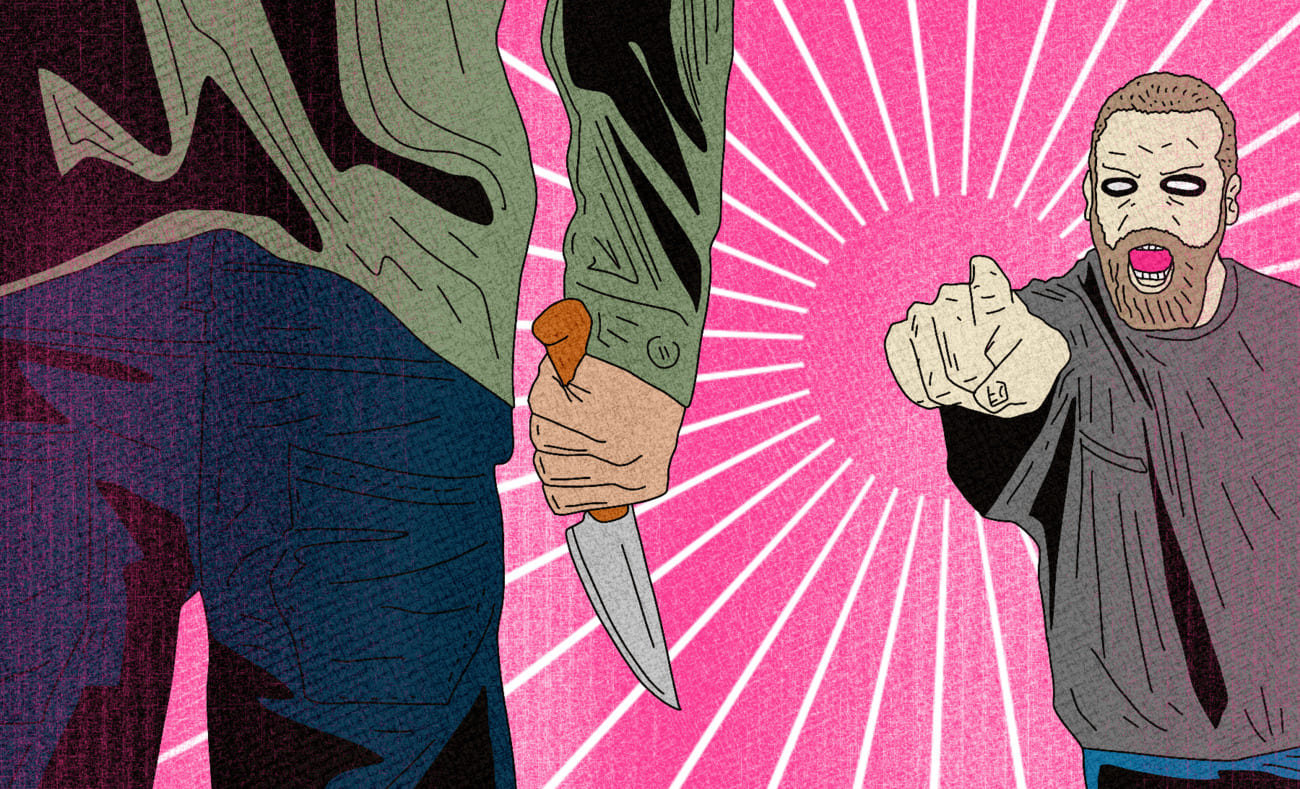
The full-scale war in Ukraine, which began almost two years ago, has led to increased violence in Russia itself. Military personnel with PTSD and criminals recruited into combat return from the front and maim and kill people in civilian life. Sometimes conversations about the war even end in violence. Mediazona and New Tab have uncovered over thirty criminal convictions for assaults and murders that occurred during quarrels about the “special military operation.” (The courts use the official wording for the war as mandated by the authorities.)
In Berdsk, Novosibirsk Region, draftee Khuler Mongush stabbed Nikolai Berezutsky, a passerby. The latter had asked Mongush why he was going to Ukraine. Saying that he was going there “to defend the Motherland,” the mobilized man attacked Berezutsky. Mongush was sentenced to eight years in prison for murder.
In the Irkutsk Region, farmer Maxim Khalapkhanov was drinking with an acquaintance, who began ridiculing the state of the Russian army during the war. Khalapkhanov eventually got angry and killed the acquaintance with a knife, whose handle was decorated in the colors of the Russian flag, and drew the letter Z on his stomach with a fireplace poker. Khalapkhanov was sentenced to seven years in a high-security penal colony.
Anton Rakov, a resident of Orenburg, was drinking with a new acquaintance. They began arguing about the war. Rakov did not like what his interlocutor was saying and killed him. While his victim breathed his final breaths, Rakov recorded a video with the dying man in the background, shouting, “This is what will happen to anyone who disagrees with me!”
Viktor Konnov of Zlatoust beat up a friend who said something nice about Ukraine, while Ivanovo resident Mikhail Vitruk received two and a half years in a penal colony for beating up his girlfriend, who allegedly called him a “Nazi” while they were watching the news.
In 2020, Mikhail Taskin attempted to shoot three people over a parking space and was sentenced to nine years in a penal colony, whence he was freed by the Wagner Group. Taskin spent several months in combat, where he lost a leg, eventually returning to his native village of Nerchinskiy Zavod in the Transbaikal Territory. In August 2023, he got into a fight at a local cafe. Taskin mocked the waitresses and promised to “hump all of them.” The incident ended in a brawl, and the police detained five people, but not Taskin was not among them. His sister and the local authorities argued that the disabled man had been assaulted by “opponents of the war.” But the news website Regnum discovered that two of the detainees were certainly not against the war because they had been involved in patriotic campaigns in the region.
It is not only drinking buddies and casual acquaintances who quarrel and fight over the war. Mediazona and New Tab turned up no less than seven court rulings in cases where the defendants and the victims were members of the same family. Vladimir Tofel from Petropavlovsk-Kamchatsky killed his nephew during an argument about the war. Yuri Makarkin stabbed his son, while Anna Cheremnova, a resident of the Altai Territory, stabbed her husband.
The experts asked for comment by Mediazona and New Tab argue that these are signs of a deep split within society, and the policy of the authorities does not help society to overcome this fissure. On the contrary, the hysterical rhetoric of propaganda only heightens the degree of intolerance, and people are increasingly willing to maim and kill each other.
Source: WTF (Mediazona) newsletter, 10 January 2024. Translated by the Russian Reader
