Separatists Congress to Be Held in Moscow Financed by Foundation Close to Kremlin
Georgy Makarenko
September 15, 2015
rbc.ru
On Sunday, September 20, the President Hotel in downtown Moscow will host a conference entitled “The dialogue of nations. The right of peoples to self-determination and building of the multipolar world,” [sic]. According to the meeting’s organizers, it is the “first and so far unique event for exchanging opinions among supporters of sovereignty for small nations around the world.”
According to the text of the invitation to the forum (which RBC has in its possession), in the conflict between two fundamental principles of international law—the inviolability of state borders and the right of nations to self-determination—the event’s participants come down on the side of the second position. The conference’s stated aim is the creation of an international working group for coordinating the actions of independence fighters throughout the world. The planned outcome is a communiqué defending the right of peoples to self-determination, which organizers suggest submitting as a draft resolution to the United Nations.
The Anti-Globalization Movement of Russia (ADR), a Russian NGO, is organizing the congress.
Foreign Partners
In December 2014, ADR held a similar gathering in the capital. The “anti-war” faction made up a significant portion of the foreign delegation then. The largest group of this sort was the United National AntiWar Coalition (UNAC), an American organization that advocates against police abuse at home in the States and against Washington’s military interventions abroad. UNAC was represented at December 2014 forum by five co-coordinators. One of them, Joe Lombardo, informed RBC that members of his organization had not been invited to the September conference, and even if they had been invited, the Americans were unlikely to come because of their tight schedules.
ADR leader Alexander Ionov refused to reveal the exact guest list for the September forum, citing “security concerns.” According to him, western authorities could hinder delegates from flying to Moscow. His fears are not groundless. In February 2015, the FBI raided the offices of the Texas Nationalist Movement (TNM), confiscating equipment and detaining several activists. The TNM was among the organizations involved in the December 2014 forum, and it will return to Moscow in September. [According to articles in The Houston Chronicle and The New York Times, no one was arrested during raid, which took place at a meeting of a secessionist group calling itself the Republic of Texas—TRR.]
Generally, according to ADR, this time the vast majority of delegates will represent separatist movements fighting against western governments. They include separatists from Hawaii, Puerto Rico, Catalonia, and the Western Sahara, and a delegation from the Irish party Sinn Féin, which last year proposed holding a referendum on Northern Ireland’s secession from Great Britain, citing the Scottish independence referendum. [What Sinn Féin actually proposed was “a Border poll on a united Ireland”—TRR.]
The Russian Side
According the Russian Ministry of Justice, the Anti-Globalization Movement of Russia has the status of a regional nongovernmental organization and was registered on March 15, 2012.
ADR was created “to support countries and peoples who are opposed to the unipolar world’s diktat and seek to propose an alternative agenda.” Before ADR was formed, Ionov was co-chair of the Committee for Solidarity with the Peoples of Syria and Libya (which was headed by ex-State Duma deputy Sergey Baburin). In the spring of 2013, an ADR delegation traveled to Damascus, where it presented President Bashar Assad with an honorary membership in the organization. Mahmoud Ahmadinejad, the former president of Iran, is another honorary member.
Among its partners, ADR lists the Rex Information Agency, the Novorossiya Information Agency, and Nashe Podmoskovye radio station (where Ionov hosts his own program), as well as Russian and international anti-war organizations. Since 2013, ADR’s leader has also been on the presidium of the organization Officers of Russia along with General Leonid Ivashov, actor Vasily Lanovoy, and singer Iosif Kobzon. Anton Tsvetkov, chair of the Russian Public Chamber’s security committee, heads the organization.
The President’s Patronage
According to the invitation to the forum, ADR is prepared to pay for foreign visitors’ flights, airport transfers, and accommodation in Moscow. Ionov confirmed this information to RBC. According to him, ADR and its foreign guests are NGOs with limited means, and according to an unwritten rule, the hosts take care of basic expenses, which had also been the case during the trips the Russian activists made to, say, the Middle East.
Ionov said that ADR’s two main sources of financing are donations from supporters and government grants. These funds are enough to hold an international conference at least once a year, he said.
RBC failed to find information about the grants issued to ADR in the databases of the Ministry of Justice and the Ministry of Economic Development. At the same time, ADR has regularly participated in grant competitions held by the National Charity Fund. Thus, ADR received a grant of one million rubles from the fund last year for its December forum, and this year it won an earmarked grant of two million rubles to organize the September conference. In the latter case, ADR was among ninety-nine winners from a total of over four hundred applications.
The National Charity Fund was founded in late 1999 at the initiative of Prime Minister Vladimir Putin as the National Military Fund. Its goal was the financial support of military personnel and military-patriotic projects. Lieutenant General Vladimir Nosov has been the fund’s director since 2009. Prior to this, he was first deputy head of the FSB’s military counterintelligence department. The fund’s budget is formed by voluntary contributions from the public and by grants. Donors include both public figures (e.g., Roman Abramovich and Suleiman Kerimov) and major companies (e.g., Sberbank, Lukoil, Severstal, and ONEXIM Group), and ordinary citizens may also transfer funds via SMS. The fund operates under the patronage of the President of Russia and his administration, which is stipulated on the organization’s website.
Probably because of the limited budget, it was decided to hold the event on Sunday. According to the hotel chain, rental of a conference room at the President Hotel costs 45,000 rubles an hour on the weekend, which is twenty-five percent cheaper than on weekdays. In addition, the final press conference will be held on Monday, September 21, at the Izmailovo Hotel Complex. Renting a conference room there for a period of one to four hours costs twenty to thirty thousand rubles, depending on the room.
The trait that unites all those invited to Moscow—from leftist Irish nationalists to Latin American anti-globalists—is their anti-Americanism, notes Anton Shekhovtsov, an expert at the Institute of Euro-Atlantic Cooperation (Kyiv).
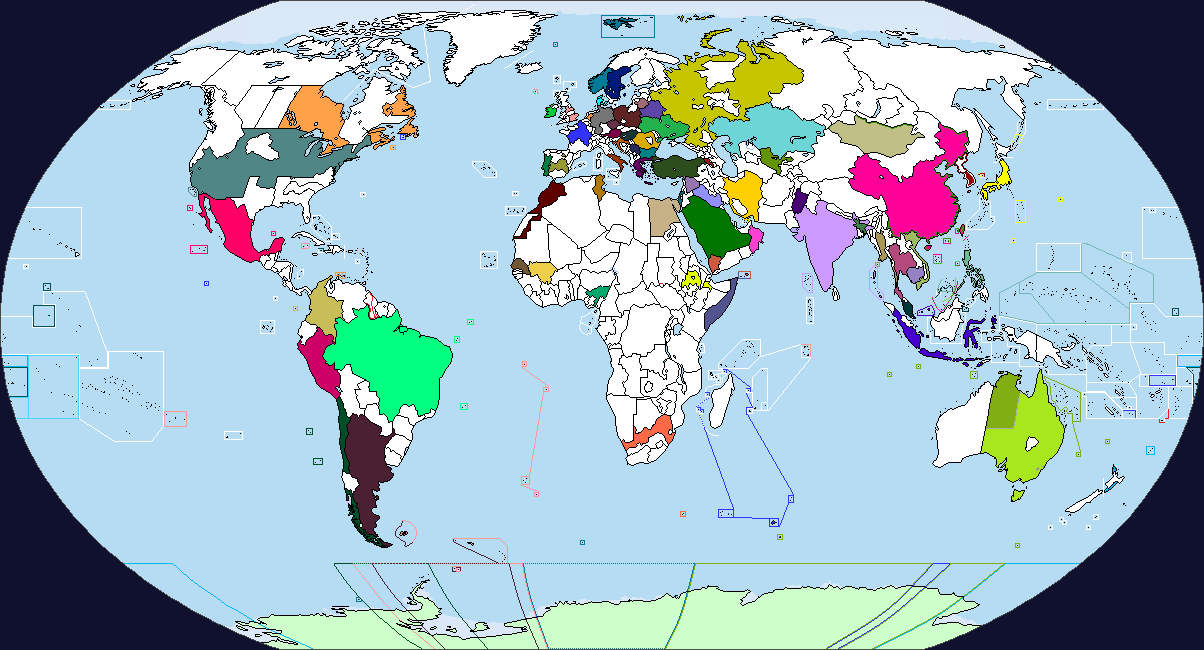
Translated by the Russian Reader. Thanks to Anton Shekhovtsov for the heads-up. Map courtesy of alternatehistory.com
_________
New Law Could Punish ‘Separatist Views’ With 5-Year Prison Sentence
RIA Novosti
January 11, 2014
The Moscow Times
President Vladimir Putin signed a law makes spreading separatist views a criminal offense punishable by up to five years in jail.
Under the law submitted to the State Duma by the Communist Party, people will face a fine of up to 300,000 rubles ($9,200) for calling for action against Russia’s territorial integrity.
Lawmakers said the legislation was an effort to curb increasing public support for the idea of relinquishing mainly Muslim territories in the North Caucasus but the measure has also drawn criticism for drawing attention away from more serious problems in Russian society.