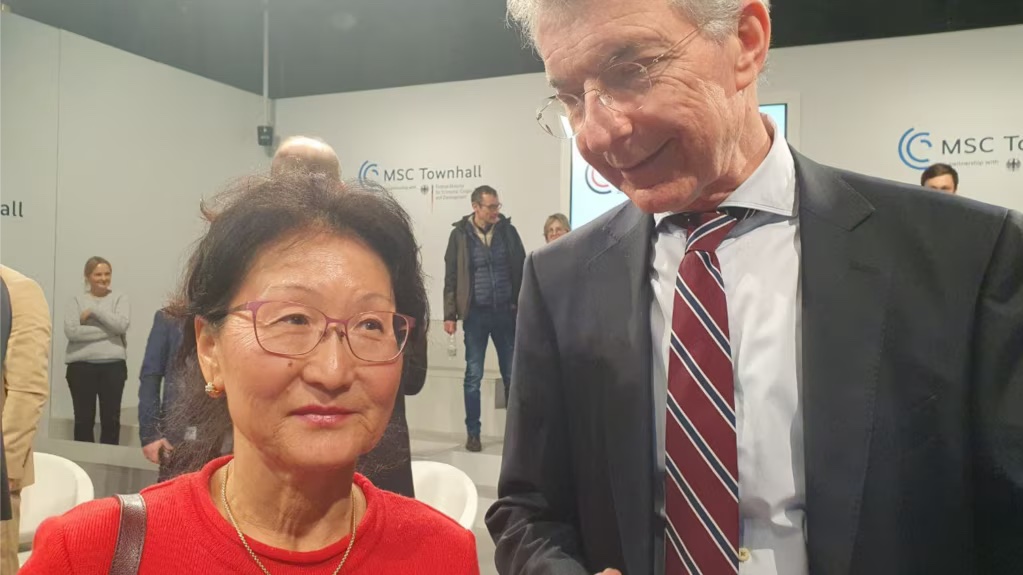
When Russia invaded Ukraine, national movements in Russia’s regions advocating secession from Moscow were given a new impetus. A number of analysts have seriously argued that Russia could break up if there is a turning point in the war and noted the particular role of the Caucasus in this process. Kavkaz.Realii spoke with Maria Ochir-Goryaeva, Doctor of Historical Sciences, corresponding member of the German Archaeological Institute, and Distinguished Scholar of Kalmykia, about Kalmykia’s national movement, the Kremlin’s influence on the republic, and the republic’s current plight.
In 1999, Dr. Ochir-Goryaeva was awarded a competitive fellowship by Germany’s prestigious Alexander von Humboldt Foundation, and continued her research at the Eurasian Department of the German Archaeological Institute. She has published four scholarly monographs, the first of which was published in German. Every year, the archaeologist would return to Kalmykia to carry out archaeological digs in her homeland.
• • • • •
– It is the done thing in Russia to speak negatively about the support that western nonprofits and scholarly foundations provided in the 1990s to Russian academics and the Russian education system. Allegedly, it was through grants and training programs that the west inculcated its values in Russia. Tell us about your experience and what such programs did for Russian scholarship.
– Russian propaganda in general and on this issue in particular cannot be termed anything but xenophobic. In the 1990s, when many state-sector employees, including researchers at the Russian Academy of Sciences, were not paid their salaries for months on end, the grants allocated by western foundations literally saved them. In addition to the material aspect, they demonstrated the importance of researchers and their research. It was only thanks to the support of western and, later, Russian foundations that a number of academics, including me, remained in academia.
As for the “inculcation” of values, this is a distorted understanding of the purpose of such organizations. Each foundation has its own goals and values; if they are scholarly foundations, then their goals are scholarly. I have been living in Berlin for twenty-four years and I know that no one is subjected to “inculcation” here, but is given the opportunity to think and choose independently. Reality shows that people enjoy freedom of speech and the possibility of choice. These things work: everyone is eager to live in democratic countries, rather than in Iran, Afghanistan or Russia, which they leave at the first opportunity.
It is not western foundations that smack of “inculcation,” but Moscow’s imperial approach. Putin and his supporters are unable to adapt to a constantly changing world and are trying to adapt it to their needs by brute force and to make it conform to their outdated stereotypes.
– There is the opinion that this intellectual stagnation is displayed not only by country’s leadership, but also by many rank-and-file Russians, including those who disagree with Putin.
– I agree with this opinion. The wave of migrants from Russia, regardless of ethnicity, is no different from the populace who have stayed behind in Russia. Just as there, a small percentage of them are genuinely active in drawing attention to what is happening in Russia. Even here in Germany, many continue to fear for themselves, concealing their faces and names at protest rallies. The rest are either simply indifferent or they support Putin. Many have relocated in order to maintain their level of well-being and to be able to continue traveling around the world. They are, primarily, residents of Moscow who made good money.
Two things disappoint me about the new immigrants from Russia. The first thing is that few of them follow the news from the front and sincerely worry about Ukrainians. The topic never comes up in their conversations. Feelings of shame and guilt are probably unfamiliar to them. When I say something about bombing or war crimes, they immediately change the subject.
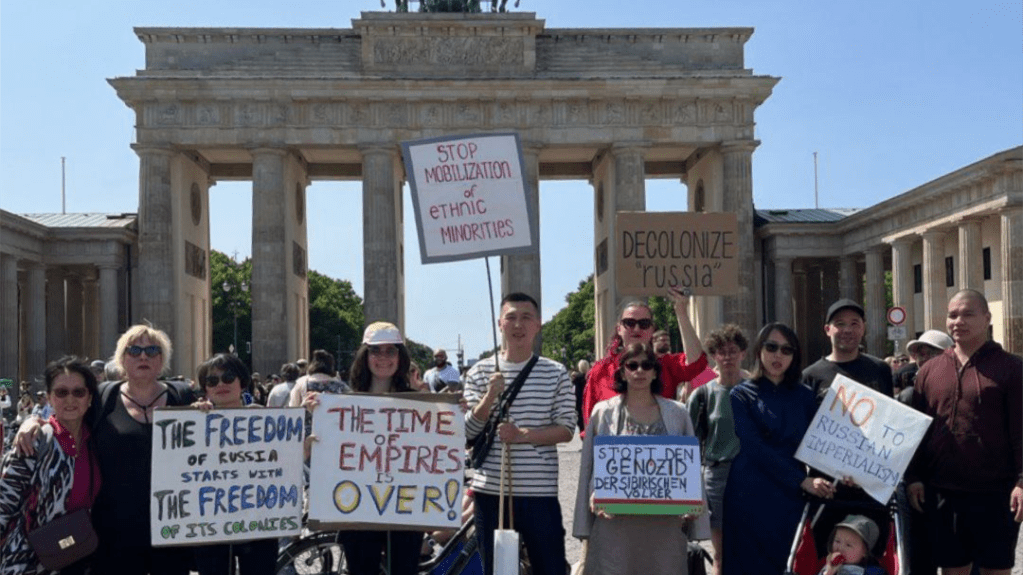
The second thing is xenophobia. Walking around Berlin, I have repeatedly heard indignation voiced by Russian speakers over why Germans tolerate the fact that Muslims here go about “in their headscarves.” Or, for example, Russians ask for help finding an apartment, but only in neighborhoods where “blacks,” as they say—meaning Arabs and Turks—do not live. This has shocked me as an Asian woman.
It seems to me that many immigrants do not assimilate the moral values of democracy and tolerance, but simply import Russia with all its stereotypes and ideology here. The problem is that Russians, with rare exceptions, are unable to understand the rationale and value of democracy. Otherwise, neither Putin, nor these decades of trampling on freedoms in Russia, nor the terrible war would have happened.
– At the same time, Putin and his entourage claim that the west has been trying to rewrite and distort history.
– We were all taught in school that in the early Middle Ages there was Kievan Rus’, a state centered around the city of Kyiv, that is, in present-day Ukraine. Then, three or four centuries later, the Grand Duchy of Moscow was formed, incorporating the lands in Moscow’s orbit. This name was the most accurate and reflects the essence of both the territory and its populace. Theoretically, it could be called Muscovite Rus’, but after its conquest of other peoples, it would be more correct to call this entity the Muscovite Empire. This state has its own history and traditions, like any other. The towns of the Golden Ring alone are worth so much! It is not that you mustn’t prize your own identity and your own statehood, but you should not appropriate someone else’s past.
Until a certain point, the Muscovites did not seek to appropriate Kievan Rus’ as part of their own history. This happened later, after Peter the Great declared himself Emperor of All the Russias. It was then that the temptation emerged to occupy not only the lands, but also the past of this foreign state.
Most of modern Russia consists of lands forcibly annexed to the Grand Duchy of Moscow and the Tsardom of Russia: the Volga region, Siberia, the Far East, and the North Caucasus have nothing to do with Kievan Rus’. They are colonies of the Russian empire. So it is the inhabitants of the Kremlin who are engaged in distorting history for the sake of political ambitions and propaganda.
– In 2022, representatives of national movements from different republics condemned the war and stressed that the conflict did not serve the interests of the Russia’s ethnic minorities. There were isolated protests in Kalmykia, but there were no large-scale protests here. Did you expect this reaction?
– Attitudes to the war in Kalmykia, according to my information, are similar to what you would find among an average sampling of opinions Russia-wide. Why should it be otherwise if the empire has been pursuing a policy of Russification and unification for centuries, thus leveling ethnic differences? There are critically minded people in every region, but there are only a few of them. And almost all of them have left the country, especially since 2022.
It is clear that if the Oirats had reached the shores of the Atlantic in the distant past and stayed here, they would probably have been part of a democratic Europe. Since our ancestors founded their Torghut Khanate on the banks of the Ijil-Idel-Edel-Volga River [these are different names for the Volga River—KR], they shared the fate of the rest of the peoples in the Evil Empire.
We could talk for a long time about the pros and cons of the arrival of the Oirats in Europe, the foundation of their khanate, the migration to Dzungaria, the peasant colonization of the khanate’s lands, the Russian Civil War… History, as you know, does not operate in the subjunctive mood. And Kalmyks have to live in those conditions, which means they are inevitably a cross-section of the society in which they find themselves today.
– How realistic are hopes for the independence of Kalmykia now? What are the decisive factors? Are Kalmyks themselves ready for it?
– Independence has ripened for a long time; it is a necessity. There are always leveling processes within large states. So, the regions of Russia, not only the republics, have to become independent, and then function like the European Union. This means that everyone has their own state, their own rules and system of governance, but when it comes to general issues—for example, environmental protection and projects aimed at the future—they would act in concert.
Disintegration into independent states is vital to all the peoples of Russia, including ethnic Russians. After all, the interests and problems of ethnic Russians living in Siberia or the Far East are clearly different from the interests and problems of Muscovites. The capital is robbing all the regions, and so the Kremlin has a huge amount of money with which to wage a large-scale war and seize foreign lands. If the money of the regions stayed in the regions themselves, the country’s leadership would not have such massive resources, and people in Russia’s hinterlands would live much better! All segments of society suffer from this centralized system.
– At the same time, the situation in the republics differs from the situation in the regions and territories.
– The ethnic republics are, constitutionally, members of the Russian Federation. Moscow not only fleeces them, like the other regions, but also pursues a frankly colonial policy toward them. For example, it redraws their borders, grabbing the best lands for itself. The lands of the Buryats were divided into three administrative regions, while two districts were confiscated from Kalmykia to create the Astrakhan Region. Industrial facilities are built everywhere, just not in the republics. Accordingly, the economy there does not grow, professionals emigrate due to lack of work, and the populace is burdened with debt.
The project to construct the Iki-Burul water pipeline from the Levokum reservoir was imposed by Moscow to increase Kalmykia’s dependence on the outside world and force it to pay the Stavropol Territory for water, although it would have been easier for the republic to extend a branch line from the village of Tsagan Aman and pump water for free from the Ijil-Volga. The longest stretch of the Tengiz-Novorossiysk oil pipeline runs through Kalmykia, but the Krasnodar Territory receives the money for the rent. People from the Kalmykian government complained that they could not change the terms of the contract and they traveled back and forth to Moscow, but the officials there were unmoved.
They do not see the economic side, but the policy of the empire also leads to the loss of identity, language, and traditional culture.
– In your opinion, why did the population of the republics, not only Kalmykia, so easily abandon the sovereignty and even independence they had obtained in the early 1990s?
– Easily abandoned: that’s a good way of putting it! But what about the two terrible wars against independent Chechnya? Moscow forcibly and harshly resurrected the imperial approach, severely cracking down on all protests. No one wanted to be deported to Siberia again, so Kalmyks actually had no choice.
What happened to Gorodovikov back in Soviet times in Kalmykia? [Basan Gorodovikov was first secretary of the Kalmyk Regional Committee of the CPSU from 1961 to 1978—KR.] He, an old general, a decorated Hero of the USSR, was escorted from the CPSU Congress hall by KGB men and immediately booted from office because he dared to suggest that the two districts taken from Kalmykia be returned. That is why, in his wake, until 1990, only envoys from were tapped to run the republic. The desire for independence among the concerned part of our people has never faded.
– Kalmykia ranks last among Russia’s regions in almost all socio-economic ratings. This has been going on for many years—it was the same under Kirsan Ilyumzhinov and Alexei Orlov as it has been now under Batu Hasikov. In your opinion, why have none of the heads of the republic been able to achieve a breakthrough in terms of its growth? Could they have done it?
– Because the colonial policy has never stopped, and it is impossible by definition to make a breakthrough in such conditions. A colony is a colony, and its construction industry, infrastructure, and social services will be worse than in the metropole. The only thing that happens in a colony is the siphoning off of resources and professionals, and total Russification is carried out in all areas, from language to the rewriting of history. This is also an imperial policy. Nations are not allowed to study their own past: Moscow imposes on them the interpretation of the past that is beneficial to Moscow.
By the way, the regional elites are also well aware of this. The governors of the regions and the heads of republics are forced to go to Moscow to bow and scrape, begging for the money which they themselves sent there in the form of taxes. So the issue of disintegration has matured not only at the grassroots, in the minds of national movement activists, but also among local elites. The ethnic Russian hinterland must understand that Moscow takes advantage of their political naivety and forces them to live in ignominious poverty. The consequences of the war with Ukraine might just be the match that ignites this inevitable process.
– There is the opinion that Russian society massively supports this war. In your opinion, as a person observing from the outside, is this the case?
– Of course, they massively support it: people need to survive somehow, this is their priority. Everything is decided by the state system and what values it promotes. During the Third Reich, the Germans also massively supported the war. But when the system changed, the same people turned democratic. The same change can happen to Russian society, and for this to happen the system has to change. And the people as a whole easily change its opinions and habits.
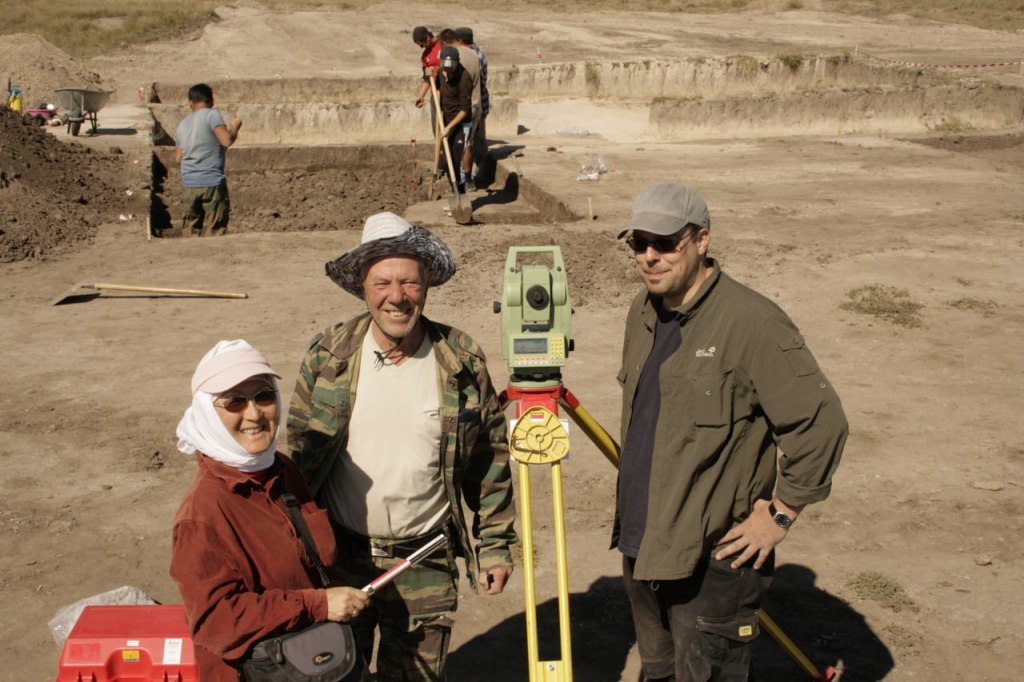
I will give you an example. I spent eight years on the border of Kalmykia and the Rostov Region digging up two fortresses from the era of the Khazar Khaganate. We lived for months in a small village where the entire population is ethnically Russian. We hired the local men to do the digging. They don’t just swear there, they practically speak in obscenities. I forbade them to swear at the digging site and joke about gender issues, otherwise I would kick them out without paying them their day’s wages. And they worked for me all day for months without swearing!
What is more, nearly everyone in this village was a nationalist, in the sense that they did not like Kalmyks. But since I treated them with respect and paid them for their work every evening, they treated me and the other researchers quite cordially. People everywhere, whether they are Russians or Germans or whatever, are masters of survival. So, I don’t think you have to convince them verbally. When conditions change, ordinary people themselves figure out how it benefits them. You shouldn’t condemn ordinary people. You should cherish them and foster conditions for them to lead decent lives, whatever their ethnicity.
• • • • •
Earlier this month, Kavkaz.Realii published a report on life in Kalmykia and the impact of the war in neighboring Ukraine on it.
In October 2022, the Verkhovna Rada adopted a resolution recognizing Chechnya as a territory temporarily occupied by Russia, and also condemned the “genocide of the Chechen people.” All 287 MPs present voted in favor of the resolution. Oleksiy Goncharenko was one of the authors of the resolution.
In late October 2022, the Oirat-Kalmyk People’s Congress adopted a declaration entitled “On the State Independence of the Republic of Kalmykia.” This is not the first call for self-determination for the Russian Federation’s ethnic republics since the outbreak of the war in Ukraine. “Free Nations of Russia Forums” have been held in Warsaw, Prague and Gdansk, and representatives of ethnic groups “oppressed by the Kremlin regime” met in Kyiv.
On January 7, supporters of an independent Ingushetia met in Istanbul. The creation of the Ingush Independence Committee was announced at the meeting. The Committee’s goals include consolidating Ingush society around the idea of freedom and independence, preserving cultural and religious identity, creating the basis for building an independent Ingush state, and “preventing another deception of the people and another round of violence against them.”
Source: Andrei Krasno, “‘Independence is a necessity’: a historian from Kalmykia on the the republic’s future,” Kavkaz.Realii (Radio Svoboda), 14 June 2023. Translated by the Russian Reader. Thanks to Comrade Koganzon for the heads-up.