
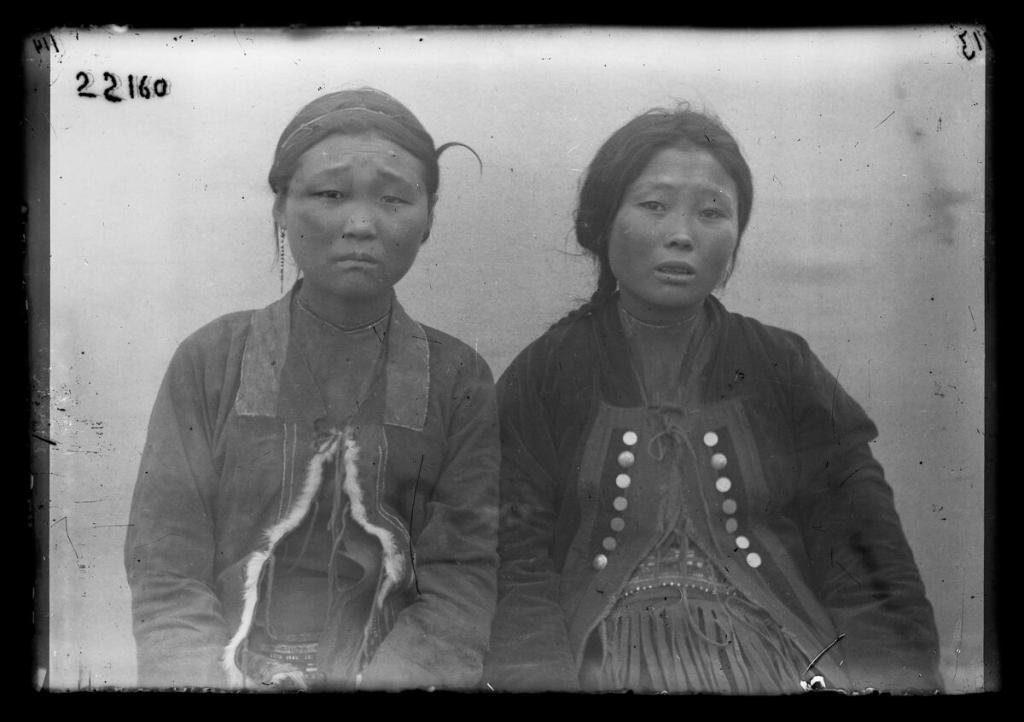
GLC@Lunch: “Trade in Women, Concubinage, and Marriage: Relations Between Russian Colonizers and Indigenous Women in 17th-Century Eastern Siberia”
Rosenkranz Hall • 115 Prospect Street, New Haven CT, 06511 • Room 241
Wednesday, April 29, 2026, 12:30—1:45pm | Hybrid
In person at Yale University, Rosenkranz Hall, Room 241, 115 Prospect Street, New Haven
Online via Zoom
Note: In-person seating is limited and available on a first-come, first-served basis.
This presentation introduces a book project on the first decades of Russian colonization in Eastern Siberia, present-day Yakutia. Rather than framing colonization solely as a process of conquest and political alliance-building, the project foregrounds intimate and gendered entanglements between Russian newcomers and Indigenous communities. Russian fur traders, trappers, and military servitors typically arrived in the region without families and encountered Yakut, Tungus, Yukaghir, and Even populations. The resulting gender imbalance among settlers quickly made the trade in Indigenous women a profitable enterprise. At the same time, commercial transactions sometimes culminated in Orthodox marriages, blurring the boundaries between coercion, commerce, and social integration. By examining these practices, the study explores how racial, cultural, and religious boundaries were negotiated in everyday interactions between Russian colonizers and Indigenous societies in seventeenth-century Eastern Siberia.
Source: Gilder Lehrman Center for the Study of Slavery, Resistance, and Abolition at Yale University
How did Russians obtain local women?
There were three ways to acquire women in Eastern Siberia. The first was as the outcome of military expeditions, sometimes referred to as ‘pogroms’ in the documents. When Russian troops attacked local settlements or nomadic camps and emerged victorious, they would seize women, children, and cattle as spoils of war. Enslavement of women during times of conflict had deep roots in Siberian history. Historical documents provide numerous accounts of inter-ethnic military clashes that resulted in the plundering of the defeated, particularly involving the capture of women, children, and cattle.
A petition from 1642 for the baptism of a Yakut woman named Katok includes Katok’s explanation of why she desired to convert to Orthodoxy where she shares her life story. She recounts that she could not recall her father’s name as she was taken by Russians during a ‘pogrom’ when she was only a child. She further explained that she had previously lived ‘among Russians,’ but that she now has nothing to eat or drink and was starving to death. In short, Katok was forcibly captured from her community as a child, likely being one of those taken as trophies from the defeated local community.
Another form of enslavement in Siberia involved trafficking, where local people would sell their relatives to Russians. Sometimes the locals would sell their women to combat poverty. Gurvich mentioned that the Yukaghirs of Yana River sold their maidens and children to Russians because of hunger in 1659. However, the women sold to Russians were not always orphans or from poor families. There are documented cases where individuals of higher social status willingly sold their daughters. For instance, local prince Orgui sold his daughter Mychak to a Russian serviceman for a cow.
Russians did not necessarily purchase or capture local women in battle; sometimes they acquired them without any effort or payment. One such case is preserved in historical documents. It tells the story of Ladchka, a Yakut woman who was abandoned by her husband and left with no means of support. She sought refuge in the Russian camp and resided there for two years before eventually being brought to Yakutsk with her child in 1643. During her interrogation, Ladchka revealed that she had been a slave (‘yasyr’) of the fur trader Oderka Martemyanov. She had a child with him and expressed her desire to be baptised. It appears that Martemyanov acquired this woman without any cost, lived with her for a period, and then seemingly cast her aside.