Whipping Bear

Bears
Bears

Whipping Bear: Why the President Needs a “Bad” Prime Minister
Nikolay Mironov
Moskovsky Komsomolets
June 1, 2016

Remember the Soviet joke about the plumber who comes to an apartment to fix a leaky radiator?

“The entire system is rotten here: the entire system has to be changed!” he concludes.

The joke is as topical now as it was then, because the system, it seems, has hit rock bottom. But the nation is clearly of two minds. It is seemingly aware of what has been happening in the country, but at the same time it maintains its loyalty to the regime that has brought us to this pass.

On the one hand, we see a president with a huge rating. On the other hand, we see a rapidly failing economy, a deteriorating social sphere, and, consequently, a high degree of public dissatisfaction with the regime. How can it be that as the foundation crumbles, the president manages to maintain his popularity?

The logic of this social attitude was, I think, nicely expressed by a cabbie who recently gave me a lift.

“Putin is going like gangbusters: the West, America, Syria, Donbas. And Medvedev is supposed to be taking care of the economy instead of fiddling with his iPhone.”

And right then and there he served me up a helping of bad news. He has been getting less work. Prices are rising. Who knows where the hell we are headed.

The taxi driver in fact reproduced the classic propaganda formula he hears every day on the TV. Aside from America, bad officials and liberals are the root of our troubles. The government is clearly underperforming, while the president is terribly busy with foreign policy and lifting Russia from its knees. He is the country’s sacred patron, its guardian angel, and the shortcomings of officials do not stick to him.

If you are thinking straight, cognitive dissonance must kick in, of course. The president has a huge number of powers. He appoints the government, and he could, if he felt like it, sack any minister, including the prime minister, without consulting with anyone. He has the power to kickstart any reforms via presidential decrees. And the Duma is at his beck and call, for United Russia holds the majority of seats there. Why does Putin not appoint a good team, dismiss corrupt officials, and announce a policy shift for the country? How will he lift the country from its knees if the economy tanks? If he is weak and incapable of doing it, why should we support him? If he just does not want to do it, that is another strike against him. But the nation, which has a weak grasp of political institutions and sees no credible alternative in sight, is willing to believe that “Putin has it rough,” that “he is fighting,” and that “they  are getting in his way.”

The massive brainwashing on this point allows the regime to keep a tight lid on the system and change nothing fundamental about it, thus preserving the current inertial scenario, which is favorable to the elites. It is favorable to them because, were the government to decide to undertake economic reforms, the economic interests of the elites would inevitably take a hit, forcing them to surrender some of their comforts and excess profits.

However, while the costs of the crisis are primarily borne by the masses, somebody has to be made the fall guy, the virtual whipping boy. With the exception of defense minister Sergei Shoigu and foreign minister Sergei Lavrov, the cabinet has been appointed to this role along with abstract liberal circles, who, allegedly, have a behind-the-scenes influence on officials.

It is obvious that today the head of state cannot officially support the current course, which has resulted in rampant poverty among the population. Equating this policy with the president would be, if not tantamount to suicide, then certainly a powerful blow to his popularity. But Putin has no intention to change course for the reason given above: the interests of the elites. For this reason, on the eve of the election campaigns, the plan is to deliberately unhook the domestic agenda from the president and hang it on Medvedev and his government. Consequently, the prime minister will no longer be the number two man in Russia, but an expendable, a scapegoat.
%d0%bc%d0%b8%d1%80%d0%be%d0%bd%d0%be%d0%b2-%d0%bd-%d0%bc
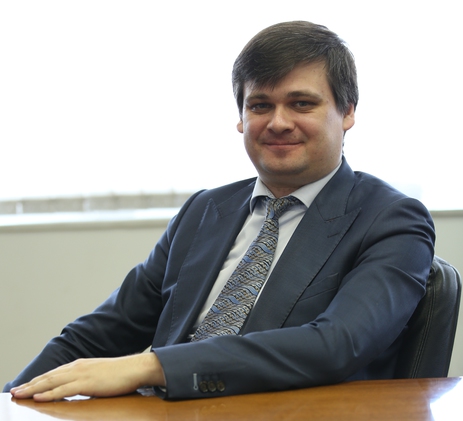
Nikolay Mironov. Photo courtesy of the Center for Economic and Political Reform (Moscow)

Moreover, we should not identify Medvedev with United Russia. Their identities are not blurred in the propaganda, and this is no accident. All the negativity towards officials and the head of the government must not devolve on the party tasked with winning a majority in the Duma in September. United Russia members have thus even been criticizing government ministers, pretending that they and the executive branch are different animals, despite the fact they have the same leader (Medvedev) and a majority in parliament, allowing them to make any and all political appointments and legislative decisions.

This is a quite important part of the spectacle. Medvedev has to be a lightning rod for Putin, and yet United Russia, which Medvedev chairs, has to make it successfully through the campaign for the new seating of the Duma. Since this is the task at hand, the regime will do its utmost to control the volume of criticism leveled at the prime minister, including criticism voiced by opposition parties. As for attacks by forces close to the regime (e.g., the Russian People’s Front’s usual philippics against bureaucrats), they will most likely come down to a matter of tweaking the picture to help the president avoid the impact of potential criticism for the current situation. But the propagandists will avoid belittling the government excessively during the election period. “Local officials” will bear the brunt of the negativity. The government, moreover, will be given carte blanche to spend budgetary funds for populist purposes and to mitigate the crisis, including through a temporary increase in dividends paid out by large corporations. (The figures currently quoted range between 300 and 400 billion, which should be quite enough to get through the summer.)

Thus, during the Duma campaign, Medvedev will draw fire upon himself. So-called managed democracy, however, will ensure this fire will not turn into a conflagration and burn the regime and the elites. The president must remain unharmed, since his main play strategically is the 2018 presidential election, a key election for the elites.

The next act in the political spectacle will be Medvedev’s premiership after the Duma elections in September and in the run-up to 2018. Here, too, he will function as a whipping boy and political expendable, readying the way for the launch of Putin’s next presidential campaign.

After the election, the prime minister, having received formal carte blanche from the voters, can undertake unpopular measures. (Unless, of course, the oil price suddenly rises miraculously.) It is inevitable. Someone has to pay for the crisis, and, apparently, the elites are still not this someone. In any case, it is Medvedev who will have to make ends meet in the 2016 budget, with its whopping 14.7% deficit on the expenditures side, and then rob Peter to pay Paul when drafting the 2017 and 2018 budgets.

If the situation gets ugly, and the populace’s complaints attain a critical mass, Putin can dismiss Medvedev on the eve of the presidential election, appointing him to some cushy post. And he will again profit from the decision, because in the eyes of the electorate, the president will be seen as a virtual national savior. Having dampened tensions in society this way, he will be re-elected to another six-year term as president, winning an acceptable percentage of the vote. The opposition will again be confounded, and someone like Alexei Kudrin can become prime minister. This will nicely symbolize the compromise between “liberals” and “conservatives,” while also functioning as a nod to the west, whose cheap money we need desperately.

The alpha and omega of all this complicated maneuvering is preserving the system, and thus preserving the privileges and assets of the supreme elites, their lifestyle, and their ability to peaceably transfer their wealth to their children. They will be able to breathe a sigh of relief and once again enjoy the sunsets on the French Riviera and in Italy.

Only time and economic conditions will tell what comes next. If the country’s currency reserves run out, and the oil price does not increase, intrigues around choosing Putin’s successor will kick off. Or a new scapegoat will be found, and so on ad infinitum. Generally speaking, the current regime just does not plan that far ahead.

Only one question remains. What is in all of this for Medvedev himself? Does he enjoy being expendable? Here it is like the line from the classic Soviet comedy film The Pokrovsky Gate: “Life is lived not for pleasure’s sake, but for the sake of conscience.”

I think the answer that immediately comes to mind is also the most likely to be the right answer. Medvedev does his job and is loyal to his boss. He cannot imagine himself outside the system, much less as the creator of a new system.

Another joke comes to mind in this connection. President Medvedev wakes up in a sweat. His wife asks what the matter is.

“I dreamt I fired Putin,” Medvedev replies.

2011 clearly showed that staging a revolution or even serious reforms was beyond the prime minister’s scope. Medvedev’s political career consists of brief ascents followed by a series of humiliations. However, his job has numerous upsides, too. Is it so bad being prime minister of such a rich country as Russia for a whole six years?

Nikolay Mironov is head of the Center for Economic and Political Reform, in Moscow, and a frequent columnist for Moskovsky Komsomolets newspaper. Translated by the Russian Reader. Thanks to Sean Guillory for the heads-up.

Ilya Budraitskis: Putrefaction as the Laboratory of Life (The 2016 Elections)

Nikolai Yaroshenko, Life Is Everywhere, 1888. Image courtesy of Wikipedia

The 2016 Elections: Putrefaction as the Laboratory of Life
Ilya Budraitskis
OpenLeft
April 29, 2016

How do the upcoming Duma elections threaten the regime?

Today, it would seem that the upcoming September elections to the State Duma are a cause of growing concern only in the Kremlin. While polls continue to record a low level of public interest in the event, and the tiny number of parties allowed to run in the election wanly prepares to fulfill their usual roles, the president and his entourage are increasingly talking about possible threats.

The rationale of radicalization
At a recent meeting with activists of the Russian People’s Front, Putin noted that external enemies would preparing ever more provocations to coincide “with elections to the State Duma, and then with the presidential election. It’s a one hundred percent certainty, a safe bet, as they say.”

Regardless of their real value, the upcoming elections have been turning right before our eyes into a point of tension on which the state’s repressive apparatus has focused. Beginning with the establishment of the National Guard, the process has been mounting. Each security agency has now inaugurated its own advertising season, designed not only to remind the president and public of its existence but also to show off its unique capabilities, inaccessible to other competing agencies, for combating potential threats.

Prosecutor General Yuri Chaika has uncovered a plot by the Ukrainian nationalist group Right Sector, while in his programmatic article, Investigative Committee head Alexander Bastrykin essentially suggested canceling the elections since holding them could prove too dangerous. He made a direct appeal to stop “playing at pseudo-democracy” and provide a “tough, appropriate, and balanced response” to the country’s enemies “in light of the upcoming elections and the possible risks presented by the stepping up of efforts by destabilizing political forces.” With the appointment of Tatyana Moskalkova, even the previously neutral office of the human rights ombudsman has, apparently, been turned into yet another bastion of the fight against conspiracies.

This nervousness is certainly due to the fact that the growing economic and social crisis has had no visible political fallout for the time being. There have been no mass spontaneous revolts or sectoral strikes, although there has been an overall uptick in isolated labor disputes.  The political realm has long ago been securely purged of any uncontrollable opposition, while the president’s personal rating has remained phenomenally high. Nothing, it would seem, portends serious grounds for political destabilization this autumn. The absence, however, of real threats itself has become a threat to the internal stability of the state apparatus.

Where does the threat lie? In recent times, it has become obvious that decision-making at all levels and whatever the occasion has been subjected to a rationale of radicalization. Its principle can be described roughly as follows: no new decision can be less radical than the previous decision. Bureaucratic loyalty is measured only by the level of severity. MPs must propose more sweeping laws against latent traitors. Law enforcement agencies must expose more and more conspiracies, while the courts must hand down rulings that are harsher than the harshest proposals made by the security officials and MPs. Permanently mounting radicalism enables officials to increase budgets, expand powers, and prove their reliability, while any manifestation of moderation or leniency can cost them their careers. This radicalization, whose causes are rooted in the political psychology of the Russian elite (which suffers from an almost animal fear of uncontrollability), has set off an extremely dangerous bureaucratic momentum. Its main problem is the inability to stop. It is not only unclear where the bottom is, but who is ultimately interested in reaching that bottom and leaving it at that.

All this generates a strange situation vis-à-vis the elections, which have generally functioned primarily as a political balancing mechanism for the Putinist system, and even now function in this way. Elections have always been a reminder—not to voters, but to the elite itself—that varying opinions within a clearly defined framework have not only been possible but have also been encouraged. This reminder has been important not out of faithfulness to an abstract principle, but as confirmation that political bodies (first of all, the presidential administration) have had the monopoly on deciding domestic policy, not a military or police junta.

Fixing the broken mechanism?
For the Kremlin, the upcoming elections are overshadowed by the political trauma of 2011, when the smoothly functioning system of managed democracy suffered a serious breakdown. The current chief political strategist Vyacheslav Volodin has more or less consistently focused on making sure the failure of five years ago is not repeated. Volodin’s mission is to fix the broken mechanism with political methods, not by force.

It is worth remembering that, for the greater part of the Putin era, parliamentary and presidential elections were parts of a single political cycle, in which the same scenario was played out. The triumphal success of the ruling United Russia party was supposed to precede and ensure the even more resounding success of Vladimir Putin. In December 2011, however, the cycle’s unity backfired against the Kremlin’s plans. The interval between elections enabled the protest movement to maintain its grassroots energy for several months.

The political rationale of Putin’s third term is now aimed not only at technically but also at conceptually disrupting this cycle. Amidst a sharp drop in confidence in the government, the Kremlin decided last summer to move parliamentary elections up from December 2017 to September 2016, and, on the contrary, postpone the presidential election from March 2017 to March 2018. The point of the maneuver is obvious. The presidential and parliamentary elections must now represent not two parts of the same script but two completely different scripts. In the first script, a limited number of parties, which make up the symphony of the Crimean consensus, will criticize the government and each other, thus competing for the sympathies of the dissatisfied populace. In the second script, the natural patriotic instinct of voters should leave no doubt as to the need to support Putin unconditionally.

The new ideological content was embodied by Volodin’s famous statement: “There is no Russia today if there is no Putin.” This personification virtually means that, as a symbolic father, Putin transcends everyday politics. You can be a liberal or a nationalist, a proponent of greater intervention in the economy or a fan of the free market. You can choose not to like the government or government officials. But the nexus Putin-Crimea-Russia is beyond any doubt. Those who fundamentally disagree with it are simply removed from the Russian political spectrum and branded “national traitors.”

In keeping with this rationale, responsibility for the sharp drop in living standards and the consequences of the neoliberal “anti-crisis” measures has been borne by ministers, MPs, and governors, by anyone except the president. Even now, when the propaganda effect of the “reunification” of Crimea has obviously begun to fade, the president’s personal rating remains high. Thus, according to the latest opinion polls, 81% of respondents trust Putin, while 41% do not trust Prime Minister Dmitry Medvedev, and 47% do not trust his government overall.

Within the new-model Crimean consensus, United Russia will no longer play the role of the backbone it played in the noughties. Untethered from the non-partisan figure of the president, it will take on the burden of unpopularity borne by its formal leader, Dmitry Medvedev, and his government. The mixed electoral system will enable candidates from local “parties of power” in single-member districts to dissociate themselves from United Russia, presenting themselves as “non-partisan Putinists” criticizing the soulless federal authorities. Volodin’s scheme involves loosening United Russia’s grip on power and slightly increasing the value of the pseudo-opposition as represented by the Communist Party and A Just Russia.

It is worth noting that the very existence of a bureaucratic mega-party previously played a stabilizing role by dampening intra-elite conflicts. Now they will inevitably come out into the open, including in the shape of inter-party struggles. Of course, the presidential administration counts on being able to effectively ensure compliance with the clear rules of this competition, but there are no guarantees. The managed multi-party system with the “father of the nation” towering over it consummates the new architecture of the Putin regime as a personalistic regime, and becomes more and more vulnerable.

In the new reality of the crisis, Putin’s depoliticization also facilitates a more intensive “natural selection” among bureaucrats at all levels by culling those who have not mastered the art of maintaining the conservative sympathies of the populace while simultaneously implementing what amount to aggressively anti-social policies. The September campaign is supposed to go off without a hitch, culminating in a predictable outcome. Having given a human face to the Central Elections Commission, which was seriously discredited by the previous leadership, Ella Pamfilova is meant to increase this manageability and predictability. It turns out that the upcoming elections are the primary pressure test of the new, post-Bolotnaya Square design of managed democracy. The future of Vyacheslav Volodin and his team, as well as Putin’s willingness to trust them with the extremely important 2018 presidential campaign, probably depends on how smoothly they come off.

From the foregoing it is clear that the objective of reestablishing the rules of managed democracy is directly at odds with the above-mentioned rationale of radicalization, whose standard-bearers are the competing law enforcement agencies. Their individual success in the internal struggle is vouchsafed by the failure of the political scenario, which would give rise to the need for a vigorous intervention by force. After all, the National Guard’s value would be incomparably increased if it put down real riots instead of sham riots, and Bastrykin’s loyalty would all the dearer if, instead of the endless absurdity of the Bolotnaya Square Case, he would uncover real extremists. To scare someone seriously, the ghosts have to take on flesh and blood.

Life is everywhere
Marx said that putrefaction is the laboratory of life. Now we see how Putinist capitalism has embarked on a process of gradual self-destruction. The upcoming elections provide a clear picture of how this has been facilitated by two opposing rationales, the political rationale (Volodin and the presidential administration) and the law enforcement rationale. Thus, the first rationale, in order to generate the necessary momentum and expand the range of opinions, must respond to social discontent by providing United Russia’s managed opponents with greater freedom to criticize. Restoring the internal political balance will inevitably lead to the fact that topics related to the crisis and the government’s anti-social policies will become the centerpiece of the entire election campaign. On the other hand, the security forces will destabilize the situation outside parliament. Together, they will do much more to undermine an already-flawed system than the long-term, deliberate efforts of any western intelligence agency.

Of course, Russian leftists should in no way count on events following an automatic course. But it is absolutely necessary to take into account the conflicts of interest within the elite and understand their decisive influence on the shape of the upcoming elections. These elections have nothing to do with the real struggle for power or traditional parliamentarianism in any shape or form. But they are directly related to the internal decomposition of an authoritarian, anti-labor, and anti-social regime. So our policy vis-à-vis these elections should be flexible and remote from all general conclusions. That means we can and should support certain leftist candidates in single-member districts. We must use all the opportunities provided by the leftist, socialist critique of the Medvedev government’s so-called anti-crisis policies. We must be ready to go to the polls. Or we must be ready to reject them, taking to the streets when the time comes.

Ilya Budraitskis is a writer, researcher, and editor at OpenLeft. Translated by the Russian Reader


When All Else Fails, Send in the Anti-Semites

Chief Rabbi Complains to Medvedev about Anti-Semitism in United Russia Party
Daniil Alexandrov
Medialeaks.ru
April 15, 2016

anti 01
Anti-Semite Vladislav Vikhorev speaking during United Russia primaries debates in Chelyabinsk on April 10, 2016

The Jewish community believes a speech made by United Russia member Vladislav Vikhorev during intra-party pre-primary debates has not been properly condemned. The candidate stated that ethnic Russians are being killed because they are standing “in the way of the Yids.”

According to Interfax, Russia’s Chief Rabbi Shalom Dovber Pinchas Lazar has appealed to Dmitry Medvedev, leader of the United Russia party and Russian prime minister. Rabbi Berel Lazar is outraged by the outburst by a party member taking part in the primaries in Chelyabinsk Region, Vladislav Vikhorev, who made an anti-Semitic speech. Even more than the speech itself, Lazar was dismayed by the lack of an adequate reaction to it.

“The Russian Jewish community is shocked by the anti-Semitic outburst by Vladislav Vikhorev, a participant in the United Russia primaries in Chelyabinsk Region who spoke of a ‘conspiracy of the Jews against the Russian people.’ But we are even more shocked by the fact that the primaries organizing committee limited itself to issuing a formal ‘warning’ to the anti-Semite and left him among the contenders for a place on the electoral list of the party you lead,” Rabbi Lazar wrote to the prime minister.

Vikhorev was speaking during primaries debates on Sunday, April 10. The gist of his speech was that Russia’s main problem and security threat were the Jews. A “Jewish coup” had occurred in Russian under President Boris Yeltsin, said Vikhorev, and since then the Jews had been systematically destroying ethnic Russian culture, the state, and the financial system.

“We Russians are being killed for standing in the way of the Yids,” said Vikhorev.

Vikhorev is still listed as a candidate on the primaries website. The Chelyabinskh regional branch of the party decided to leave him in the race, letting him off with a warning that ethnic slurs were unacceptable.


Members of the Jewish community believe that law enforcement, not party bodies, should assess Vikhorev’s statement. Yuri Kanner, president of the Russian Jewish Congress, told Lenta.ru that the prosecutor’s office and the courts should be involved in the case.

“It is not clear why the prosecutor’s office and the courts are not examining this, because this must be assessed by the state, not the party,” said Kanner.

Vikhorev was born in 1948 in the village of Rozhdestvenka in the Uvelsky District of Chelyabinsk Region. He graduated from High School No. 10 at Poletayevo Station on the First South Urals Railroad. Vikhorev is an old-age pensioner.

His speech has been posted on YouTube.

In January 2016, while meeting with members of the European Jewish Congress in Moscow, Vladimir Putin responded to a complaint that Jews in Europe did not always feel safe because of the influx of migrants by inviting them to return to Russia.

“In a crisis, we cannot do with you,” joked the president.

Yesterday, the first part of Russian Jews, a documentary trilogy by journalist and producer Leonid Parfyonov dealing with the history of the Jewish people in Russia from the eleventh century to the post-war Soviet Union, premiered in movie theaters.

Translated by Your Local Kiwanis Club