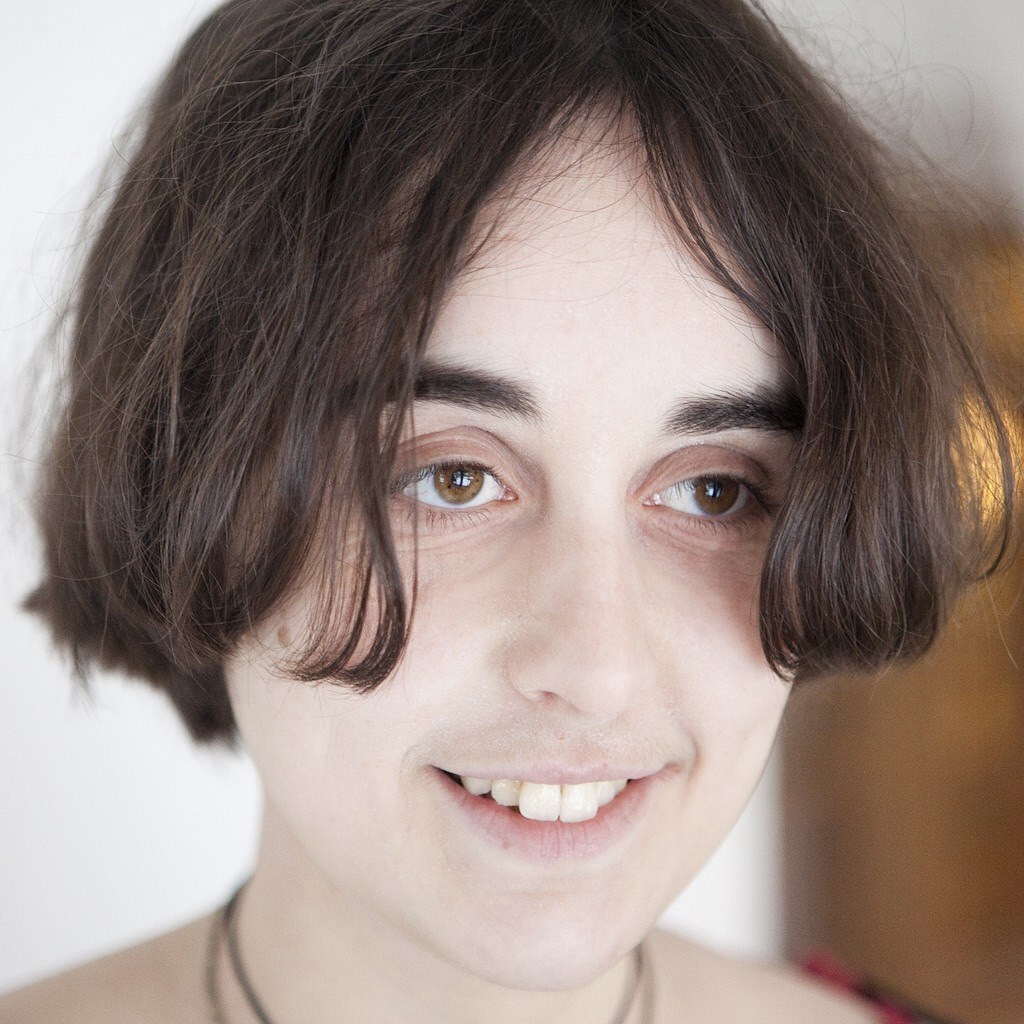
Lida Moniava, a prominent advocate for critically ill children’s care, has been charged with spreading false information about the military, her attorney told Russian media on Wednesday.
Moniava was arrested following a police search of her home in Moscow earlier in the day and questioned by officials from the Investigative Committee, Russia’s top investigative body.
Moscow’s Simonovsky District Court is expected to rule on pre-trial detention measures, her attorney told the news outlet RBC.
The charge of spreading false information about the military carries a maximum sentence of 10 years in prison.
Moniava is the founder of the Moscow-based charity Lighthouse, which operates hospices for seriously ill children and young adults in the Russian capital and surrounding region.
After Russia’s full-scale invasion of Ukraine in 2022, Moniava created a foundation that provided shelter, medical supplies and food to people fleeing from the war. The organization also later helped Armenians fleeing from conflict in Nagorno-Karabakh, as well as Russians displaced from the Kursk and Belgorod regions.
That foundation suspended operations last September due to the dwindling number of refugees arriving in Moscow and the Moscow region.
Moniava was previously detained in January and in February. She was fined 45,000 rubles ($520) after being found guilty of “discrediting” the Russian military in posts on Telegram.
Despite facing pressure from the authorities, Moniava has refused to leave Russia.
“If I leave, critically ill children will end up in nursing homes and intensive care units for longer periods. Knowing that, I doubt I could live happily in some other country,” she wrote earlier this year.
Source: “Children’s Hospice Founder Arrested and Charged Over ‘War Fakes,'” Moscow Times, 2 September 2026
Lidia Moniava is being forced out of Russia. First, her hospice was slapped with an administrative fine. Then she was threatened with criminal prosecution. Next, a criminal case was launched against her, her home was searched, and she was interrogated. Now, the court has sentenced her to non-custodial remand. It’s the standard playbook: we’re about to lock you up, so hurry and leave; take advantage of this last chance. In unison with the punitive organs, the lucky political émigrés are chiming in, “Run, Lida, run!” Escape is the very essence of their political activism. Fleeing is their means of survival.
Forcing an undesirable person to leave is the best option for the authorities. That much is obvious. But it is also obvious that this “undesirable person” has a different set of values, different views on life and on her place in it. She cannot abandon a cause she considers important; she cannot betray the people who have placed their trust in her, the people she cares for. Personal responsibility is what Russian society so desperately lacks today.
She won’t have an easy time of it. It’s hard for a free person to live in an unfree country. But it’s a noble choice, one that only people who are free on the inside can understand.
Source: Alexander Podrabinek (Facebook), 3 September 2026. Translated by the Russian Reader
I always thought she was exactly what a Christian should be like.
Lida Moniava, the director of Lighthouse children’s hospice, has been accused of circulating “fake news” about the army. she has been detained and faces up to ten years in prison.
It is clear who is running a country where righteous people are behind bars.
Source: Natalia Vvedenskaya (Facebook), 3 September 2026. Translated by the Russian Reader
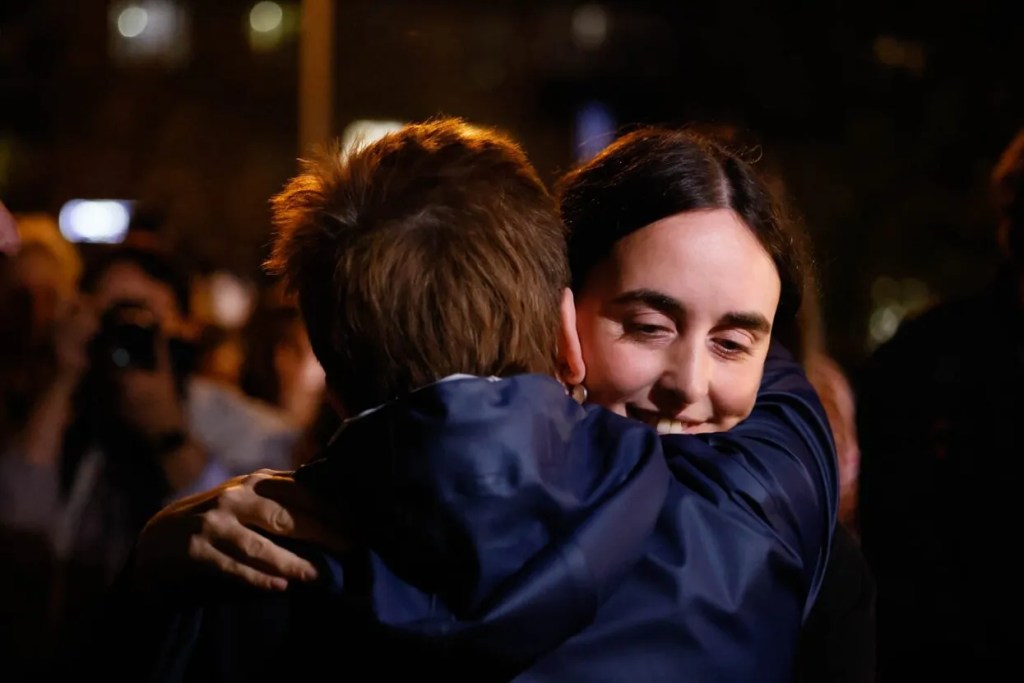
On the evening of September 3, Simonovsky Court placed Lida Moniava, founder of Dom s Mayakom (“Lighthouse Charity Foundation”), under a set of restrictions in a criminal case accusing her of spreading “fake” information about the Russian military. Moniava is one of the leading figures in contemporary Russian philanthropy: she founded the Dom s Mayakom charity and its hospices for children with severe and incurable illnesses. Dozens of people came to Simonovsky Court in Moscow to support her. The news outlet Bereg recounts what happened — and shows how Moniava’s supporters celebrated her release. Meduza is translating the report in full.
A hearing on pretrial restrictions for Lida Moniava, founder of the Lighthouse Charity Foundation, is scheduled for 5 p.m. on September 3. A full hour before the hearing, Muscovites who have come to support Moniava are already gathering outside the Simonovsky Court building.
Police searched Moniava’s home early on the morning of August 2 as part of a criminal case over spreading “fake” information about the Russian military, then arrested her. The case stems from a post Moniava published on her Telegram channel to mark the first anniversary of Russia’s invasion of Ukraine. “For a year now, my country has been sending missiles, tanks, and soldiers into Ukraine. For a year now, innocent people have been dying because of it,” she wrote.
A short young woman named Nadezhda stands in the parking lot reserved for official vehicles directly in front of the courthouse. She is visibly nervous. She introduces herself as Moniava’s goddaughter.
“I’m waiting for justice. If someone like Lida is sent to prison, something truly terrible will happen to the world,” Nadezhda says.
A mixed crowd gradually gathers by the parking lot: young people who might be described as part of the alternative scene, middle-aged people, and elderly members of the support group. Some call themselves Moniava’s friends and acquaintances; others, like red-haired Makar, dressed all in black, learned about her from recent news coverage.
“When I read about Lida, I realized she’s just an incredibly good person — kind, with the noblest intentions,” Makar tells the independent Russian outlet Bereg. “Of course, it’s a real shame things turned out this way.”
Makar says he is trying not to get his hopes up that the charges against Moniava will be dropped or that she will be released from custody, “so I don’t end up disappointed.”
Mikhail, an acquaintance of Moniava’s, is also there to support her. He speaks about her much as dozens of others have in Facebook posts supporting her over the past day.
“I admire what she does, what she stands for, and the fact that she’s open about it. That’s genuinely brave,” Mikhail says. “You can do charity work and still be a conformist because you think charity makes up for everything. But Lida did good work without becoming a conformist just to keep doing it.”
When Russia launched its full-scale invasion of Ukraine, Moniava stayed in the country and continued helping children with incurable illnesses. She also set up a fund to help refugees from Ukraine and Nagorno-Karabakh, as well as residents of the Kursk region’s border areas affected by the Ukrainian military’s incursion in August 2024.
While helping people affected by Russia’s invasion of Ukraine, Moniava also wrote antiwar posts on Facebook. In February 2026, Russian authorities fined her 45,000 rubles for “discrediting” the Russian military over those posts. She wrote about children killed in a Russian missile strike on Kryvyi Rih and the deaths of the Martynenko family — a father, a mother, and their 11-year-old son — in a strike on Sumy.
After the February hearing at which a judge imposed the fine, Moniava thanked her followers for their support and said in a post that she had “received a lot of advice to leave Russia”:
When Center E is banging on your apartment door, it’s scary, of course. But look at this photo — Anya and I are having such a great time on our shift [at the hospice]. She’s a girl who spent 19 years behind the walls of a residential institution. If I leave, children in palliative care will spend more time in residential institutions and intensive care units. I doubt I could live happily in some other country knowing that. So emigration isn’t in the plans.
In the same post, Moniava added: “I also can’t stay silent as if there’s no war. Trying to live honestly comes first for me.”
Natalya, who came to Simonovsky Court, does not know Moniava personally but has long followed her work. “I’m just in shock over what’s happening,” she says. “It’s probably to be expected, but it’s still very hard for me to accept. I’m an outsider looking on, and I simply respect her work, so I came here to support her. Lida is a wonderful person who helps others live and survive. That’s very important in our world. In turbulent times, we need to support each other somehow and do something.”
Others who came to support the Dom s Mayakom founder included Nobel laureate Dmitry Muratov, former editor-in-chief of the independent Russian newspaper Novaya Gazeta; Nyuta Federmesser, founder of the Vera Fund, which helps people with incurable illnesses; actress Tatyana Drubich, co-chair of the same fund; and Daniil Maksimov, a Vera Fund employee and founder of an inclusive magazine about sex for people with disabilities.
Maksimov, a blogger, writes on social media about living with spinal muscular atrophy (SMA) and the problems wheelchair users face. Several people in motorized wheelchairs gathered outside Simonovsky Court on the day of Moniava’s hearing.
The Lighthouse Charity Foundation needs support. In recent days, it has lost many donations and some of its donors. You can donate from Russia in rubles on the foundation’s website.
Shortly before 5 p.m., a prison transport van parked outside the courthouse pulls away. By now, around 200 people have gathered. Someone in the crowd says, “This one’s probably leaving now, and the next one will have Lida in it.” When another prison van drives onto the court grounds soon afterward, people start chanting, “Lida! Lida!”
The van’s barred windows make it impossible to see who is inside. The van pulls into the garage.
People line up to enter the courthouse, and the line moves very slowly. One woman in a blue jacket stands out among the crowd, holding a copy of Viktor Vilisov’s book Nas Vsekh Toshnit (We’re All Sick to Our Stomachs) with a bright orange cover. Off to one side stands Yekaterina Duntsova, head of the Rassvet (“Dawn”) party; somewhere in the same crowd are Tatyana and Valery Yashin, the parents of convicted politician Ilya Yashin, who was sent to Germany in a prisoner exchange.
“So many people showed up. This is a really high-profile case,” someone in the crowd says.
“Yeah, this isn’t Remeslo.”
Forty minutes later, the line still has not cleared. Two young men carrying tripods come out of the courthouse toward the line. Someone in the crowd asks hopefully:
“So, any news?”
“No, nothing at all.”
It is a little after 5 p.m. when Nyuta Federmesser, who had entered the courthouse near the front of the line, comes back outside. “Lida hasn’t arrived yet,” she says. “We came down because it’s impossible to breathe in there. There’s no point in standing here anymore because they’ll start kicking everyone out soon. The court closes at 6 p.m.”
Some of those who came are in no hurry to leave, even though it is very stuffy inside. Dmitry Muratov takes a spot right by the courtroom entrance. One woman who came to support Moniava offers people postcards to write warm messages on, which will later be delivered to Moniava. A police officer comes upstairs and asks everyone to leave the building: the court has closed for the day.
Everyone heads down to the courtyard, which is packed with people. In the middle, a group shares a pie. Police soon drive everyone out of the courtyard as well, and the gates close. Now everyone waits for Moniava by the fence.
Traffic police officers watch the crowd from cars with their emergency lights on. One of them approaches the crowd. What he says is familiar from rallies and pickets:
“Citizens, do not obstruct the passage of other citizens!”
“We’ve heard that one before,” a woman over 60 says. “I’m so sick of you!”
Word eventually spreads that Moniava has been brought to the courthouse after all and that the hearing has begun. The press is not allowed to attend.
“I know Lida personally,” says Fatima, who came to Simonovsky Court to support her. “Lida is a wonderful person. She’s done a lot in our country to help children with severe and incurable illnesses, and she built a palliative care system. Of course, it’s pretty horrifying that she’s inside the Simonovsky Court building at all.”
Neither Fatima nor Mikhail, who respects Moniava for refusing to conform, expects “anything good” to come of the judge’s decision.
Half an hour later, the crowd starts to stir. The courthouse doors open, and two security officers appear in the doorway. Several people start chanting “Lida!” but she is nowhere in sight. A few men come out, followed by a woman. “The workday is over,” someone in the crowd says.
As they wait, someone starts singing, but the words are impossible to make out.
Finally, Moniava’s defense attorney, Mikhail Biryukov, says from inside the courtroom that the court is releasing Moniava from custody and placing her under a “ban on certain activities.” While the investigation continues, she is barred from going outside between 8 p.m. and 8 a.m., communicating with witnesses, or using the internet.
Sometime between 8 and 9 p.m., Moniava and Biryukov emerge from the courthouse. The people waiting behind the fence chant Moniava’s name and applaud. Once outside the gates, she tells the crowd: “I thought I was going to get 10 years in prison. Some kind of miracle.”
She says investigators spent “many hours” trying to persuade her to admit guilt: “For some reason, it’s very important that the defendant say they feel guilty. I don’t feel guilty. I want the war to end as soon as possible.”
“Is there anything you want to do right now?” journalists ask Moniava.